Madarshah Caravanserai: A Safavid Roadside Establishment in Iran


Site at a Glance
- Rating
- 4.3
- Popularity
- Low
- Country
- Iran
- Primary era
- Early Modern
- Eras represented
- Early Modern, Modern
- Civilizations
- Qajar, Safavid
- Site type
- Economic
- Remains
- Caravanserai
On this page6 sections
History
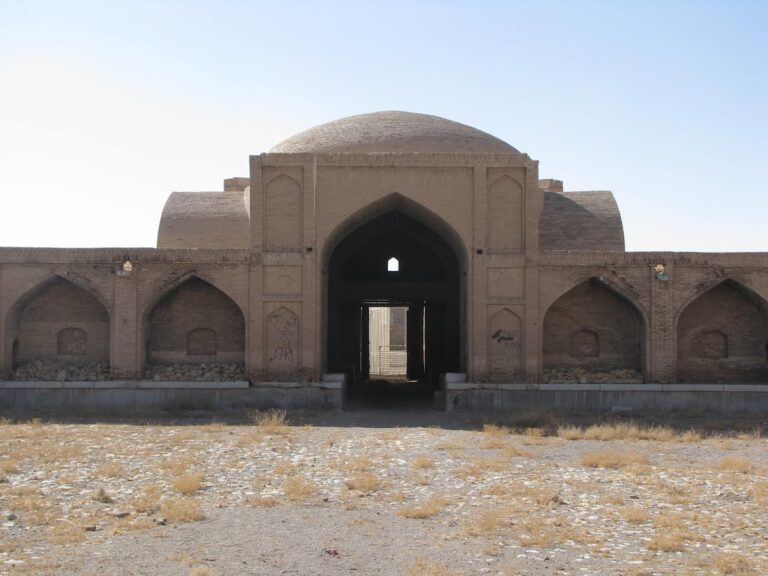
Madarshah Caravanserai, also known as Morcheh Khort Caravanserai, is a Safavid-period roadside establishment in Iran’s Isfahan Province. It was built during the reign of Shah Soltan Husayn, near the end of Safavid rule. Caravanserais provided lodging and services for traveling merchants, caravans, and their animals, and this building was also intended to support a major religious educational institution in Isfahan.
Safavid Foundation
The caravanserai was constructed at the same time as Chaharbagh School, a major Safavid religious school in Isfahan. Its income was assigned to pay the students’ expenses and maintain the school, giving the building an institutional purpose beyond accommodation for travelers. The Safavid dynasty ruled Iran from the sixteenth to the eighteenth century and made Twelver Shiism the official state religion. Shah Soltan Husayn was the last major Safavid ruler before the dynasty’s fall.
Qajar and Modern Transformations
During the Qajar period, the caravanserai fell into neglect under Zill al-Sultan, a Qajar prince and governor of Isfahan, and he eventually sold it. In 1321 of the Solar Hijri calendar, the building was converted into a military barracks. Around 1343, plans were developed to transform it into an international guesthouse while retaining its Safavid artistic and architectural values.
After the 1979 Iranian Revolution, the Islamic Revolutionary Guard Corps took control of the site. In 1379 of the Solar Hijri calendar, a tourism-development company purchased the caravanserai, and two private companies later acquired it. The building was registered among Iran’s national monuments in 1384 under registration number 13657. It is now used as a tourism and restaurant complex.
Remains
Madarshah Caravanserai survives as a large Safavid caravanserai in Morcheh Khort village, Shahin Shahr County, near kilometer 50 of the Isfahan-Delijan road. Its physical identity is defined by Safavid architectural and artistic values, which were to be preserved in the proposed conversion to an international guesthouse. The building is described as one of the largest caravanserais in Isfahan.
Safavid Architectural Fabric
The surviving building belongs to the Safavid period and retains the architectural character associated with its original construction. Its relationship with Chaharbagh School is also reflected in its purpose, since the caravanserai’s revenues were intended to support the school’s students and upkeep. Later changes in use, including its conversion into a military barracks and subsequent adaptation as a complex with tourism and restaurant functions, form part of the building’s present historical character.
Entrance Inscription
An inscription from the Qajar period remains visible above the entrance. It was produced during the reign of Muhammad Shah Qajar, a nineteenth-century ruler of the Qajar dynasty, and bears the year 1251 in the Islamic lunar calendar. The inscription records a later historical layer on the entrance of the Safavid caravanserai.