Ali Qoli Agha Mosque: A Safavid and Qajar Shiite Mosque in Isfahan


Site at a Glance
- Rating
- 4.4
- Popularity
- Very Low
- Country
- Iran
- Primary era
- Early Modern
- Eras represented
- Early Modern, Modern
- Civilizations
- Qajar, Safavid
- Site type
- Religious
- Remains
- Mosque
On this page8 sections
History
Ali Qoli Agha Mosque is an active Shiite mosque in Isfahan, Iran, built in the Safavid architectural style and completed in 1710–1711. It was founded by Ali Qoli Agha, a charitable eunuch who served during the reign of Shah Sultan Husayn, the last fully reigning Safavid shah before the dynasty fell in 1722. The Safavids ruled Iran from 1501 to 1722 and promoted Twelver Shiite Islam as the state religion.
Safavid foundation
The mosque formed part of Ali Qoli Agha’s charitable and urban building activity in Isfahan’s Bidabad neighborhood. During his lifetime, he also established a bathhouse, bazaar, caravanserai, and chahar-su, a covered or monumental market intersection, each bearing his name. The mosque’s entrance inscription, completed in 1122 AH, names both Shah Sultan Husayn and Ali Qoli Agha.
Qajar enlargement
The building was enlarged in 1297 AH, during the reign of Naser al-Din Shah of the Qajar dynasty, whose rule lasted from 1848 to 1896. The new prayer hall was identified by a verse inscription. Abd al-Javad produced the calligraphy, while Muhammad Ismail was responsible for the tilework.
Heritage protection
Ali Qoli Agha Mosque was placed on Iran’s National Heritage List on 13 December 1934 under reference number 225. Its conservation is administered by Iran’s Cultural Heritage, Handicrafts and Tourism Organization.
Remains
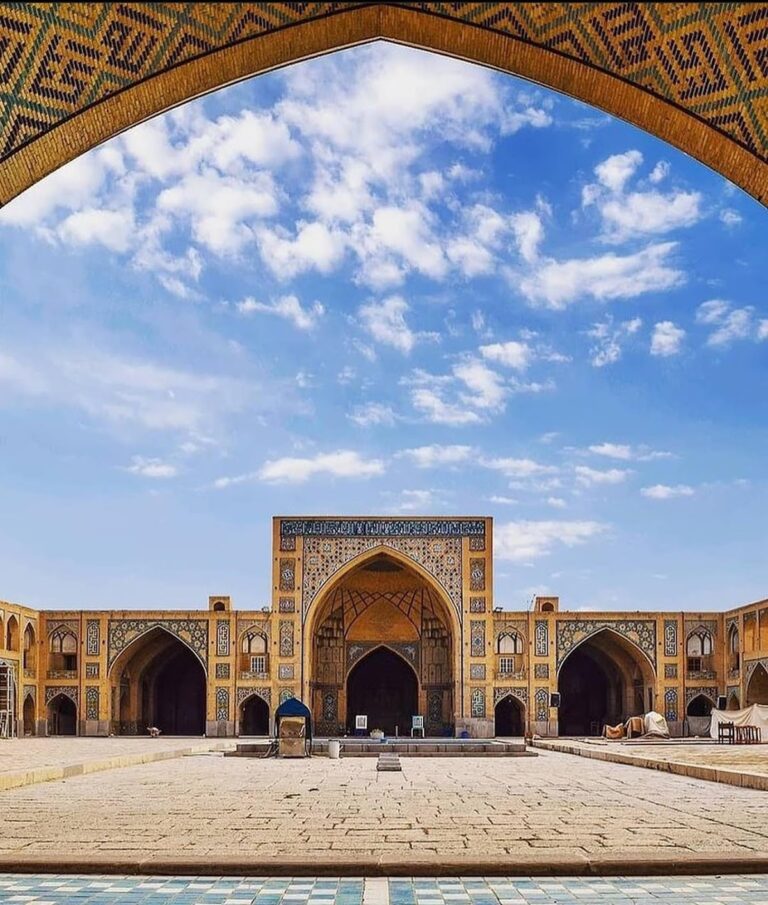
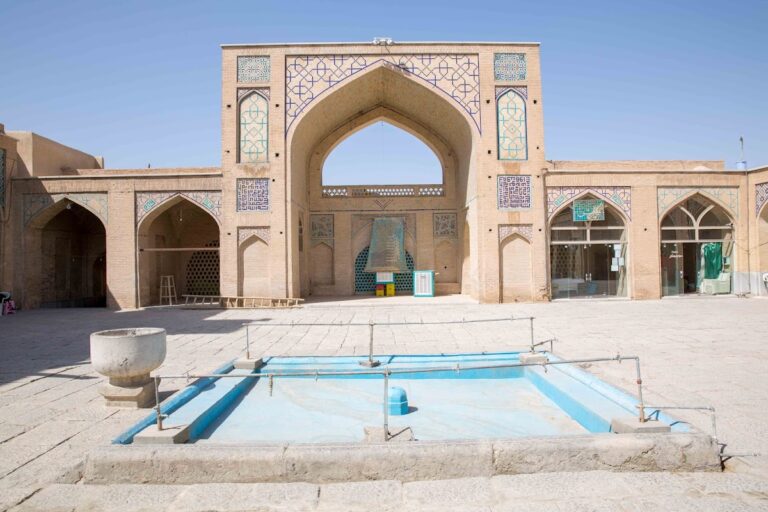
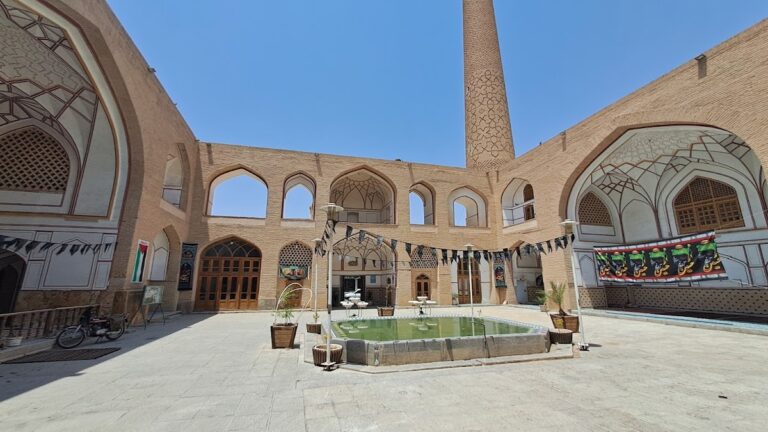
The mosque has a compact courtyard with the prayer hall positioned on its eastern side. A watercourse known as Madi Fadan or Madi Fada runs in front of the building, while the entrance portal faces west. The surviving architecture combines Safavid and Qajar-period work, with inscriptions and tile decoration forming central elements of the mosque’s appearance.
Courtyard and prayer hall
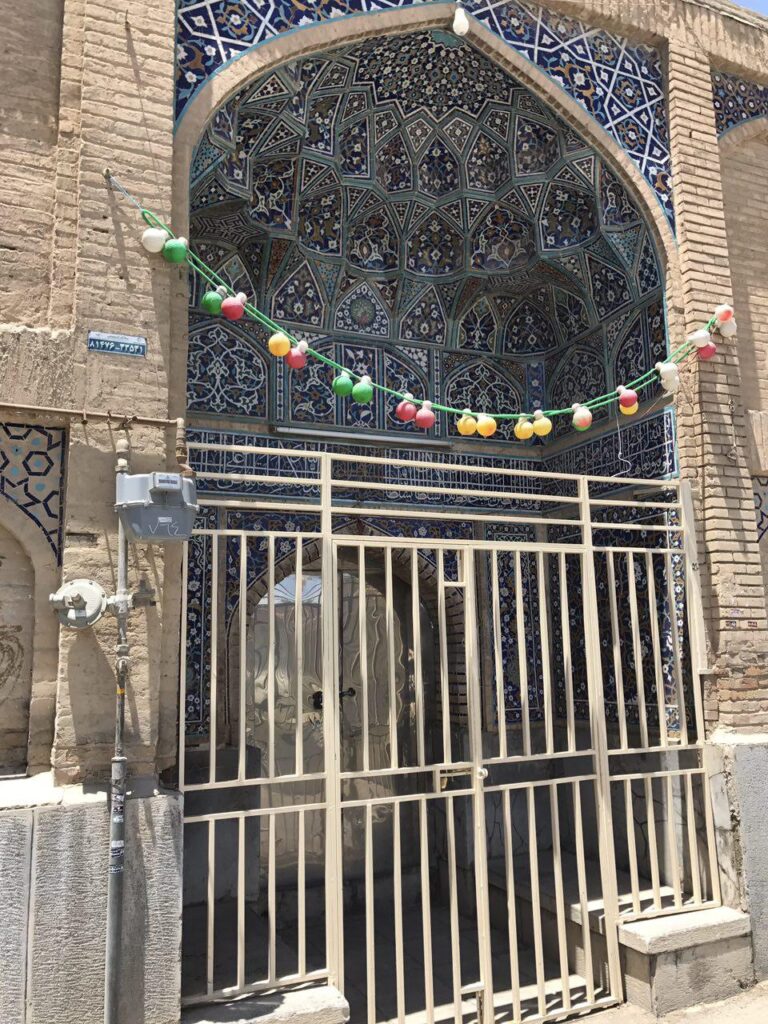
The prayer hall added in 1297 AH is decorated with elaborate girih tilework, a geometric system made from interlocking polygonal patterns. Its inscription uses white Nastaliq calligraphy, a flowing script associated with Persian writing and poetry, set against a lapis-colored tiled ground. The verse records the addition of the hall during the Qajar period.
Entrance and mihrab
The entrance inscription is dated 1122 AH and is written in brown Thuluth, a calligraphic script commonly used for monumental texts. Ali Naqi Emami produced it. South of the iwan, a vaulted hall or recess open on one side, stands a finely decorated mihrab, the niche indicating the direction of prayer. Its lower wall is faced with marble, while mosaic tilework covers the upper walls.
Bathhouse
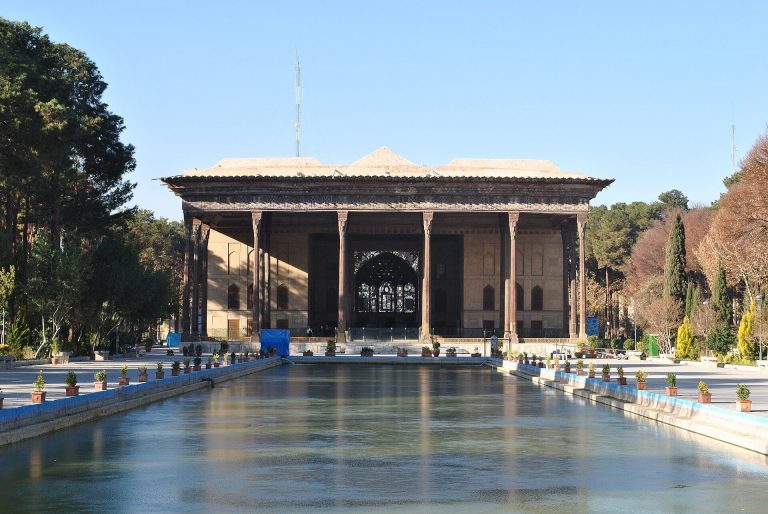
The Ali Qoli Agha Bathhouse stands opposite the mosque. It has undergone architectural alterations, and some of its fine tiles were transferred to Chehel Sotoun Palace. The Municipality of Isfahan restored and renovated the bathhouse in recent years.