Listoghil: The Central Cairn Tomb of the Carrowmore Complex
Site at a Glance
- Popularity
- Medium
- Country
- Ireland
- Primary era
- Stone Age
- Eras represented
- Stone Age
- Civilizations
- Unclassified
- Site type
- Burial
- Remains
- Burial Mound
On this page8 sections
History
Neolithic construction and use
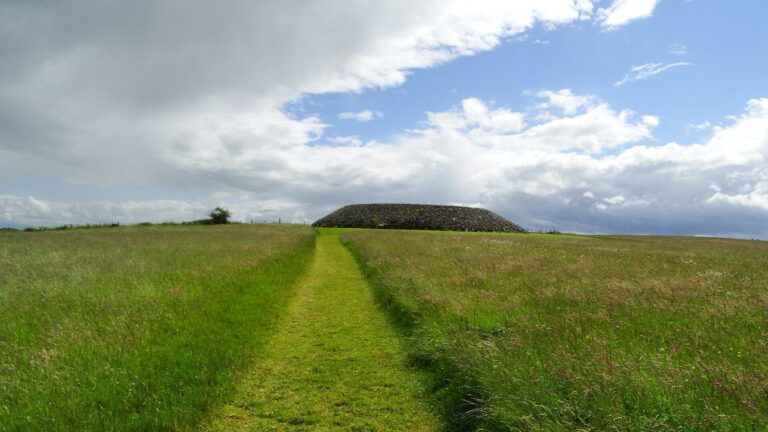
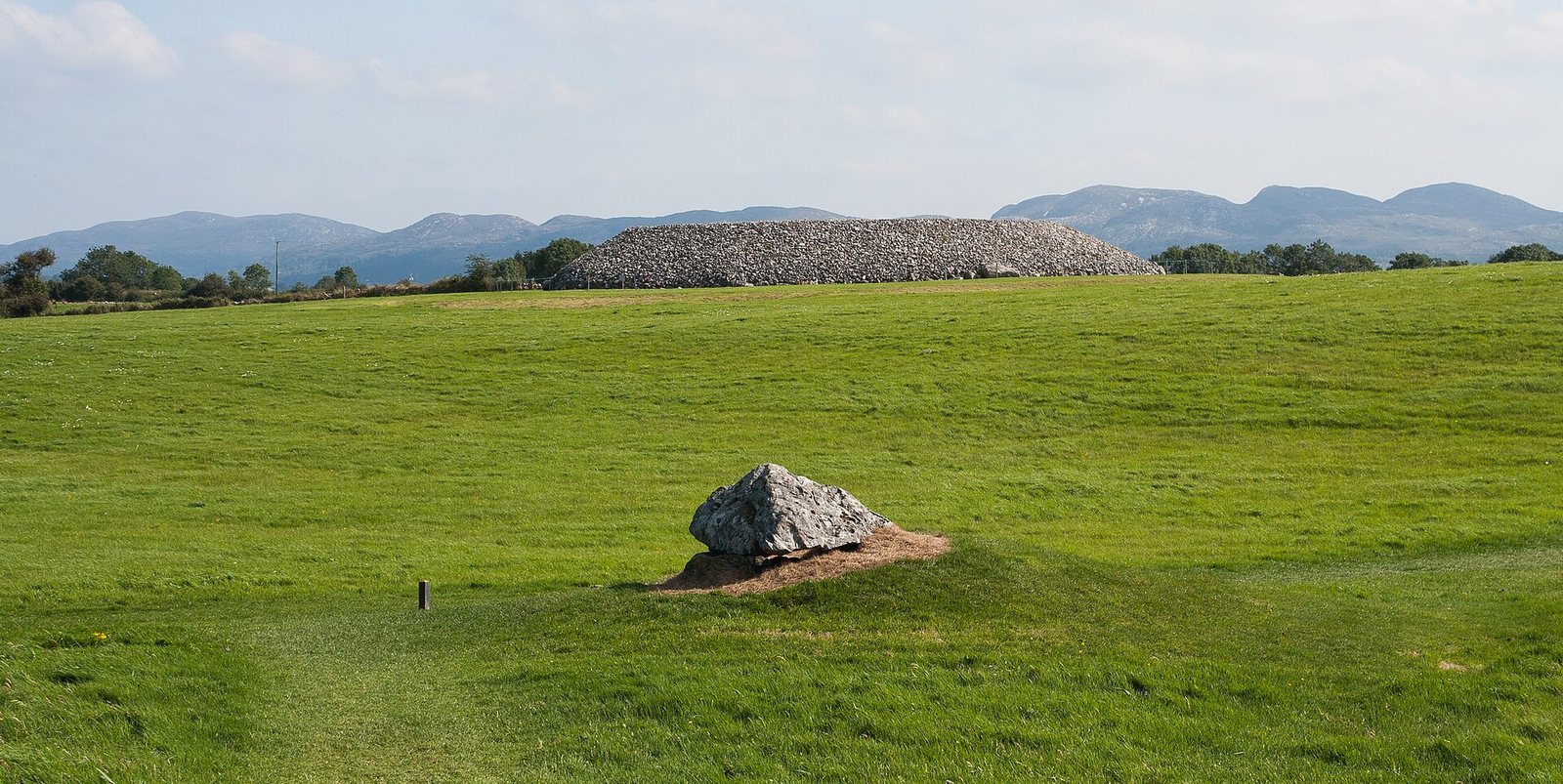
Listoghil is a Neolithic burial mound of stones at Carrowmore, near Sligo town in Ireland. The Neolithic was the later Stone Age, when farming communities built megalithic tombs. Constructed between 3640 and 3380 BC, Listoghil became the central monument of the Carrowmore prehistoric tomb group and its only cairn.
Extensive burning took place before the burial chamber was built. Radiocarbon dating of bone and carbon from the site produced an estimate of around 3500 BC. Human remains include both cremated and uncremated bone, while the older, smaller nearby tombs generally contain cremated remains.
Nineteenth-century mapping and investigation
In 1837, Irish antiquarian and surveyor George Petrie assigned Listoghil the designation Carrowmore 51, which remains in use. Drawing on an early map form, he proposed that the name Lios an tSeagail might mean “Rye Fort.” Since lios usually means a court or enclosed area, the name may originally have referred to the area surrounded by the dolmens rather than to the cairn.
During the 1880s, workers took stones from the site for road gravel. They stopped when their work exposed the burial chamber. Antiquarians had investigated the tomb by the end of the nineteenth century.
Excavation and restoration
In the late 1990s, Swedish archaeologist Göran Burenhult partly excavated Listoghil. The Office of Public Works subsequently restored the monument.
Remains
Landscape and cairn
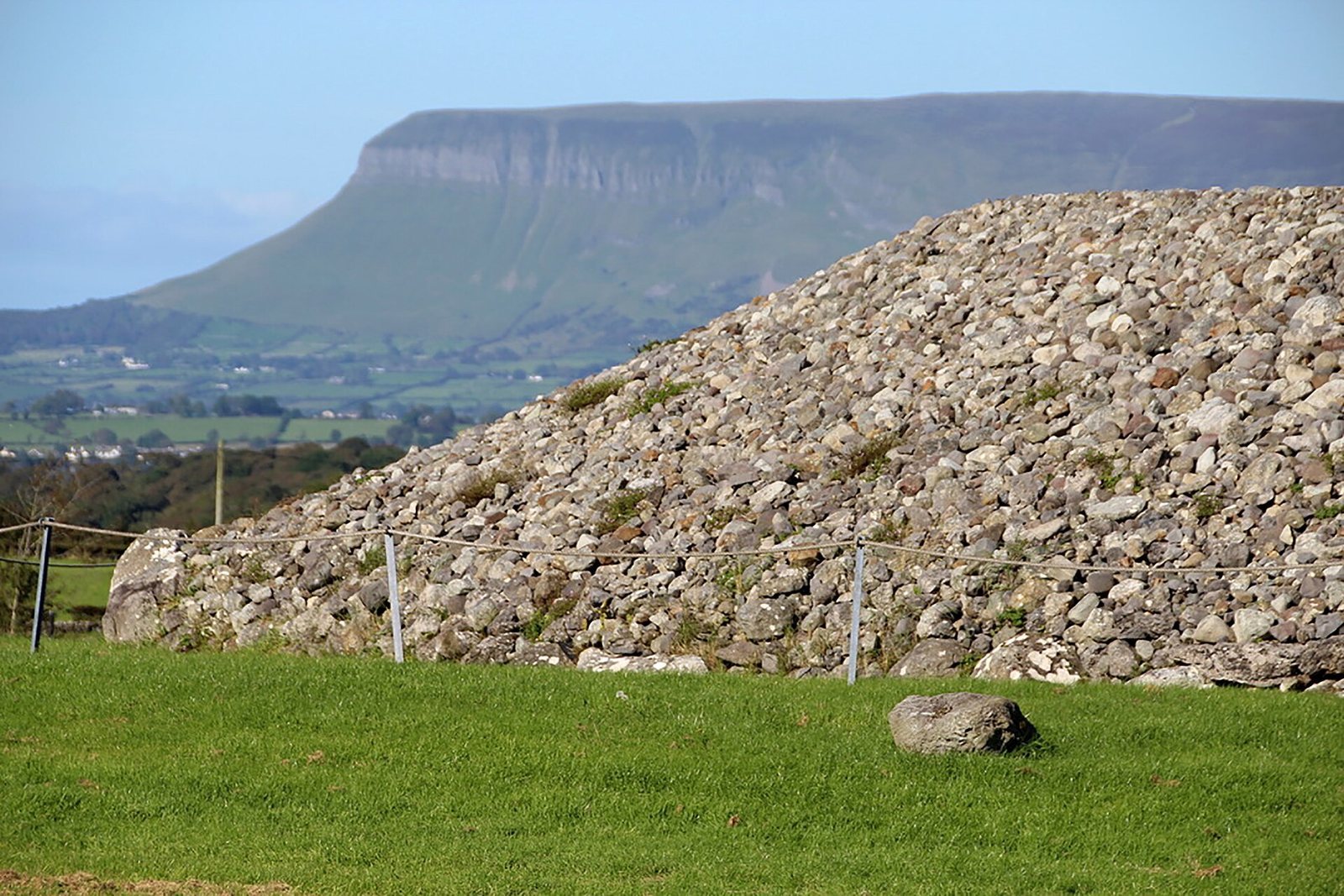
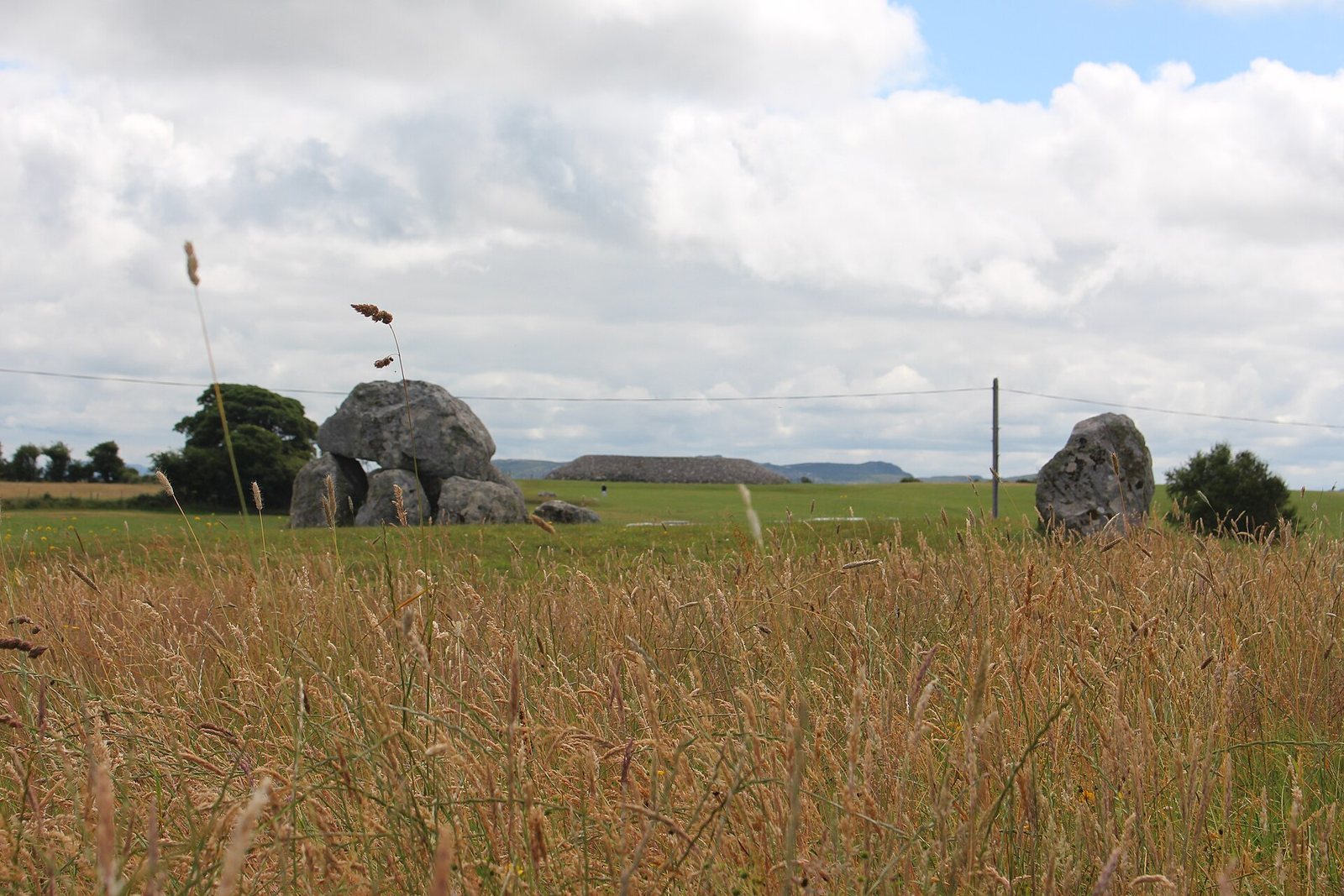
Listoghil stands about 59 metres above sea level near the highest point of a low ridge, close to the centre of the Cúil Iorra Peninsula. It is the focus of the Carrowmore passage-tomb complex, a group of tombs with chambers reached by passages. Knocknarea, with the cairn Miosgán Médhbh, lies to the west; two large cairns on Cairns Hill are to the east.
The partly preserved cairn is about 34 metres across and 4 metres high, set into the ground. This is larger than the surrounding tombs, which average about 15 metres in diameter. Dolmen circles surround it. A dolmen is made of upright stones supporting a large capstone; these circles are open and uncovered, generally facing Listoghil, and archaeologists classify them as passage tombs. Excavation exposed the mound’s intact kerb, the ring of stones around it.
Chamber and carved stones
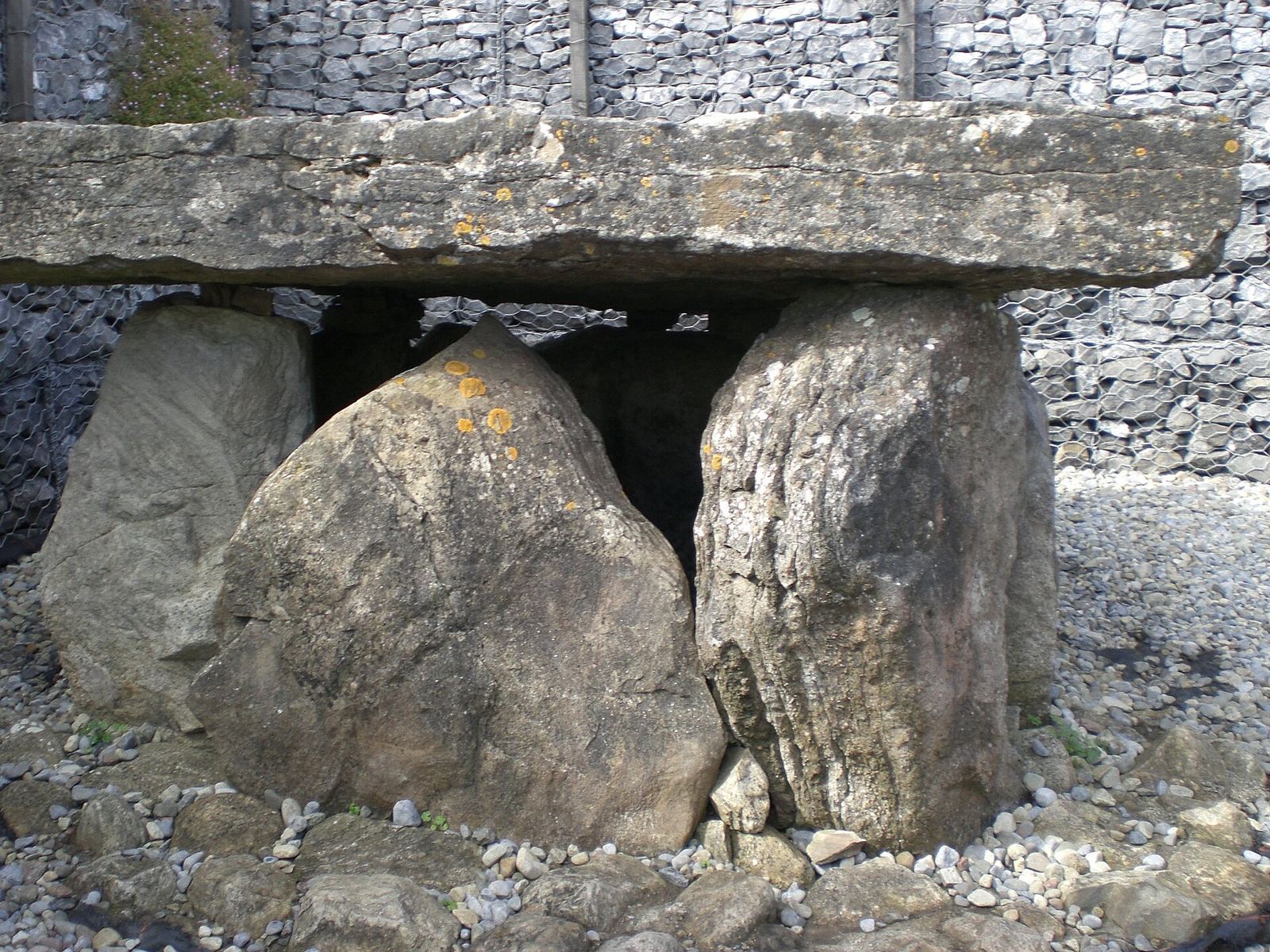
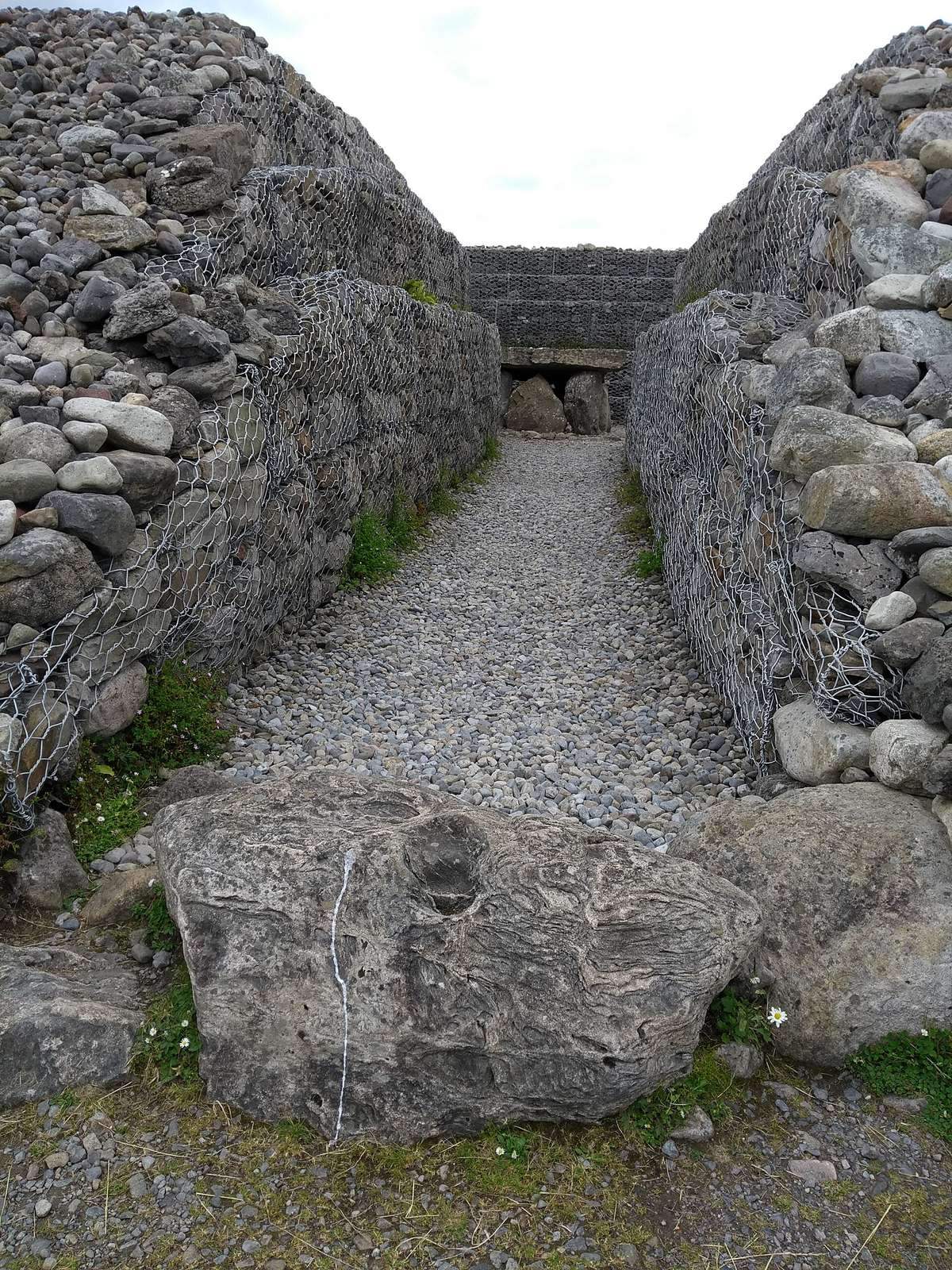
A 13-metre artificial avenue of gabions, or stone-filled cages, leads to the central chamber. Six standing stones support a single limestone roof slab, tilted at 6.1 degrees. The slab is oversized and is thought to have come from the Glen of Knocknarea. Its front bears carvings of concentric circles that can be seen only in certain lighting. This is a rare example of Irish megalithic art outside the Boyne Valley. A separate interior stone carries a distorted tripod motif, which writer Julian Cope described as “strangely distorted.”
Finds and alignment
Finds from the tomb include human and horse bones, charred wood, and a worked flint javelin head. Some recovered materials are held in the collection at Alnwick Castle.
The chamber points toward a low saddle in the Ballygawley Mountains, 6.5 kilometres to the east-southeast. Sunrises in that direction correspond to 31 October and 1 February, traditional seasonal festivals marking the beginning and end of winter. These dates do not exactly match modern astronomical cross-quarter days, which fall midway between a solstice and an equinox. The chamber’s axis and sunlight illumination also correspond to those of the Mound of the Hostages, another Neolithic tomb at the centre of the Tara complex.