Lindek Castle: A Medieval Fortress in Slovenia
Site at a Glance
- Rating
- 4.5
- Popularity
- Very Low
- Country
- Slovenia
- Primary era
- Medieval
- Eras represented
- Medieval
- Civilizations
- Holy Roman Empire
- Site type
- Military
- Remains
- Castle
On this page8 sections
History
Lindek Castle is a medieval castle in Slovenia, probably built by the bishops of Gurk at the beginning of the thirteenth century on Castle Hill above Beli Potok, north of Frankolovo. It stood within the territory that Countess Hemma of Gurk transferred to the Gurk monastery through her inheritance in 1042. About three decades later, the territory passed to the newly established Gurk bishopric, whose bishops held secular authority over lands and fiefs in the area.
The Gurk Bishopric and the Lindek Knights
The castle’s name appears in several forms, including Lindecke in 1264, castrum Lindek in 1333, Lyndegk in 1343, and haus Lindegk in 1441. It derives from the German word for linden tree, a motif also represented in the Lindek family coat of arms.
Lindek was administered by the Lindek, or Vitanje, knights, who were ministerials of the Gurk bishopric. A ministerial was a medieval dependent noble or administrative retainer who served a higher lord in military, governmental, or estate-management duties. Henricus de Lindecke is named in connection with Lindek in 1258, while Heinz is the first knight specifically identified in 1275. The family administered the lordship until the sixteenth century and also served as castellans at Pilštanj and Vitanje. A castellan was responsible for managing and defending a lord’s castle.
During the fourteenth century, the Lindek family acquired possessions in Carniola. Wulfing I Lindek, active between 1299 and 1335, was repeatedly associated with the circle of Ulrik of Žovnek. In the second half of the century, Wulfing II was recorded as the son-in-law of Henrik Hebenstreit. Another family member, Popo, held a tower and several Gurk fiefs, was associated with Vitanje, and lived at the Celje court. His daughter Kunigunda later became abbess of the monastery at Mekinje.
Loss and Recovery of the Lordship
The Styrian branch of the Lindek family lost Lindek Castle in the mid-fourteenth century and entered service at the Celje court. Friderik Lindek recovered the lordship and castle in 1404, receiving them as a lease and fief from Gurk bishop Konrad. A fief was a holding granted by a superior lord in return for service or allegiance. Friderik’s heirs retained Lindek until the end of the sixteenth century. His son Hans succeeded him in 1412, and Hans was followed by his son Ludvik in 1467.
Under Ludvik, the lordship included 60 farms. By 1542, the number had fallen to 36, reflecting the impoverishment of the Lindek family. Hans Lindek also appeared on a Habsburg list of enemies of the state and was described after 1422 as a vassal of the counts of Celje, a powerful medieval noble dynasty in the region. The Lindek knights were last mentioned in written records at the beginning of the seventeenth century.
Later Owners and Abandonment
Hans Seidl owned the castle from 1580 to 1613. Katarina Strassberger then held Lindek Castle and its lordship until 1621, after which her sons Adam and Johann Strassberger inherited them. Georg M. Vischer’s map of Styria from 1678 still showed the castle as practically intact, although its tower had already lost its roof. At the end of the seventeenth century, the property belonged to Krištof von Fuhrenberg and later passed to the barons of Tauffenbach.
In 1720, Jožefa Katarina Baroness Tauffenbach sold the castle to the chaplain Janez Jereb, who owned it for the next ten years. The estate then passed to Marija Ana and Johan von Conti di Camisano. Around 1792, it entered peasant ownership, with Ferdinand Verstovšek recorded as its owner.
Lindek may have remained inhabited until the mid-eighteenth century. Franc Wolf was the last recorded resident, living there until 1758, after which the castle began to deteriorate. Its ruins were mentioned in 1876. Lindek appeared on the Josephine military map, while the Franciscan cadastral survey already marked it as ruins. In 1930, the ruins were purchased by Ramšak, a teacher from Maribor.
Remains
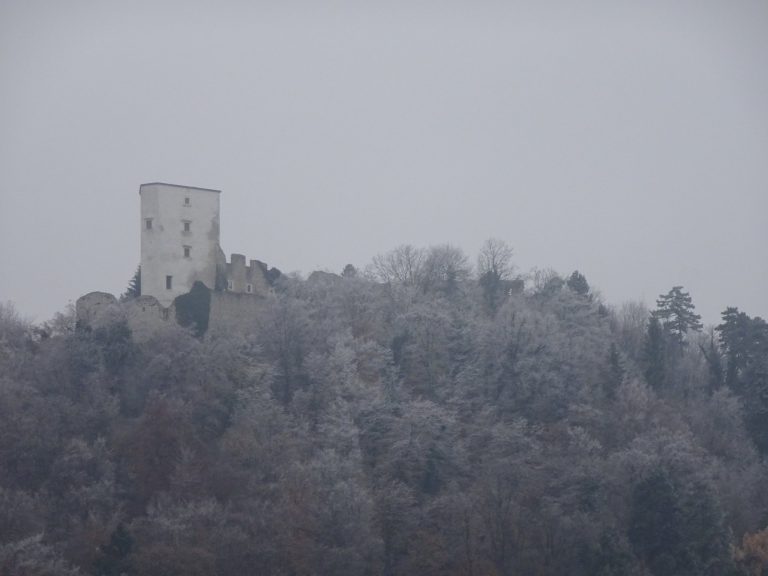
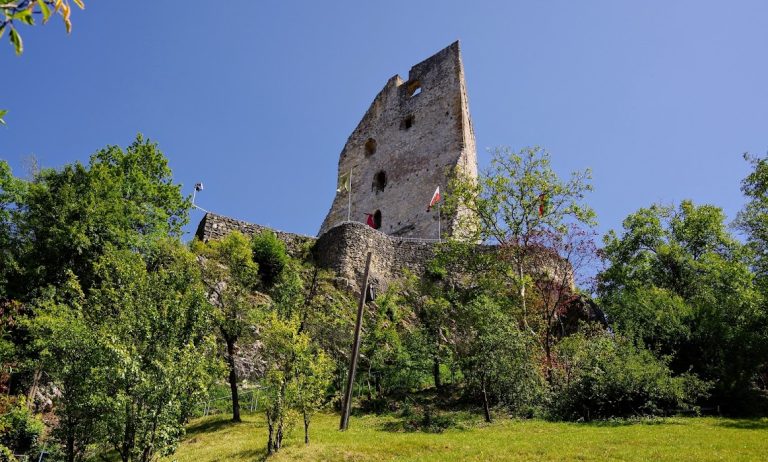
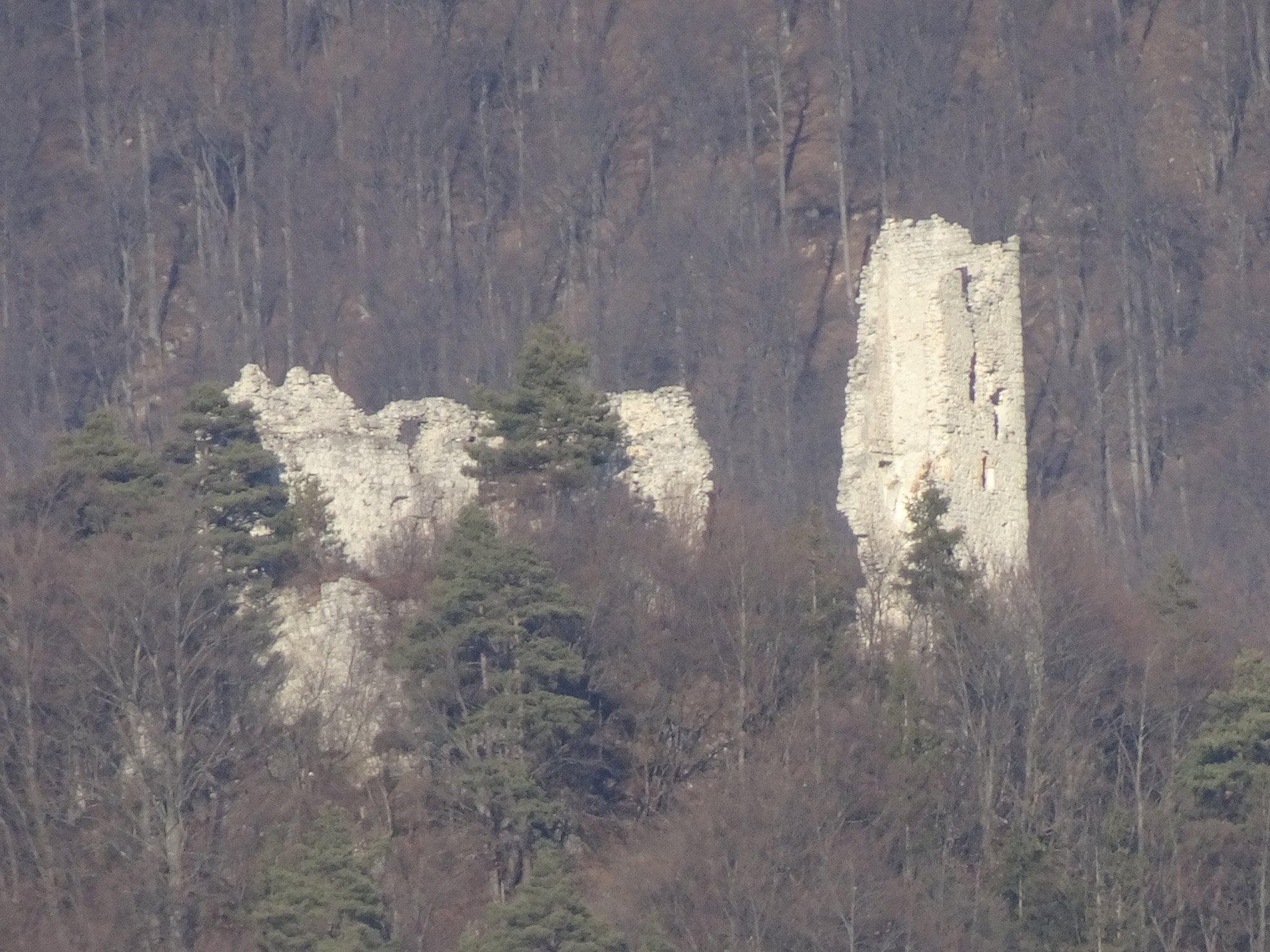
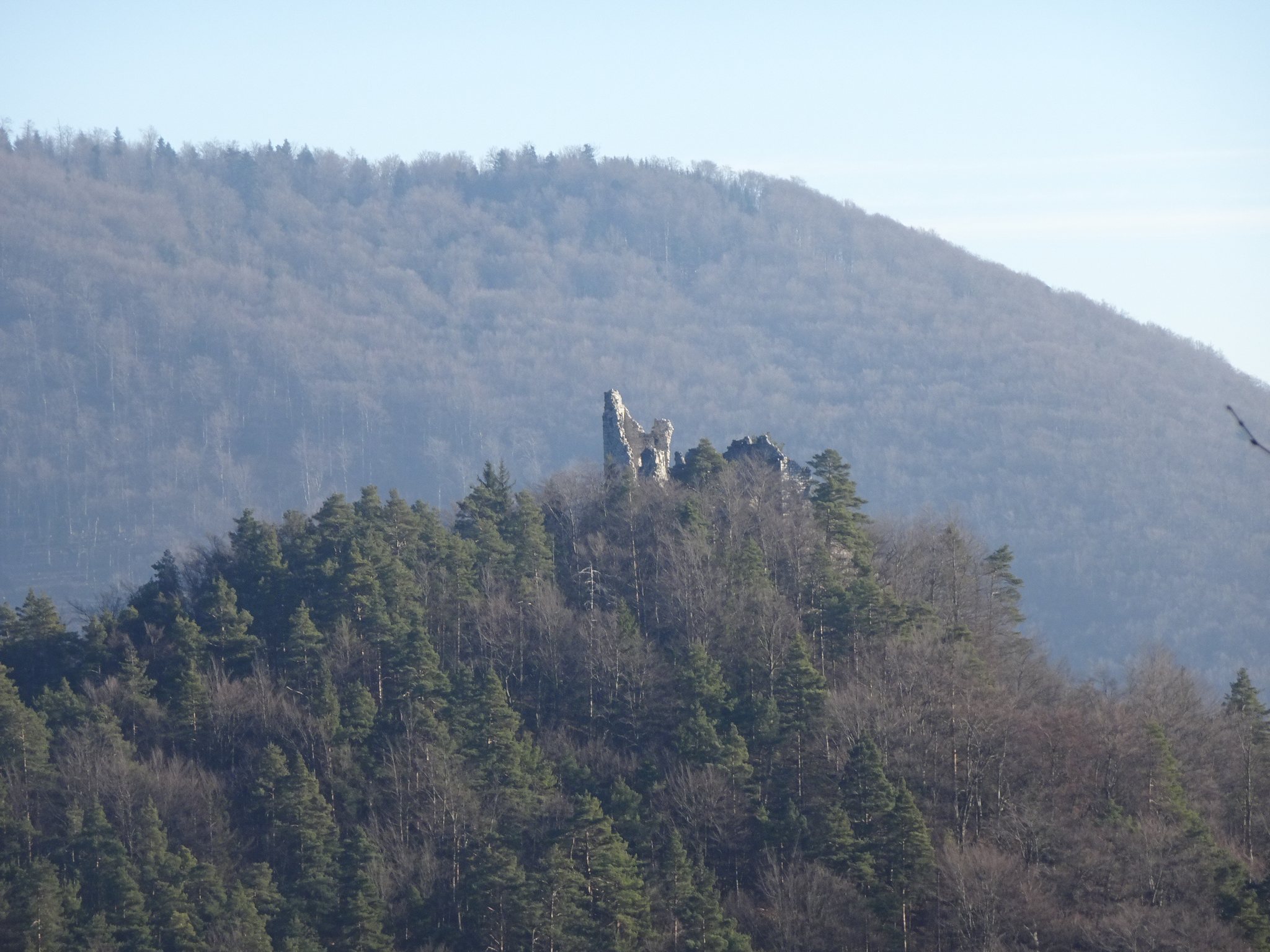
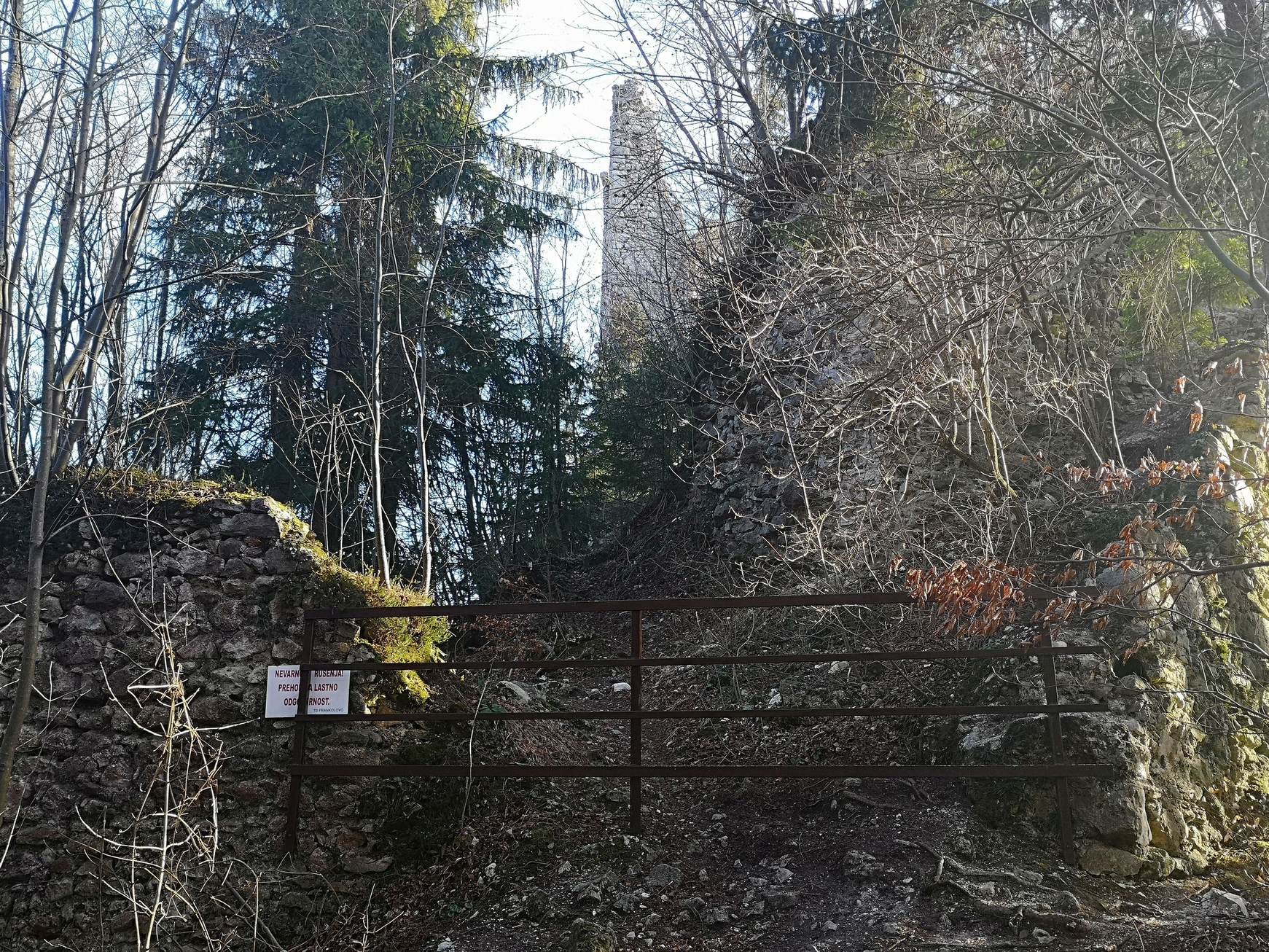
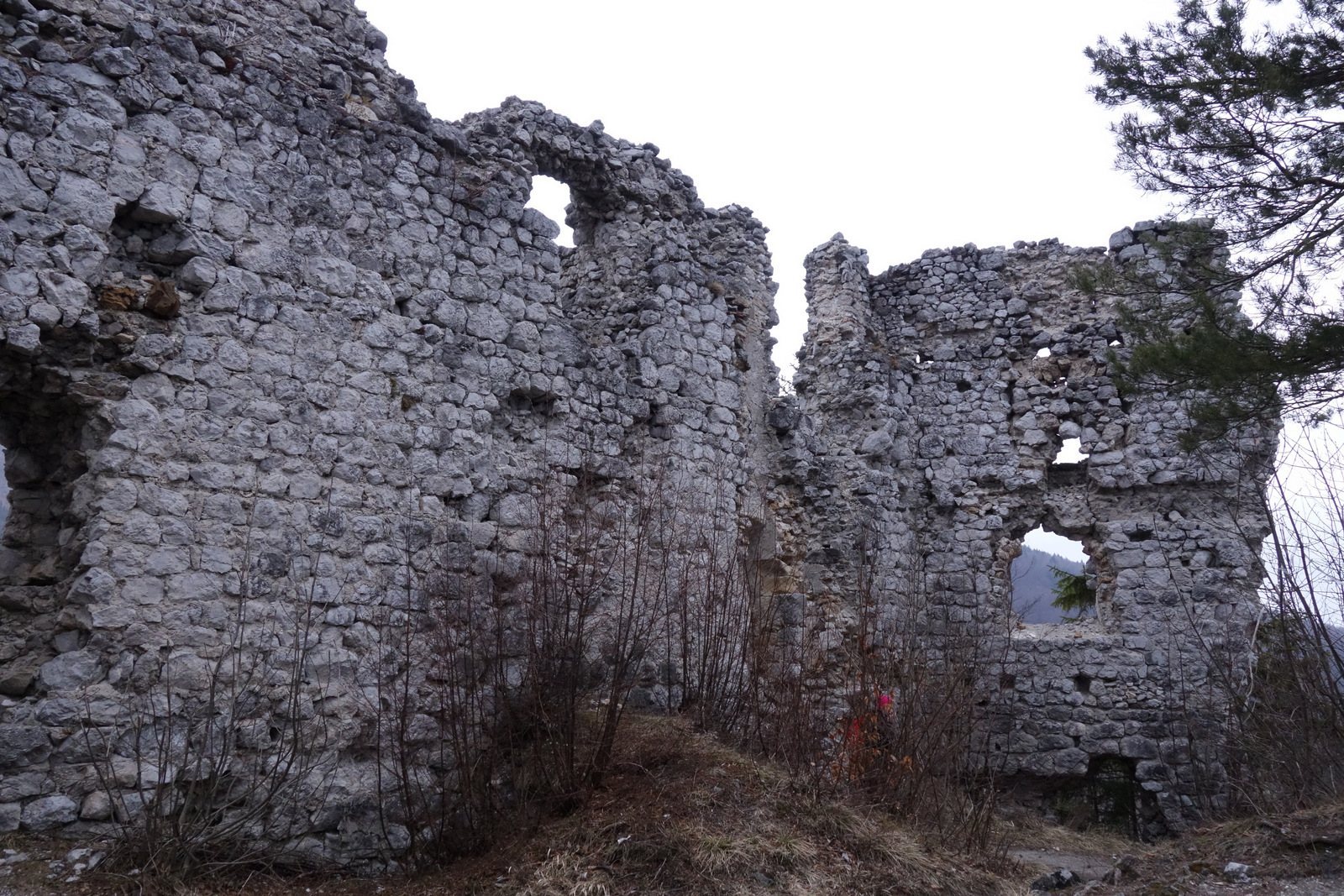
Lindek Castle stands on Castle Hill on the slope of Stenica, above Beli Potok. The surviving remains represent a central Romanesque castle core enclosed by perimeter walls added during the Gothic period. The former complex also included a tower, creating a fortified arrangement on the hillside.
Castle Structures
Romanesque Core
The central part of the castle dates to its construction at the beginning of the thirteenth century and preserves the Romanesque core of the complex. This core formed the interior of the castle and was later enclosed by walls from the Gothic period. The remains survive in a ruined condition.
Tower and Perimeter Walls
A tower formed part of the castle’s documented extent. By 1678, it had already lost its roof, although the castle as a whole was still shown as largely complete. The surrounding perimeter walls were later Gothic additions to the earlier core. Subsequent records and the Franciscan cadastral survey portray the site as ruins, preserving the outline of a castle that had deteriorated after its abandonment.