Lacus Juturnae: A Sacred Spring and Fountain in Rome
Site at a Glance
- Popularity
- Medium
- Country
- Italy
- Primary era
- Classical
- Eras represented
- Iron Age, Classical
- Civilizations
- Roman
- Site type
- Religious
- Remains
- Sanctuary
On this page10 sections
History
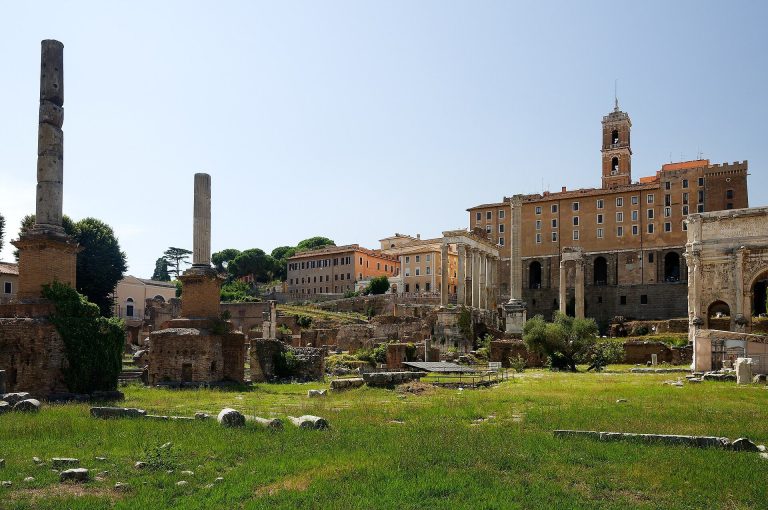
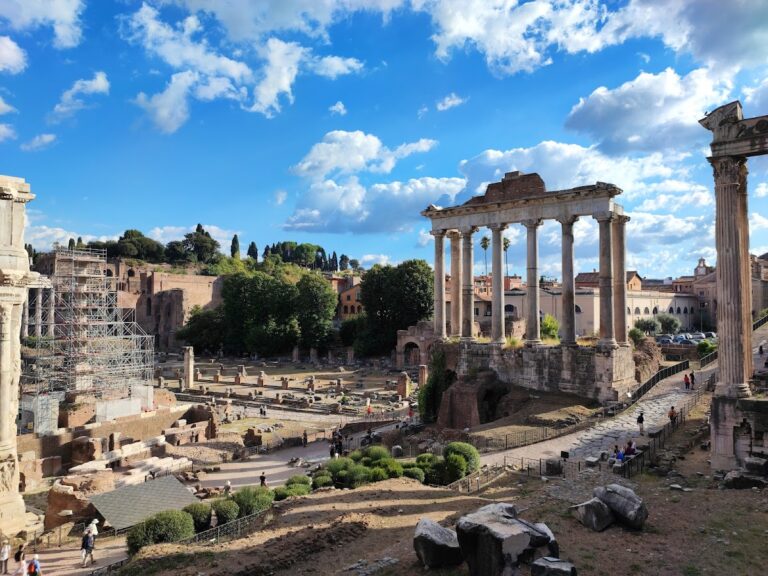
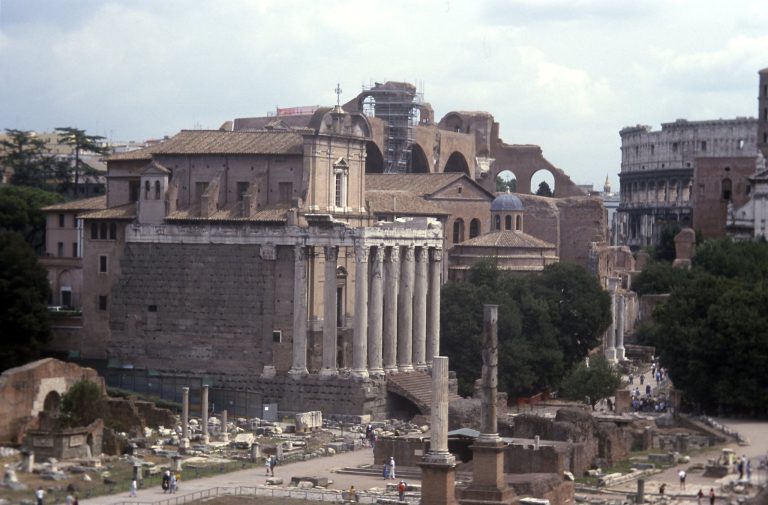
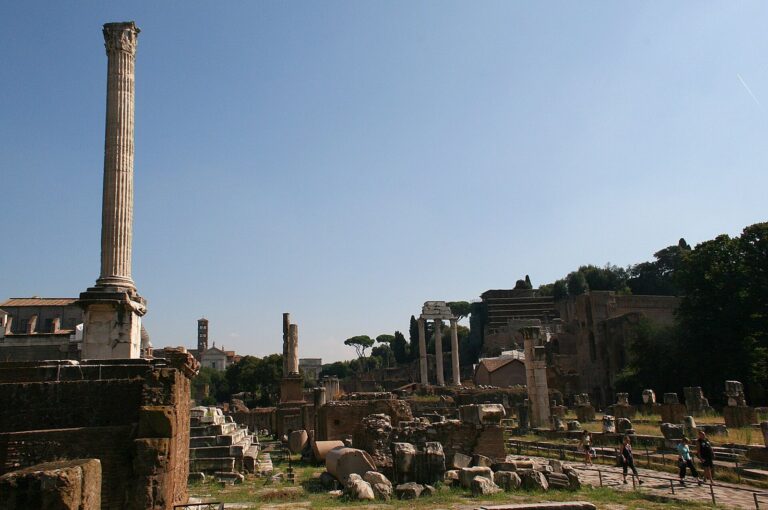
Lacus Juturnae is a Roman sacred spring and fountain on the south side of the Roman Forum in Rome, Italy, established in the fifth century BC. Dedicated to Juturna, a Roman water nymph and, in Roman tradition, the sister of Turnus, it was among the city’s oldest and most important water sources before Rome’s first aqueduct was built.
Early worship and Republican development
The spring was revered in Rome’s early historical period, and its water was believed to have healing powers. Elderly and sick people made offerings there in the hope of recovering. Roman legend told that Castor and Pollux, the divine twins known together as the Dioscuri, stopped at the spring in 495 BC to water their horses and announce Rome’s victory at the Battle of Lake Regillus. A temple to the twins was built nearby. Another tradition held that Juturna appeared above the spring after Rome’s victory at Pydna in 168 BC.
During the second century BC, the spring was developed into a fountain while Aemilius Paulus served as censor, a senior magistrate responsible for the census and aspects of public administration. A sculptural group of the Dioscuri and their horses commemorated extraordinary signs, and Lucius Aemilius Paulus dedicated it. Lucius Caecilius Metellus Dalmaticus rebuilt the fountain in 117 BC.
Imperial use and later history
A fire damaged the fountain in AD 14, and it was restored under Emperor Tiberius. During the imperial period, when Rome was ruled by emperors, the Vestal Virgins drew water here for religious ceremonies after another source dried up. The Vestals were priestesses of Vesta, the goddess of the hearth and the Roman state. In the fourth century, the fountain was altered to accommodate a statio aquarum, a station connected with the administration of Rome’s water supply.
The spring continued in everyday use during the Middle Ages, and pilgrims visited in search of its reputed healing benefits. Excavations in the southern Forum began in 1900 under the archaeologist Giacomo Boni and continued through 1901. Further work from the 1980s onward was supervised by Eva Margareta Steinby. The excavated remains were mainly from the imperial period, with some dating to the Roman Republic, the period before rule by emperors.
Remains
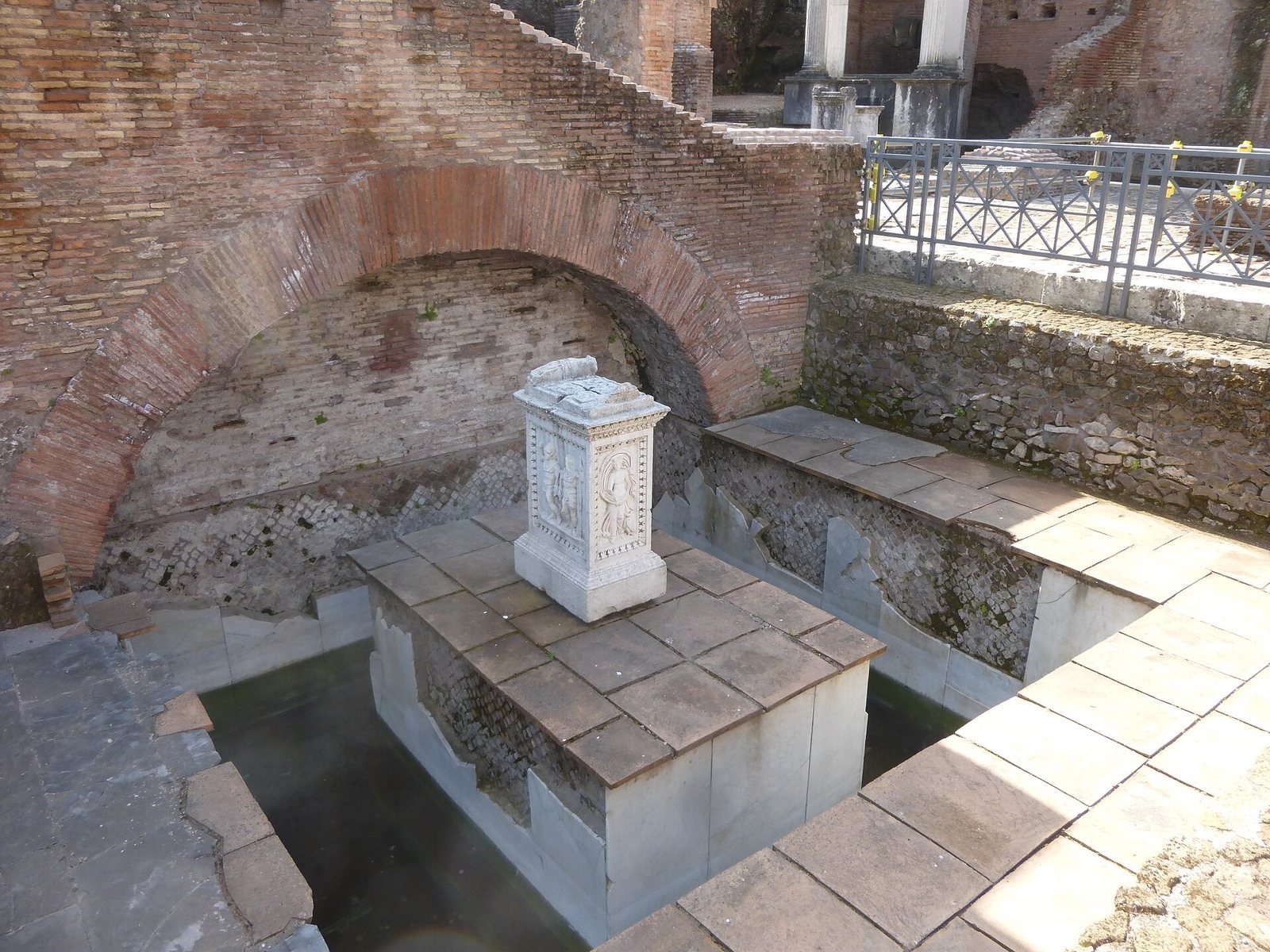
The sanctuary is arranged around a nearly square pool and its central pedestal, with a small shrine and altar group to the south. Its surviving fabric includes marble lining and an earlier basin built with net-pattern masonry.
Basin and sculpture
Water basins
The principal basin measures about 5.13 by 5.04 metres and is 2.12 metres deep. Two springs fed it at its northern corners, and marble slabs line its sides. A rectangular pedestal stands at the centre, measuring 1.78 metres high, with a base about 3 by 2 metres. Roughly a metre below paving from the reign of Augustus, Rome’s first emperor, lies an approximately square Republican basin, built with small blocks arranged in a net-like pattern. It is generally dated to the late second or early first century BC, with its dating linked to Metellus’s work on the nearby Temple of Castor. Later repairs used a different type of tufa stone and are probably from the early imperial period, associated with the restoration under Tiberius.
The Dioscuri and other statues
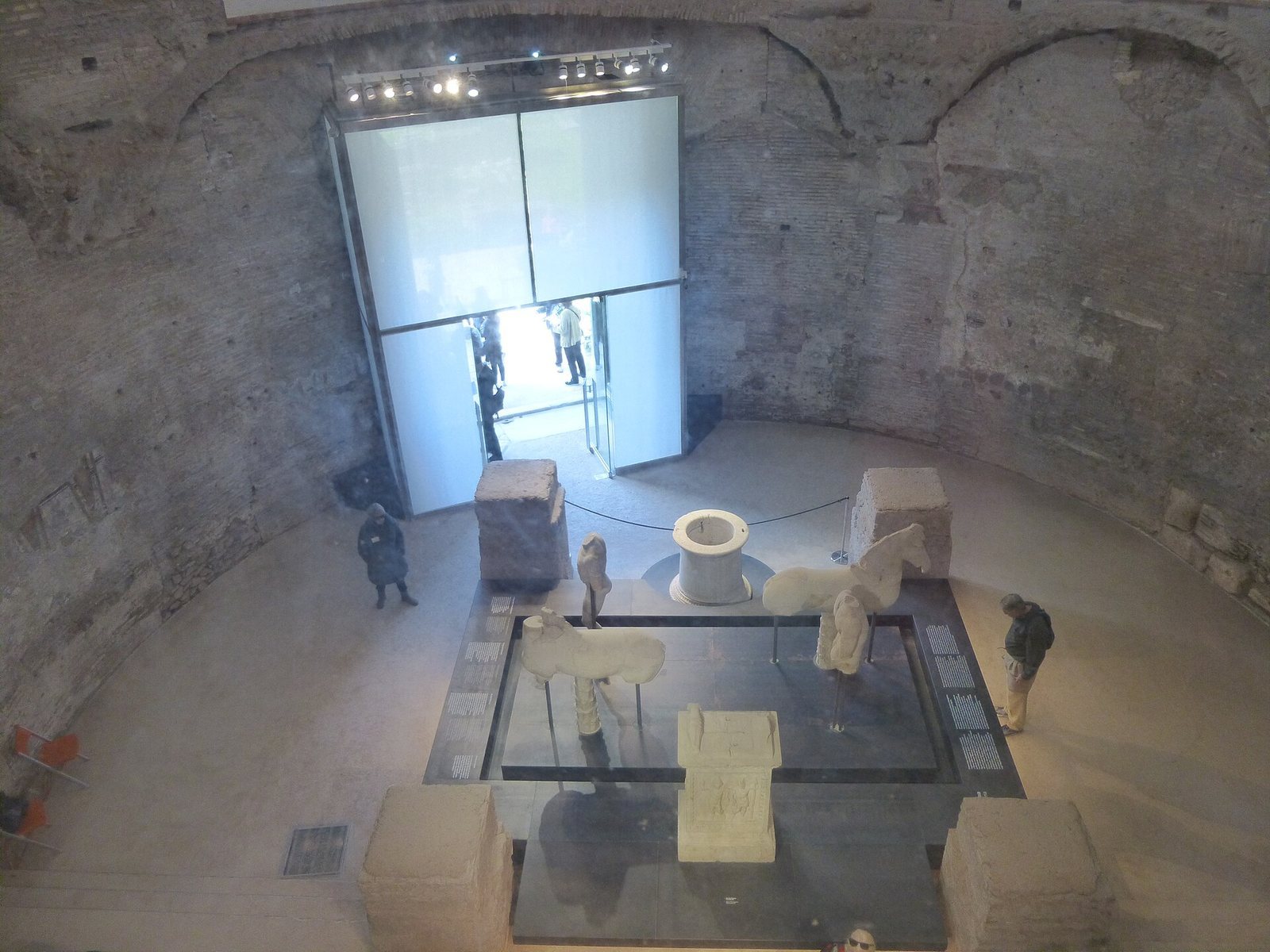
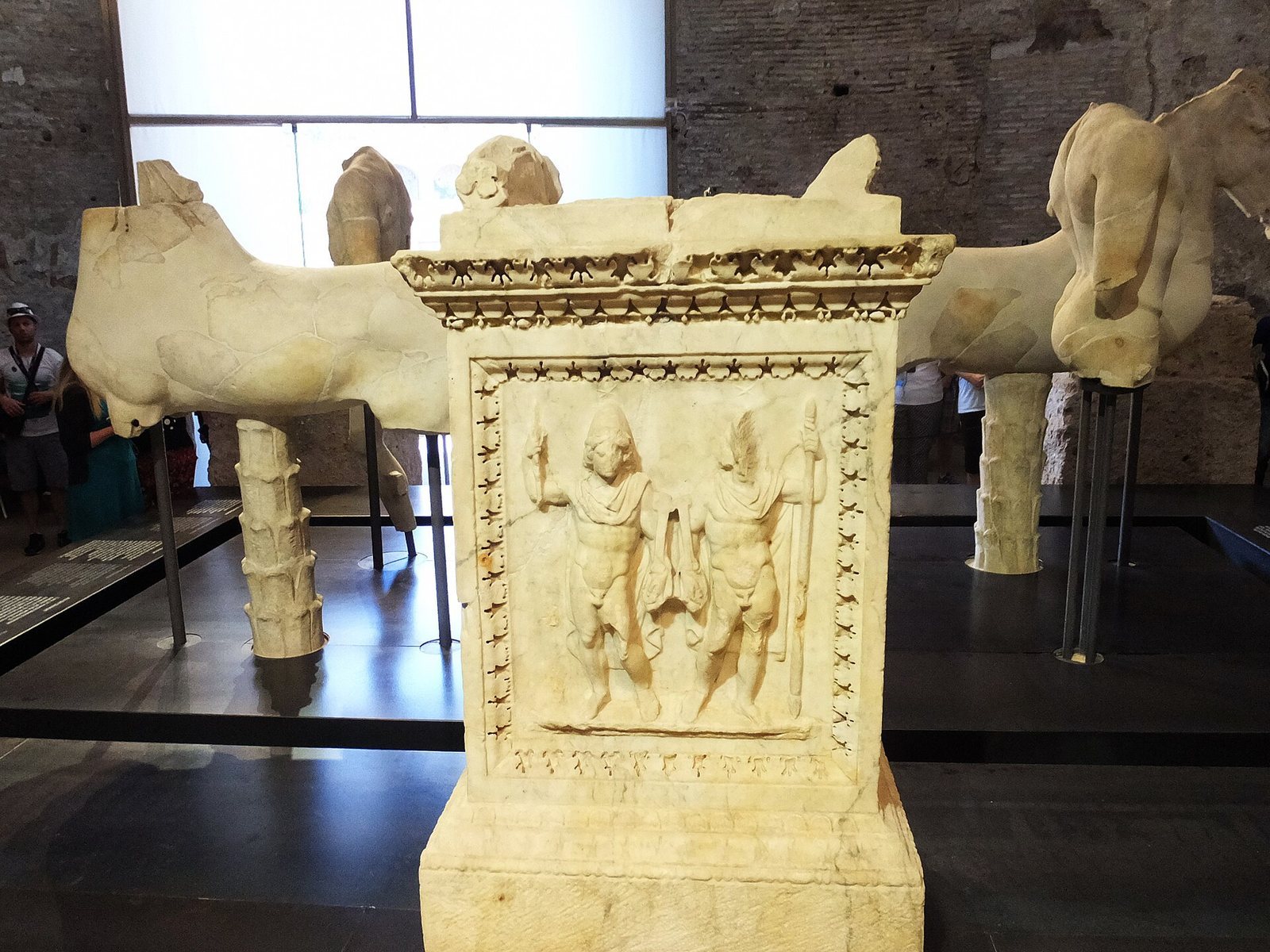
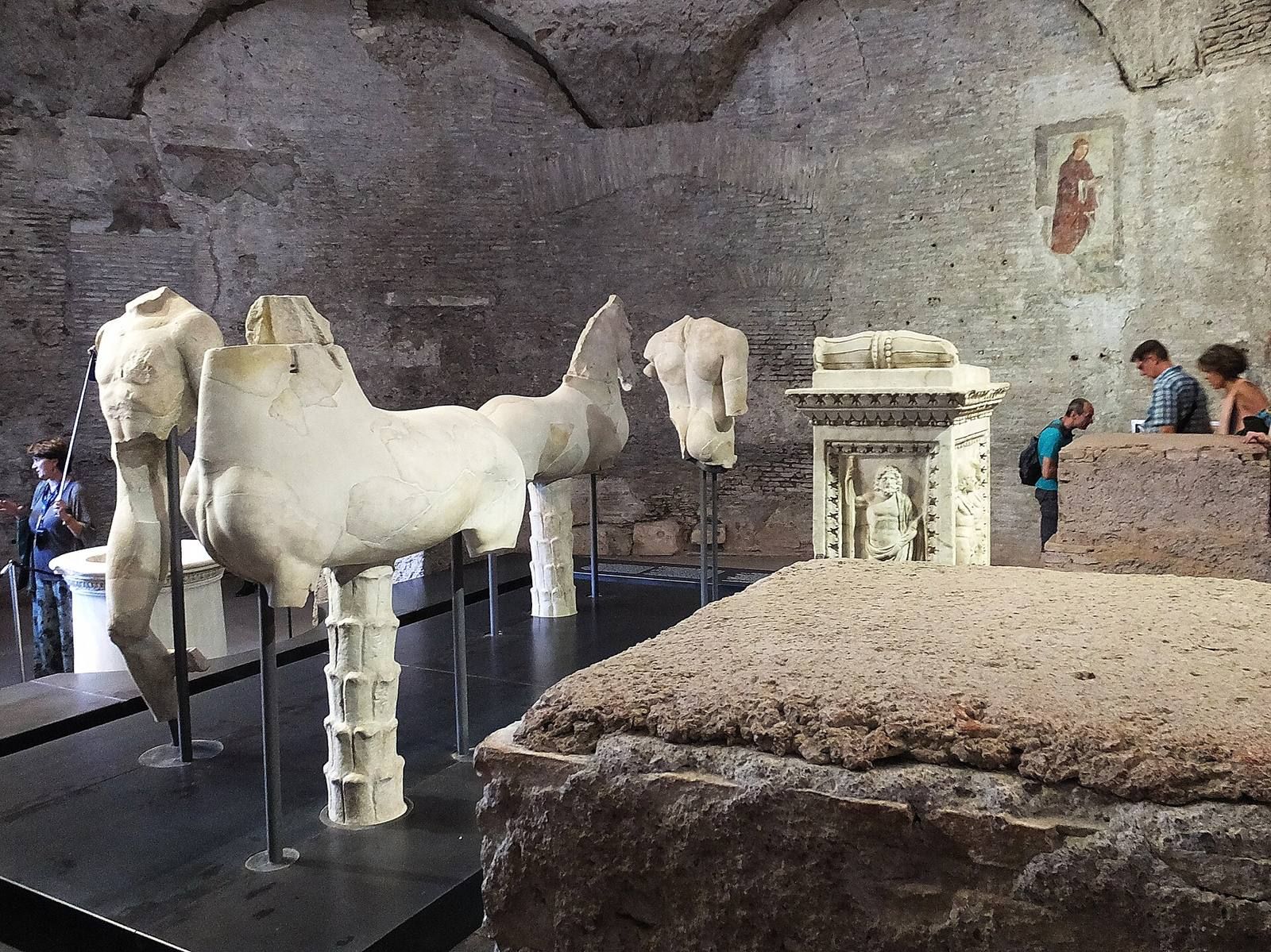
Broken statues of the Dioscuri were found in the basin and almost certainly stood on its central pedestal, depicting the twins watering their horses. Although archaic in style, the figures date to around the end of the second century BC, in the Hellenistic era of Greek kingdoms and culture that followed Alexander the Great. They show traces of burning and repairs made with Carrara marble in place of Pentelic marble. The statues are now in the Roman Forum Museum, along with figures of Apollo and Asclepius that also adorned the fountain.
Shrine and associated monuments
Juturna’s shrine and the well
About four metres south of the basin is a small shrine, with a chamber that housed a statue of Juturna and a porch supported by two columns. An altar in front of the shrine carries a relief of Juturna and Turnus. A circular marble well stands in front of the shrine, between it and the altar. Its double inscription names Marcus Barbatius Pollio and records his restoration of the sanctuary. Pollio was a curule aedile, a Roman civic magistrate whose responsibilities included public works, active in the second half of the first century BC.
Altars and reliefs
A nearby altar bears figures of the Dioscuri and Helen, with Jupiter on one side and Leda on the other; these carvings were added during Emperor Hadrian’s reign. Another altar, dated to the reign of Emperor Septimius Severus, shows Juturna and Turnus and the Dioscuri on its longer sides. Its shorter sides depict Jupiter holding a scepter and thunderbolt, and Leda with a swan. A relief near the basin is a copy of a relief from Emperor Trajan’s reign, showing the Dioscuri, their parents Jupiter and Leda, and Juturna. The original is in the Antiquarium, a museum of archaeological antiquities.