La Fonteta: A Phoenician Port City in Spain
Site at a Glance
- Rating
- 4.8
- Popularity
- Very Low
- Country
- Spain
- Primary era
- Iron Age
- External website
- Open
- Eras represented
- Iron Age
- Civilizations
- Phoenician
- Site type
- City
On this page7 sections
History
La Fonteta was a Phoenician colonial port in Spain, located near Guardamar del Segura on the right bank of the Segura River estuary. Established in the second half of the eighth century BC, the settlement developed during the Orientalizing period, when Iberian communities adopted and adapted artistic forms, technologies, objects, and religious influences associated with eastern Mediterranean contacts. La Fonteta became an important center for metal production, western Phoenician trade, and the transmission of Phoenician culture to indigenous Iberian communities before its abandonment around the first half of the sixth century BC.
Early settlement and urban development
From around the middle of the eighth century BC, La Fonteta consisted of informal or temporary dwellings alongside metallurgical workshops. Its position near the Segura estuary may have supported the exploitation of nearby saltworks for producing salted foods. The settlement also formed part of a wider commercial environment linked to the estuary and inland routes.
By the end of the eighth century and through the seventh century BC, La Fonteta acquired a more formal urban layout. Multi-room houses replaced the earliest temporary structures, while craft and metalworking continued. Nearby Peña Negra, an archaeological site in the Serra de Crevillent, had traded with Phoenicians from the ninth century BC, with those connections intensifying during the eighth century. Its metallurgical activity may have helped attract traders from the eastern Mediterranean.
Fortification and later occupation
Near the end of the seventh century BC, the settlement was fortified. The defensive project led to the abandonment of some earlier residential and workshop areas and may have been an emergency response to political conflicts with nearby local communities. During a later phase in the second half of the seventh century BC, houses were constructed directly against the fortification wall.
La Fonteta functioned as an important center for the supply and production of silver, bronze, and iron, as well as a base for Phoenician trade in the western Mediterranean. Its interactions with indigenous Iberian communities helped shape the Orientalizing period in southeastern Iberia, influencing architecture, technology, craftsmanship, imagery, material culture, and religious beliefs. The settlement belonged to a diverse southeastern Iberian world near the frontier of the Tartessian region, associated with the Iron Age civilization of Tartessos in the southwestern Iberian Peninsula.
Religion, abandonment, and archaeological importance
A sanctuary in the Guardamar area was probably connected with Astarte, a major Phoenician goddess who served here particularly as a protector of sailors. Its position at a coastal point important for navigation suggests a religious connection with maritime activity. Reused architectural elements in La Fonteta’s fortification also indicate that a temple or sanctuary stood somewhere in the surrounding area.
The settlement was definitively abandoned around the first half of the sixth century BC. Its archaeological importance rests on the combination of a large defensive system, extensive metalworking, a rich material record, and unusually good preservation beneath the surrounding dunes. Excavation at La Fonteta has advanced understanding of Phoenician colonization and of relations between Phoenician settlers and indigenous communities along the Iberian coast. The nearby Caliphal Ribat of the Guardamar Dunes belongs to a much later Muslim period and is separate from the Phoenician settlement.
Remains
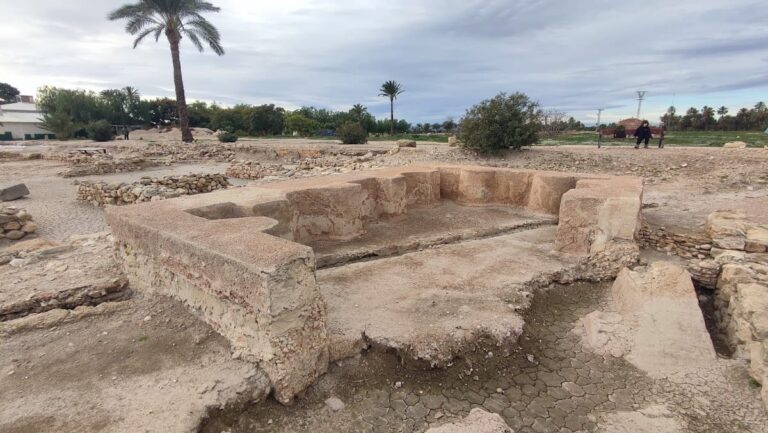
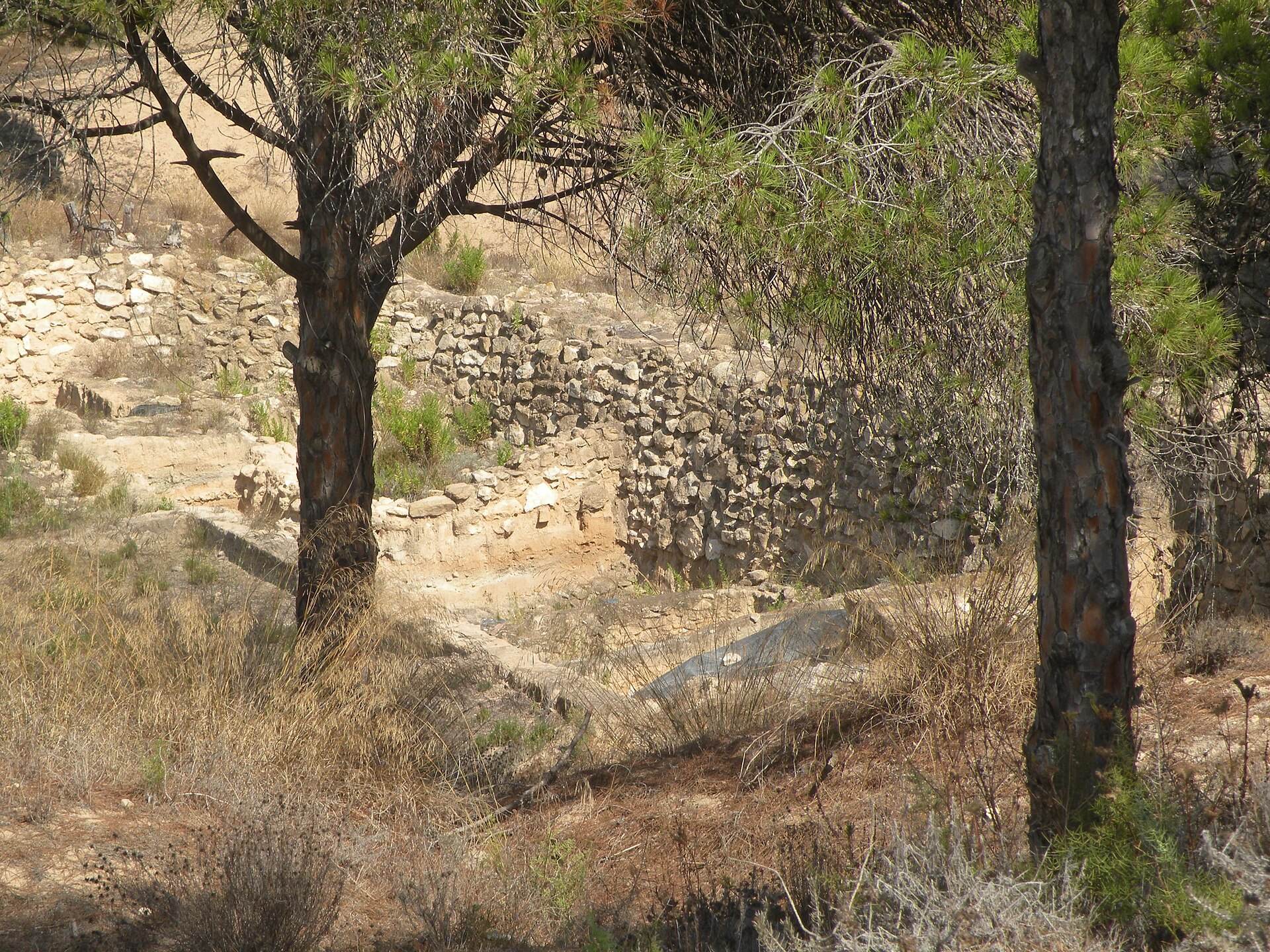
La Fonteta lies in the Guardamar Dunes, just south of the Segura River mouth. The urban area may have covered nearly eight hectares, making it one of the largest known Phoenician settlements in the western Mediterranean. Sand buried the settlement and preserved substantial urban, defensive, craft, and metallurgical remains.
Urban settlement and fortifications
The earliest buildings were temporary or informally constructed residential and metallurgical structures. Later housing comprised multi-room buildings made with rammed earth, a material formed by compacting earth within wooden or other forms, together with masonry. These houses were later built against the defensive wall, creating a close physical relationship between domestic occupation and the settlement’s principal monumental structure.
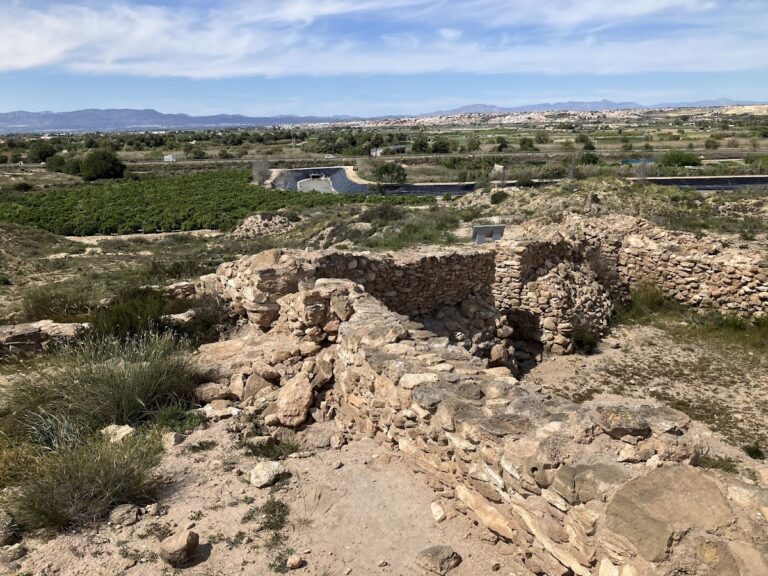
The large defensive wall includes an exposed section about 60 metres long. It stood approximately 4 to 5 metres high and may have been more than 7 metres wide at its base. Builders used medium-sized blocks of soft sandstone and calcarenite limestone, a limestone formed largely from cemented carbonate grains. Regularly spaced buttresses, or projecting supports that strengthen a wall, rose above the main wall body. They divided the structure into sections and helped limit the transmission of movement, including movement caused by earthquakes. This technically sophisticated construction was adapted to the seismic conditions of the Lower Segura region and is comparatively uncommon among Phoenician settlements of the first millennium BC. Reused architectural pieces within the wall provide physical evidence for a temple or sanctuary in the surrounding area.
Pottery, ritual objects, and metalworking
La Fonteta has yielded an extensive range of Phoenician pottery, including amphorae, plates, decorated cups, red-slip vessels with a red surface coating applied before firing, burnished wares, rimmed plates, bowls, oenochoes used for pouring liquids, lamps, and tripods. Archaic Greek pottery was also recovered, together with decorated ostrich eggs, ivory, and scarabs. Scarabs are small beetle-shaped objects commonly associated with ancient Egyptian and eastern Mediterranean religious or funerary traditions.
Metallurgical remains form a major part of the site. The evidence includes one of the most complete metallurgical assemblages known from the western Phoenician world and contributes to the study of the beginnings of iron production in the protohistory of the western Mediterranean. Together with the workshops, houses, fortifications, and imported objects, these remains reveal the range of industrial, domestic, commercial, and cultural activity carried out at the port.