Kuniyoshi Castle: A Mountain Fortress Guarding Tsubaki Pass in Japan
Site at a Glance
- Country
- Japan
- Primary era
- Early Modern
- Eras represented
- Early Modern, Modern
- Civilizations
- Ashikaga shogunate, Japanese
- Site type
- Military
- Remains
- Castle
On this page12 sections
History
Kuniyoshi Castle is a mountain castle on Mount Otake in Japan, built in 1556 by Awaya Katsuhisa, a retainer of the Takeda clan of Wakasa. It replaced an earlier stronghold attributed to Tsunekuni Kuniyoshi. Built during the Sengoku period, an era of widespread military conflict and political division, the castle guarded the strategic crossing at Tsubaki Pass, a route used by forces moving from Echizen into Wakasa.
The Asakura campaigns
From 1563 into the late 1560s, Katsuhisa and local samurai and residents resisted repeated attacks by the Asakura clan, which ruled Echizen. A war chronicle, the Record of the Siege of Kuniyoshi Castle, recounts six Asakura invasions, but the historicity of most is disputed. One interpretation accepts an invasion in 1568 and considers an invasion in 1566 possible. The work survives in several versions with broadly similar narratives of the sieges, retaliatory campaigns after Oda Nobunaga’s invasion of Echizen, and later events. It is thought to have been written about 30 to 40 years after the fighting, drawing on observations by a participant who had entered Buddhist religious life.
Nobunaga and political change
In 1568, Takeda Motoaki, Wakasa’s provincial military governor, submitted to the Asakura and urged Katsuhisa to surrender, but Katsuhisa refused. Oda Nobunaga, a major military leader, stayed at the castle in 1570 during a campaign into Echizen. Tradition holds that he praised Katsuhisa’s prolonged resistance. Katsuhisa later joined Nobunaga’s second campaign in Echizen in 1573, when the Asakura clan was defeated.
The Honnō-ji Incident, the 1582 attack that led to Nobunaga’s death, took place in the same year that the Wakasa Takeda clan fell. A new lord took control of the castle in 1583 and renovated it with stone walls. Katsuhisa died in 1585.
Abandonment and later use
The castle was abandoned in the early Edo period, which began in the early seventeenth century; 1615 is a possible date for its closure. The site later housed a magistrate’s office and prospered as a post station on the Tango-Kaido road. It is recognized as a town-designated historic site and was selected in 2017 for the Continued Top 100 Japanese Castles, a follow-up selection distinct from the original Top 100.
Remains
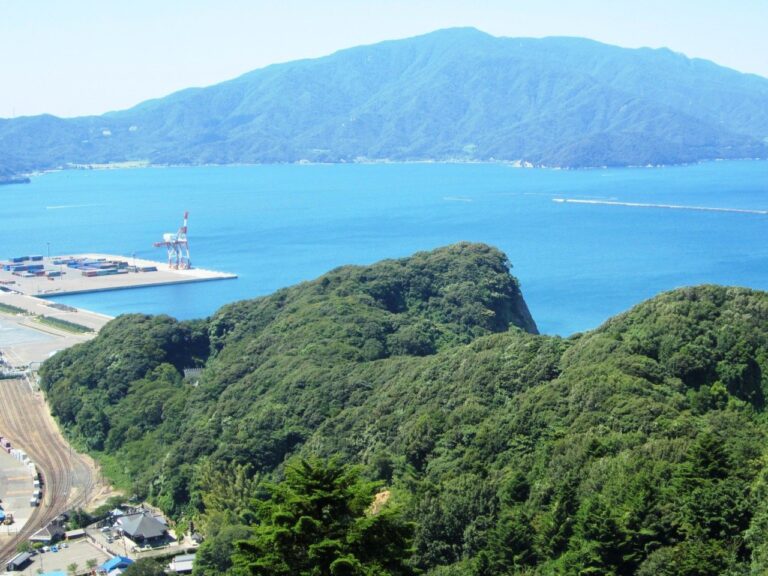
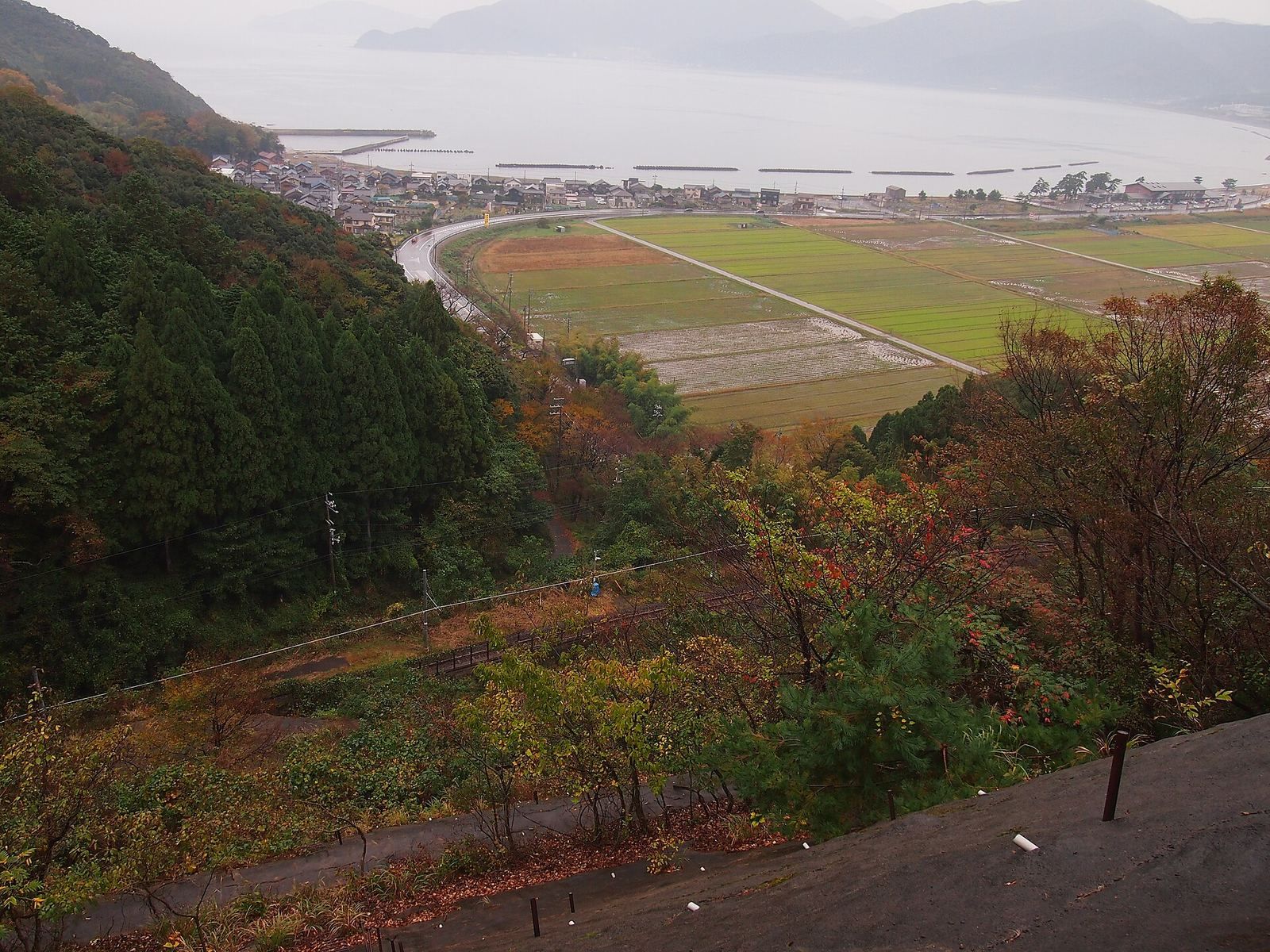
The castle occupies the northwestern end of a ridge on Mount Otake, at Shiroyama, 197.3 metres above sea level. Its remains include enclosures, earthen ramparts, stone walls, dry defensive ditches and cuts across the ridge. The lower residence lies in a valley on the southwestern slope. The survival of both the mountain defenses and the residence remains is unusual among Japanese castles. Tsubaki Pass lies between Mount Tenno to the north and Mount Otake to the south, with the old Tango highway running through the pass.
Mountain defenses
Main enclosure and northern ridge
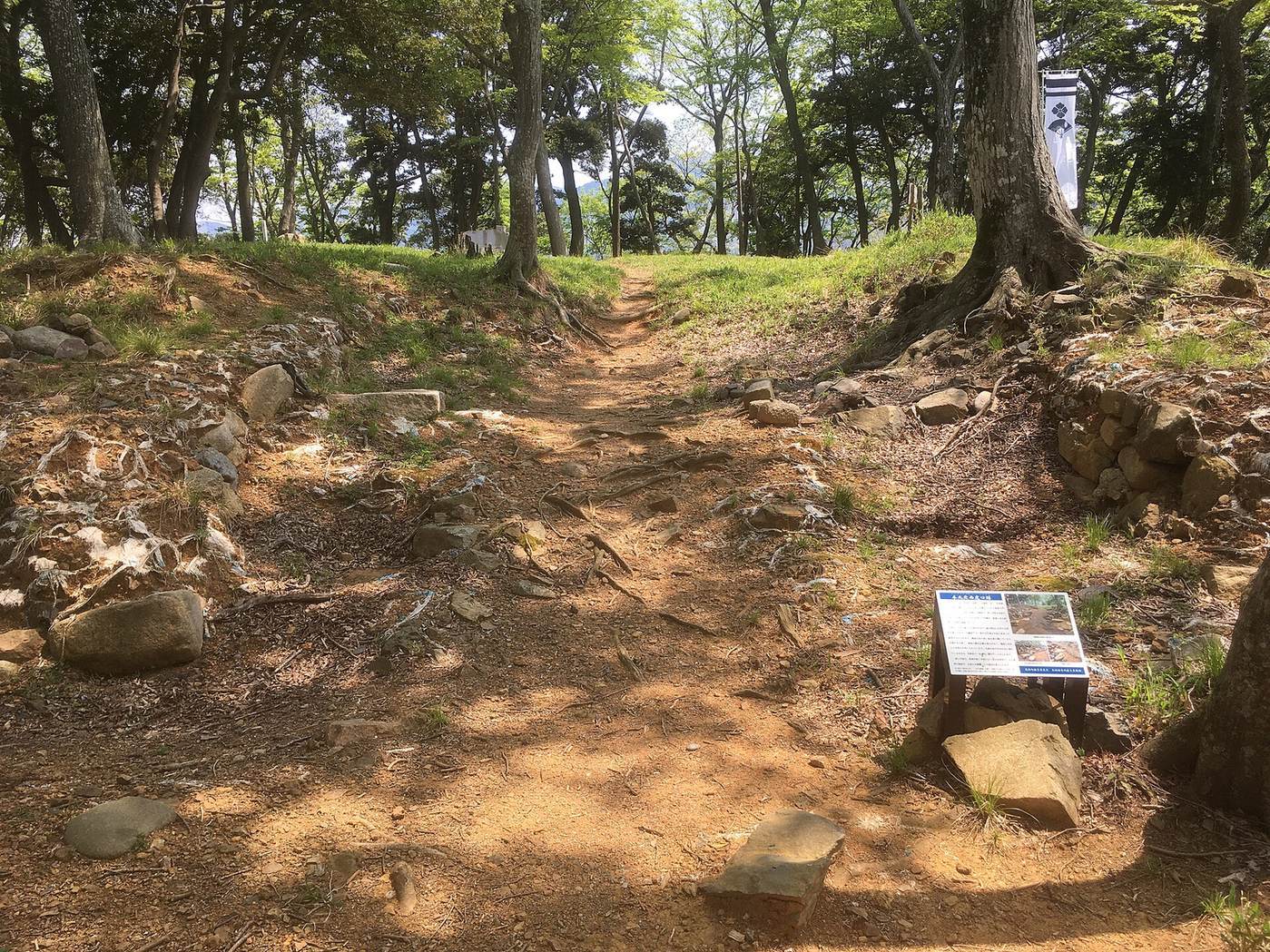
The flattened summit formed the main enclosure, with simple entrances to the east and northwest and sections of stone wall on the surrounding slopes. The northwest entrance connects to a ridge carrying five enclosures arranged in steps. Their steep slopes and substantial changes in height made access difficult. Continuing down the ridge leads past a hall dedicated to Myoken, a Buddhist deity associated with the North Star, and toward the old highway near Tsubaki Pass.
Eastern ridge and outlying fort
From the eastern entrance, the ridge continues by way of Koshigoe Slope to the ruins of Iwade-yama Fort, an outlying fortification associated with Kuniyoshi Castle.
Summit objects and markers
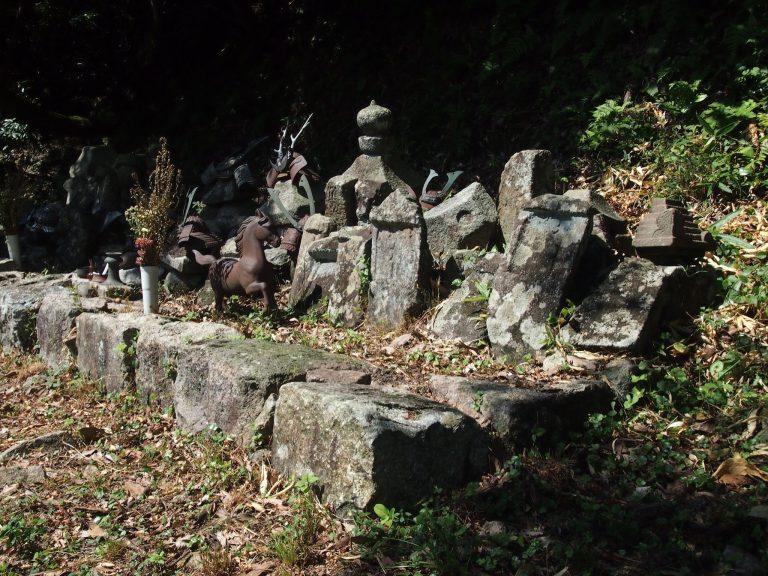
The summit provides a clear view of the highway running east to west. A stone monument to Kuniyoshi Castle, erected in the early twentieth century, and a fourth-order triangulation point, a marker used in land surveying, are also there. Stone Buddhist images, Buddha heads and five-ring stone pagodas, whose stacked forms represent the five elements in Buddhist tradition, are gathered at several points nearby. Tradition holds that these objects were used as projectiles during the sieges.
Residence and lower slope
Lower residence
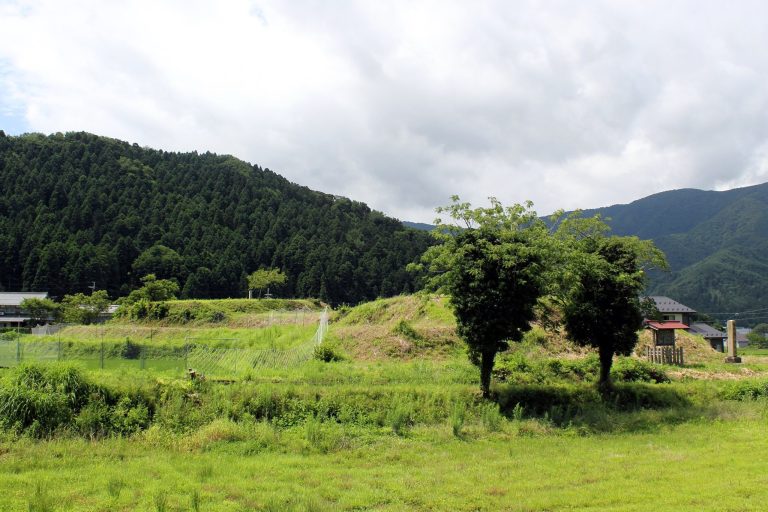
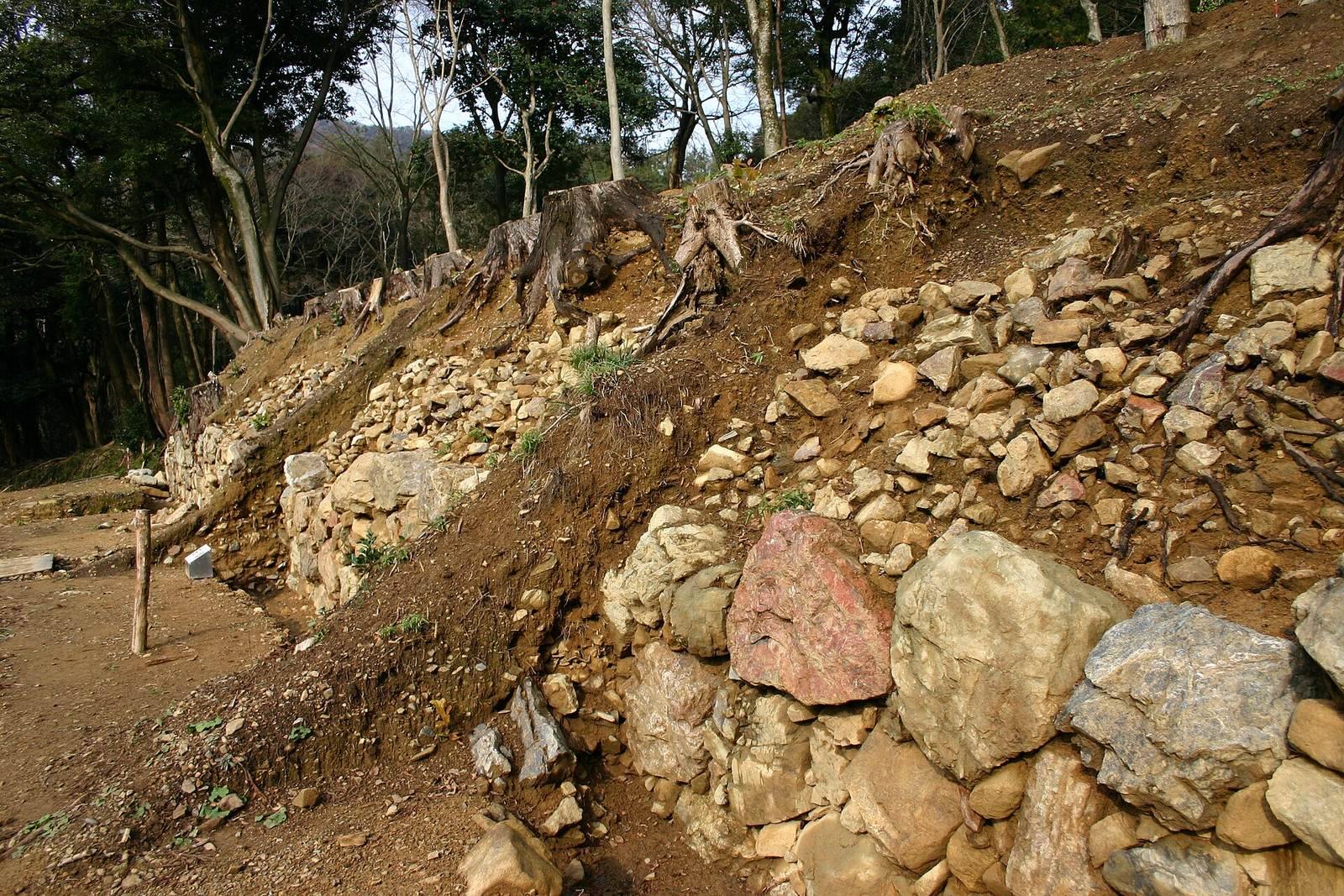
The residence area was set on level terraces cut into the hillside. Excavations in 2001 and 2002 revealed earthen ramparts, stone walls, drains lined with stone and building foundation stones. A large wall in front of the residence was discovered in 2004 and is thought to date from the late sixteenth or early seventeenth century. It may indicate that the castle retained a military function for a time after the Edo period began. Excavation and improvements at the site have made the mountain and residence remains visible.
Outwork on the slope
A winding path leads uphill from the residence to an outwork halfway up the slope, traditionally identified as a secondary enclosure. It has an offset entrance and is enclosed by earthen ramparts more than two metres high. The present path bypasses the outwork, while the original approach is thought to have followed the ridge through it.