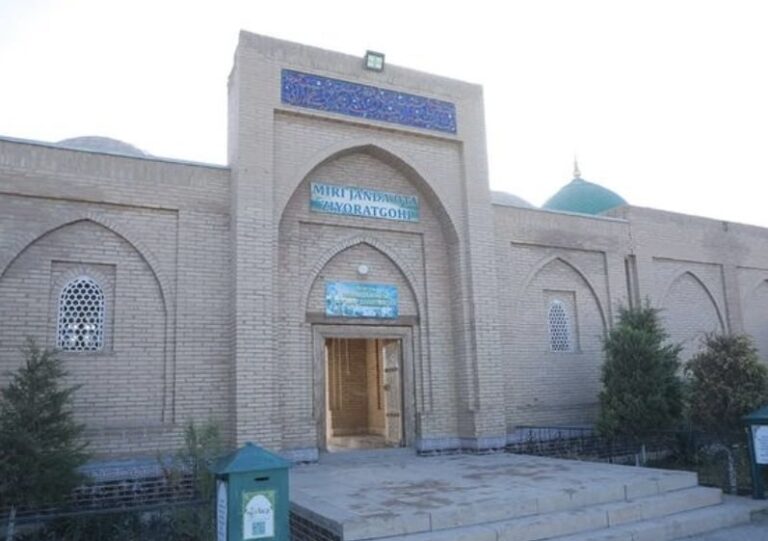
Kuk Gumbaz Mosque: A Sixteenth-Century Place of Muslim Worship
Site at a Glance
- Popularity
- Low
- Country
- Uzbekistan
- Primary era
- Early Modern
- Eras represented
- Early Modern, Modern
- Civilizations
- Khanate of Bukhara
- Site type
- Religious
- Remains
- Mosque
On this page8 sections
History
Construction under Abdullah Khan II
Kuk Gumbaz Mosque, a place of Muslim worship in Uzbekistan, was built in the late 16th century during the reign of Abdullah Khan II, a ruler of the Shaybanid dynasty. Its façade bore the ruler’s name and the date 1590–1591.
Prayer and restoration
Friday prayers resumed at the mosque in 1953. Its imams included Eshon Porsokhan and Eshon Ahmadkhan in the 1920s, Nomonkhon Qori in the 1930s and 1940s, Ne’matkhan Turdimatov from 1956 to 1968, and Khoja Akmalkhan Otakhanov from 1968 to 1974. Haji Ismail Rayhonov began serving in 1975.
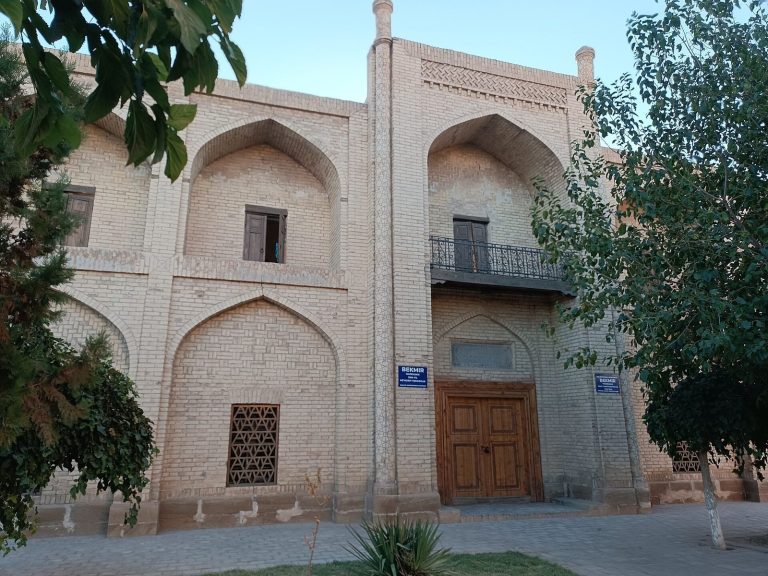
Partial renovations took place in 1957, 1971 and 1975, followed by a complete renovation in 1982. Construction and repair work was also carried out in 1996, during celebrations marking 660 years since the birth of Amir Temur, a Central Asian conqueror and ruler. A further restoration in 2005–2006 gave the mosque its present appearance. In 2018, the mosque and the Khoja Mahram Madrasa complex were added to Uzbekistan’s national register of immovable tangible cultural heritage and placed under state protection.
Remains
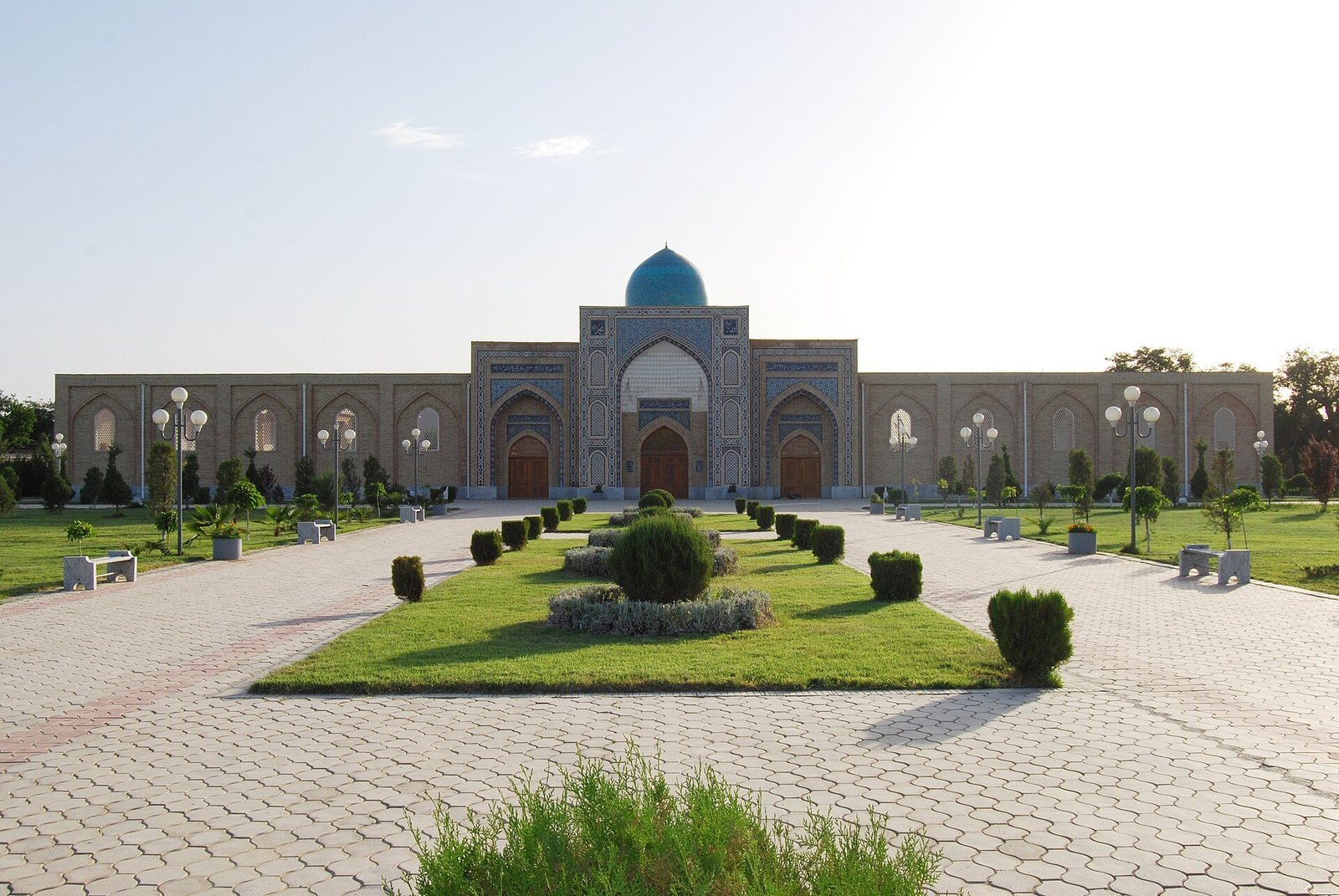
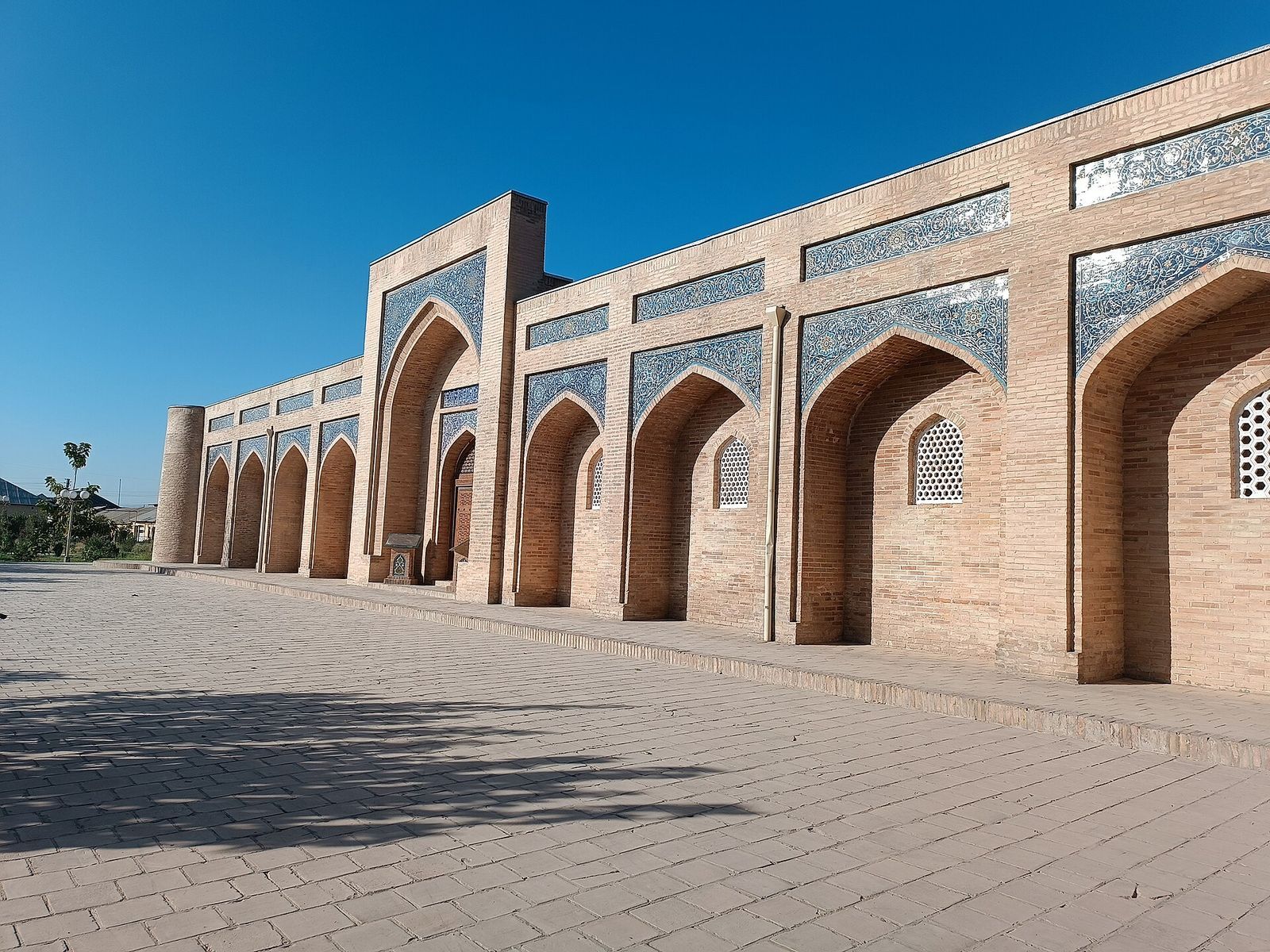
The complex is arranged around a high-domed square hall, with rows of buildings extending on either side. These rows have a stated total length of 25 to 38 m. The mosque is built from baked bricks measuring 26 × 26 × 5 cm and 28 × 28 × 6 cm.
Plan and principal features
Central prayer hall
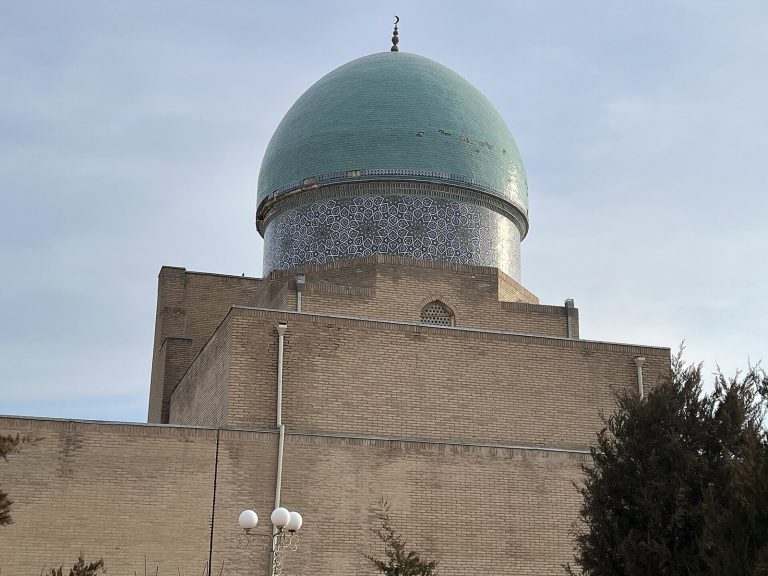
The central room is square, measuring 8 m on each side, and rises to 14 m. Its wall facing the direction of Muslim prayer contains a deeply recessed mihrab, the niche that marks that direction, with a minbar, or pulpit, beside it. The depth of the niche makes the wall behind it slightly wider.
Side wings
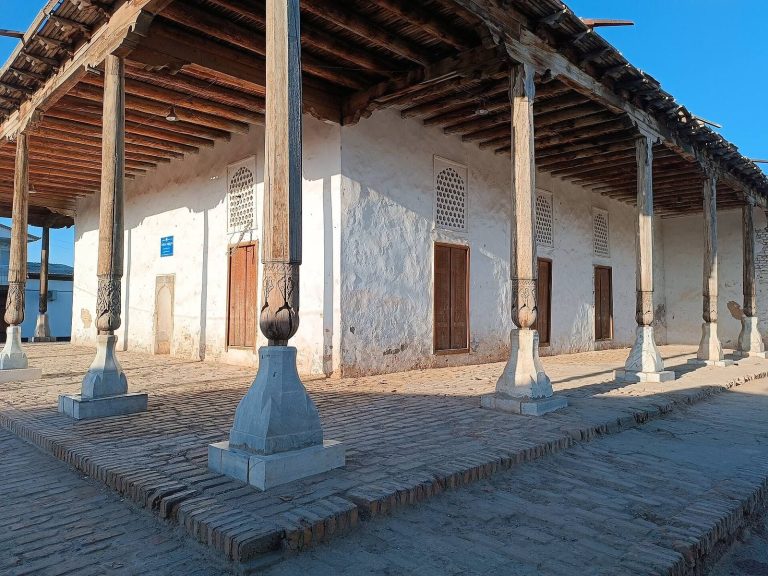
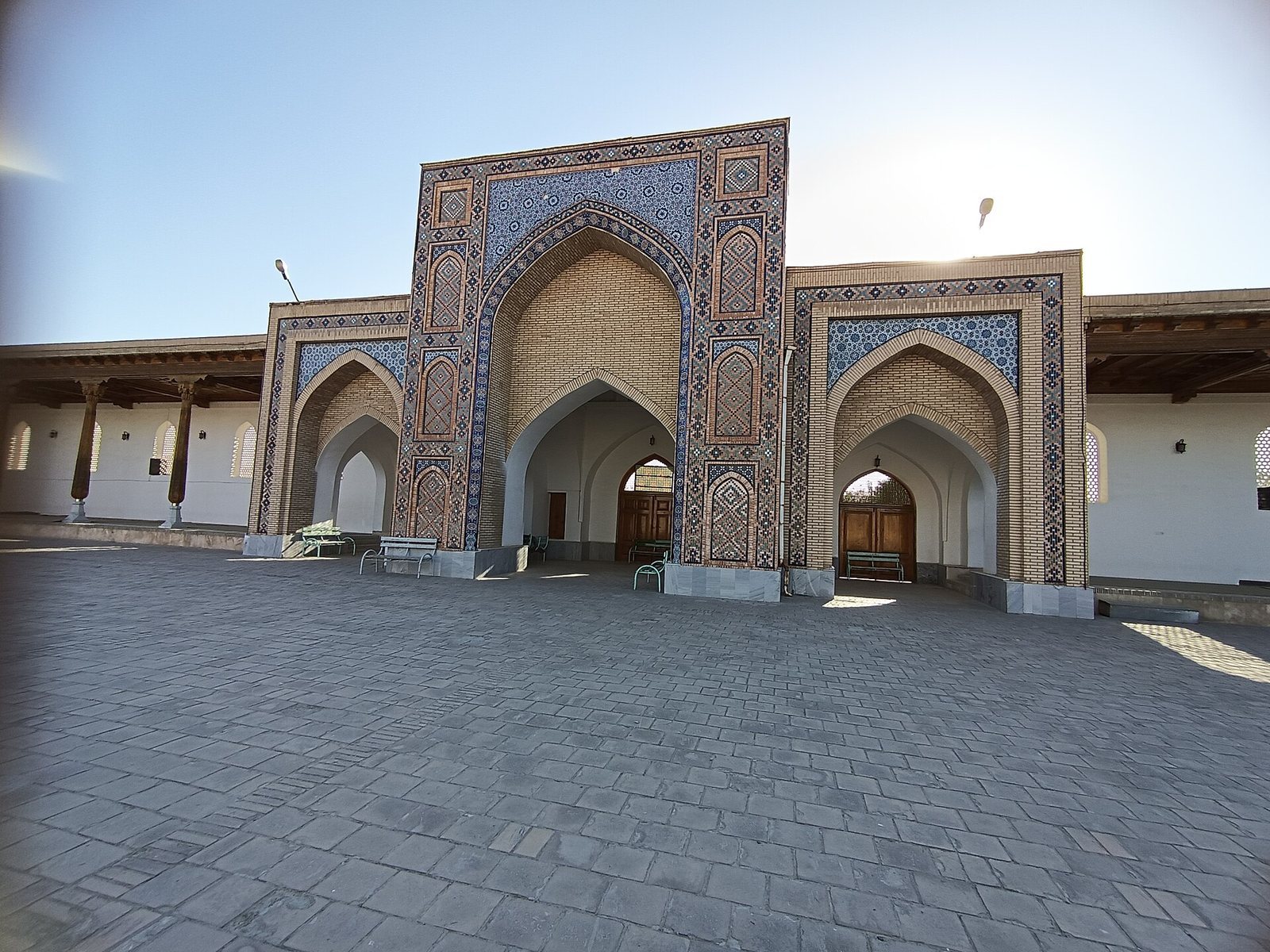
The northwestern wing is 14 m wide and the southeastern wing 14.6 m. Each contains four domed rooms arranged in two rows, linked by arched passages. The fronts of rooms in the upper and side portions of the building were once open in a porch-like arrangement.
Dome
The name Kuk Gumbaz means “Blue Dome,” referring to the blue tiles that covered the outer dome before it collapsed in the 1898 earthquake. Master carpenter Hamdam repaired the dome in 1967. In 1982, painter Nusratillo Asadov placed verses from Surah al-Mulk, a chapter of the Qur’an, at the top in blue glazed tile, and a gold-colored finial was installed.