Kravaře Castle: A Baroque Palace in Czechia
Site at a Glance
- Popularity
- Medium
- Country
- Czechia
- Primary era
- Early Modern
- Eras represented
- Early Modern, Modern
- Civilizations
- Habsburg, Habsburg Austria, Holy Roman Empire
- Site type
- Domestic
- Remains
- Castle
On this page8 sections
History
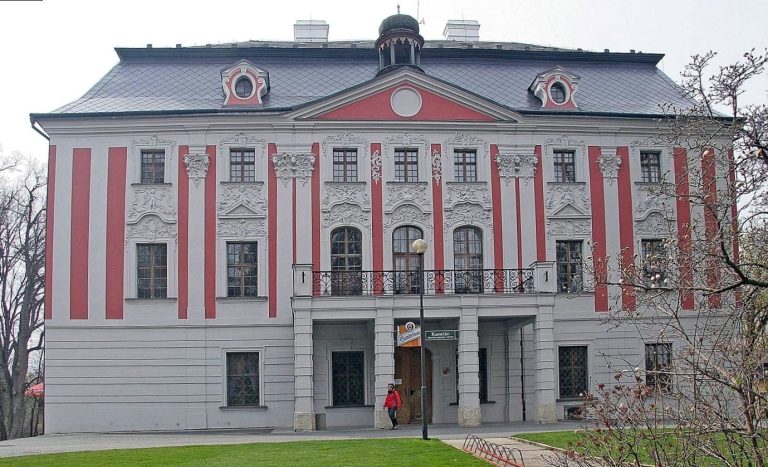
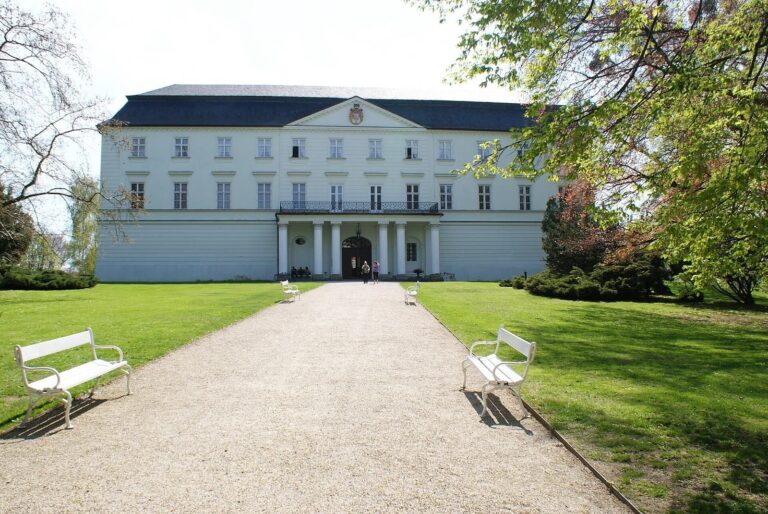
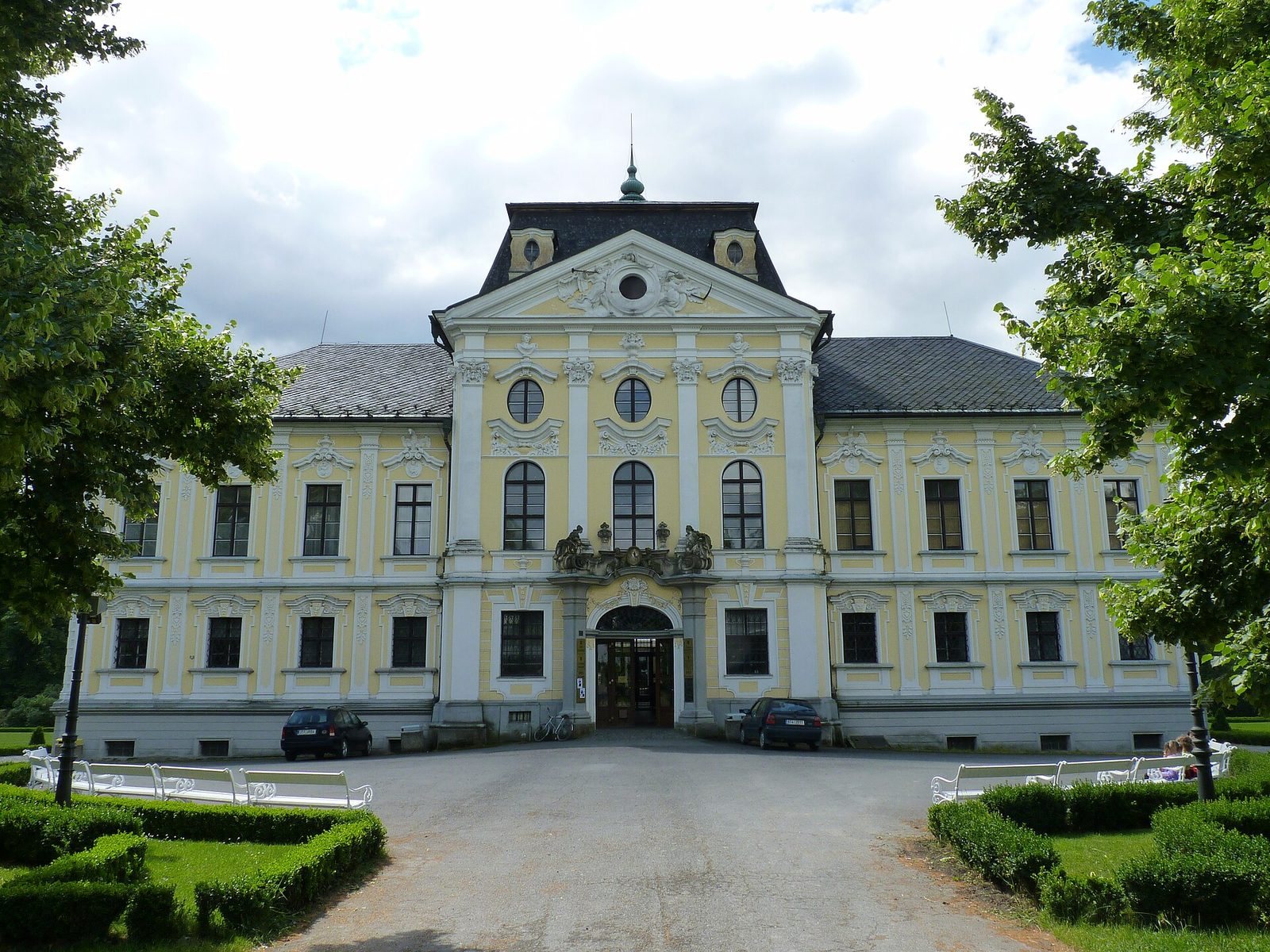
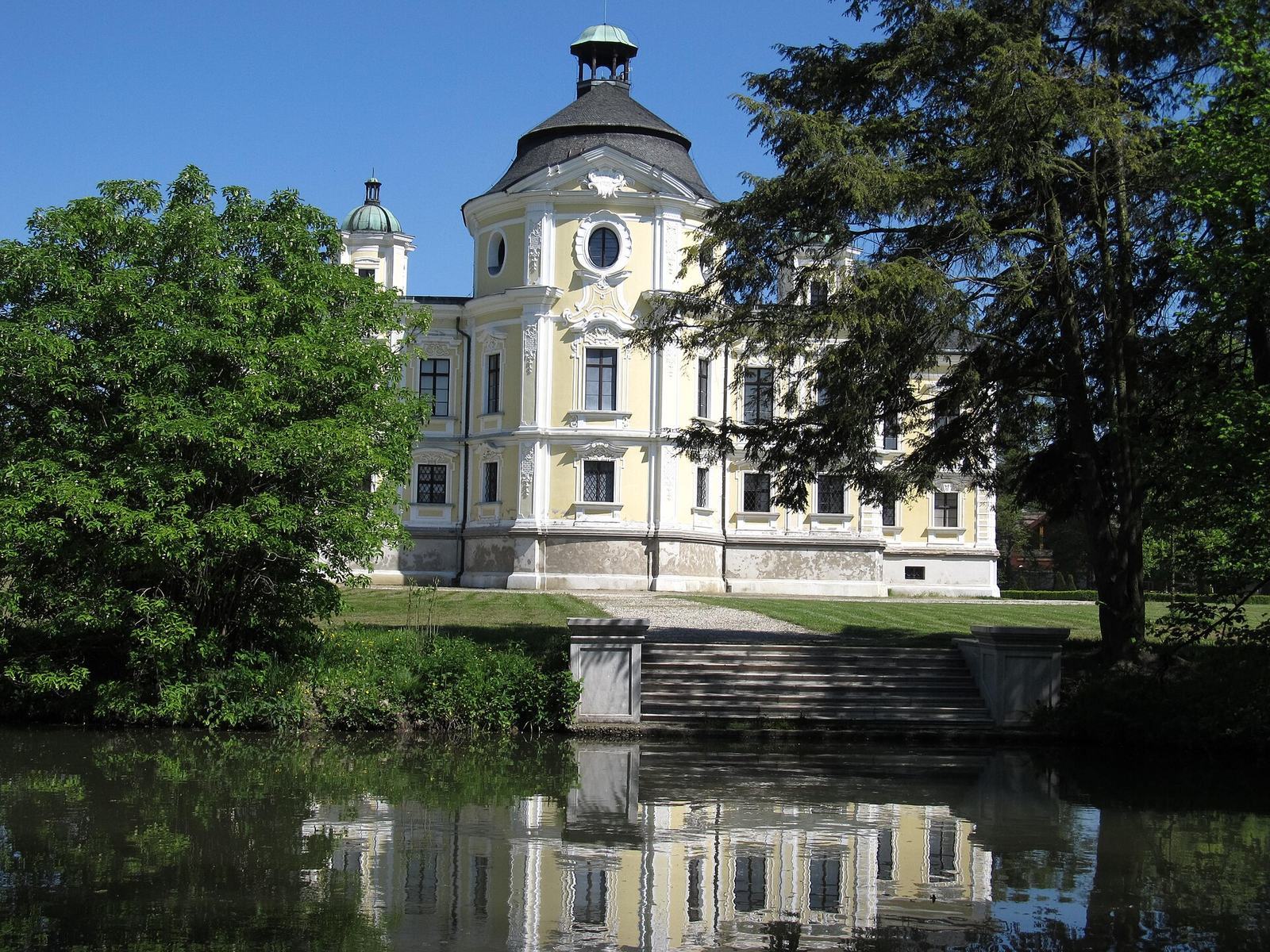
Kravaře Castle is a Baroque palace in Czechia, reconstructed between 1721 and 1728 for Johann Rudolf, Baron von Eichendorff, to a design by architect Johann Hildebrandt. Its ownership passed through several noble families before the estate became state property in the 20th century.
Sendivogius and the Eichendorffs
In the 17th century, Michael Sendivogius, a Polish alchemist and natural philosopher, received the castle from Rudolf II, Holy Roman Emperor from 1576 to 1612. In 1636, Sendivogius’s daughter Maria Weronika married Jakub von Eichendorff, a member of the Brandenburg nobility. The Eichendorff family held the property until about 1782. Johann Rudolf, Baron von Eichendorff, financed the castle’s Baroque reconstruction in 1721–1728.
Successive owners
From 1782 to 1815, the estate belonged to Anton, Count Schaffgotsch, and his son. Gabriel von Rudziński and his son Rudno owned it from 1815 to 1844. Andreas, Count von Renard, and his son Hippolyt Maria held the estate from 1844 to 1856. Wilhelm von Fontaine and his daughter Alice, later widowed Countess von Pfeil and Klein-Ellguth, owned it from 1856 to 1911. Felix Luschka Edler von Sellheim was the final private owner, from 1911 to 1914.
Aristocratic life at the castle and private use of the estate ended in 1914, when the much-reduced property passed to land dealers Lammel and Müller. Most trees in the 19-hectare park were cut down, including oaks estimated to be 400 to 500 years old.
State ownership and restoration
After the Hlučín region passed from Prussia to Czechoslovakia in 1921, the Czechoslovak state took ownership of the castle and established a state agricultural school there. A major fire on 21 January 1937 destroyed the roof structure, the first-floor ceiling and the interior fittings. It consumed the north wing and an adjoining section, while the south wing, including the chapel, survived.
The Prussian state regained control in 1938 and began restoration, which remained unfinished when the Second World War ended in 1945. Reconstruction was completed in 1970. The exterior was extensively restored under strict conservation principles, while the interior reflects the style of that restoration period. Kravaře city now owns the castle. Its rooms contain a museum presenting the Eichendorff family, as well as a restaurant, offices and function rooms.
Remains
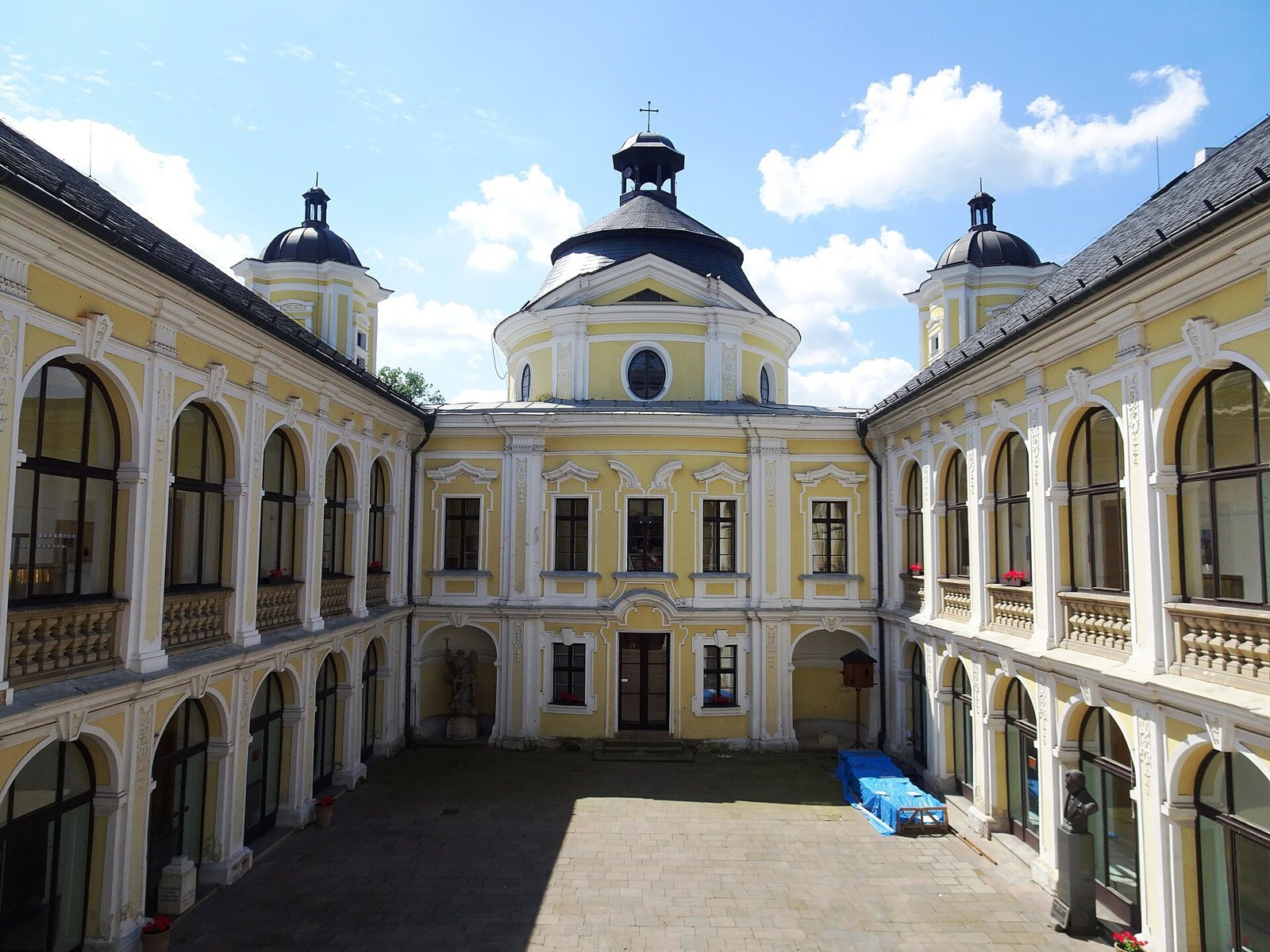
The castle is a four-wing Baroque palace arranged around a courtyard. The south wing contains the chapel, while the surrounding park covers 19 hectares and is now used largely as a golf course.
Palace and courtyard
Three sides of the courtyard have arched galleries on both the ground and first floors. These galleries were originally open and are now glazed. The palace replaced a 17th-century building in the Mannerist style, a late Renaissance form.
Chapel of St Michael
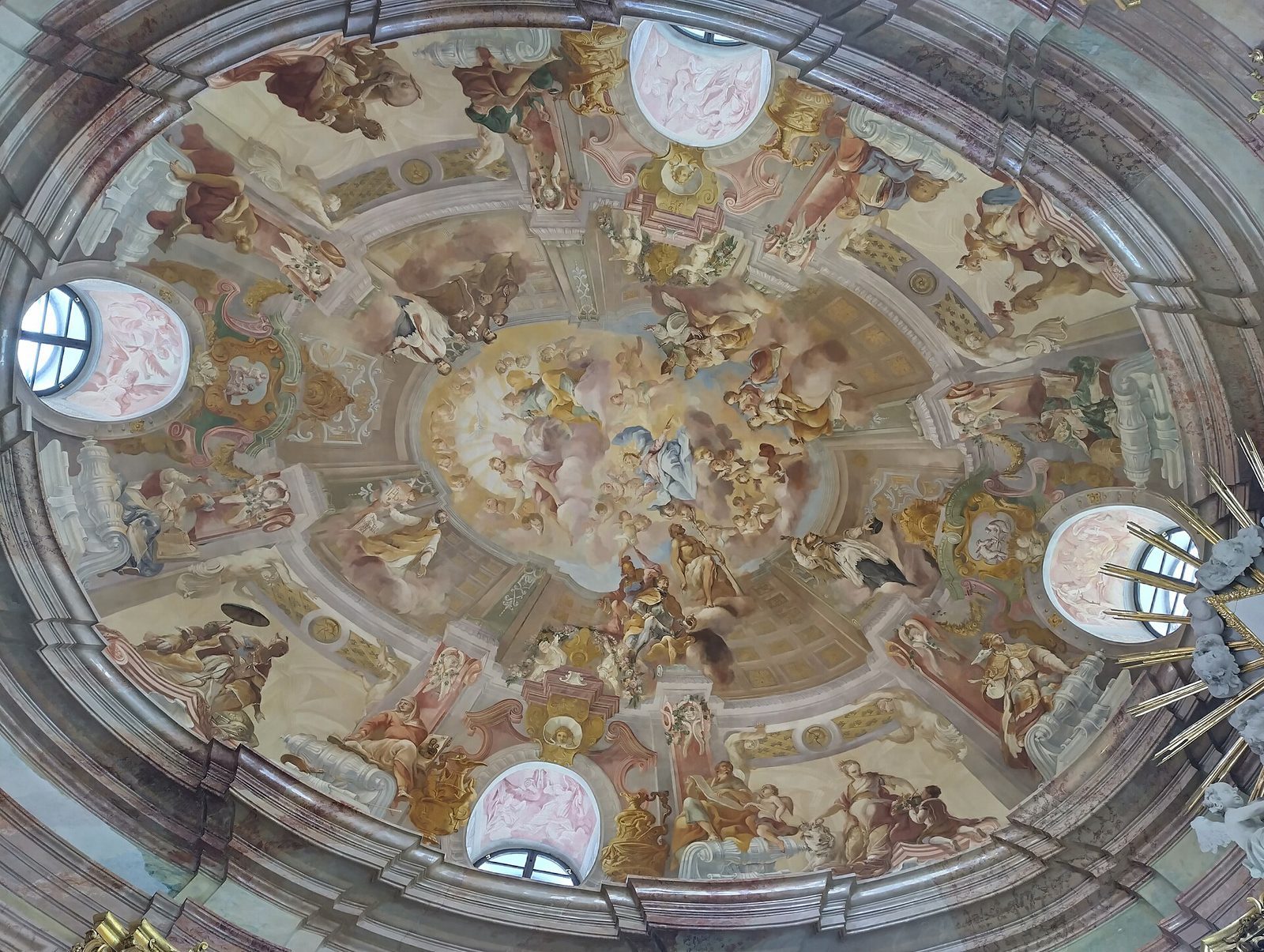
The chapel’s altar has figures of angels holding a painting of The Fall of the Angels, attributed to Josef Stern. A ceiling painting on plaster by Franz Georg Eckstein shows the Assumption of Mary, the Christian belief that Mary was taken bodily into heaven.
Coats of arms and furnishings
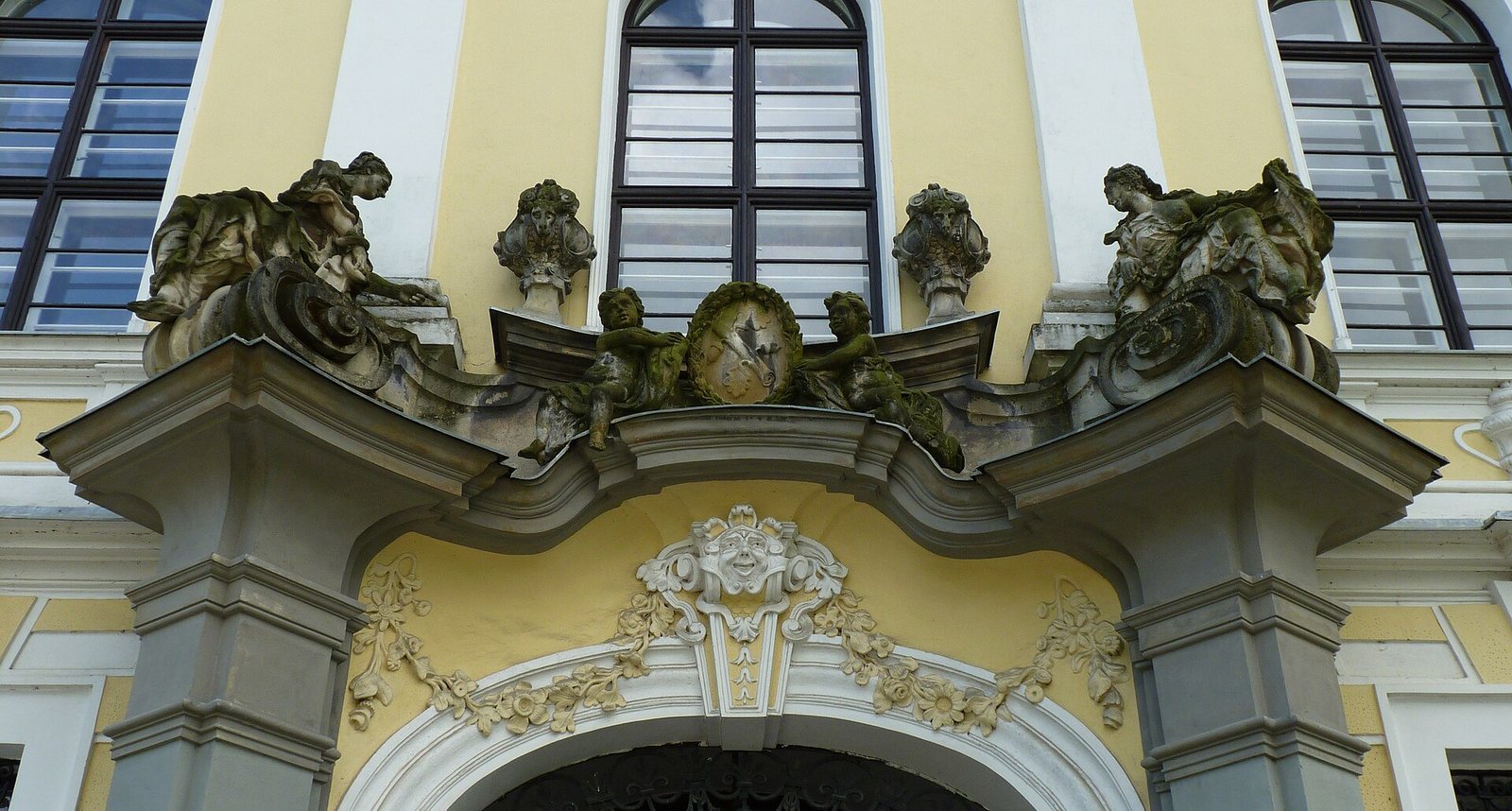
The castle displays the arms of the Lords of Kravař and the Eichendorff family arms above a doorway and on a pediment, the triangular feature crowning a building element. A mosaic bears the arms of Andreas von Renard and the Rudziński family. Made during the ownership of Eufémia, Andreas’s wife, it includes the Rudziński arms known as Prus III, a variant of a Polish coat of arms. The castle exhibition also includes Baroque furniture from Opava.