Kōzan-ji Temple in Shimonoseki: A Zen Temple and Mōri Family Memorial Site
Site at a Glance
- Popularity
- High
- Country
- Japan
- Primary era
- Medieval
- Eras represented
- Medieval, Early Modern, Modern
- Civilizations
- Ashikaga shogunate, Japanese, Kamakura shogunate, Tokugawa
- Site type
- Religious
- Remains
- Temple
On this page14 sections
History
Foundation and medieval history
Kōzan-ji Temple in Shimonoseki, Japan, is a Zen Buddhist temple founded in 1327 as Chōfuku-ji, a temple of the Rinzai school. Its Buddha Hall had been built in 1320. The founding priest was Kyoan Genjaku, and the patron may have belonged to the Hōjō clan.
In 1333, the temple became an imperial prayer temple, a Buddhist institution assigned to pray for the imperial family. During the 1330s, Ashikaga Takauji, founder of the Ashikaga shogunate, granted it land, including territory near Ozuki. The temple consequently gained the regard of both the court and the government. It later received protection from the Ōuchi clan during the Muromachi period, a medieval era in Japan. Ōuchi Masahiro restored the temple in 1476. In 1557, the Ōuchi leader Yoshinaga took his own life there while surrounded by the forces of warlord Mōri Motonari. The temple then declined.
Restoration under the Mōri
In 1602, Mōri Hidemoto, the first lord of the Chōfu domain, brought in a monk to revive the temple. It became Shōzan-ji, a temple of the Sōtō school of Zen Buddhism, distinct from Rinzai, and served as the Mōri family’s temple for memorial rites and burials. After Hidemoto’s death, the temple was renamed Kōzan-ji in 1650 in his honor. Later lords continued to support building work and restoration on the grounds.
Political upheaval and modern recognition
Five court nobles who had fled Kyoto took refuge at Kōzan-ji in 1863. The following year, the domain’s thirteenth lord, Mōri Motochika, used the temple as his headquarters in opposition to a fleet from four European powers. Late that year, Sanjō Sanetomi and other opponents of the Tokugawa shogunate, Japan’s military government, also sought refuge there. In January 1865, samurai leader Takasugi Shinsaku raised a force at the temple against the shogunate. This action became known as the Kōzan-ji uprising.
The Buddha Hall received special state protection in 1903 and became a National Treasure in 1953. The entrance gate and former museum building also hold formal cultural-property recognition. Kōzan-ji belongs to the Sōtō school and is included in two religious circuits: it is the nineteenth temple on the Chūgoku 33 Kannon Pilgrimage, a route devoted to Kannon, a bodhisattva associated with compassion, and the ninth on the Sanyō Flower Temples pilgrimage. Its traditional Buddhist mountain title is Kinzan.
Remains
The temple grounds include a sequence of gates leading toward the Buddha Hall, as well as a group of halls and service buildings beside a garden. Timber construction, tiled roofs and the bark-covered roof of the Buddha Hall are among the surviving architectural features.
Approach and gates
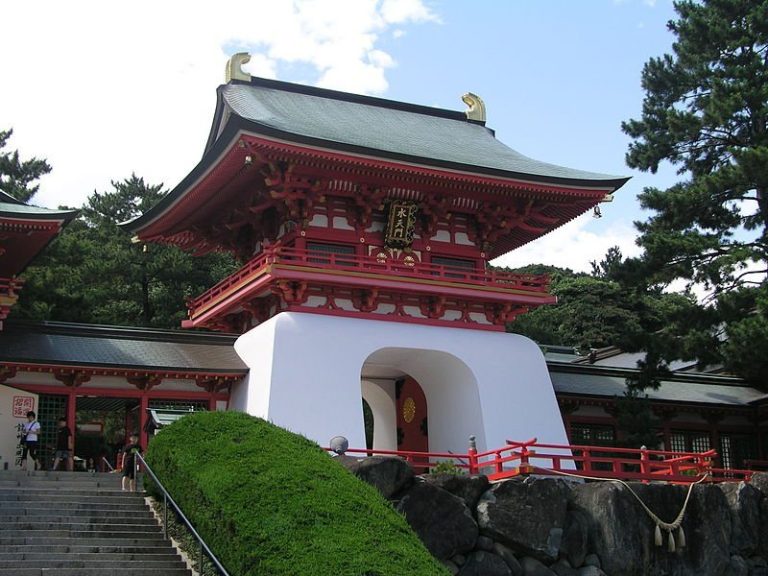
Sōmon entrance gate
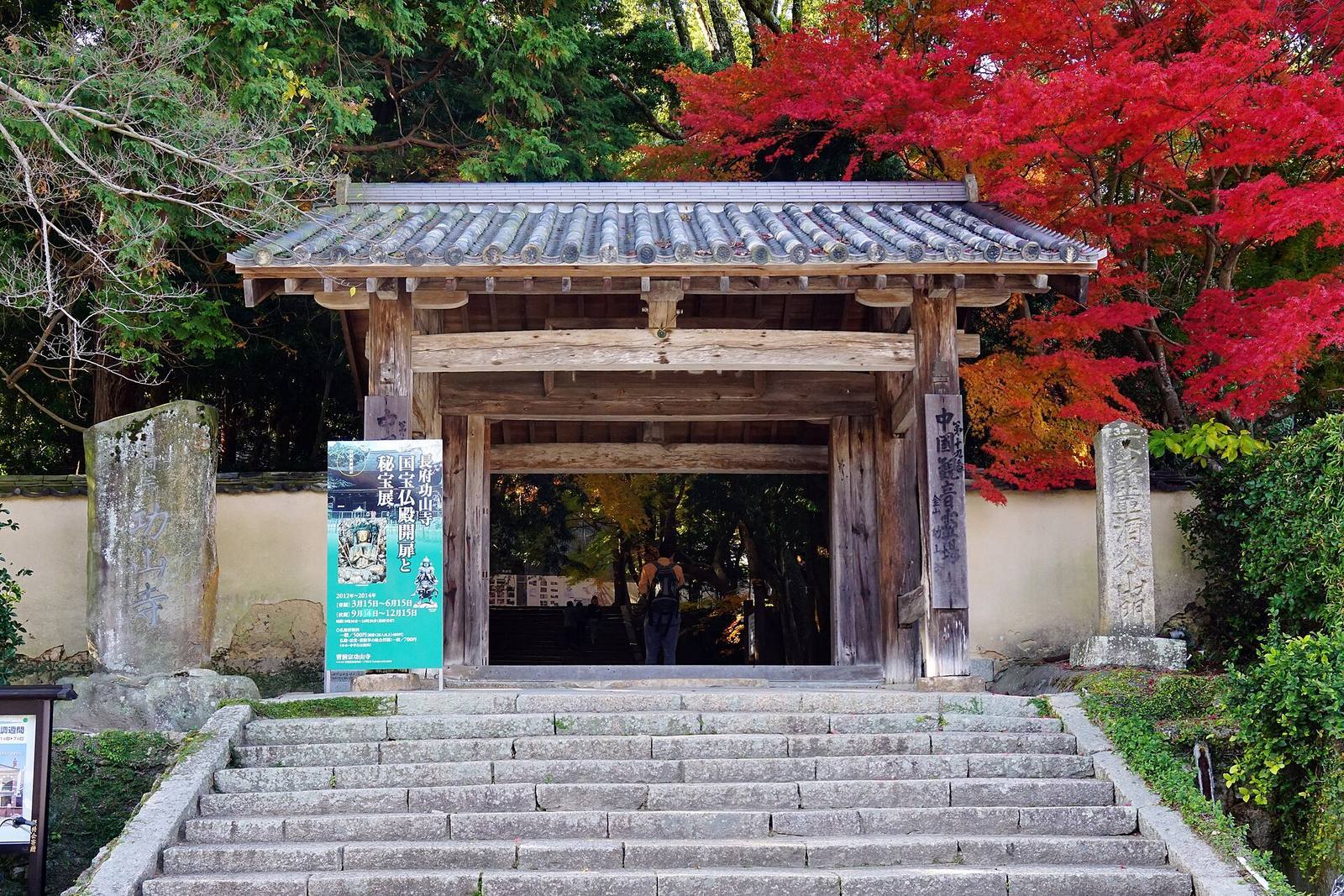
The approach passes through the Sōmon, continues up steps and then goes through the separate Sanmon toward the Buddha Hall. The Sōmon is a timber gate with a tiled roof and four supporting legs, measuring 4.4 metres across. Its structural framework retains a form from the middle Muromachi period, while its eaves were altered during the Edo period.
Sanmon
The Sanmon is a distinct gate beyond the Sōmon. A typhoon accompanied by heavy rain destroyed it in 1487, and it was rebuilt in 1773.
Buddha Hall
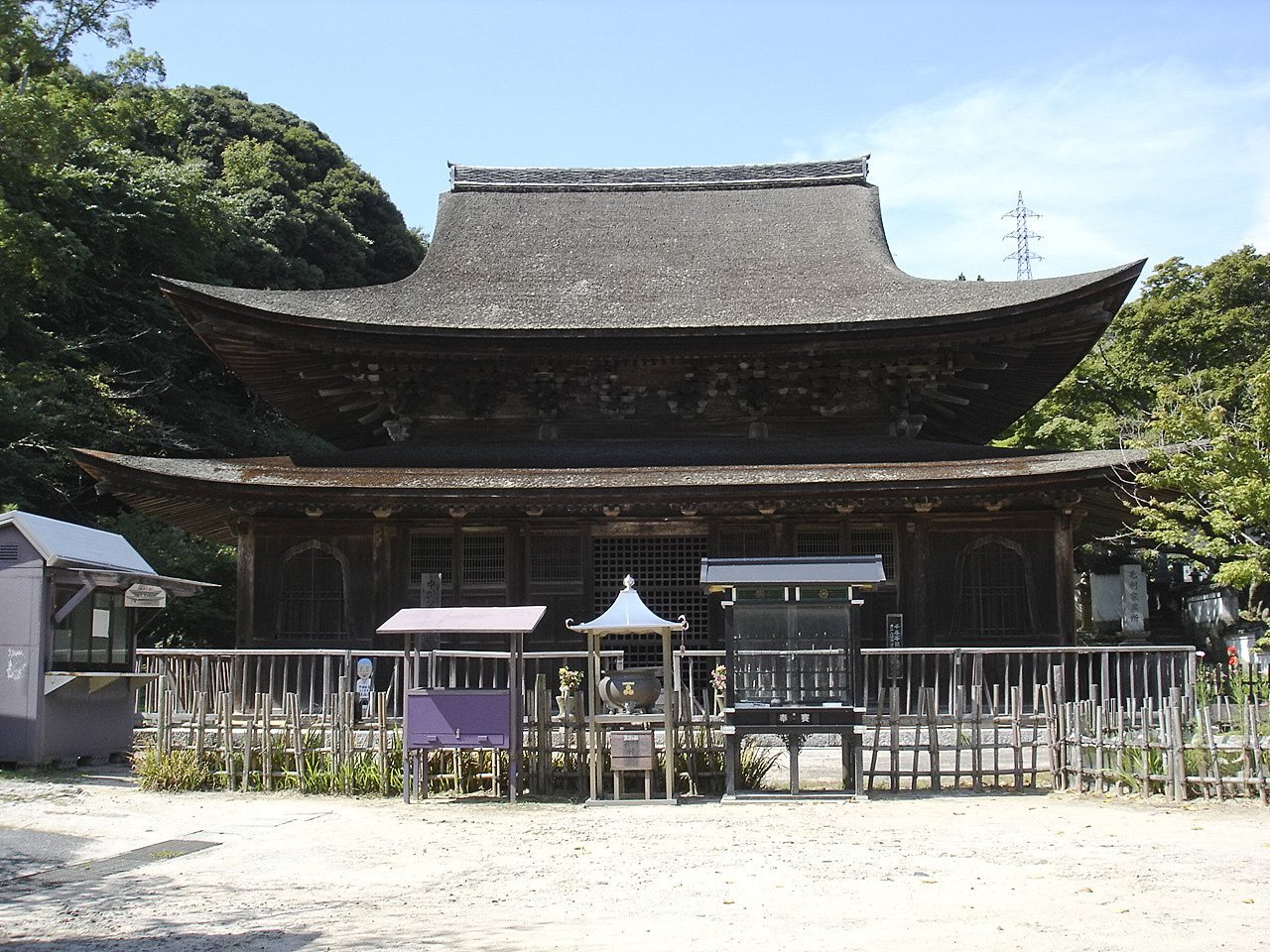
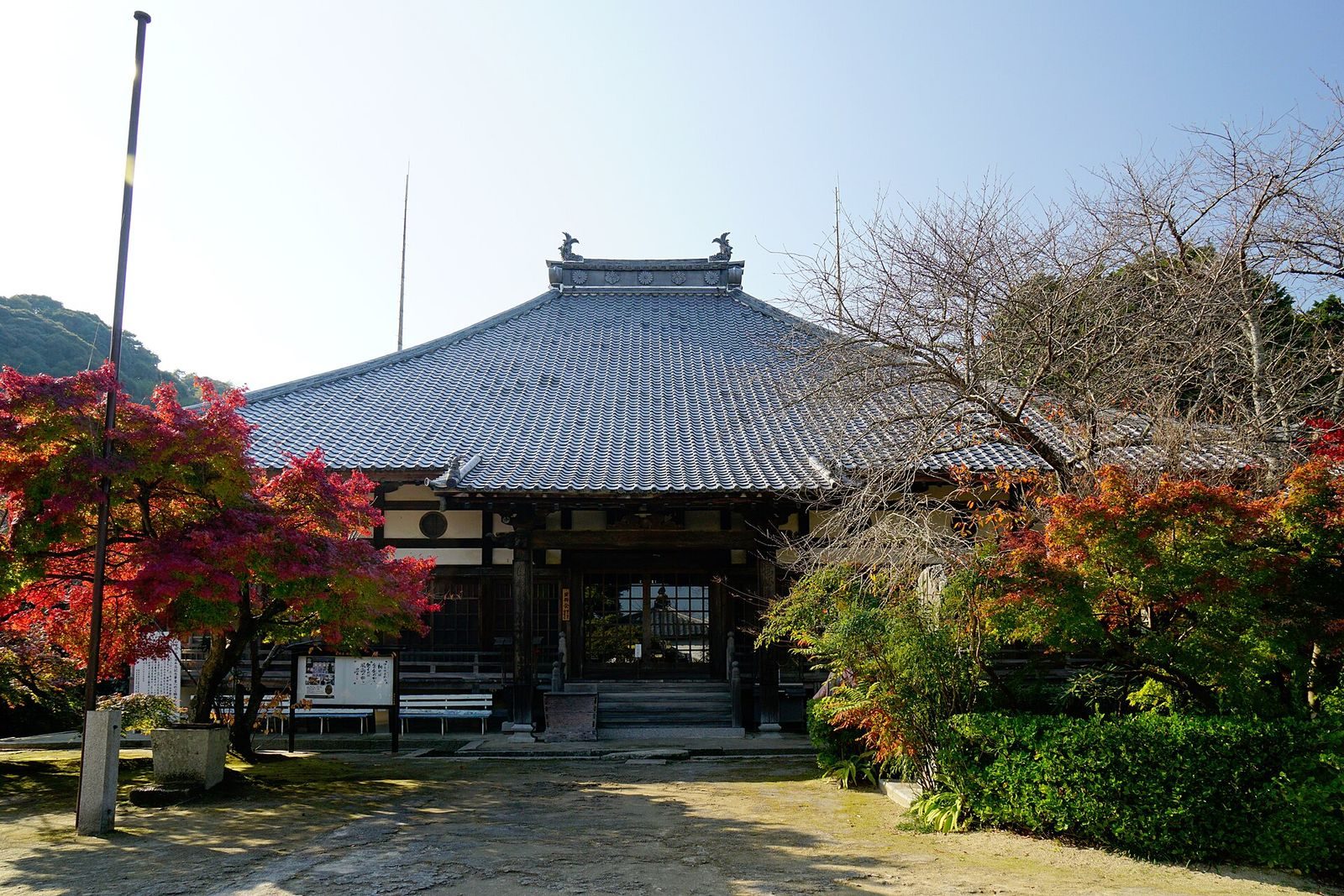
Built in 1320, the Buddha Hall is a representative example of Zen-style architecture and is described as Japan’s oldest surviving building in that style. An ink inscription on one of its pillars gives the construction date. Its square central structure has three bays, or structural divisions, and is surrounded by a lower roof tier. Above it is a roof combining hipped and gabled forms, covered with hinoki bark. The principal image inside is a seated statue of the thousand-armed Kannon.
Other buildings and garden
Hall complex and garden
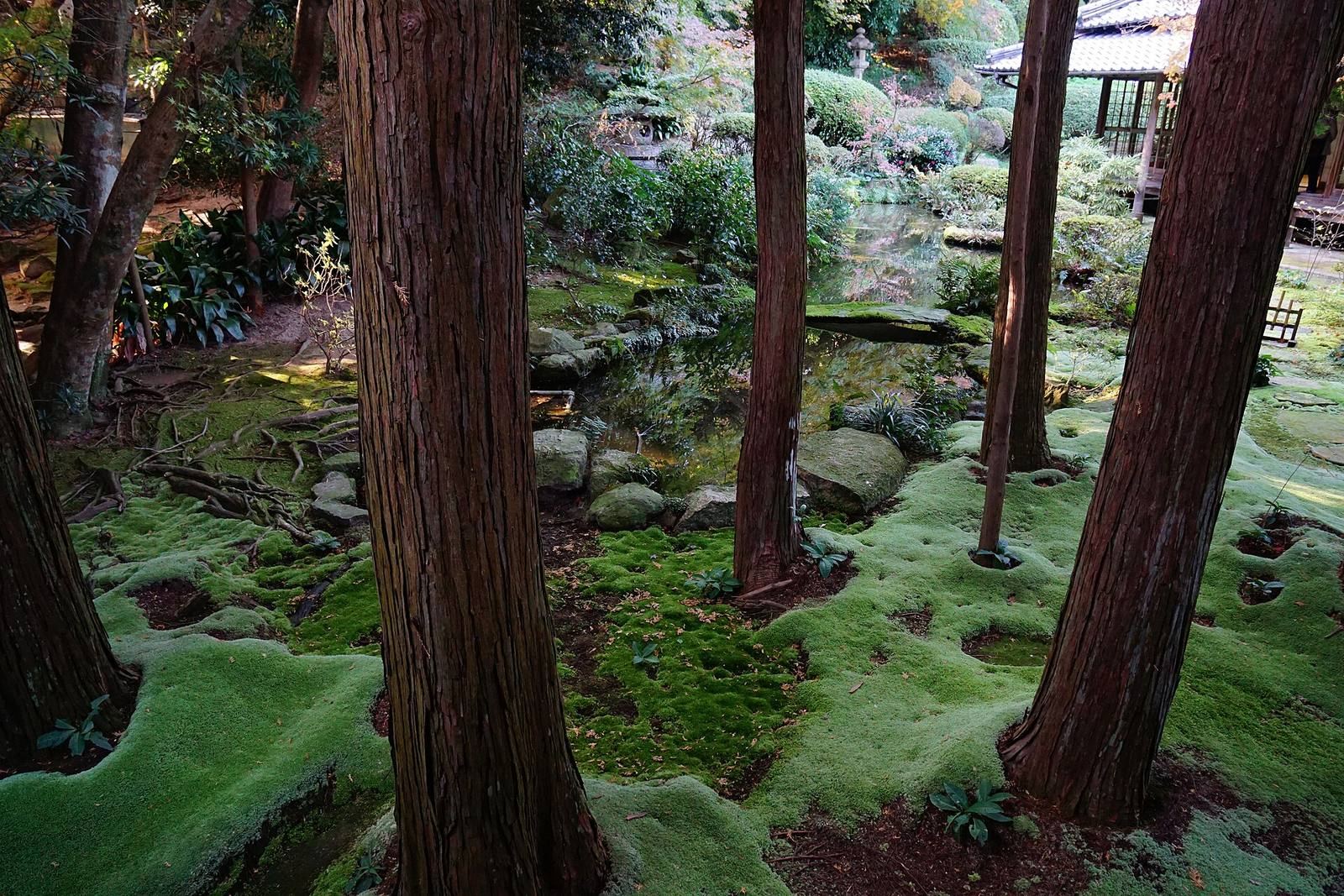
To the right of the Buddha Hall, the Great Lecture Hall, the abbot’s chambers and the refectory form a building complex around a temple garden. The garden contains a heart-shaped pond. Mōri Masayoshi commissioned the Great Lecture Hall in 1788; Mōri Motoyoshi commissioned work on the abbot’s chambers and refectory in 1835.
Sutra Repository
The Sutra Repository is another named building within the grounds. Mōri Motoyoshi commissioned work on it in 1799.
Cemetery and memorials
The grounds contain a cemetery with a section for the Mōri family, as well as an equestrian statue commemorating Takasugi Shinsaku. A separate memorial honors those who died in the Meiji Restoration, the nineteenth-century political transformation that ended Tokugawa rule. It was assembled from stones sent from around Japan.
Former museum building
A one-storey building completed in 1933 has a reinforced-concrete structure, a tiled roof and a floor area of 315 square metres. It served as the main building of the Chōfu City Museum until 2016. The museum’s collections focused chiefly on the Mōri family of Chōfu and the Meiji Restoration.