Church of the Holy Cross: A Roman Catholic Parish Church in Devín, Slovakia
Site at a Glance
- Popularity
- Low
- Country
- Slovakia
- Primary era
- Medieval
- Eras represented
- Medieval, Early Modern, Modern
- Civilizations
- Habsburg, Hungarian
- Site type
- Religious
- Remains
- Church
On this page15 sections
History
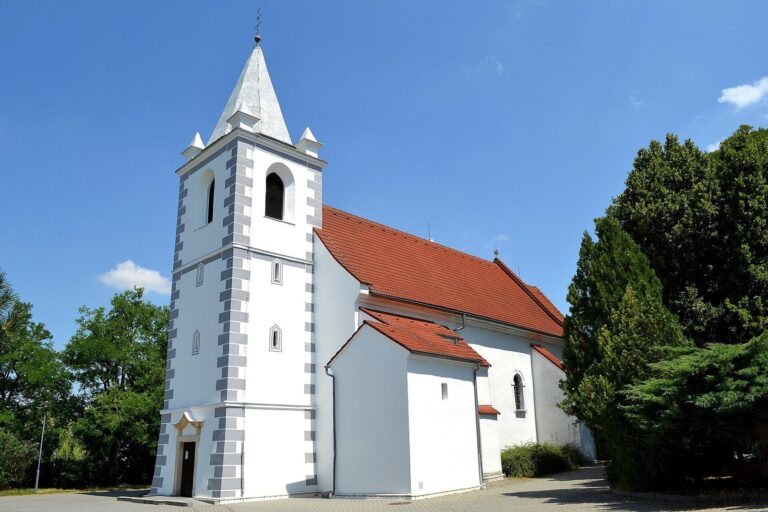
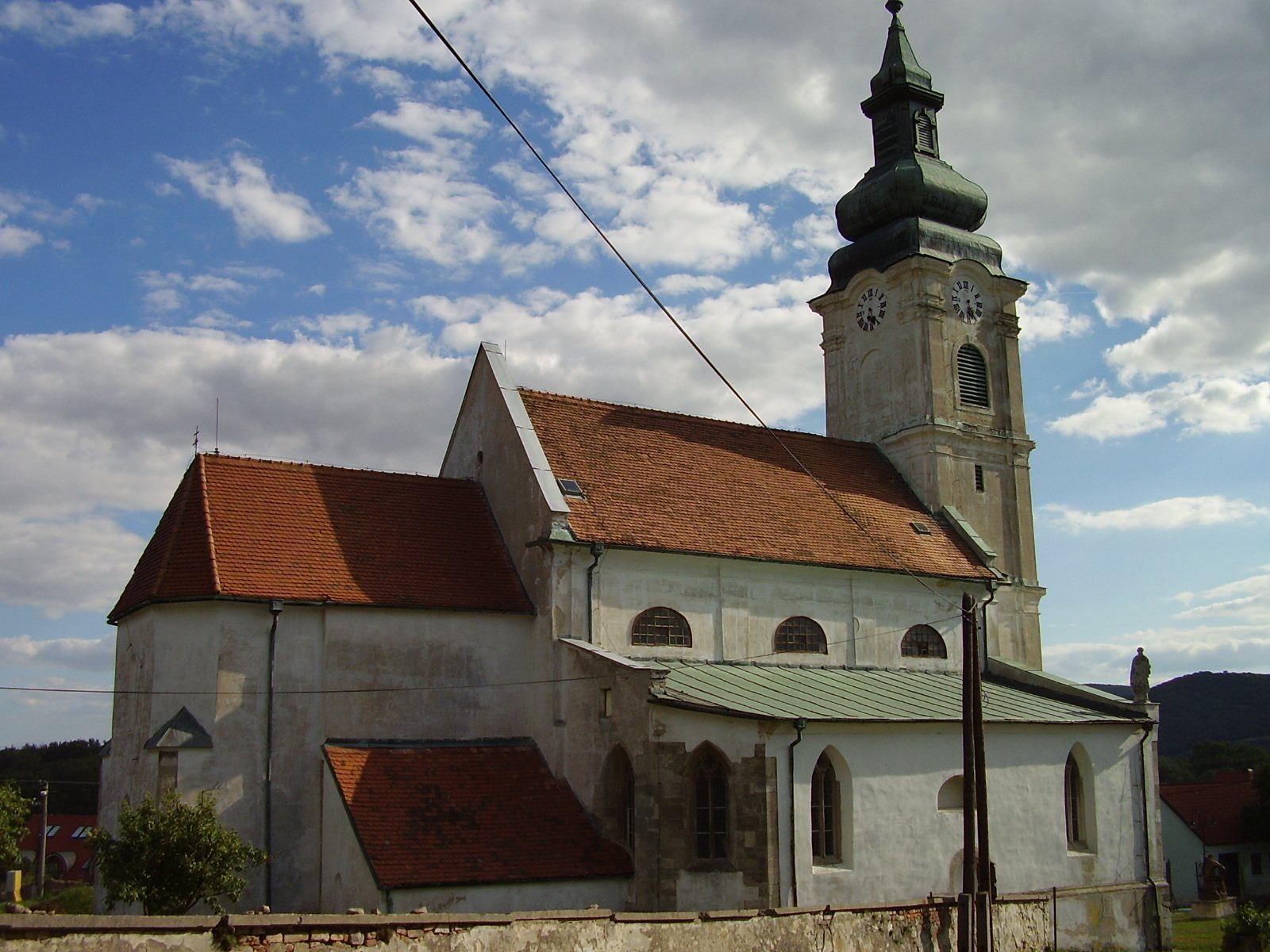
The Church of the Holy Cross is an active Roman Catholic parish church in Devín, Bratislava, Slovakia, probably built in the mid-13th century. Its first form was towerless, with a single nave and a square presbytery, the sanctuary area around the main altar. The church was gradually enlarged in the Gothic style, a European architectural tradition.
Seventeenth-century use
Restoration work took place in 1672–1673. During the 17th century, the church was dedicated to the Virgin Mary, the mother of Jesus.
Eighteenth- and nineteenth-century alterations
In 1772, the tower was structurally altered, and the main entrance and a side portal were built. A diamond-patterned vault was added over the presbytery in 1788 in the Classicist style, a distinct European architectural style. A main altar was installed in the presbytery during the 19th century.
Modern history
The church was registered as a National Cultural Monument of the Slovak Republic on 23 October 1963. Archaeological and architectural investigations in the 1970s were followed by a thorough restoration.
Remains
The stone church has three aisles, with pointed arches linking the side aisles to the central nave. Two sacristies stand beside the presbytery. The tower projects from the church, while sculptures and other furnishings remain in and around the building.
Aisles and sanctuary
Aisles and central nave
The south aisle comprises two building sections. The newer section retains an original cross vault, formed by intersecting curved sections, and four Gothic windows light the aisle. The north aisle ends in a multi-sided form and largely keeps its original Gothic appearance.
Presbytery and sacristies
A diamond-patterned vault covers the presbytery. The older, northern sacristy has a barrel vault, a continuous tunnel-shaped ceiling. A Gothic pastophorium, a niche for the Eucharist, the consecrated bread used in Catholic worship, was found there.
Tower and entrance
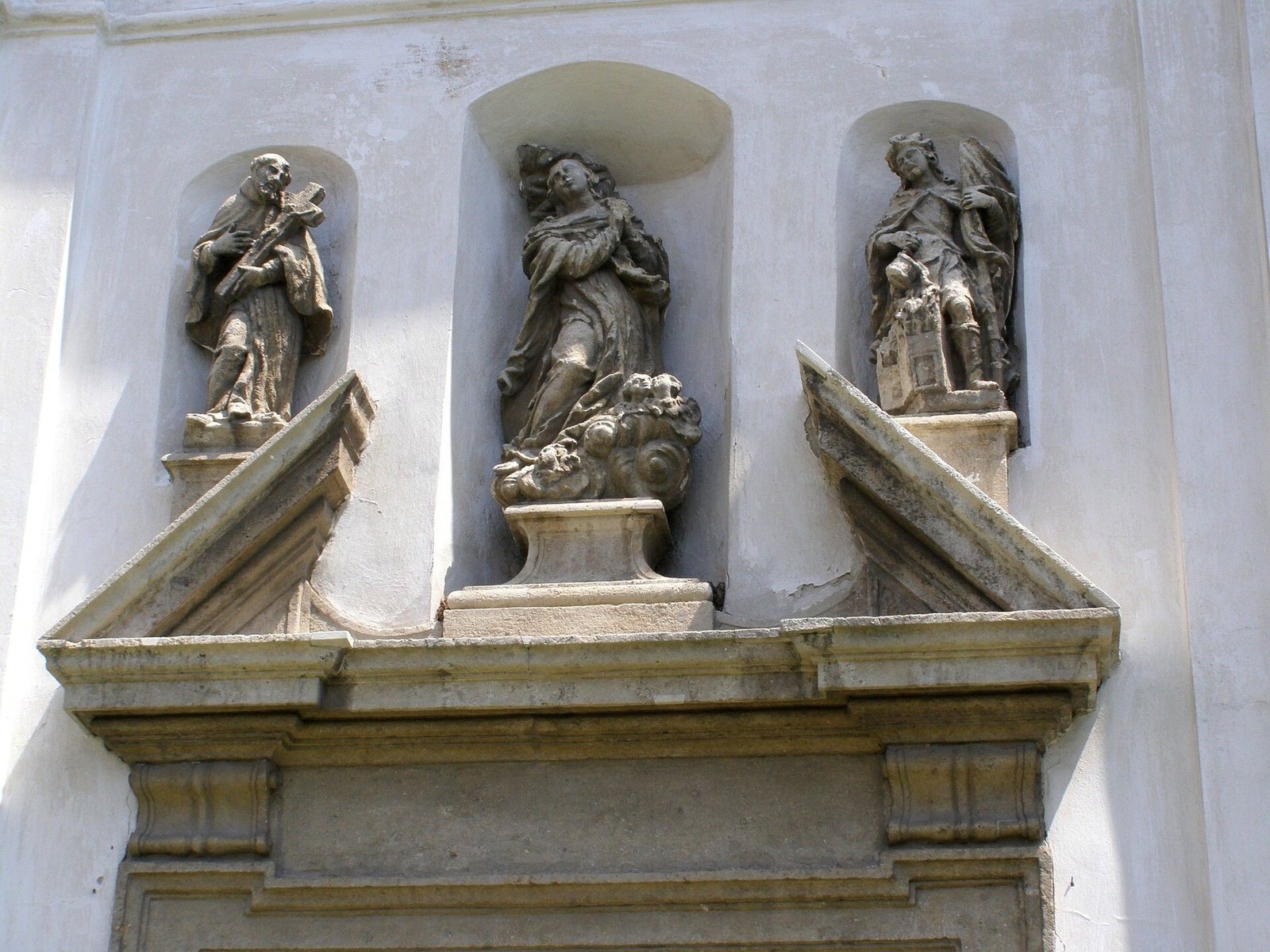
The tall, projecting square tower has three levels divided by horizontal cornices and a double onion-shaped roof. Above the main portal, a broken pediment, a decorative top interrupted at the centre, carries stone statues of Saint Francis of Assisi, the medieval founder of the Franciscan order, the Virgin Mary, and Saint Florian, an early Christian martyr. Each figure stands on a pedestal.
Altars and archaeological finds
Altars and font
The main altar stands in the presbytery. Its projecting base supports a columned pavilion and tabernacle, a container for the reserved Eucharist, topped by a tall cross. The idealized figure of the crucified Christ shows no signs of suffering. Its sculptor was influenced by Franz Xaver Messerschmidt, a late-Baroque sculptor. The altars of the Holy Family and the Pietà, a depiction of Mary mourning the dead Christ, have columned frames and central paintings. A painting of the Holy Trinity, once part of a Neo-Gothic altar, is in the south aisle; Neo-Gothic art revived forms associated with Gothic architecture. The church also has a stone baptismal font in the Baroque style, a European artistic tradition, with a chalice-shaped bowl.
Relief and recovered objects
The lower portion of a large relief of the Assumption of the Virgin Mary survives; this is the Christian belief that Mary was taken bodily into heaven. It probably formed the centre of an early Baroque altar. Investigations at the church also uncovered two large stone keystones, probably from the original vault over the main nave, and a 14th-century stone epitaph marked with a cross and two chalices. Another recovered Gothic relief depicts a scene on the Mount of Olives after the Last Supper.
Garden sculptures and entrance column
Garden display
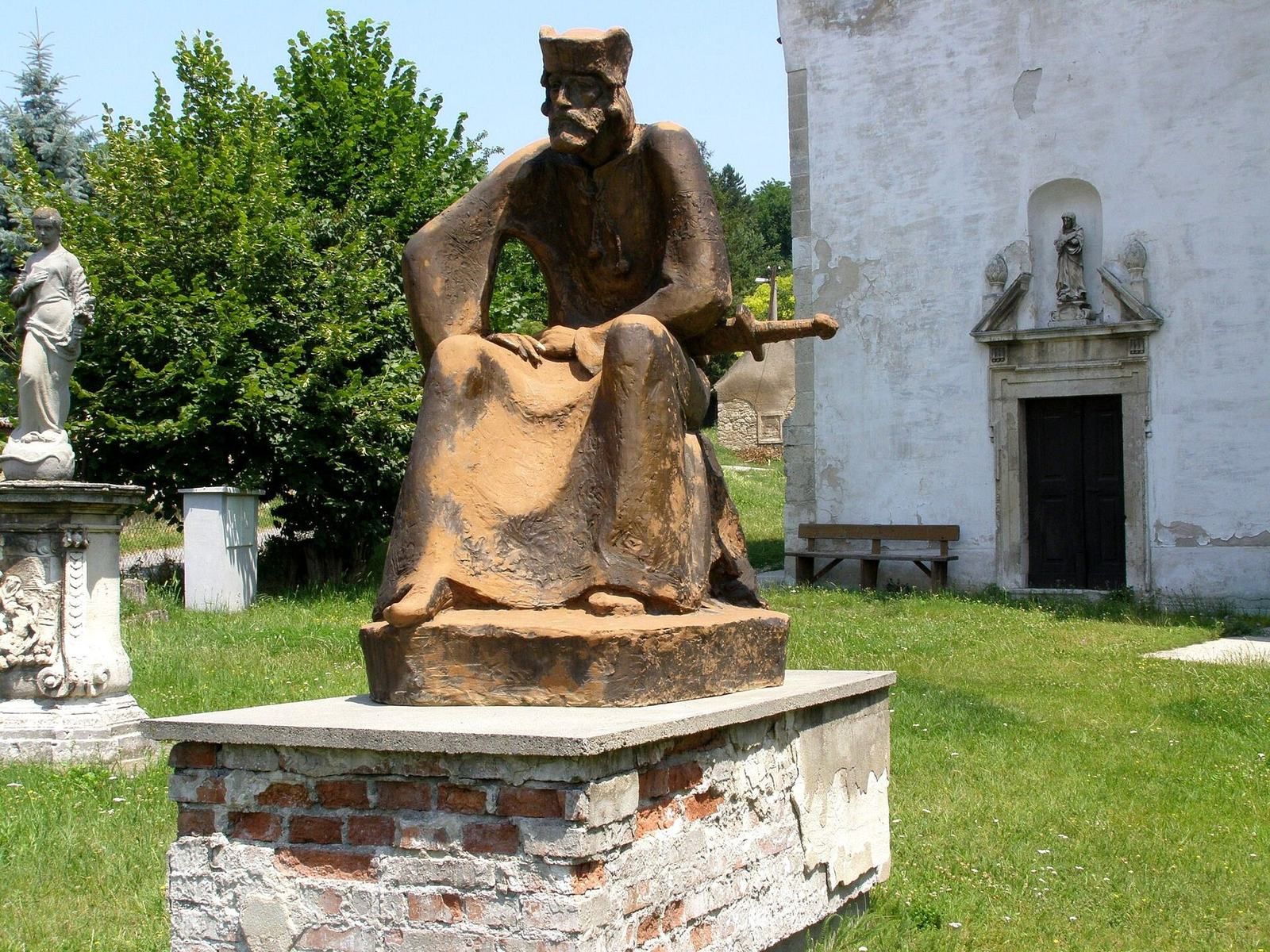
The church garden has a sculpture display associated with early Slovak history. It includes a seated statue of Rastislav, a prince of Great Moravia, an early medieval Slavic polity in Central Europe. Slovak academic sculptor Ľudmila Cvengrošová made the statue, which was moved here from a crossroads halfway to Devín Castle. The display also includes a sculptural group of Saints Cyril and Methodius, ninth-century Christian missionaries associated with the Slavic peoples.
Column beside the entrance
To the right before the entrance, a column stands behind a stone balustrade. Its capital bears a figure of Christ crucified.