Church of the Assumption of the Blessed Virgin Mary and St Florian in Krysk: A Roman Catholic Parish Church
Site at a Glance
- Popularity
- Very Low
- Country
- Poland
- Primary era
- Medieval
- Eras represented
- Medieval, Modern
- Civilizations
- Kingdom of Poland, Russian
- Site type
- Religious
- Remains
- Church
On this page9 sections
History
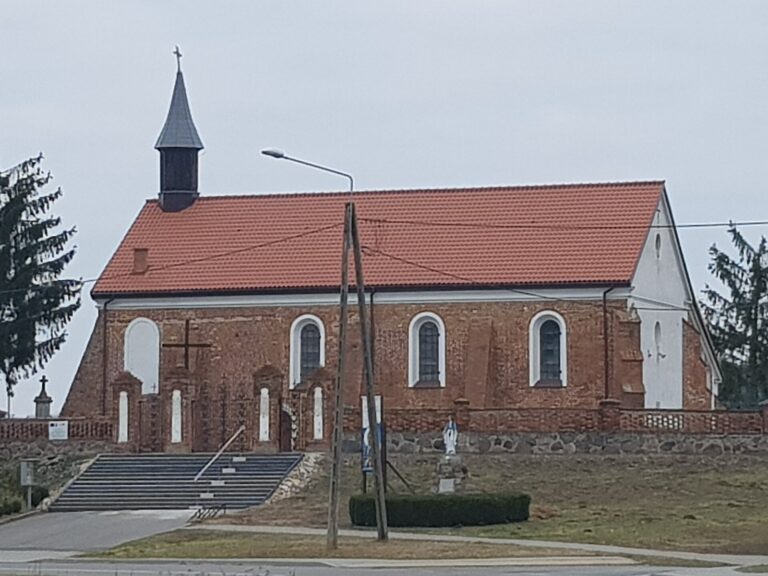
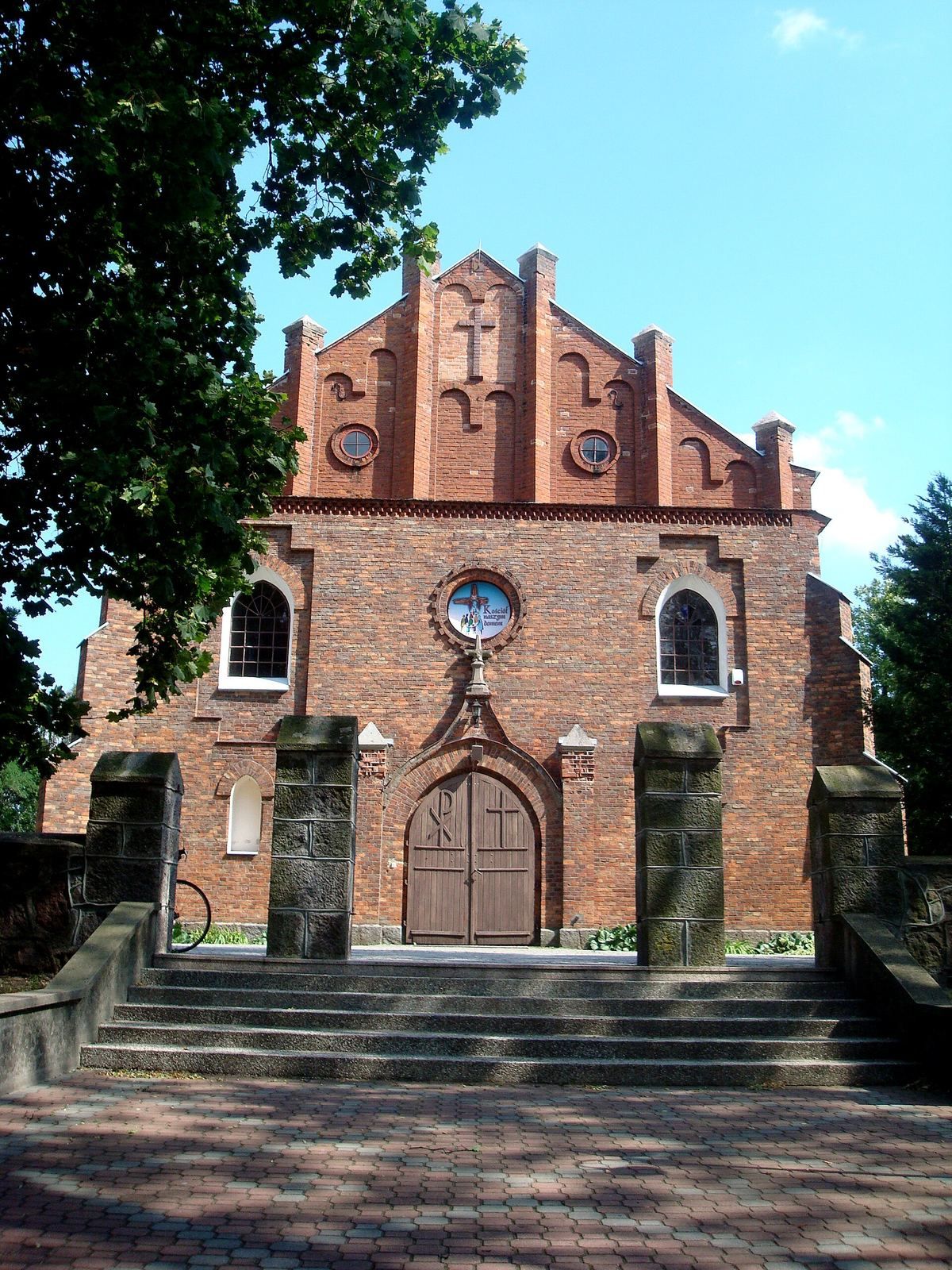
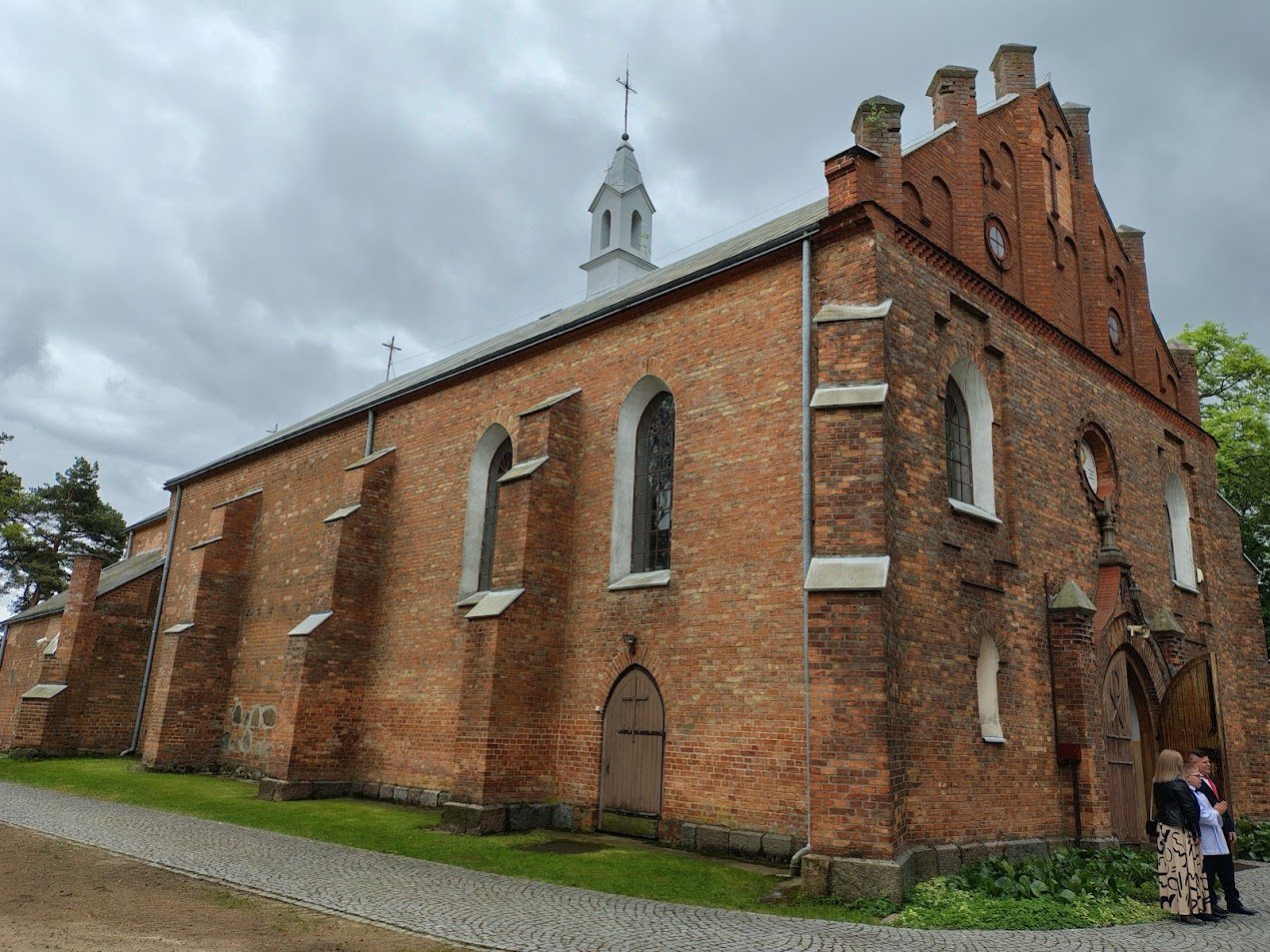
The Church of the Assumption of the Blessed Virgin Mary and St Florian is a Roman Catholic parish church in Krysk, Poland. Its Gothic core dates to 1481. The dedication refers to the Assumption, the Christian belief that Mary was taken into heaven, and to St Florian, an early Christian martyr. The church belongs to the Parish of St Florian in the South Płońsk deanery of the Diocese of Płock.
Changes in the brickwork point to repeated rebuilding and enlargement. The latest work took place in the early 20th century, with 1907 recorded as its completion date.
Remains
Structure and construction
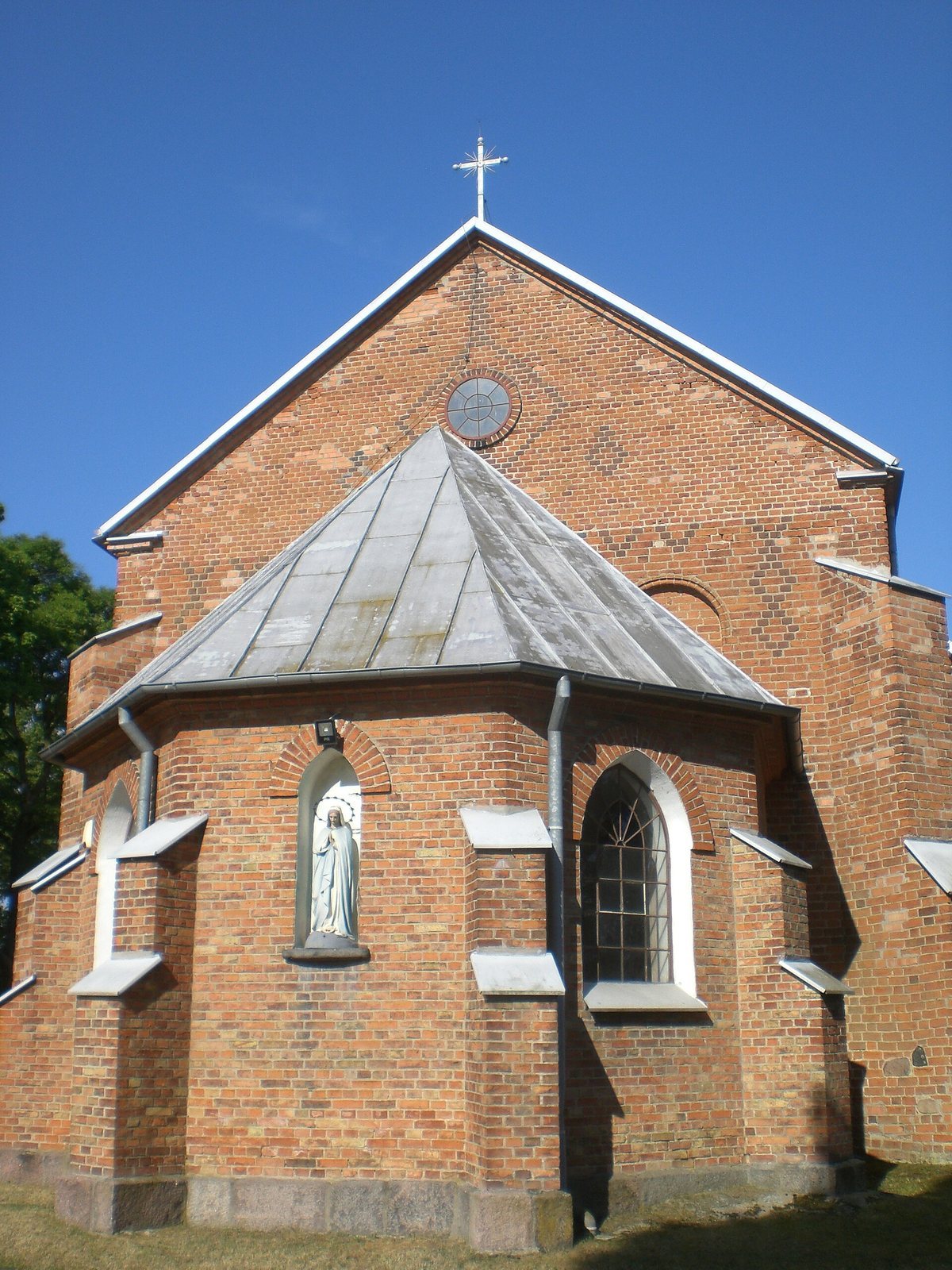
The church has a single nave aligned along a liturgical east–west axis. Its brickwork uses mixed patterns, chiefly Wendish and Gothic bonds; Wendish bond is a traditional way of arranging bricks in a wall. The masonry also includes overfired bricks, whose surfaces can become partly glass-like under intense heat. The building combines Gothic and Neo-Gothic features. A bell turret covered in sheet metal stands on the ridge of the roof.
Interior furnishings and decoration
Altars
The church has three altars. The Neo-Baroque main altar, dating to the second half of the 19th century, has two tiers and three vertical divisions. Its white-painted surface is accented with gilding on decorative details and picture frames. A small shrine-like frame with a rectangular panel and an incomplete arch holds a representation of St Florian. The central section contains a Madonna and Child image of the type known as Our Lady of the Snows, probably made in the late 17th century and covered with a silver-sheet overlay. A sliding panel carries an oil painting on canvas of St Joseph with the Child. Its lower-right corner bears the signature "Franciszek Mielnicki 1872." The two side altars date to 1874 and have paintings made in 1911: one of St Stanislaus Kostka, a Polish Jesuit and saint, and one of St Anne, traditionally identified as Mary’s mother.
Pulpit and baptismal font
The baptismal font dates to the second half of the 19th century. The Neo-Gothic pulpit was made around 1907.
Painted decoration
Multicoloured painted decoration was added in 1967 by Henryk Domurat of Poznań and remained in the church until 2002. Its designs included grotesque ornament and interlaced patterns, with relatively few figurative images.
Organ
The organ was made around 1930 by the W. and Z. Kamiński Brothers’ organ factory in Warsaw-Grochów. It has fourteen stops, controls that select the instrument’s sound registers.
Epitaphs
Interior epitaphs commemorate local landowners. They include Franciszek Małowieski (1765–1825), his wife Małowieska, born Walicka (1769–1817), and their son Michał (1794–1883). Michał served as president of the Płock Voivodeship Commission, a regional administrative body. Other memorials name Leon Starczewski (1780–1832), associated with the Nałęcz coat of arms, a heraldic emblem linked to a family lineage, and Zofia Izydora Powichrowska, born Dziechcińska (1858–1903), owner of the Szczytno estate.