Church of the Holy Heart of Jesus in Cerkwica: A Gothic Parish Church in Poland

Site at a Glance
- Rating
- 4.3
- Popularity
- Very Low
- Country
- Poland
- Primary era
- Medieval
- External website
- Open
- Eras represented
- Medieval, Early Modern, Modern
- Civilizations
- Duchy of Pomerania, German, Holy Roman Empire, Kingdom of Prussia
- Site type
- Religious
- Remains
- Church
On this page5 sections
History
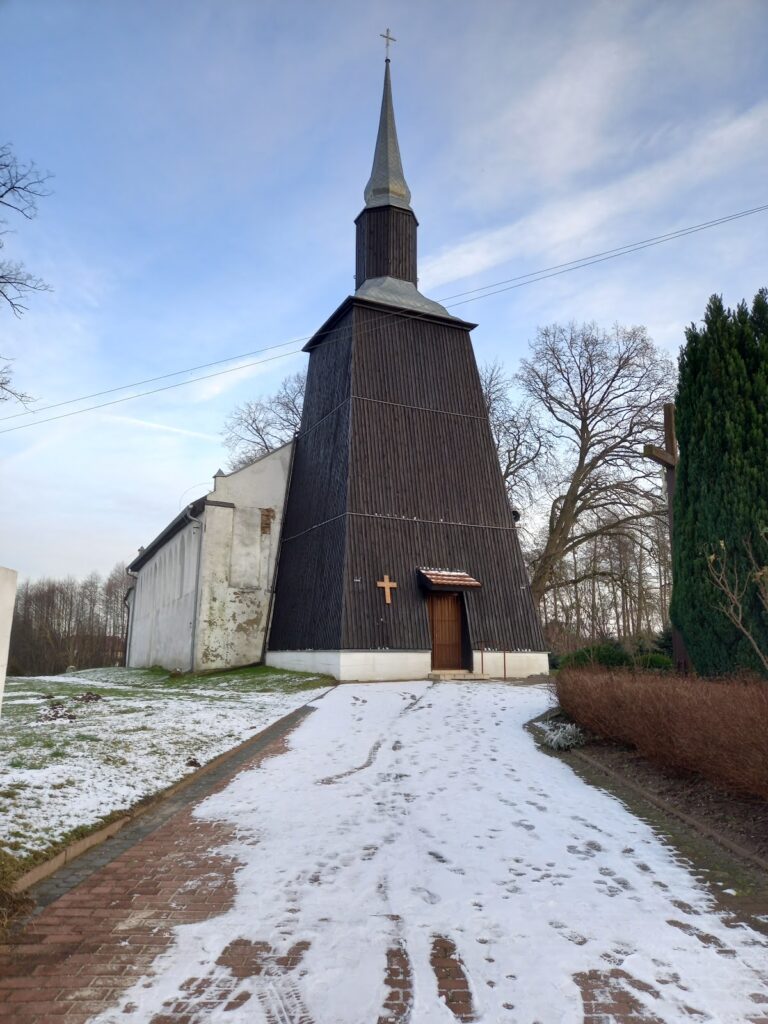
The Church of the Holy Heart of Jesus in Cerkwica is a Roman Catholic parish church in Poland, founded and completed in the fifteenth century in the Gothic tradition, a medieval architectural style known for pointed arches and detailed masonry. Its medieval fabric was later altered by the addition of a wooden tower in the eighteenth century and a porch on the south side in the late nineteenth century.
From Protestant worship to a Catholic parish
From the Reformation until 1945, Protestant worshippers used the church. It was dedicated on 19 February 1947, and the parish was established on 4 March 1974. The church is monument no. 278 in Poland’s heritage register, where it was entered on 6 March 1958.
Remains
Gothic church building
The church is a single-nave building on a rectangular plan, constructed from brick and wood and covered by a two-pitched roof. Its main entrance is framed by a portal with a pointed archivolt, a band of mouldings following an arch, formed here by five arches set progressively farther back from the wall. Two side entrances also serve the building. A porch stands before the main interior, with the eighteenth-century wooden tower rising above it and ending in a high scrollwork helmet. Inside, niches articulate the walls, while exposed structural beams form the ceiling. The furnishings include a seventeenth-century altar, a pulpit, and a baptismal font.
Church grounds and baptismal tradition
Near the church hill called Dzwonnik is a well associated with baptisms believed to have been administered there in 1124 and 1125 by Saint Otto of Bamberg, a German bishop and missionary linked to the Christianization of Pomerania. The church grounds also contain a wooden cross on a stone pedestal, probably dating from the nineteenth century, and a figure of the Merciful Jesus.