Končul Monastery: A Serbian Orthodox Monastery on the Ibar
Site at a Glance
- Rating
- 4.9
- Popularity
- Medium
- Country
- Serbia
- Primary era
- Medieval
- Eras represented
- Medieval, Modern
- Civilizations
- Ottoman, Serbian
- Site type
- Religious
- Remains
- Monastery
On this page8 sections
History
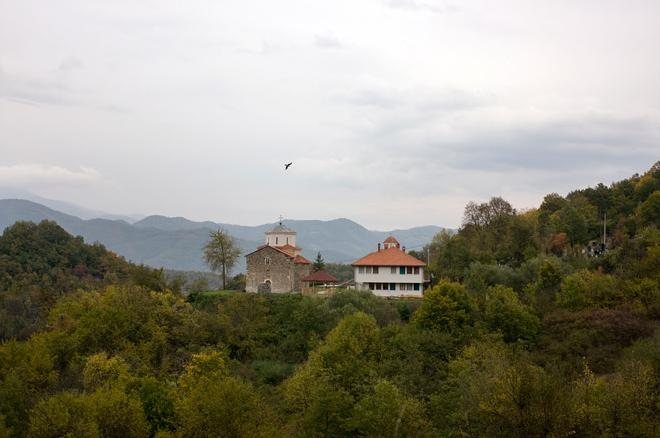
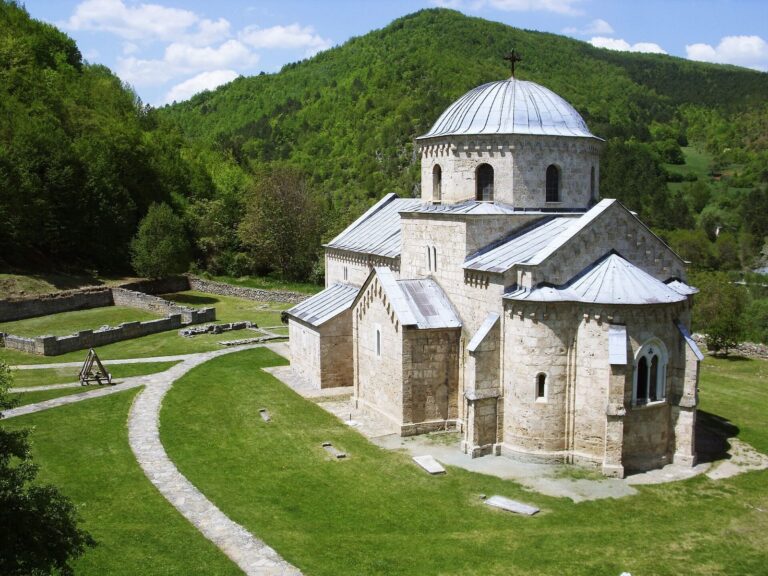
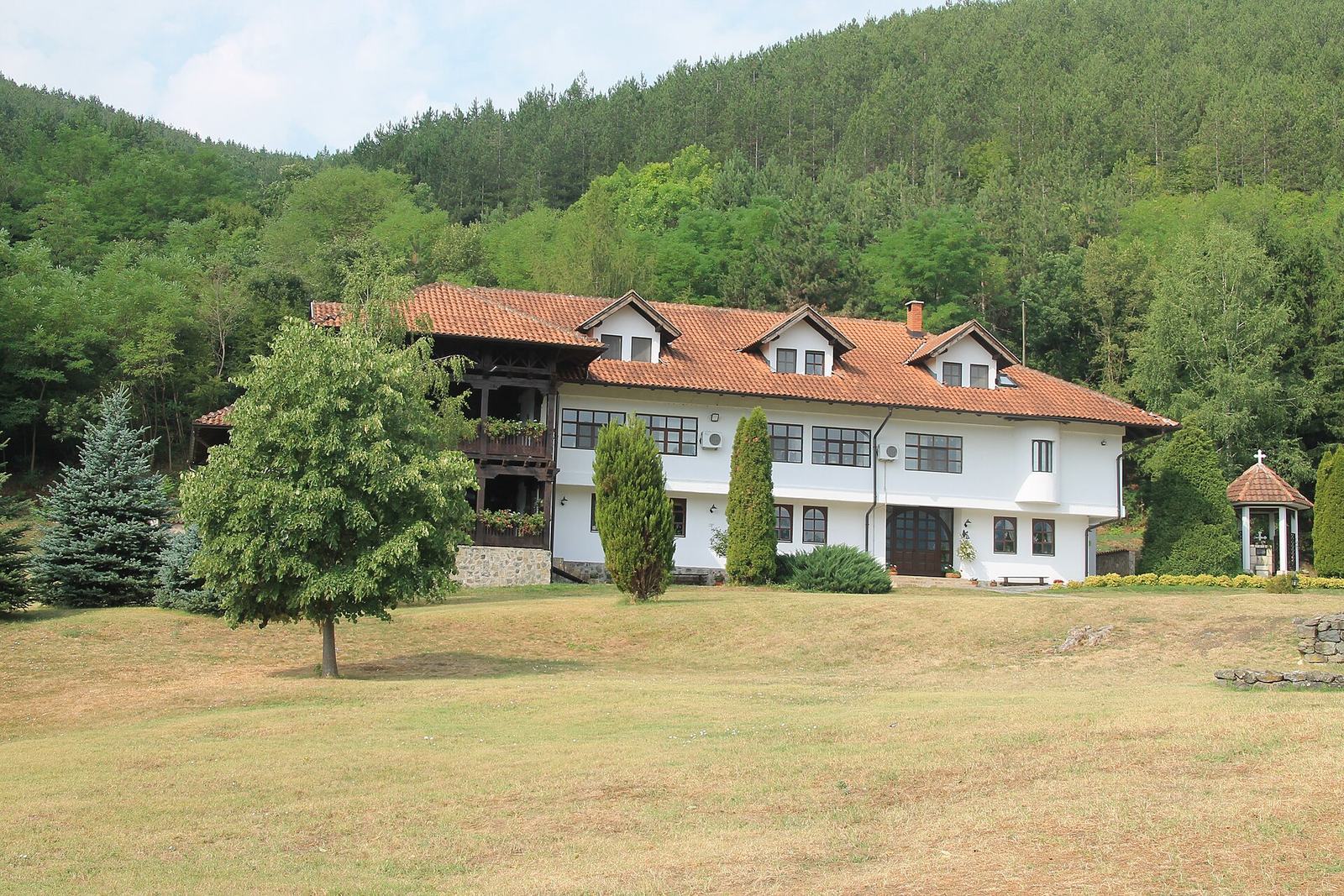
Končul Monastery is a Serbian Orthodox monastery on the left bank of the Ibar, about 3 km southeast of Raška in Serbia. Dedicated to Saint Nicholas, an early Christian bishop of Myra, it belongs to the Raška-Prizren Eparchy, a church territory comparable to a diocese. Its foundation is generally placed in the 11th century, though its origins may predate the Nemanjić dynasty, the medieval Serbian ruling house founded by Stefan Nemanja. The monastery’s name is linked to a Proto-Slavic word meaning “end” or “termination.”
Origins and medieval prominence
Stefan Nemanja is believed to have rebuilt Končul around 1175, although he may instead have founded it. The monastery is first mentioned in the Studenica Typikon, a monastic rulebook composed in 1208 by the future Saint Sava, a Serbian monk and religious leader. During the reign of King Stefan Milutin (1282–1321), Končul became the seat of a newly established eparchy.
Danilo II, who later became a Serbian archbishop and writer, entered monastic life at Končul. The monastery reached its greatest prominence in the 14th and 15th centuries. During the rule of Đurađ Branković (1427–1456), a Serbian ruler, a bishop lived at the monastery. A local tradition places Končul’s first home at Kaznoviće. It tells that, during a raid, God carried the monastery across the swollen Ibar after the monks prayed, saving it from the raiders.
Destruction and renewed monastic life
Končul was destroyed in 1689 during the Great Turkish War, a late-17th-century conflict between the Ottoman Empire and a coalition of European powers. Its destruction came during the period known as the Great Serbian Migration, when Serbs moved from the region.
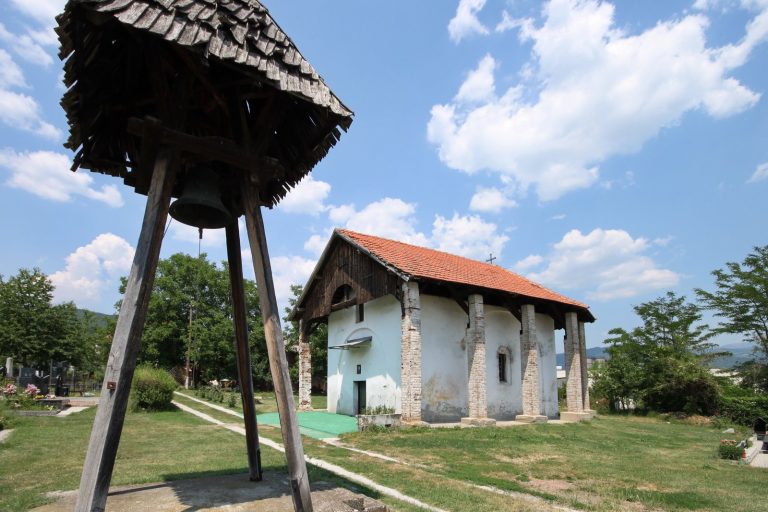
A later church was built over the older church remains and subsequently served as a parish church. After monastic residences were built, refugee nuns arrived in 2000 from the ruined Holy Trinity Monastery at Mušutište in Kosovo, and Končul again became a monastery. It remains an active monastic community.
Archaeological investigation and conservation work took place across the former monastic complex from 1975 to 1979. Since 1983, the monastery has been protected by the Serbian state as a cultural monument of great importance.
Remains
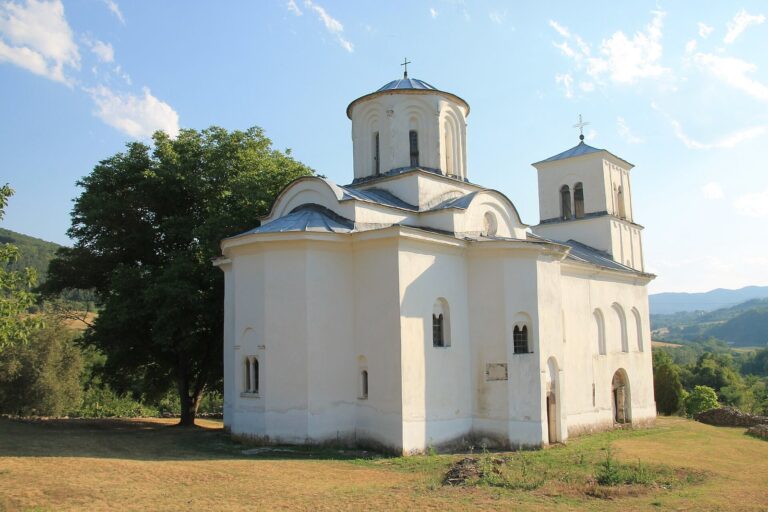
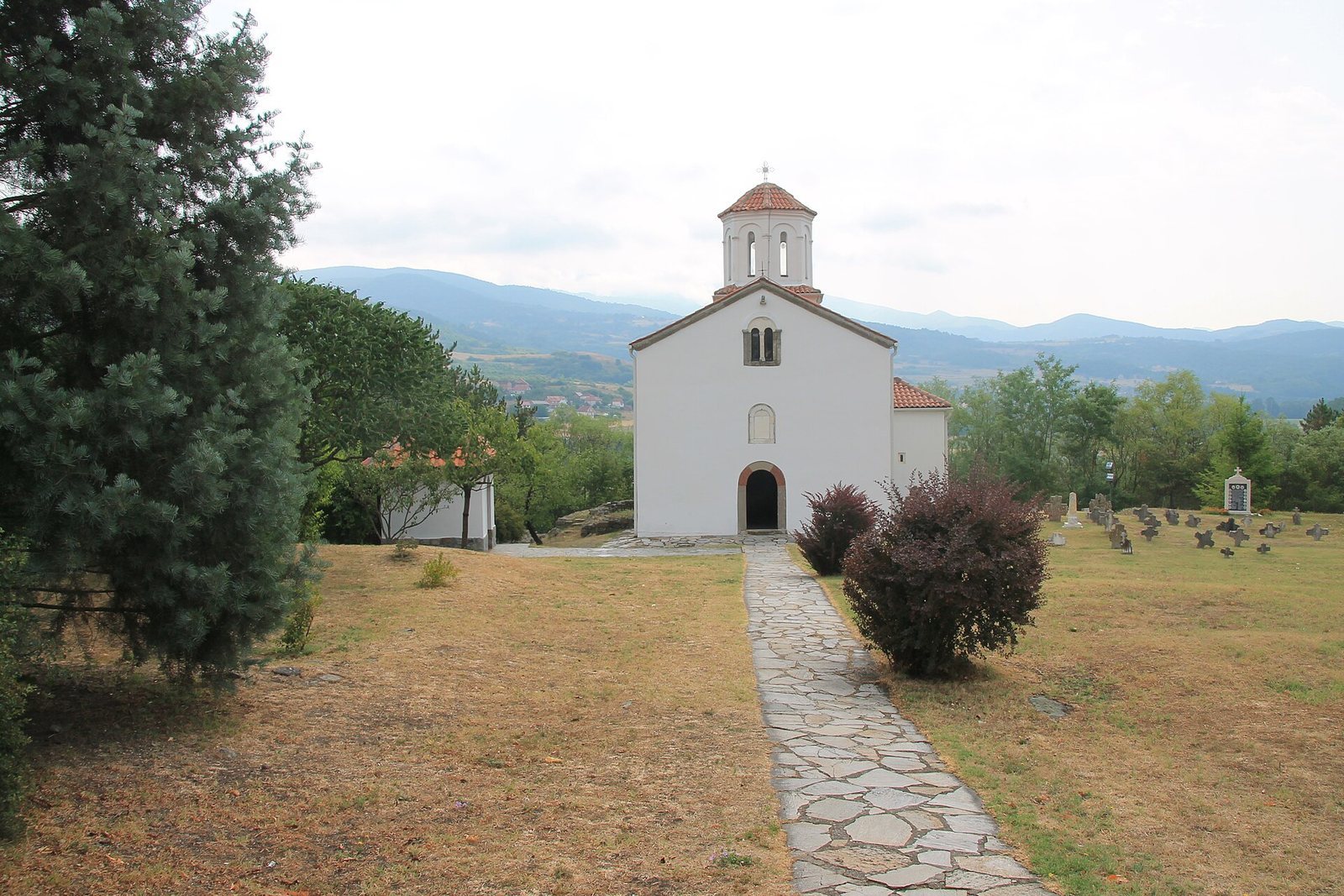
The surviving complex includes a church built over the earlier church remains and archaeological traces of the surrounding monastery. The present church follows the earlier building’s plan in broad outline, with changes to its chapels. Excavations have also revealed burials and remnants of buildings within the former precinct.
Church and monastic precinct
Church plan and fabric
The church was built in 1861 above the remains of the older church. It has one main worship space, a semicircular altar end, a rectangular chapel on the south side, and a small chapel on the north. Its upper parts and interior underwent extensive renovation. These features retain the main outline of the earlier church while reflecting changes to the chapel arrangement.
Archaeological remains
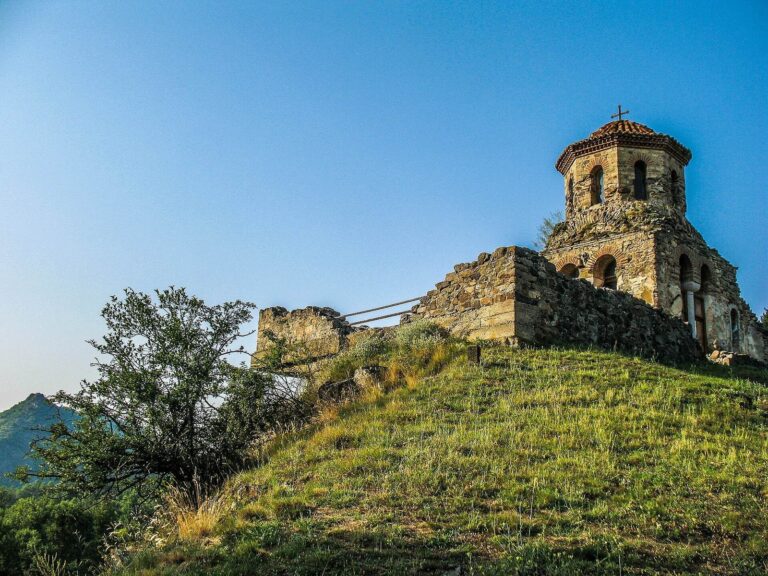
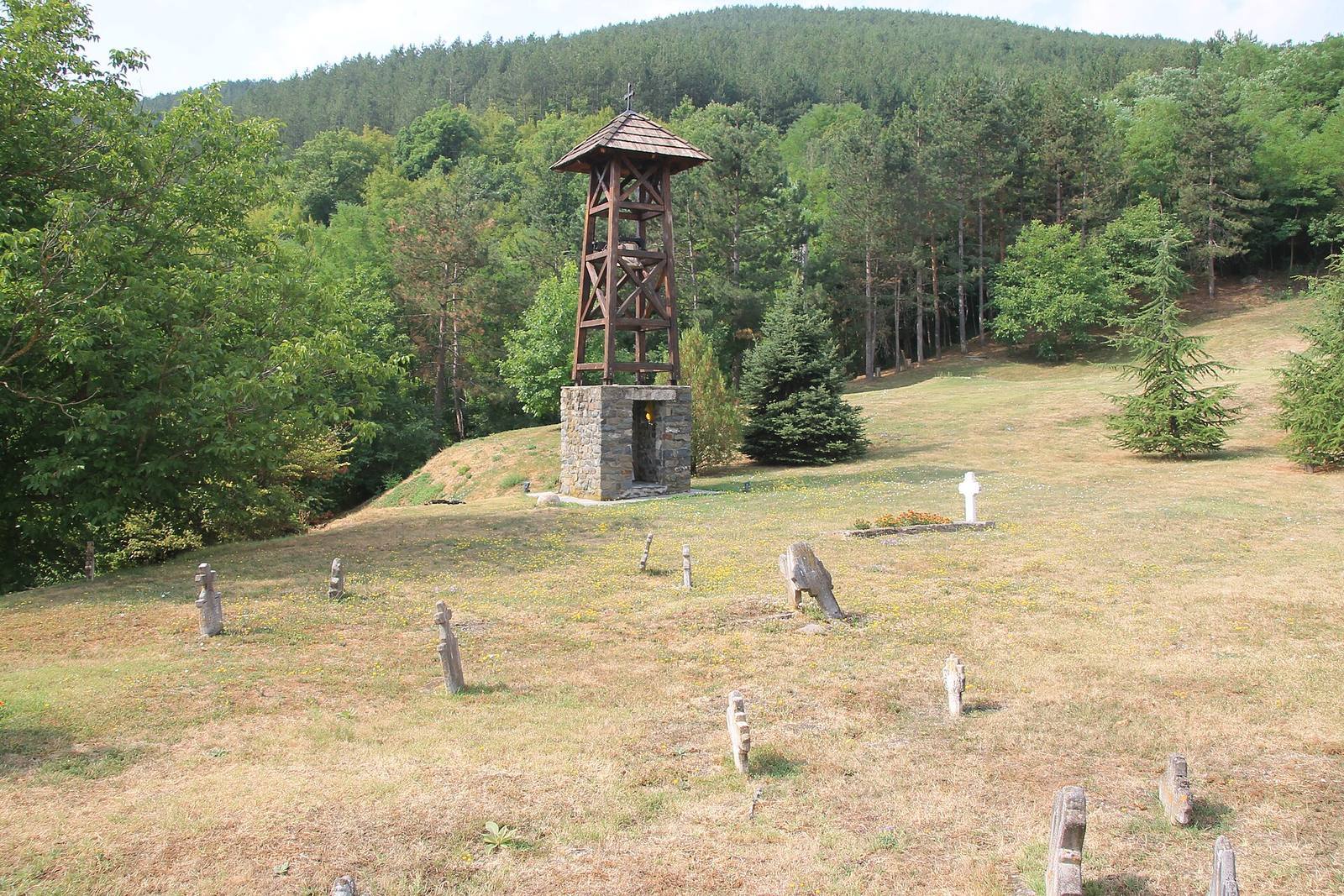
Fragments of frescoes, architectural sculpture, ceramics, and broken marble tombstones reused in repairs indicate that a church stood here in the 14th century, while leaving open the possibility of an earlier date. Excavations also revealed a burial ground older than the original church. Remains of monastic residences, entrances, stairs, and other buildings were found along the extensive monastery wall. Church foundations also survive at Kaznoviće.
Iconostasis
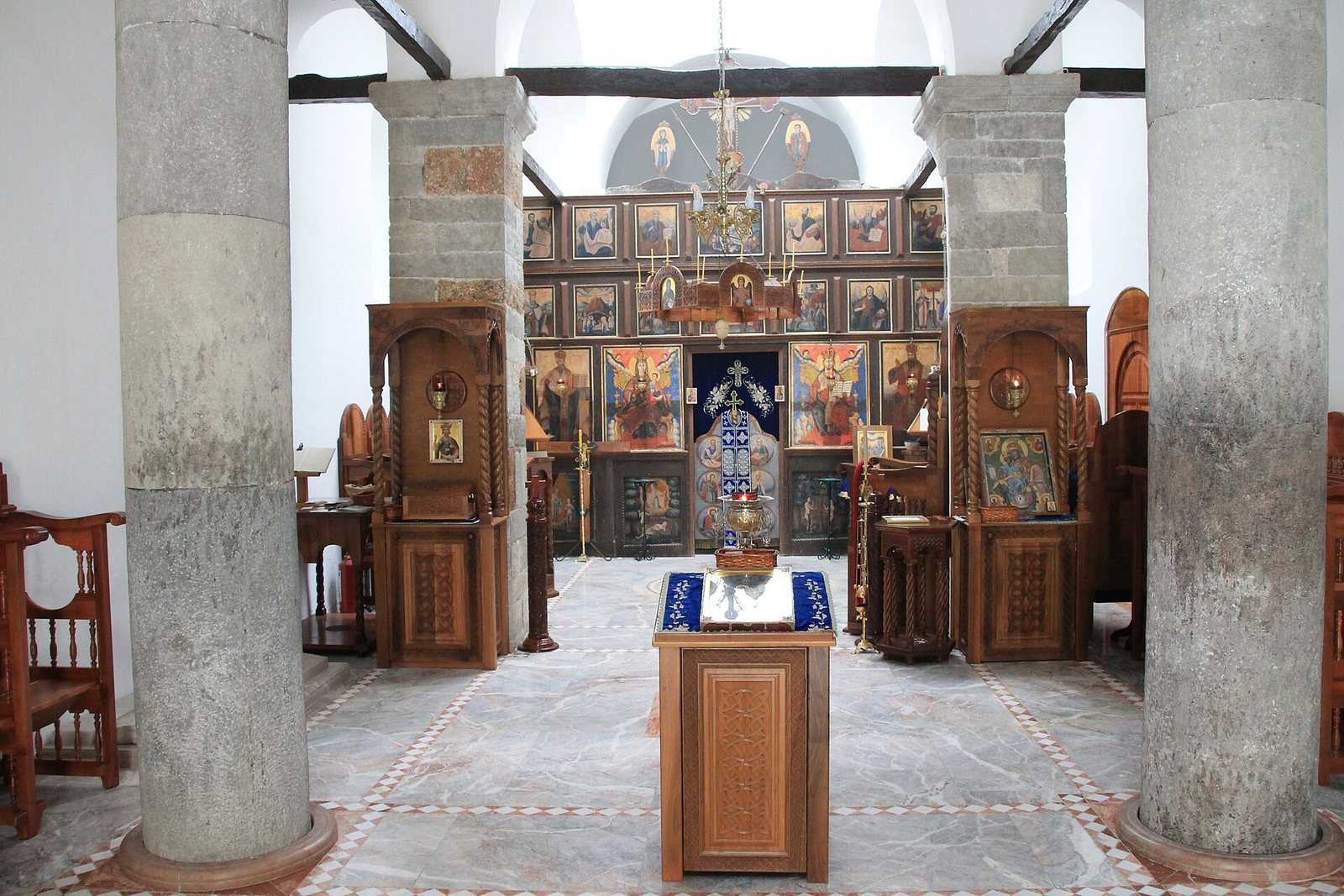
The iconostasis, an icon-covered screen separating the sanctuary from the nave, was made and decorated before the church was consecrated in 1904. Its two altar icons, showing the Virgin Mary with Christ and Jesus Christ, date to the mid-19th century and are by an unknown artist. The other icons, the cross above the altar, an image of the Holy Trinity (God as Father, Son, and Holy Spirit), and images of Archangel Michael and Basil the Great are attributed to a prominent painter from the Debar school, a regional tradition of icon painting, and his workshop. The cross is dated 1902, which is also the probable date of the screen. Old Testament scenes cover its base. The altar row shows Jesus Christ, the Virgin Mary with Christ, and Saints Nicholas and Sava; two rows above contain the Great Feasts, major days in the Orthodox calendar, apostles, and other saints. A large Crucifixion crowns the screen. It has three openings, with doors only at the centre.