Kōfuku-ji Temple: Hossō Buddhist Headquarters in Nara


Site at a Glance
- Rating
- 4.4
- Popularity
- High
- Country
- Japan
- Primary era
- Medieval
- External website
- Open
- Eras represented
- Medieval
- Civilizations
- Yamato
- Site type
- Religious
- Remains
- Monastery
On this page5 sections
History
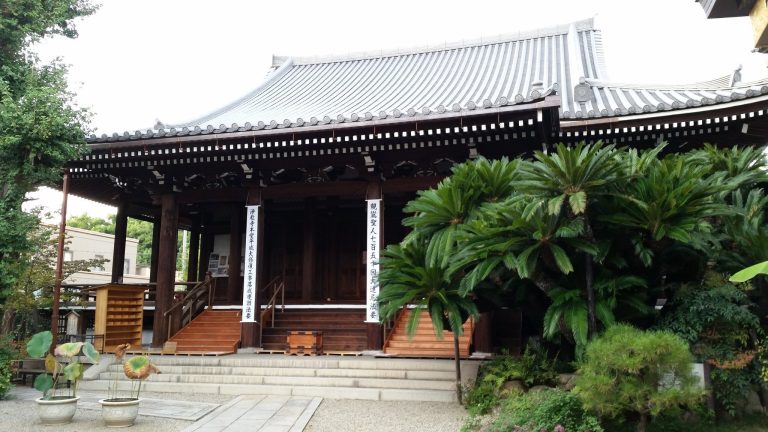
Kōfuku-ji is a Buddhist temple in Nara, Japan, and the national headquarters of the Hossō school, the Japanese branch of the East Asian Yogācāra tradition associated with the study of consciousness and Buddhist doctrine. Traditionally founded in 669, it became the Fujiwara clan’s tutelary temple and one of Nara’s Seven Great Temples. Its former precinct forms part of the UNESCO World Heritage designation “Historic Monuments of Ancient Nara” and is also a national historic site.
Origins and Transfers
The temple’s traditional origin lies in 669, when Kagami-no-Ōkimi, the wife of Fujiwara no Kamatari, established a temple at Yamashina in Yamashiro Province to pray for her husband’s recovery from illness. Another tradition says that Kamatari had commissioned a Shaka triad, a Buddhist group centered on Shakyamuni Buddha with two attendant bodhisattvas, around 645, and that Kagami-no-Ōkimi enshrined it in the new temple.
After the imperial capital moved to Asuka in 672, the temple was transferred to Umayasaka in Yamato Province and became known as Umayasaka-dera. In 710, when the capital moved to Heijō-kyō, the temple was relocated to the eastern side of the new capital at its present site. Fujiwara no Fuhito, Kamatari’s son and an important court statesman, renamed it Kōfuku-ji.
The early history of Yamashina-dera and Umayasaka-dera remains uncertain. Later temple records preserve the traditions, while the Nihon Shoki does not mention them and the Shoku Nihongi first records Kōfuku-ji in 720. Their exact locations and independent existence have therefore been debated. Some interpretations regard the earlier establishments as small Buddhist halls rather than fully developed temple complexes.
Formation at Heijō-kyō
Construction at the present site probably began during the Wadō period. The relocation date of 710 marks the movement of the capital, not necessarily the completion of the entire temple. A central hall was consecrated in 714, and the central compound was substantially complete by about 720. This group included the Central Golden Hall, a principal Buddhist worship hall, the Lecture Hall, cloisters, and the Central Gate.
After Fuhito’s death in 720, the government established an office to oversee construction at Kōfuku-ji. In 721, Retired Empress Genmei and Empress Genshō ordered Prince Nagaya to build the North Octagonal Hall as a memorial to Fuhito. Direct state construction of a temple that had originated as a private Fujiwara foundation was unusual.
Eighth-Century Expansion
The temple grew through a series of imperial and aristocratic foundations. Emperor Shōmu founded the East Golden Hall in 726 for the recovery of Retired Empress Genshō. Empress Kōmyō commissioned the Five-story Pagoda in 730, a Buddhist tower associated with relics and commemorative worship. In 734, she founded the West Golden Hall in memory of her mother, Agata Inukai no Michiyo. That hall housed sculptures representing the Eight Classes of Devas and the Ten Principal Disciples.
The central compound and its associated facilities probably reached substantial completion by 744. These works included the Lecture Hall, dining hall, monks’ quarters, South Great Gate, Central Gate, and cloisters. An eastern compound was later developed with additional halls, monks’ quarters, and smaller residential facilities.
In 813, Fujiwara no Fuyutsugu founded the South Octagonal Hall for memorial rites for his father, Fujiwara no Uchimaro. Its construction completed the principal group of halls associated with the temple’s early development.
Fujiwara Patronage and Religious Influence
Kōfuku-ji received extensive support from the state and aristocracy in the form of land grants and revenues. In 738 it received a tax allotment of 1,000 households. In 749 it was granted 100 chō of temple fields, and in 757 its medical dispensary received 100 chō of rice fields in Echizen Province.
The return of the monk Genbō from Tang China contributed substantially to the development of Hossō at Kōfuku-ji. During the Nara period, conventionally dated from 710 to 794, the temple was counted among the Four Great Temples. In the Heian period, the era of court rule conventionally dated from 794 to 1185, it was included among the Seven Great Temples of Nara.
Its close relationship with the Fujiwara regents brought continuing protection, while its influence extended across much of Yamato Province. At the height of its development, more than one hundred subsidiary cloisters belonged to the temple complex.