Kangō Shrine: A Historic Shinto Shrine in Nara, Japan


Site at a Glance
- Rating
- 4.2
- Popularity
- Low
- Country
- Japan
- Primary era
- Early Modern
- External website
- Open
- Eras represented
- Medieval, Early Modern
- Civilizations
- Unclassified
- Site type
- Religious
- Remains
- Sanctuary
On this page12 sections
History
Kangō Shrine is a Shinto shrine in Nara, Japan, traditionally founded in 593 during the reign of Emperor Suiko. The shrine tradition states that the emperor ordered Ōmiwa no Kimi Shiratsutsumi to enshrine Sonokami, a garden deity. In 717, Fujiwara no Fuhito, an influential statesman of the early Nara period, is said to have added two Karakami deities.
Early traditions and changing names
The shrine was formerly known as Kasuga Ritsukawa-Sakaoka Shrine or Sonokara Shrine. Its present name is traditionally explained through changes in the characters used for the words associated with “garden” and “Kara.” The principal deities are Ōmononushi-no-Mikoto as Sonokami, together with Ōnamuchi-no-Mikoto and Sukunahikona-no-Mikoto as the two Karakami.
A further shrine tradition states that these deities were transferred in 859 to the Imperial Household Ministry in Heian-kyo, the government office responsible for imperial household affairs and court rituals. They were then regarded as guardian deities of the imperial house. This tradition conflicts with accounts associated with the corresponding shrines in Heian-kyo. Kangō Shrine is also identified as a small and disputed candidate for inclusion among the ancient shrines listed in the Engishiki, a tenth-century compilation of court regulations and ritual procedures. It formerly held the rank of prefectural shrine.
Medieval destruction and rebuilding
In December 1181, the shrine was burned during Taira no Shigehira’s attack on Nara, then known as the southern capital. Reconstruction took place in 1188 at both the Ritsukawa and Sakaoka locations. The work followed a memorial petition by Kakushō, a senior monk of Kōfukuji’s Ichijōin.
Early modern patronage
During the Keichō era, which lasted from 1596 to 1615, Tokugawa Ieyasu donated slightly more than five tan of rice land in Horen Village. A tan was a traditional Japanese unit of land area, and the income from this donation allowed the shrine buildings to be repaired.
In 1614, during the Osaka Winter Campaign, Tokugawa Ieyasu visited Kangō Shrine and dedicated a suit of armor. The armor is now kept at the Nara National Museum, while a replica is displayed in the shrine’s kagura hall, a building used for sacred music and dance.
Later traditions and status
A shrine tradition identifies Hayashi Jōin, who came from the Yuan dynasty to Japan in 1349 and lived at the entrance to Kangō Shrine, as the maker of Japan’s first manju. This steamed, usually filled bun is associated with Japanese confectionery. Hayashi Shrine, located within the precinct, is dedicated to Hayashi Jōin and Tajimamori, a legendary figure associated with bringing confectionery traditions to Japan. Tajimamori was enshrined there in 1978, and the shrine subsequently drew devotion from the manju and confectionery industries.
Genkuro Inari Shrine was transferred to Kangō Shrine from Yamanotera in 1924. Its deity is Ukanomitama-no-Kami. Kangō Shrine was ranked as a prefectural shrine during the Meiji period, which lasted from 1868 to 1912. Its precinct and buildings now include protected cultural properties. The main hall is designated as a tangible cultural property by Nara Prefecture, while the armor storehouse and its associated armor are designated tangible cultural properties by Nara City. The cited designations date to 2004 and 1951 respectively.
The principal annual festival takes place on October 17. Other observances include the Manju Festival on April 19, the Chin-ka Festival on June 5, the Setsuyōshū Festival on June 15, and the Saigusai Festival on June 17.
Remains
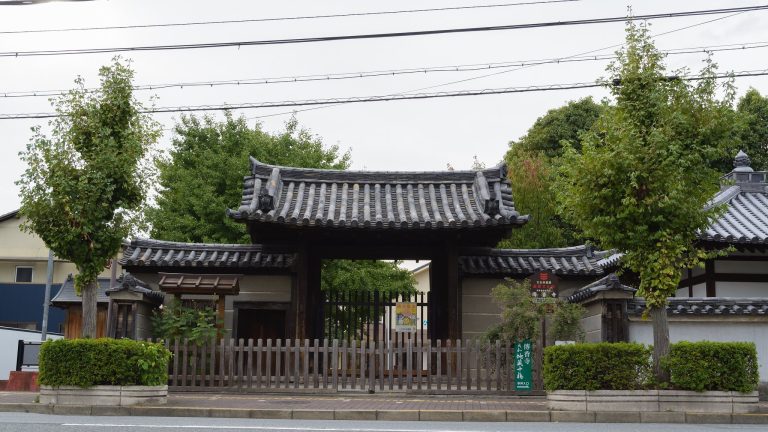
The precinct contains the main hall, a worship hall, subsidiary shrines, a kagura hall, commemorative mounds, a front gate, the shrine office, and an armor storehouse. The principal buildings preserve features associated with the shrine’s early modern form, while the subsidiary shrines and mounds reflect the range of religious traditions maintained within the grounds.
Main shrine buildings
Main hall
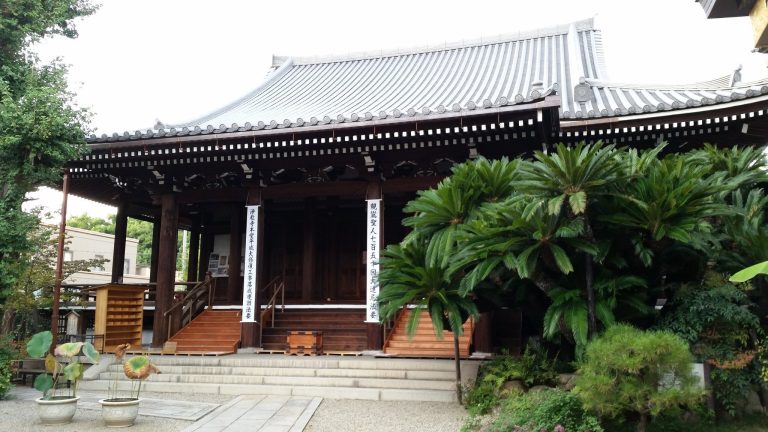
The main hall is a Momoyama-period structure in three-bay nagare-zukuri style. This style is characterized by a roof that curves outward over the front entrance. The hall has a cypress-bark roof made from layered strips of Japanese cypress bark and a box ridge. It measures three bays across and one bay in depth, with a one-bay worship porch projecting from the front. A shrine document records detailed repair and maintenance work carried out in 1610.
Worship and kagura halls
A worship hall stands in front of the main hall. The precinct also contains a kagura hall, where the replica of Tokugawa Ieyasu’s armor is displayed. The original armor is deposited at the Nara National Museum.
Subsidiary shrines
Several subsidiary shrines occupy the precinct. Hayashi Shrine is dedicated to Hayashi Jōin and Tajimamori. Aoi Shrine is dedicated to Tōshō Daigongen, the deified form of Tokugawa Ieyasu. Genkuro Inari Shrine enshrines Ukanomitama-no-Kami, while Hachioji Shrine’s deity is identified in tradition either as Munakata Masasaki-no-Ōkami or Kamiyata Tatehime-no-Mikoto. Suijin Shrine is enshrined in the ablution pavilion.
Commemorative mounds and precinct features
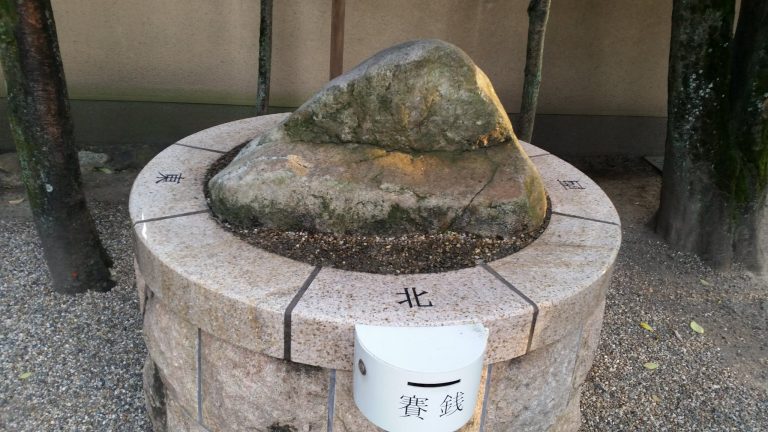
The white-pheasant mound commemorates a bird said to have been presented from Baekje in 721. It was deposited at the shrine in 723 and buried there on September 18, 724. The mound remains within the precinct. Another commemorative feature is the manju mound. The front gate, shrine office, and armor storehouse complete the group of other recorded precinct structures.
Armor collection
The armor associated with Tokugawa Ieyasu is a tea-thread-laced domaru gusoku, a form of samurai armor designed to wrap around the wearer’s body. The brown or tea-coloured cords bind its armor plates. The suit is regarded as the work of Iwai Yozaemon, an armor maker from Nara who served the Tokugawa family. The original is held at the Nara National Museum, and the shrine displays a replica in its kagura hall.