Kodeljevo Castle: A Renaissance Mansion and Estate in Ljubljana
Site at a Glance
- Rating
- 4.5
- Popularity
- Low
- Country
- Slovenia
- Primary era
- Early Modern
- Eras represented
- Early Modern
- Civilizations
- Habsburg, Habsburg Austria, Holy Roman Empire
- Site type
- Domestic
- Remains
- Castle
On this page10 sections
History
Kodeljevo Castle is a mansion in the Renaissance style, a European architectural period, built in the first half of the seventeenth century beside a broad bend in the Ljubljanica River in Ljubljana, Slovenia. It became the center of an estate that passed through several owners before the Codelli family acquired it.
Changing ownership and the Codelli family
Burkhard pl. Hitzigkh owned the property in 1640, followed by Janez Ferdinand Hoffman pl. Hoffental in 1654. Hoffman’s widow, Marija Magdalena, later married into the Edling family and sold the estate to Gašper baron pl. Lichtenturn, manager of the Idrija mine. The Poor Clares, a Catholic contemplative order in the Franciscan tradition, acquired it in 1677; Franc pl. Zergollen took ownership the following year. In 1700, Zergollen’s son sold the castle and Kodeljevo estate to Peter Anton Codelli, who had moved from Bergamo.
The Codellis became a major landowning family. Baron Anton Franc Ksaver Pavel Codelli served as Ljubljana’s mayor from 1811 to 1832, during the French period, when France ruled parts of the Slovenian lands in the Napoleonic era.
The estate and its later use
In 1738, Avguštin Codelli added a chapel dedicated to the Immaculate Virgin Mary. In Catholic teaching, the Immaculate Conception is the belief that Mary was preserved from original sin from the moment of her conception. The Codellis also built service buildings and laid out the estate park. Its plan appears on the Franciscan cadastre, a land survey made under Emperor Francis I of Austria whose maps show parcels and other features.
The Ljubljanica was straightened in 1828, removing the river bend near Zaloška cesta and Selo. The estate’s last owner, Anton Codelli, brought the first automobile to Ljubljana in 1898. An inventor with several patents, he made important discoveries relating to electronics and television. After the Second World War, he moved to Switzerland.
After the war, the castle was nationalized and used in turn for apartments, a youth educational and correctional home, a party school, and a retirement home. It was renovated in 1973, after which the hospitality company Figovec took it over and leased it to various tenants. The estate now includes Kodeljevo sports park, with the Faculty of Sport beside it. The castle remains in a denationalization proceeding, and its ground floor houses a restaurant and pizzeria.
Remains
The surviving estate is centered on a rectangular, two-storey masonry mansion, with the chapel and courtyard structures forming part of its architectural group. The present Anton Codelli Park is a reduced remnant of the former estate grounds.
Castle and chapel
Mansion
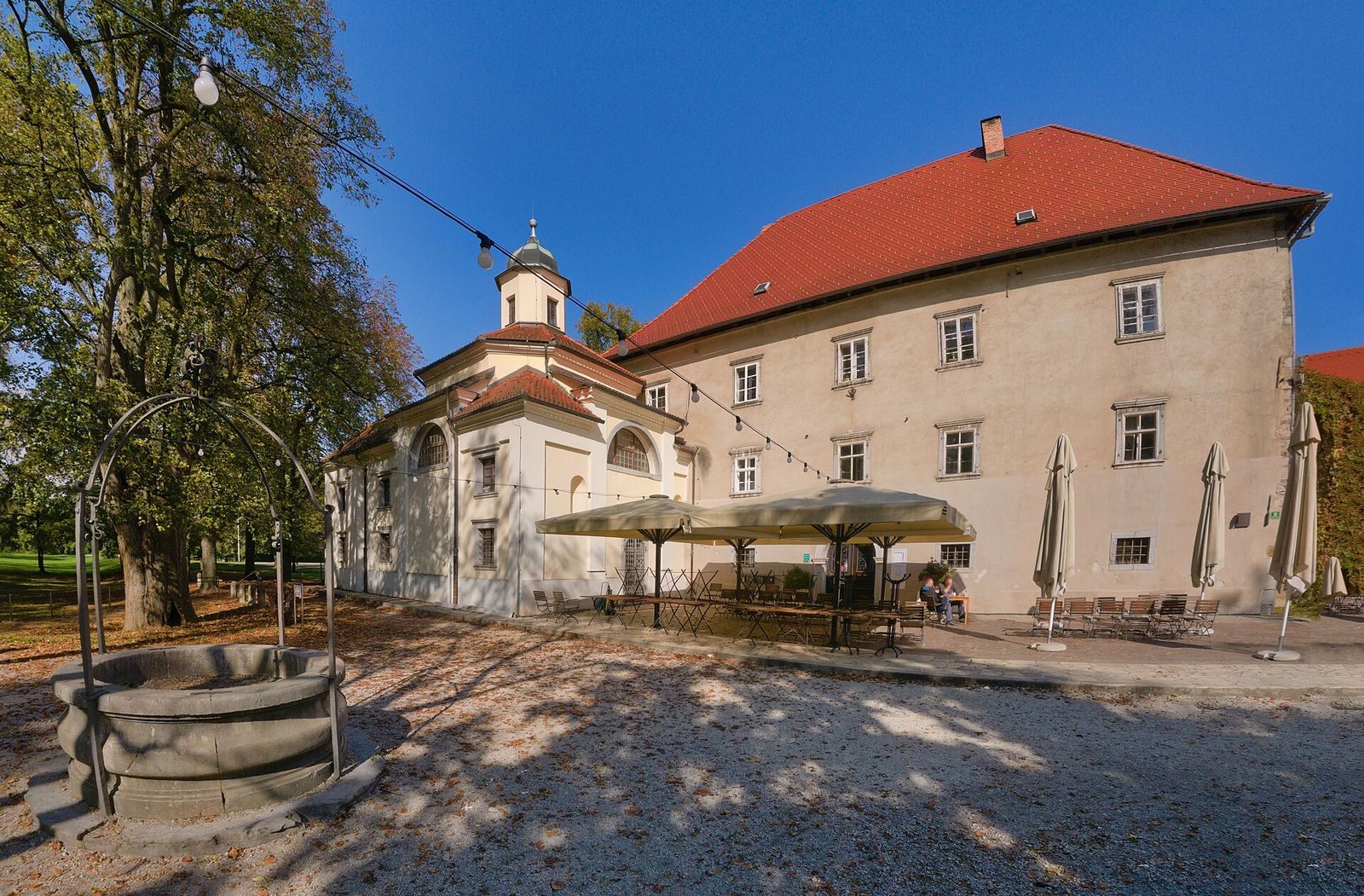
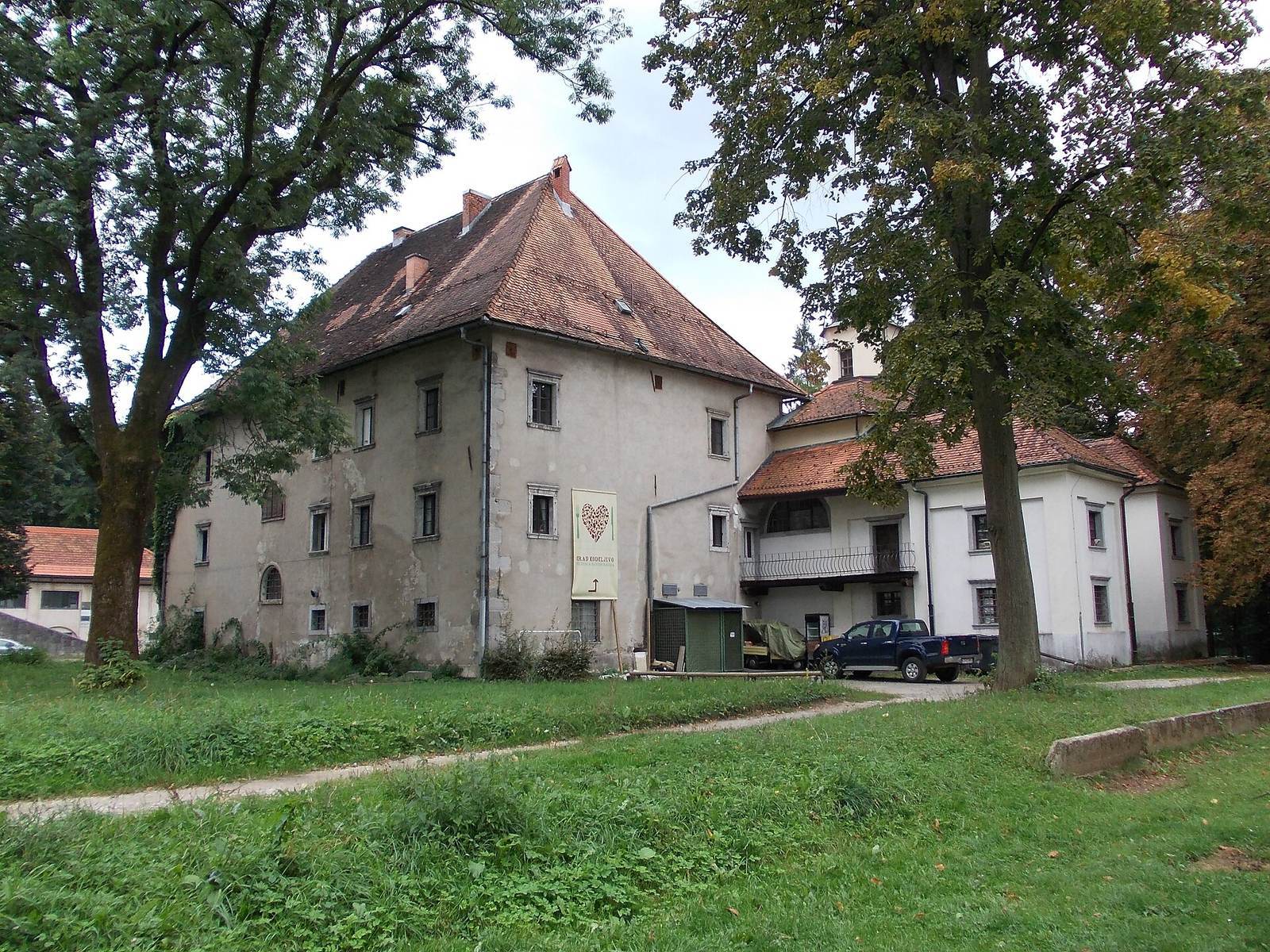
The mansion has a steep roof sloping on all four sides, and its fabric has changed little over the centuries. A one-storey, tower-like projection extends from the east side; its ground floor is open and rests on two columns. The main entrance is a semicircular stone doorway framed by broad bases and column tops, with a central wedge-shaped stone. A Codelli coat of arms was added to it later. Small, horizontally oriented windows mark the ground floor, while the upper-floor windows are larger and upright, with decorative surrounds and sills.
Inside, a winding staircase has a wrought-iron railing, and several Baroque doorways survive. Original arched ceilings with crosswise arches remain on the ground floor; the ceilings elsewhere are newer.
Chapel
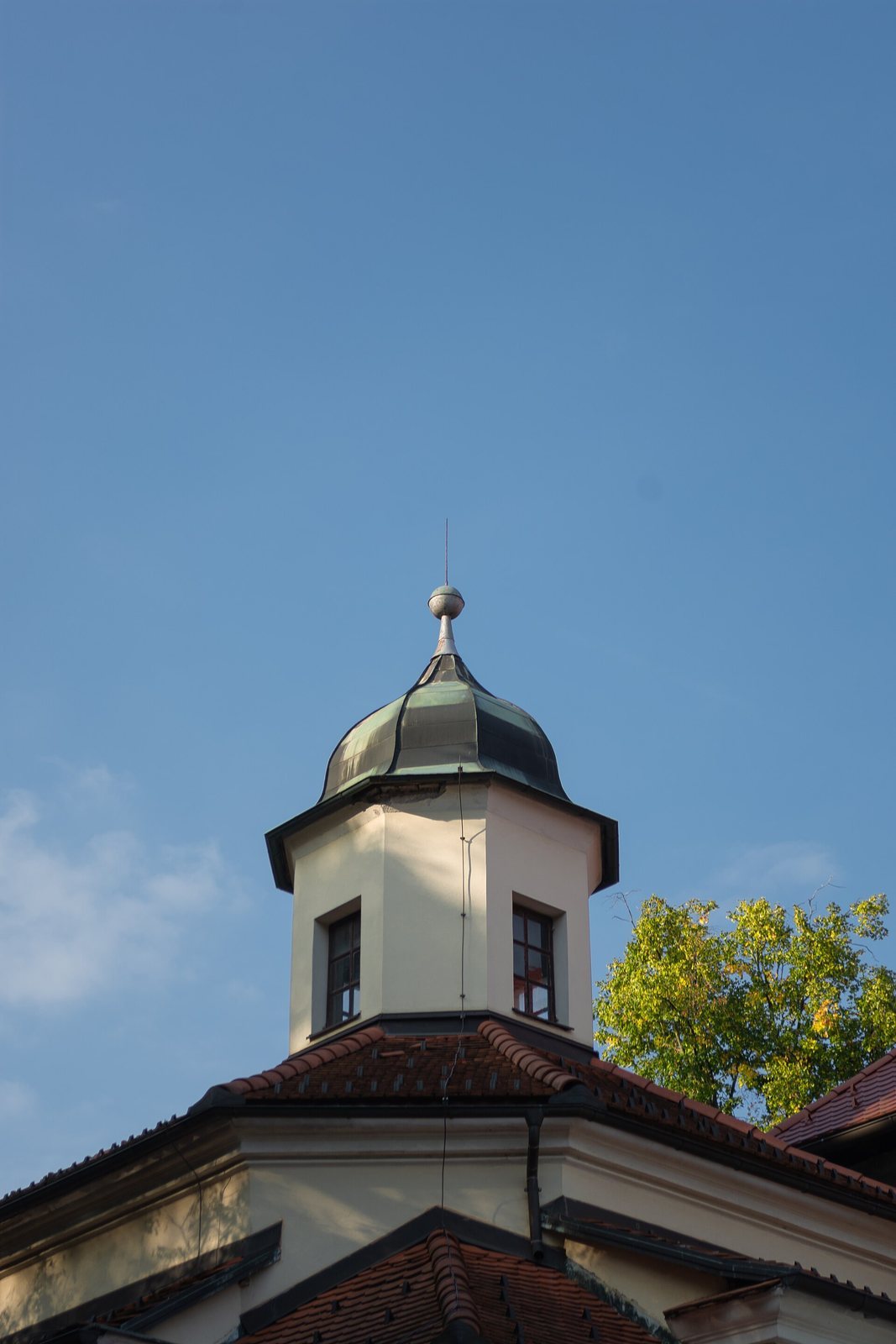
The chapel has a large Baroque dome and a fully painted interior, including paintings by Fran Jelovšek. Its three Baroque altars are made of Carrara marble. The main altar centers on a figure of the Immaculate Virgin, accompanied by four sculptures of saints by Jacopo Contieri. The entrance is emphasized by a projecting section of the facade with a straight lintel. Niches on either side once held statues of Augustine and Ambrose, early Christian bishops and theologians. Beneath the choir, an inscription uses a chronogram, a text whose letters with numerical values encode a date.
Courtyard and park
Service building and courtyard
A Baroque service building bears the date 1706. In the courtyard, a Baroque fountain beside a large linden tree bears the arms of Avguštin Codelli pl. Fahnenfel and the date 1753. Its wrought-iron mechanism was used to wind or draw water.
Park
The present Anton Codelli Park, formerly Kodeljevo Park, preserves part of the estate’s former layout. A broad, straight road once ran from the castle toward the river, lined with chestnut trees and ending at a circular feature. A rectangular grid of paths and garden beds also formed part of the plan. The former park extended from an old river channel near the present outdoor swimming pool, across what is now built-up Kodeljevo, to another abandoned channel. Tennis-court construction partly filled one channel, while surviving elms still trace its course.
The current park is densely planted, with hornbeams, elms, spruces, lindens, birches, larches, and a plane tree near the children’s playground. A large beech grows close to the fountain. Two chestnut avenues lead toward the castle, one from Litijska cesta and the other from Povšetova ulica.