Kloster Marienthal: A Former Cistercian Nunnery in Germany
Site at a Glance
- Rating
- 4.1
- Popularity
- Very Low
- Country
- Germany
- Primary era
- Medieval
- External website
- Open
- Eras represented
- Medieval
- Civilizations
- Holy Roman Empire, Margraviate of Meissen
- Site type
- Religious
- Remains
- Monastery
On this page8 sections
History
Kloster Marienthal is a former Cistercian nunnery in Germany, founded at Sornzig, now a district of Mügeln, in 1241 by Siegfried III of Mügeln. The Cistercians were a Western Christian order that stressed disciplined communal life, agricultural work, and strict observance of monastic rules. The nunnery became the center of an estate that administered surrounding villages and helped shape the agricultural character of the area.
Origins and medieval development
The foundation grew from an older noble presence at Sornzig. Around 1150, Siegfried I of Mügeln established a noble estate there. His ancestors had received the area around Festenberg as a royal donation during the eleventh century, probably in connection with their service as vogts, secular officials who exercised administrative or protective authority for a church institution or ecclesiastical lord, of the Meissen bishopric.
Marienthal already held a religious connection with Festenberg by 1218, when the chapel of its castle ward came under the monastery’s ownership. A medieval castle ward was an administrative district associated with a fortified center. In 1243, Bishop Conrad of Meissen confirmed that Siegfried of Mügeln had placed both the parish church of Sornzig and the castle chapel at Mügeln under the nunnery’s authority.
Later donations expanded Marienthal’s holdings to include nearby villages, which were administered through the Sornzig Monastery Office. The nuns also introduced fruit cultivation to the monastery’s lands. In 1252, Margrave Henry the Illustrious placed Marienthal under his protection and supported it repeatedly. A major fire in 1278 destroyed much of the monastery, and indulgences, including one issued by Frederick, Bishop of Merseburg, helped finance its rebuilding.
Reformation and secularization
The sixteenth-century Reformation challenged established Western Christian institutions and encouraged the adoption of Protestant churches in many territories. During this period, discipline within the Cistercian community declined. At Easter 1523, Katharina von Bora escaped from the nearby Nimbschen convent. Six nuns subsequently fled from Sornzig as well, while the person who assisted their escape was later beheaded.
Marienthal was secularized and dissolved around 1539 to 1540. Its property was confiscated by the state and assigned to St. Afra princely school in Meissen, an elite educational institution. From 1540 to 1570, the former monastery territory was administered as part of the Meissen Electoral School Office.
Administration after the nunnery
After 1570, the Sornzig Monastery Office was exchanged for the Mühlberg Office and transferred to Johann IX of Haugwitz, Bishop of Meissen. When Johann resigned on 20 October 1581 and converted to Protestantism, he received the former Marienthal monastery and Ruhethal Castle in Mügeln as a lifelong annuity, meaning property or income granted for use during his lifetime. He retained both until his death in 1595.
In 1584, the Sornzig Monastery Office came under the administration of the Wurzen collegiate foundation, a church institution governed by a college of clergy rather than a monastic community. This brought the territory fully into Albertine Electoral Saxony, the branch of Saxony ruled by the Albertine Wettin line. It remained administered through the Wurzen collegiate foundation office by a special Electoral Saxon government acting for the Dresden court until 1818.
The estate was leased to Georg von Schleinitz for twelve years from 1608. Between 1666 and 1761, the former monastery office became a manorial estate owned by the von Burkersroda family. From 1763, its lands were distributed among the office’s subjects. Around 1797, three settlements, Lichteneichen, Neubaderitz, and Neusornzig, were established on former monastery territory.
From state estate to preserved complex
After the Wettin foundation government and the Wurzen collegiate foundation office were dissolved in 1818, Sornzig became part of the Mügeln state office in the Leipzig district of the Kingdom of Saxony. This arrangement continued until 1856, when the Mügeln and Oschatz district courts replaced the office.
Leipzig city planner Ludolf Colditz purchased the monastery grounds in 1892, restored the buildings, and introduced modern plantation fruit cultivation at Sornzig. The Colditz family was expropriated in 1946, after which fruit growing continued under the state enterprise Volksgut Sornzig until 1990. Following German reunification, the family reacquired the monastery building and reconstructed its interior and exterior in accordance with heritage-conservation requirements. The Dr. Ludolf Colditz–Kloster Marienthal Foundation was established in 1996 to preserve and use the complex.
Remains
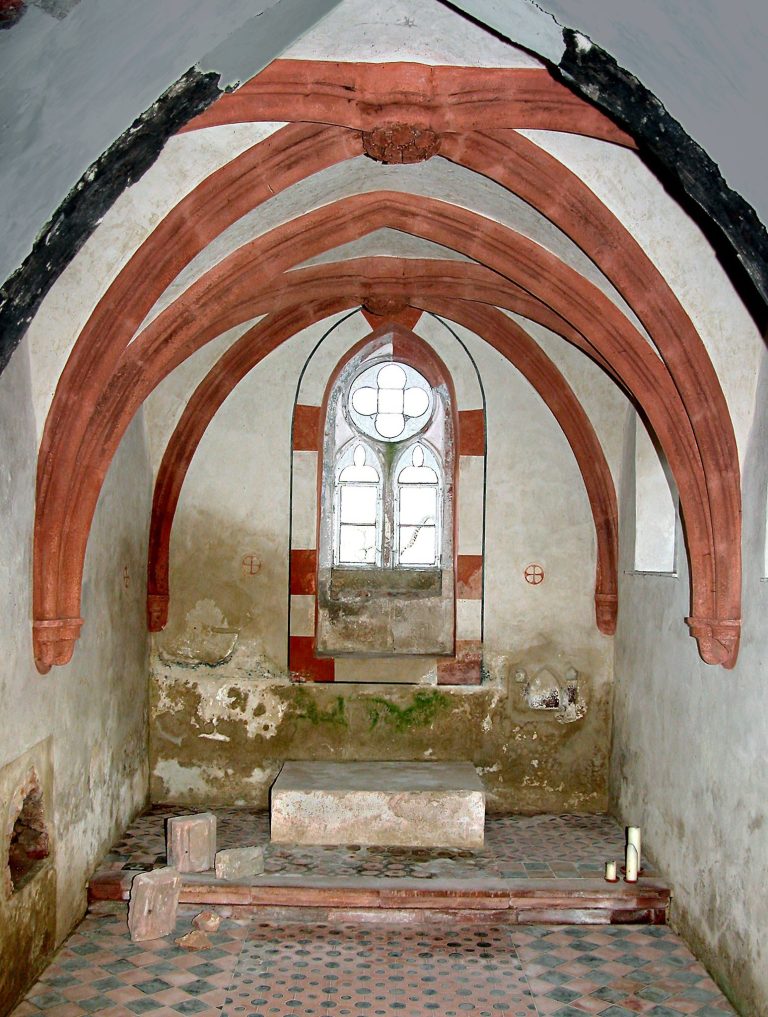
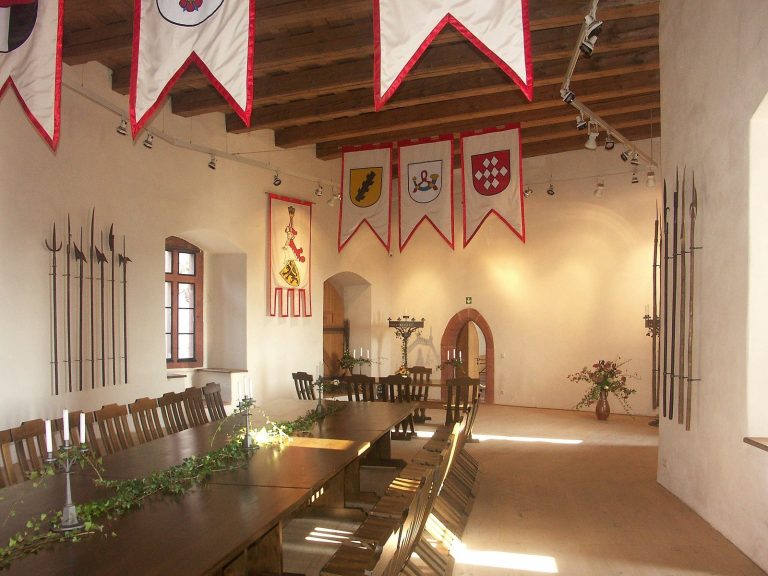
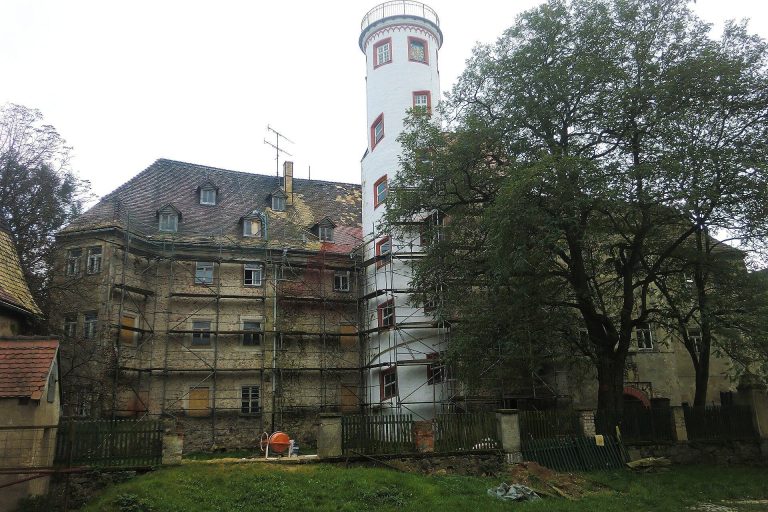
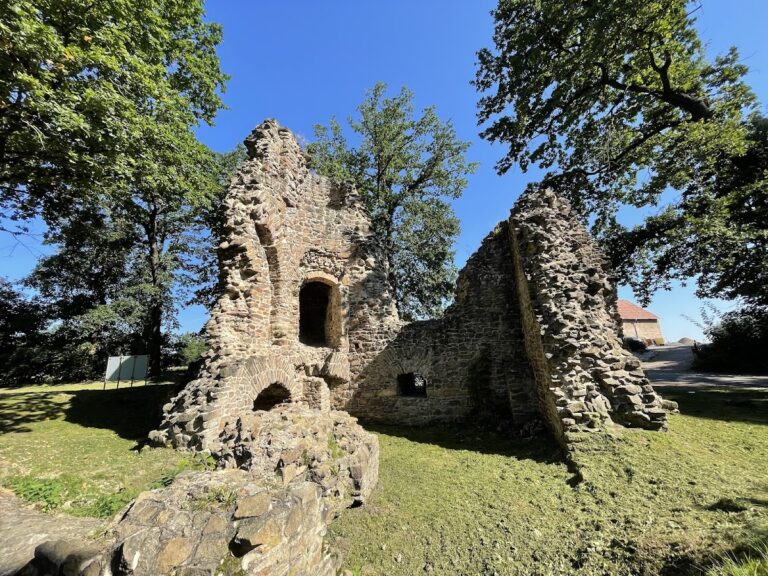
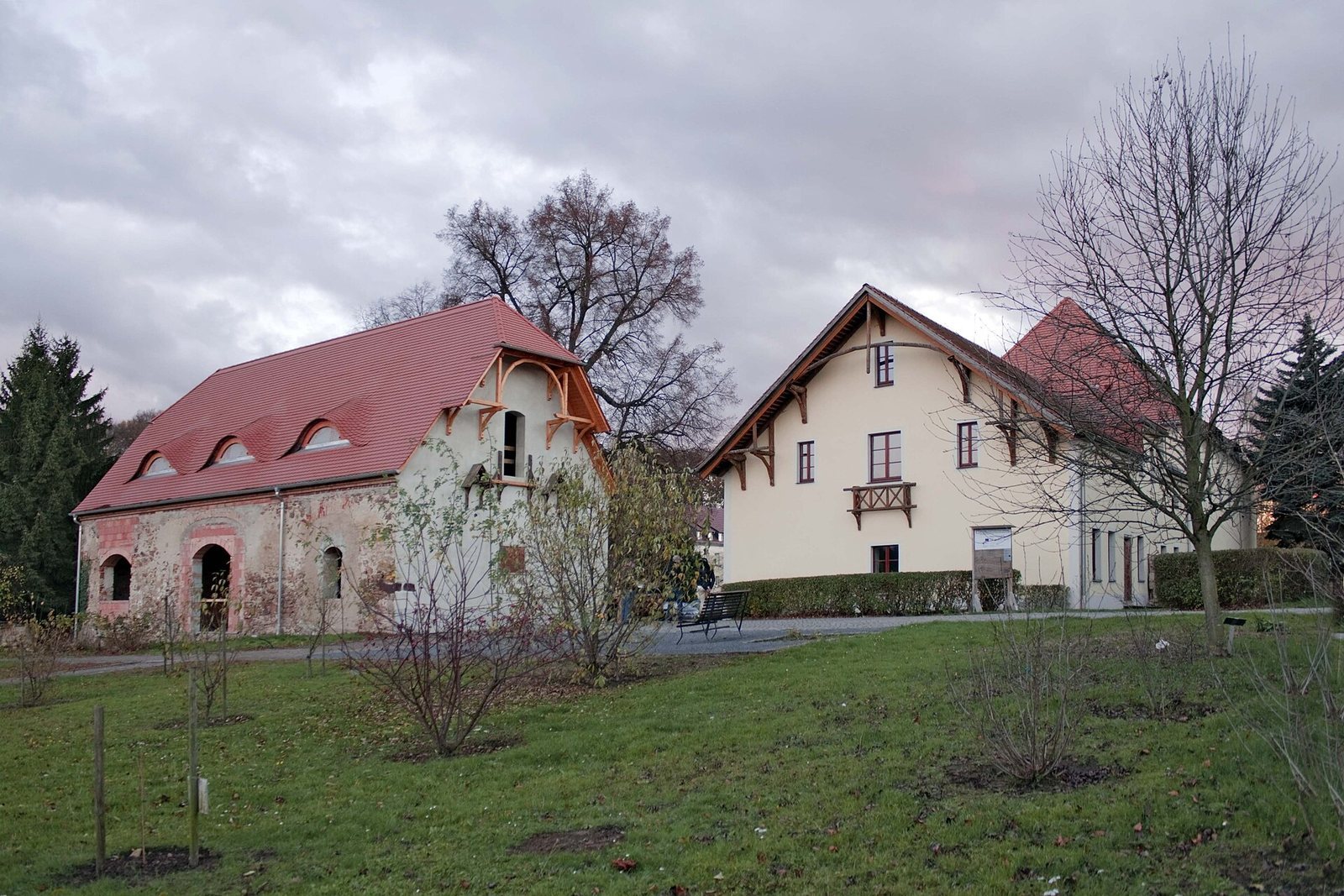
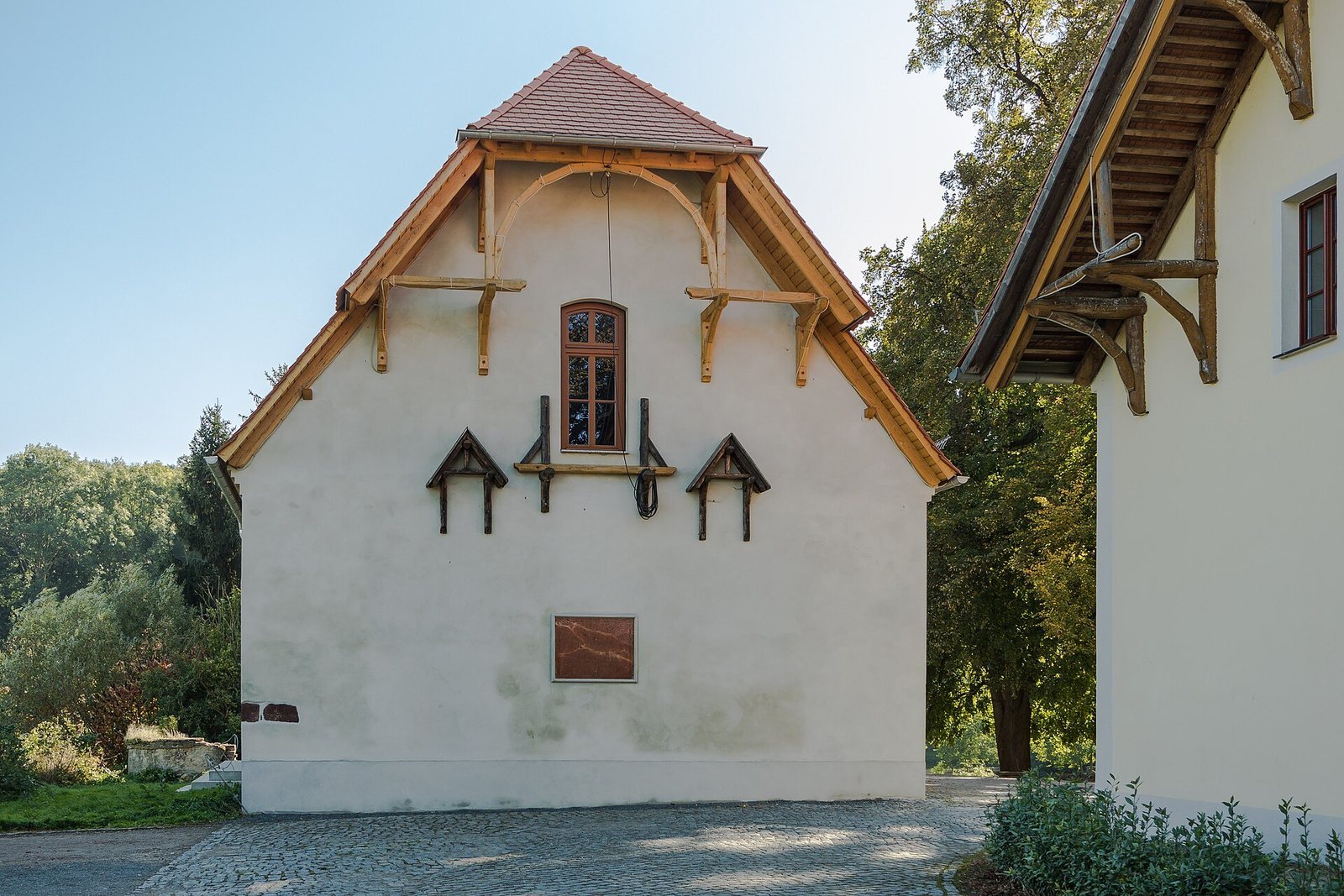
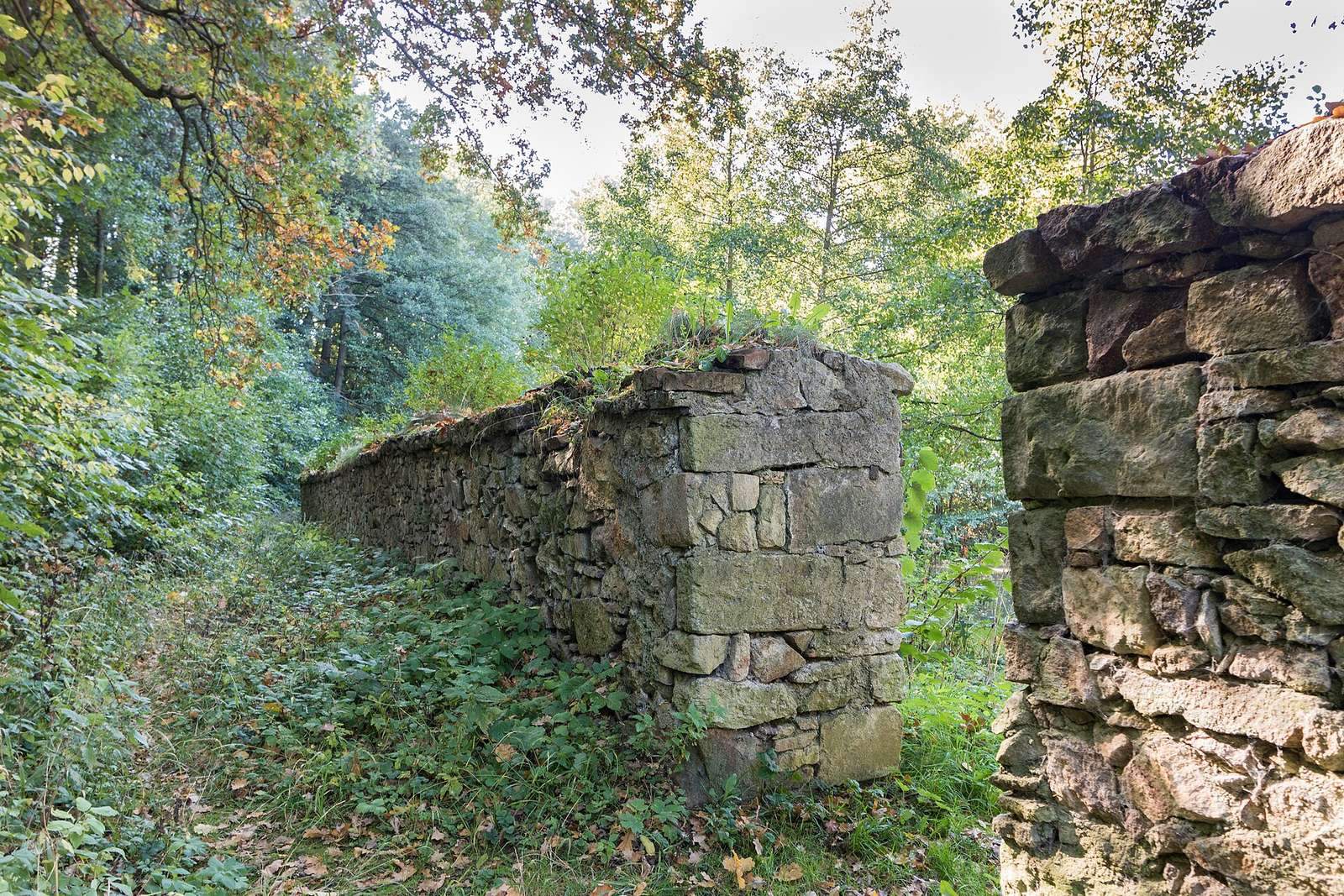
Kloster Marienthal stands on the Hasenbach, a tributary of the Döllnitz, in a hilly landscape within Saxony’s central fruit-growing region, known as the Obstland. The surviving historic complex includes the sisters’ house, a monastery wall enclosing the grounds, the monastery barn, and the monastery garden. Together, these elements preserve the principal physical components of the former religious and agricultural estate.
Monastery buildings and grounds
The monastery wall defines the former grounds, while the sisters’ house and monastery barn represent the surviving built elements of the complex. The monastery garden contains a fishpond associated with the historic monastery mill. The former monastery building was restored after Ludolf Colditz acquired the site in 1892 and was later reconstructed both inside and outside after the Colditz family reacquired it following German reunification.
Related religious landscape
Marienthal’s wider religious landscape included the chapel of the castle ward on Festenberg, owned by the monastery from 1218. It also included the parish church of Sornzig and the castle chapel at Mügeln, both placed under the nunnery’s authority in 1243. These associated institutions formed part of the network through which the monastery exercised religious authority beyond its immediate buildings.