Gernrode Abbey: A Foundation for Secular Canonesses
Site at a Glance
- Popularity
- Medium
- Country
- Germany
- Primary era
- Medieval
- Eras represented
- Medieval
- Civilizations
- Unclassified
- Site type
- Religious
- Remains
- Church
On this page6 sections
History
Gernrode Abbey was a community of secular canonesses founded by Margrave Gero, a frontier ruler of the Saxon Eastern March, at his castle of Geronisroth on the northeastern edge of the Harz Mountains, at the site of present-day Gernrode, Germany. Its foundation is conventionally dated to 959, though an alternative reassessment places it in the summer of 961. Gero intended the institution to be his burial place and a center of prayer in his memory. Unlike a Benedictine nunnery, its members shared a religious life without monastic vows or enclosure; their rules followed regulations adopted at the Council of Aachen in 816.
Early privileges and religious ties
Gero’s only son, Siegfried, died without an heir, and Gero left his personal property to the abbey. Gifts from Otto I and other rulers, Margrave Ekkehard II of Meissen, and Abbess Hedwig of Seeburg further enlarged its wealth. Hathui, Gero’s daughter-in-law and Siegfried’s widow, became the first abbess, the leader of the women’s community. She belonged to the Billung family and was a niece of Queen Mathilde.
In 961, Otto I placed the abbey under royal protection and granted it immunity. Its privileges included the right to elect its own abbess and advocate, a secular official who represented and protected the institution. Otto III confirmed these rights in a charter in 999, and the abbey also received papal protection. Exemption from the authority of the bishop of Halberstadt developed over time; the abbesses had secured it by 1381.
The church was first dedicated to Mary and Peter. After Gero acquired an arm relic of Saint Cyriacus in Rome, it reached Gernrode through Frose. The abbey became a center of the saint’s cult, and its church was rededicated to him. Frose was closely linked to Gernrode and may have been converted from a Benedictine nunnery founded by Gero in 950 into a community of secular canonesses under Gernrode’s abbess. The canonesses of both houses elected their abbess together, with the advocate, canons, and dependent officials and retainers present.
The second abbess, Adelaide I, was a daughter of Otto II and also led Quedlinburg, strengthening the ties between the two institutions. During the period of the Ottonian rulers, Gernrode held standing comparable to the abbeys of Quedlinburg, Gandersheim, Essen, and Vreden. It also shared an association for commemorative prayer with Gandersheim and Vreden.
Ascanian influence and shrinking estates
Gernrode’s connections with kings weakened from the eleventh century onward. From the twelfth century, members of the House of Ascania served as advocates, probably beginning with Albert the Bear. The family gradually extended its influence over the abbey and used the office to advance claims to territorial authority. Imperial visits included those of Empress Cunigunde and Henry V; Frederick I Barbarossa held an imperial assembly at Gernrode in 1188. In 1357, Charles IV issued a diploma confirming the abbey’s rights.
Abbesses and provosts, senior officers of the institution, often came from noble families such as the Billungs, Ascanians, and Wettins. The abbess controlled admission to the community, assigned income and offices, nominated parish priests for the abbey’s dependent churches to the bishop of Halberstadt, and oversaw its estates and courts. Its holdings exceeded 1,000 hides in the High Middle Ages, a hide being a historical land measure whose area varied. From the eleventh century, the estate was divided among the abbess, canonesses, and other members of the institution, with much land held in return for service by dependent officials and military retainers.
A charter falsely attributed to Gero, written in 1207 and recognized by Pope Innocent III that year, claimed the abbey possessed 24 villages, 21 churches, and 400 hides in separate locations. From the thirteenth century, Gernrode lost influence amid mismanagement by some abbesses, wider economic changes, and the policies of the archbishops of Magdeburg and bishops of Halberstadt. By 1544, its holdings had contracted to the town of Gernrode and five villages. In the fifteenth and sixteenth centuries, the House of Anhalt, descended from the Ascanians, sought to absorb the abbey. Its abbesses repeatedly sought confirmation of their rights from emperors including Sigismund, Frederick III, Charles V, Maximilian II, and Rudolf II, without securing lasting territorial sovereignty or exemption from episcopal authority.
Reformation and incorporation into Anhalt
In 1525, during the German Peasants’ War, Gernrode’s serfs rebelled unsuccessfully against increased levies imposed by Abbess Elizabeth of Weida, who ruled from 1504 to 1532. The Reformation began during her tenure, and Protestant worship was introduced publicly in 1545. Gernrode became a Protestant women’s foundation, while its abbess retained the status of an imperial prince, an ecclesiastical lord recognized in the Empire’s political order, and a place in imperial and Upper Saxon Circle assemblies. As an imperial estate, Gernrode was subject directly to the emperor rather than to a territorial lord. It held one collective vote on the Rhenish Prelates’ bench in the Council of Imperial Princes, part of the Imperial Diet.
Between 1610 and 1614, the House of Anhalt incorporated Gernrode’s remaining possessions into its territories. The last abbess, Sophie Elisabeth of Anhalt-Dessau, left in 1614 to marry, ending the succession of abbesses. The Peace of Westphalia confirmed Gernrode’s assignment to Anhalt, which held it on 1 January 1624. The remaining estates supported the senior member of the House of Anhalt until 1669, when they were divided among its four branches. Prince Friedrich of Harzgerode received the town and abbey buildings, while the Dessau and Bernburg branches received other estates; voting rights remained shared. The Gernrode administrative district was among the arrangements that followed, and the House of Anhalt represented Gernrode in the eighteenth century.
Remains
Collegiate church
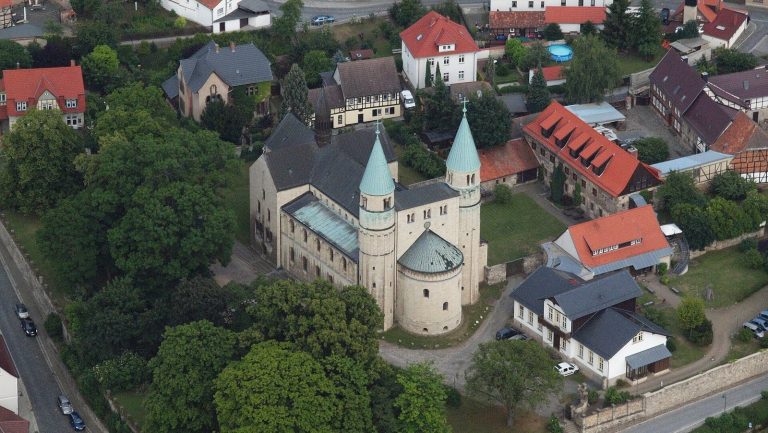
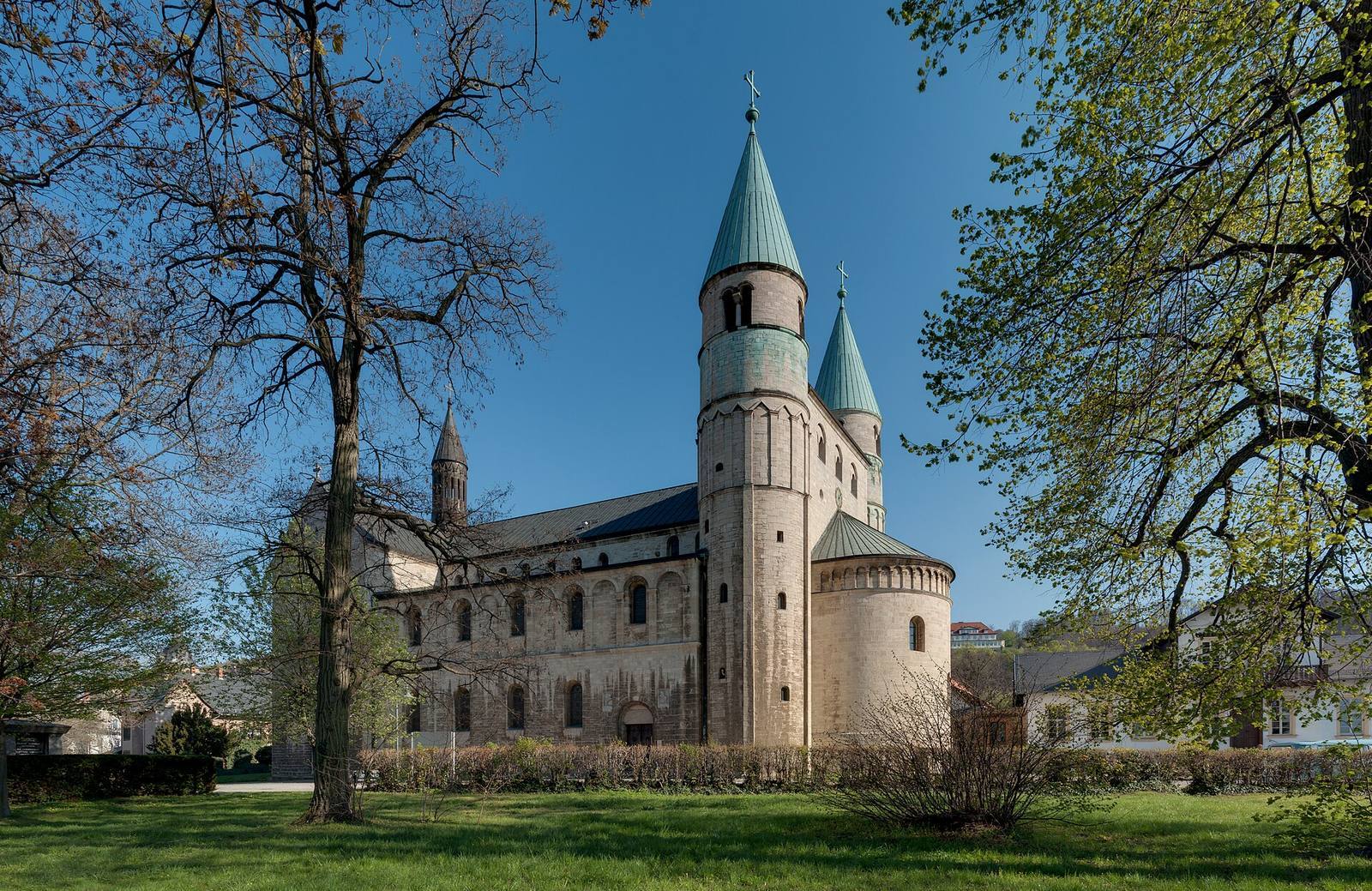
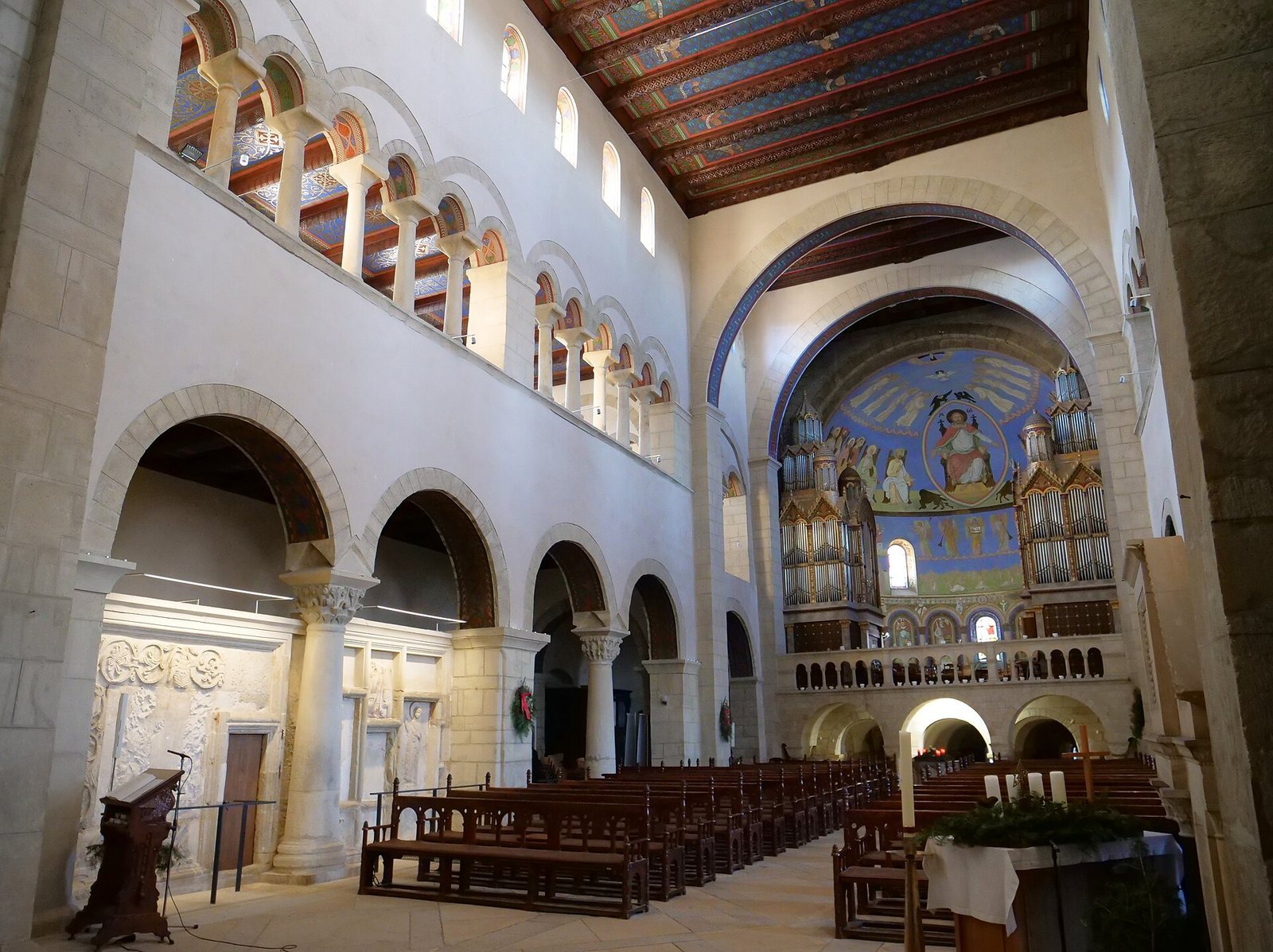
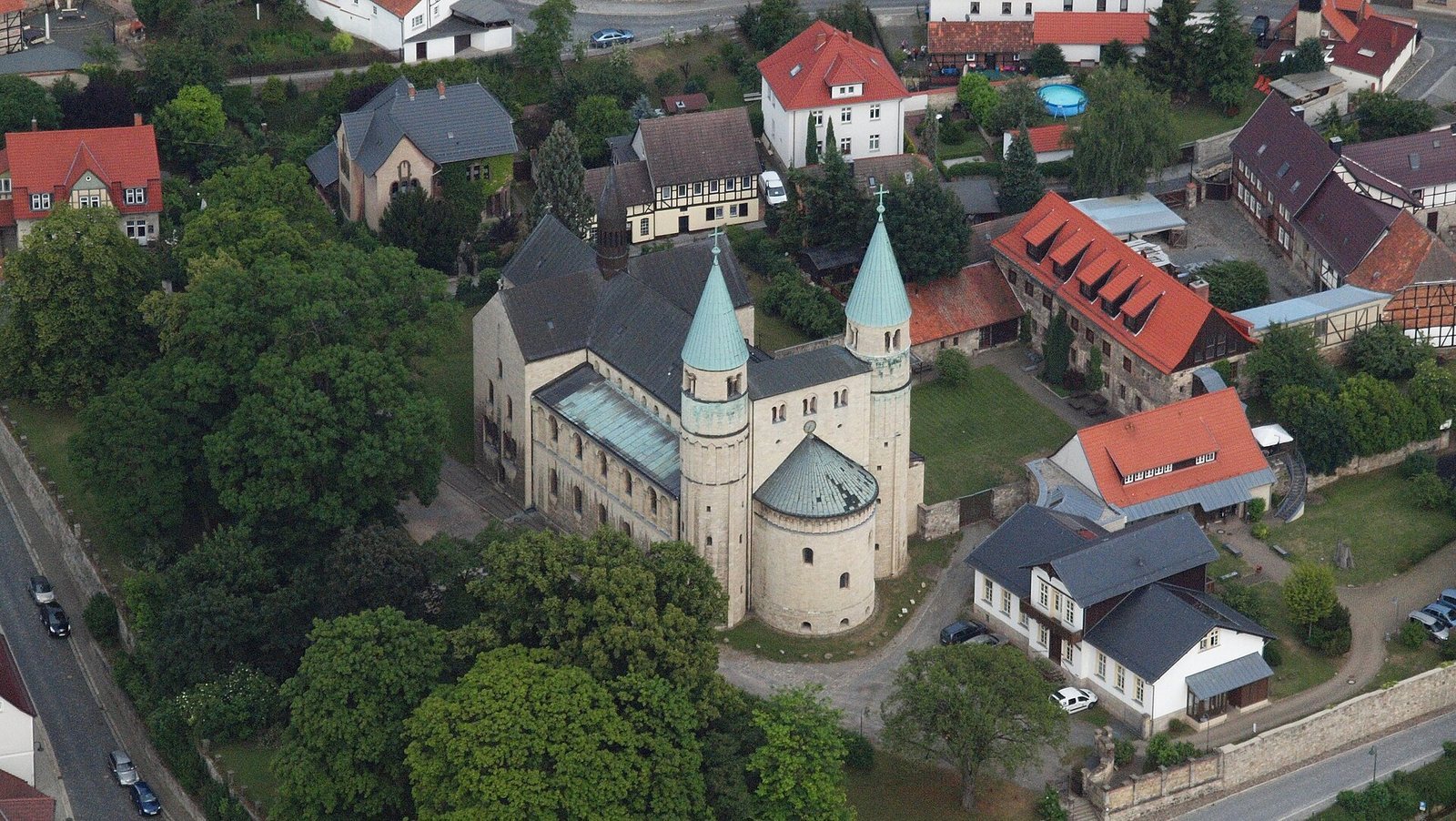
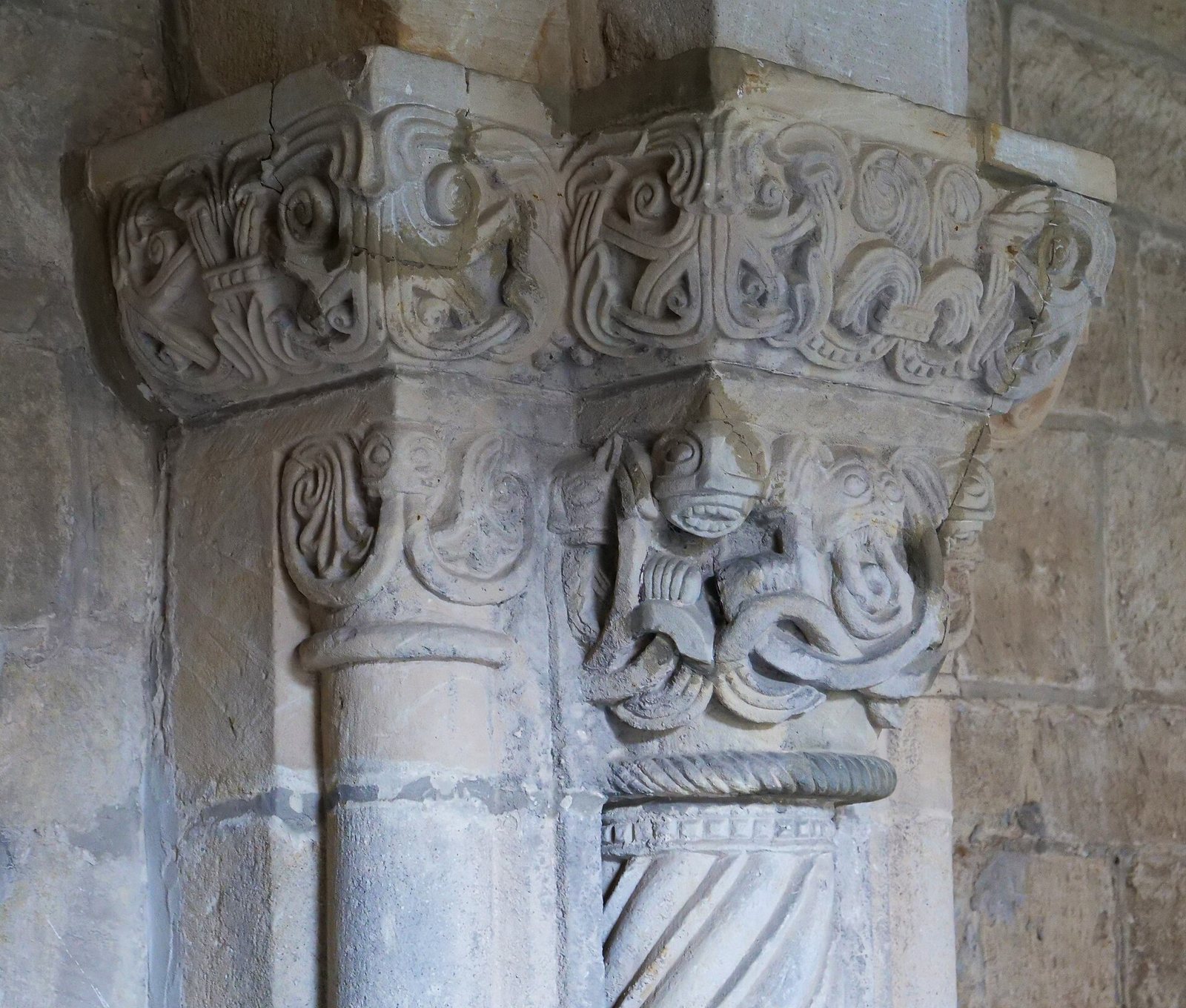
Construction of the collegiate church probably began in 961. Its three-aisled basilica plan has a central nave and side aisles, with a broad, hall-like crypt beneath the church. A sequence of differing columns or piers forms the alternating supports in the nave, while elevated galleries served the canonesses. The church also includes a Holy Sepulchre chapel and a penitential cell, a small enclosed space used for religious penance, in one of its side aisles.