Killagha Abbey of St Mary de Bello Loco: An Augustinian Monastery in County Kerry
Site at a Glance
- Rating
- 4.5
- Popularity
- Medium
- Country
- Ireland
- Primary era
- Medieval
- Eras represented
- Medieval
- Civilizations
- Norman
- Site type
- Religious
- Remains
- Monastery
On this page9 sections
History
Foundation and medieval life
Killagha Abbey of St Mary de Bello Loco is a ruined Augustinian monastery near Milltown in County Kerry, Ireland. Geoffrey de Marisco, an Anglo-Norman nobleman and senior royal official, established it around 1216 on the site of an earlier monastery founded by Saint Colman. The predecessor gave the place the alternative name Kilcolman, meaning “Church of Colman.” Geoffrey had received extensive lands in Munster from King John of England.
Dedicated to the Virgin Mary, the abbey was served by Canons Regular, clergy who lived communally under a religious rule, belonging to the Order of St Augustine. It came under the Diocese of Ardfert, the area governed by a bishop. The name Bello Loco means “beautiful place,” and Killagha drew pilgrims. Its prior, the monastery’s superior, held a seat in the Irish House of Lords, part of Ireland’s legislature. The abbey also maintained a leper house and a hospital. Its extensive Munster lands supported a wealthy institution, which paid the third-highest tax rate in the Diocese of Ardfert in 1302.
Suppression and Crown transfers
During the Desmond Rebellions, sixteenth-century conflicts over English Crown authority in Ireland, the abbey’s closeness to the fortress at Castle Maine brought it to royal attention. The Crown ordered its closure, and it was suppressed in 1576 during the Reformation in Ireland, a period of religious and political change under English rule that included the closing of monasteries. Its distance from Dublin contributed to its later dissolution than that of most Irish abbeys.
After seizing the abbey and its lands, the Crown leased them to Thomas Clinton, an officer of Elizabeth I in County Kerry. Sir William Stanley held the lease briefly in 1583. On 12 December 1588, the Crown granted the abbey and estate to Captain Thomas Spring of Castlemaine, a Protestant nobleman who had served during the Desmond Rebellions. The grant required the domestic buildings to be rebuilt in a castle-like form for defence.
War and later ownership
Thomas Spring’s son Walter became High Sheriff of Kerry in 1609. A later Walter Spring, Captain Thomas Spring’s grandson, was raised as a Roman Catholic and fought in the Irish Rebellion of 1641. During the Irish Confederate Wars, a series of conflicts that began with the 1641 rebellion, a Cromwellian army attacked the abbey. After the rebellion was suppressed, Oliver Cromwell’s forces seized almost all of Walter Spring’s lands. Walter became known as “The Unfortunate.”
The Crown granted the abbey to Major John Godfrey, a soldier in the Cromwellian army. After Charles II’s restoration to the throne in 1660, land claims were readjusted, but the Act of Settlement 1662, which addressed land redistribution after the wars, confirmed Godfrey’s grant. The destruction of the manor house ended the abbey’s use as a residence. In 1772 the Godfrey family built a separate house in Milltown, called Kilcolman Abbey and also known as Bushfield House. It was abandoned and demolished in 1977. The abbey ruins are now protected as Kilcolman Burial Ground.
Remains
Surviving complex
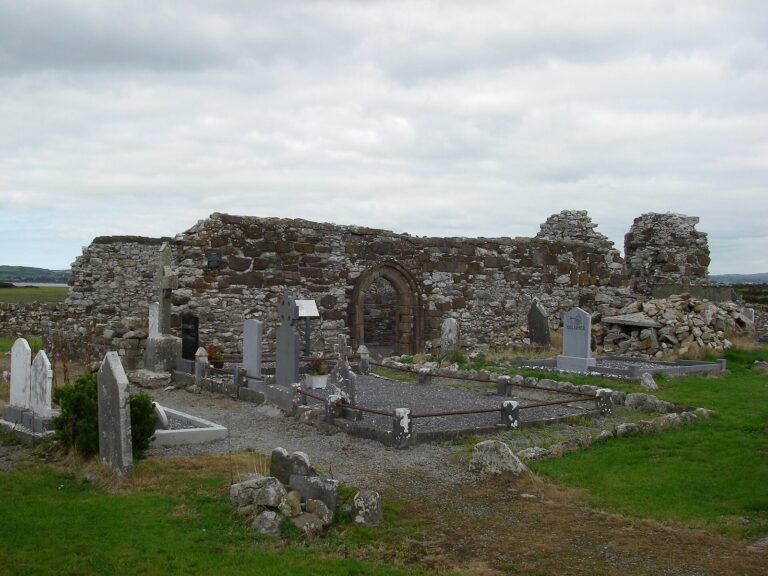
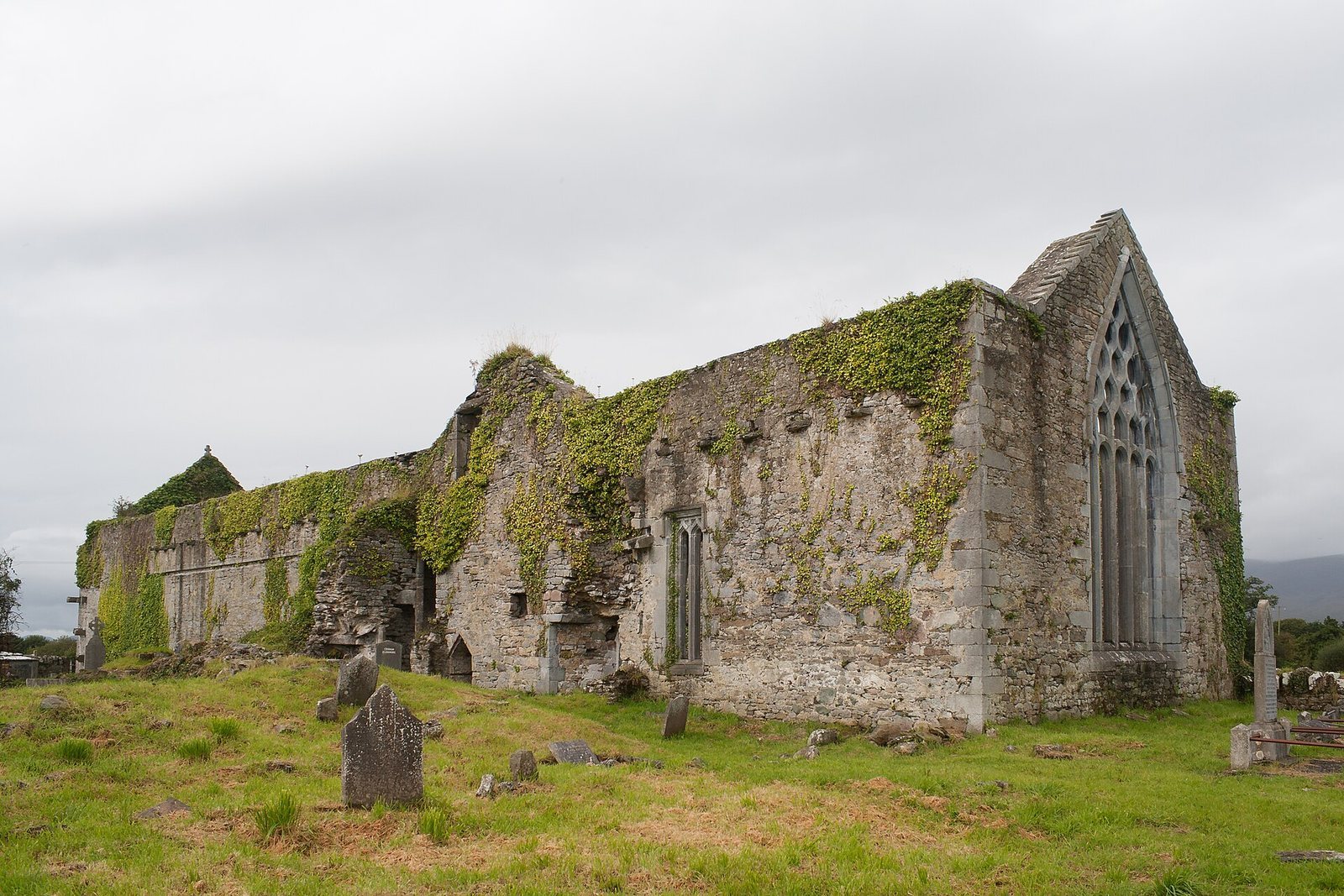
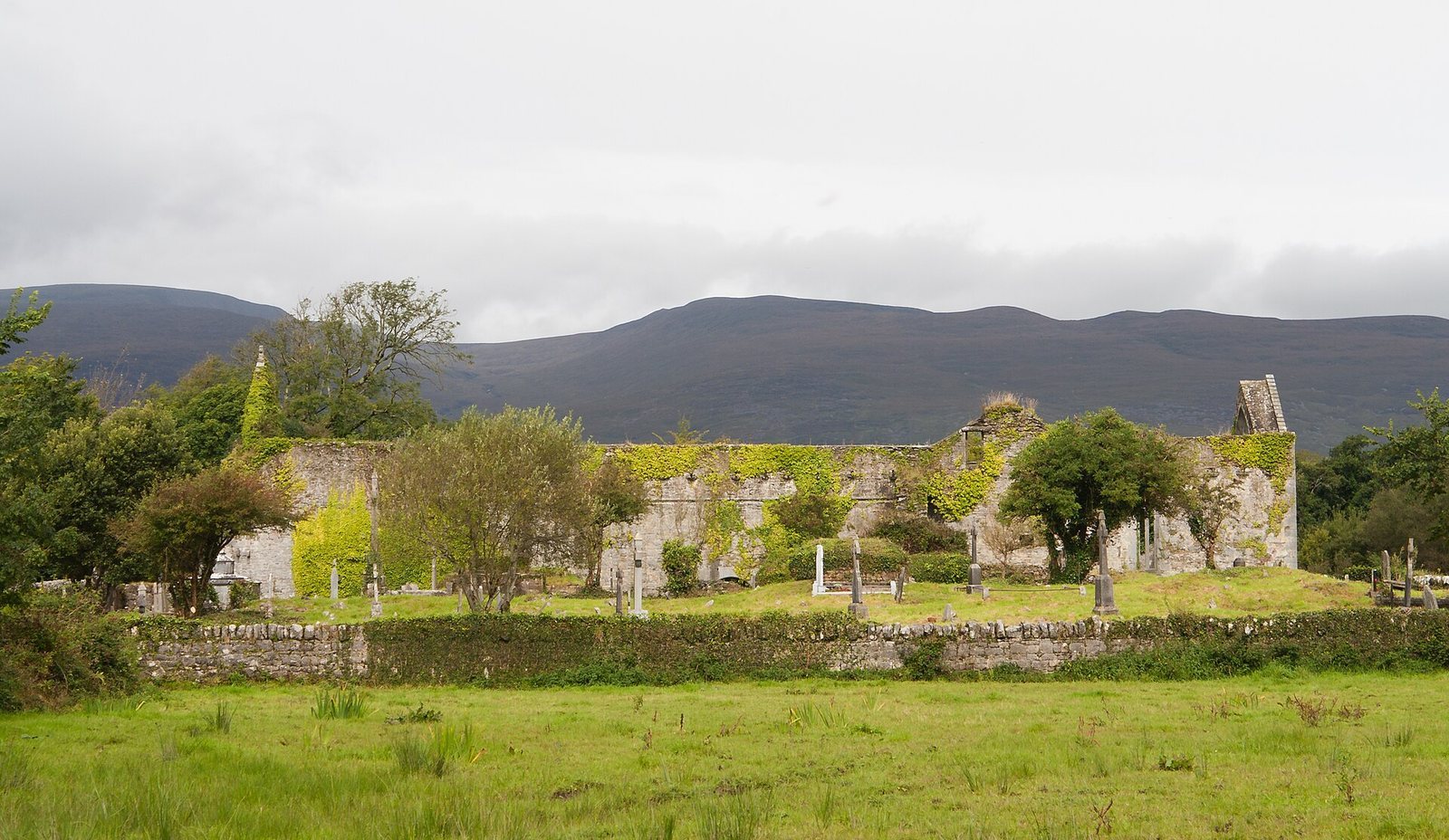
The ruined abbey and former manor-house site lie about 1 kilometre northwest of Milltown, near the River Maine. The church stands within the area once occupied by the abbey’s domestic buildings, while the land immediately around the church formed its cemetery.
Church
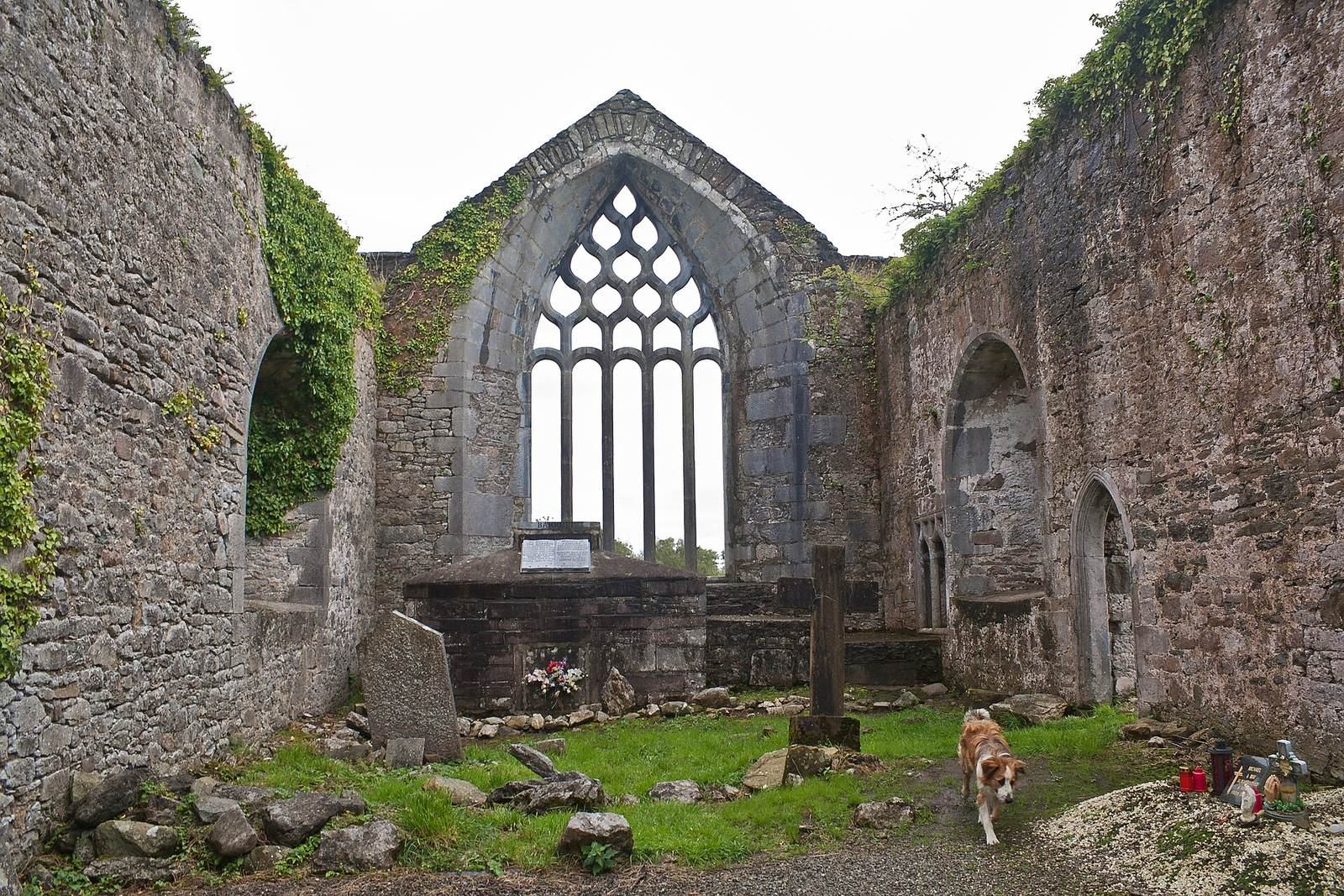
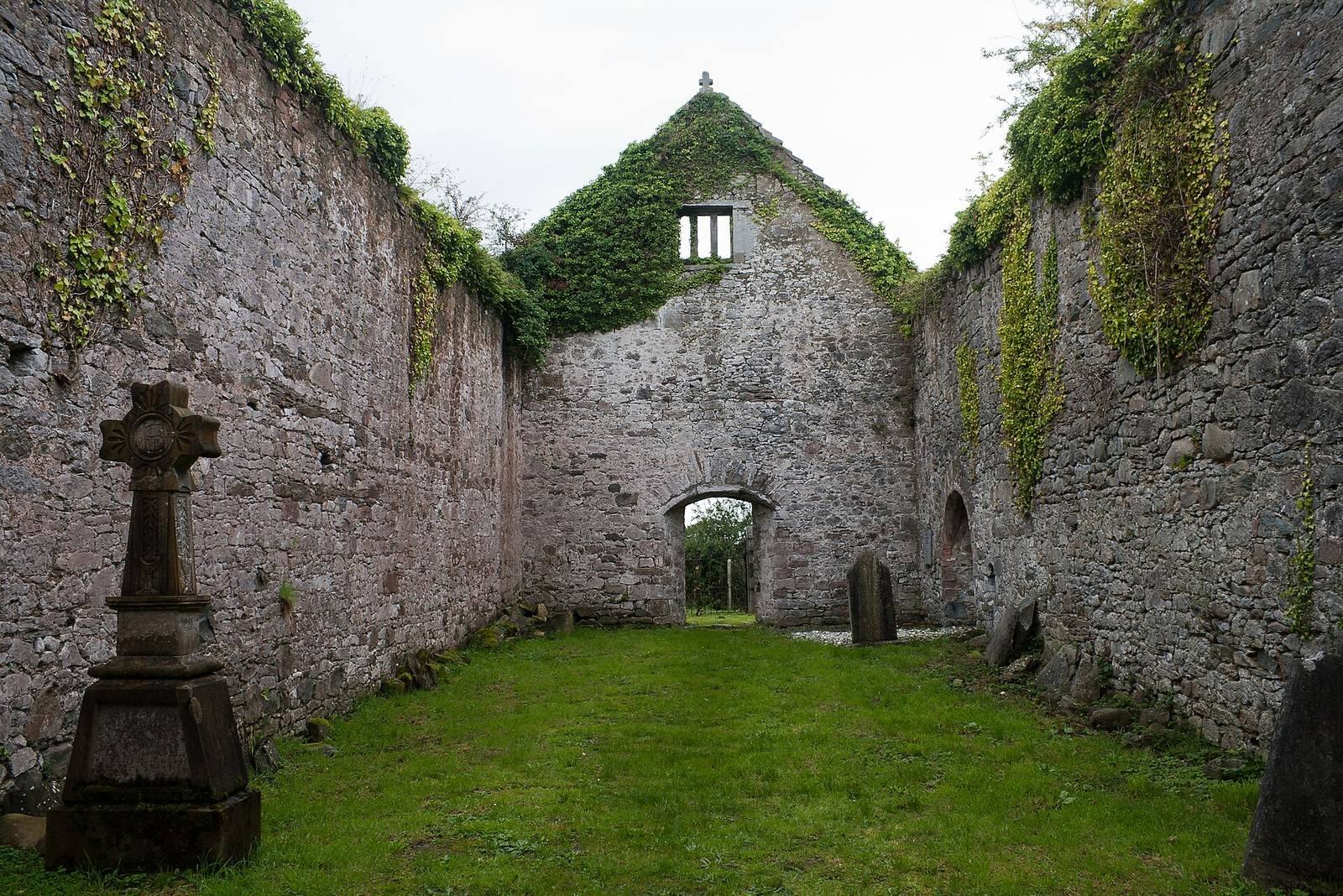
A large east window was added to the church in the fifteenth century. The building was partly damaged during the Cromwellian attack and later fell into ruin.
Fortified domestic buildings
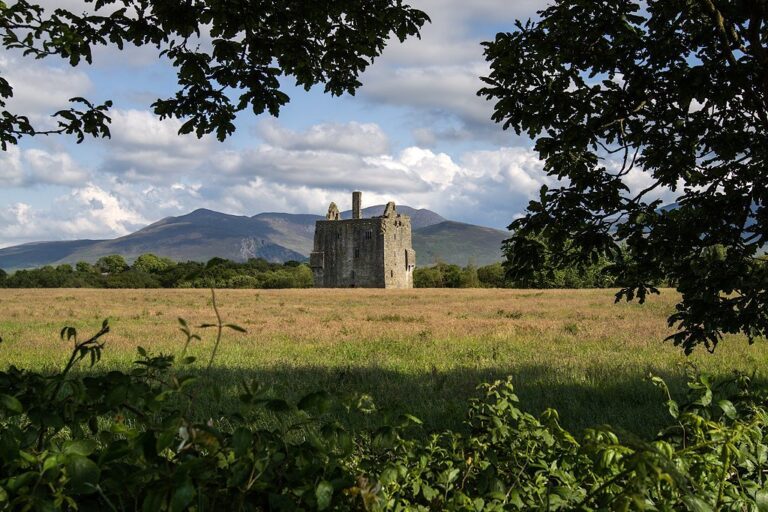
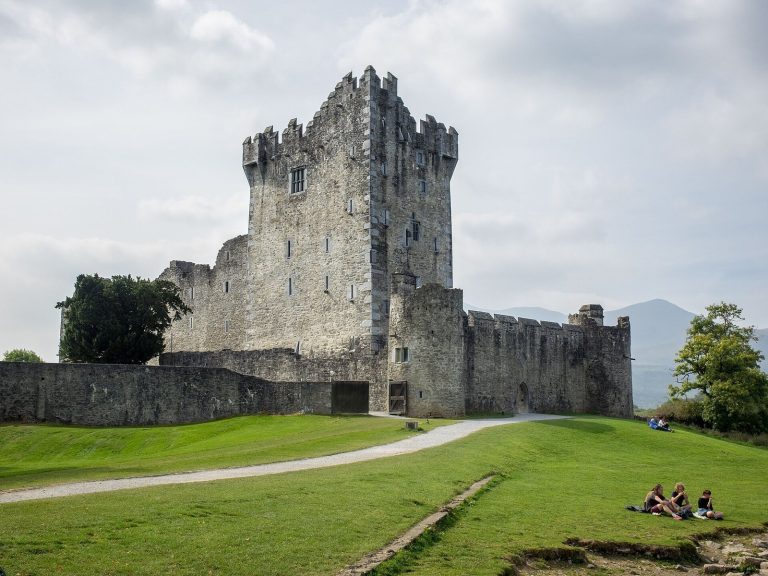
The abbey’s domestic buildings were rebuilt in a castle-like form for defence. Cannon fire destroyed them during the Cromwellian attack. Some of their building materials were later taken for nearby houses and for the Godfrey family’s separate manor house.
Burial ground
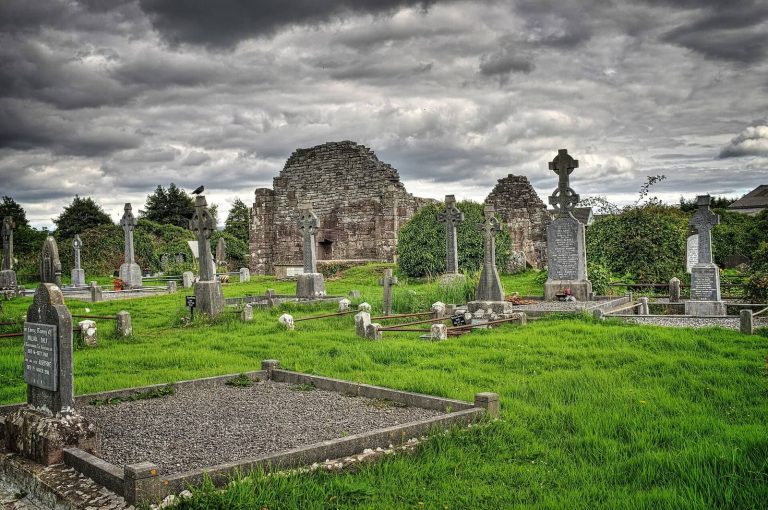
The ground immediately surrounding the church served as a cemetery for about 300 years.