Kidal Temple: A Singhasari Temple in East Java
Site at a Glance
- Rating
- 4.6
- Popularity
- Low
- Country
- Indonesia
- Primary era
- Medieval
- Eras represented
- Medieval
- Civilizations
- Unclassified
- Site type
- Religious
- Remains
- Temple
On this page6 sections
History
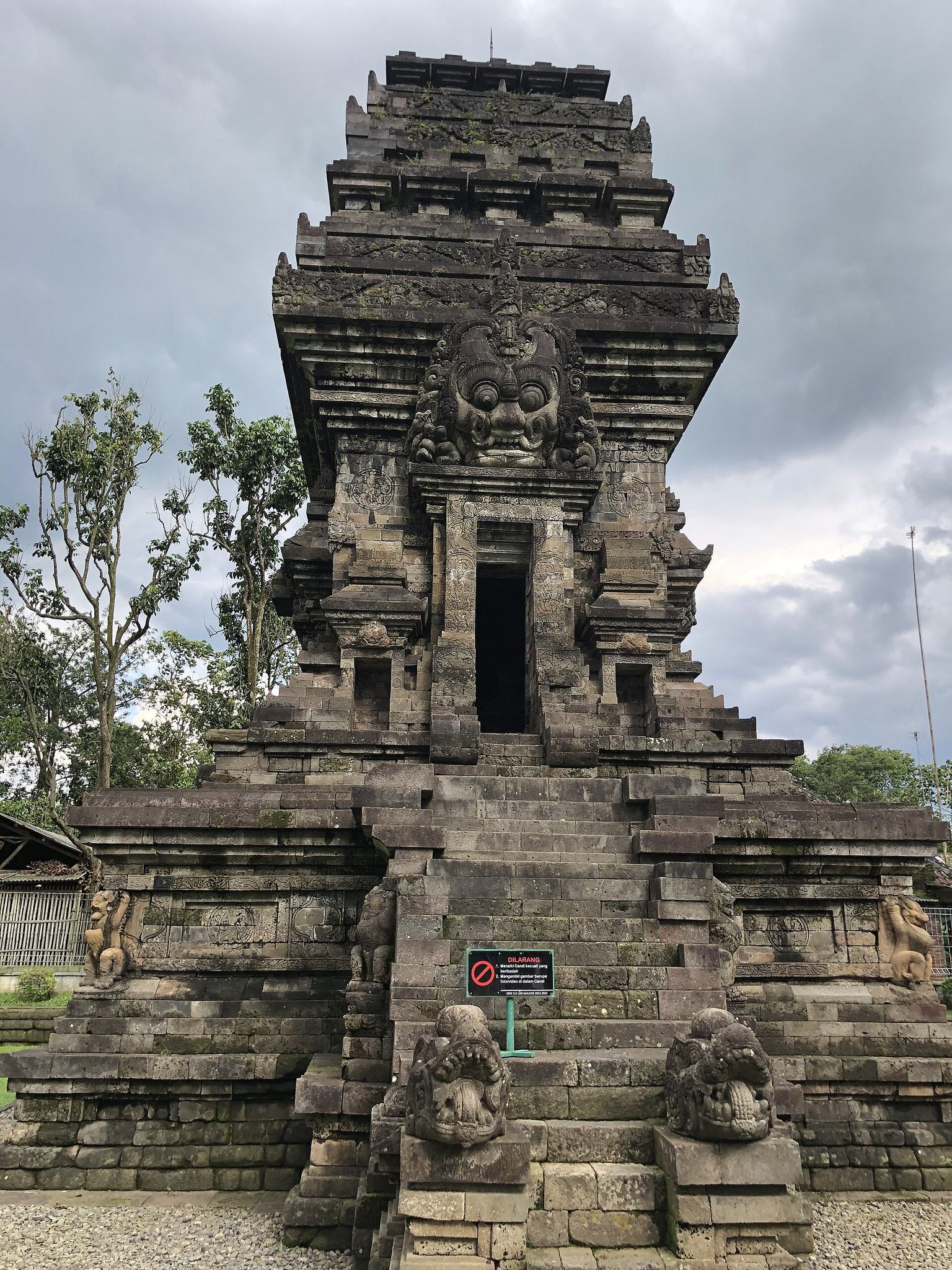
Kidal Temple is a Hindu temple in Kidal village, East Java, Indonesia, built by the Singhasari kingdom in 1248 during the East Javanese temple-building period. It stands in a valley on the western slope of the Tengger mountain region, about 20 kilometres east of Malang, at an elevation of approximately 520 metres. The temple was constructed for the posthumous veneration of Anusapati, Singhasari’s second ruler, who reigned from 1227 to 1248.
Anusapati and the Singhasari Kingdom
Anusapati died in 1248 during a succession struggle within the Singhasari royal family. The Pararaton, a traditional Javanese historical chronicle, says that Panji Tohjaya killed him. This account connects the killing with the curse of Mpu Gandring, a legendary smith whose curse was associated with the deaths of Singhasari rulers. These traditions place Kidal within the political and religious history of the Javanese kingdom that ruled East Java before the rise of Majapahit.
Construction of the temple is associated with the completion of the twelve-year series of funerary ceremonies called sradha, which were performed for Anusapati. Kidal served as the place of his continuing religious veneration, where he was represented as Shiva Mahadeva, a divine form of Shiva. In East Javanese religious and political tradition, a deceased ruler could be ritually purified and represented as a deity. The Negarakretagama, a Javanese court poem containing historical and genealogical information, also associates Anusapati with his funerary temple at Kidal.
Kidal is regarded as one of the oldest surviving temples in East Java from the period following the earlier Central Javanese temple-building era. An earlier temple at Kagenengan was associated with Ken Arok, the founder of the Singhasari kingdom, but Kagenengan has not been found. Kidal therefore provides an important surviving setting for understanding the treatment of royal memory and posthumous religious identity in early Singhasari history.
Discovery and Restoration
Dutch researchers identified Kidal Temple in 1925. Restoration took place between 1986 and 1990, leaving the monument in its present reconstructed form. Its Garudeya imagery has traditionally been understood as a moral allegory of liberation from enslavement and as an expression of ruwatan, a ritual process of purification or release from misfortune. One interpretation proposes that Anusapati intended the imagery to purify his mother, Ken Dedes, although this remains a possibility rather than a certain historical conclusion.
Remains
Temple Layout and Construction
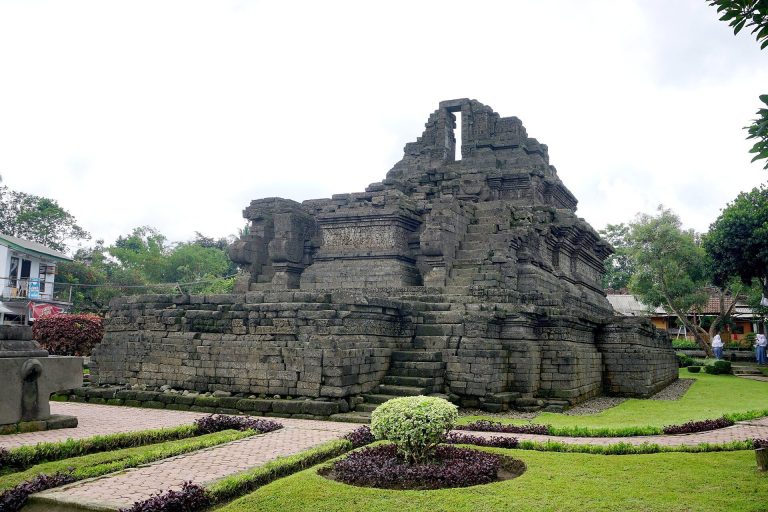
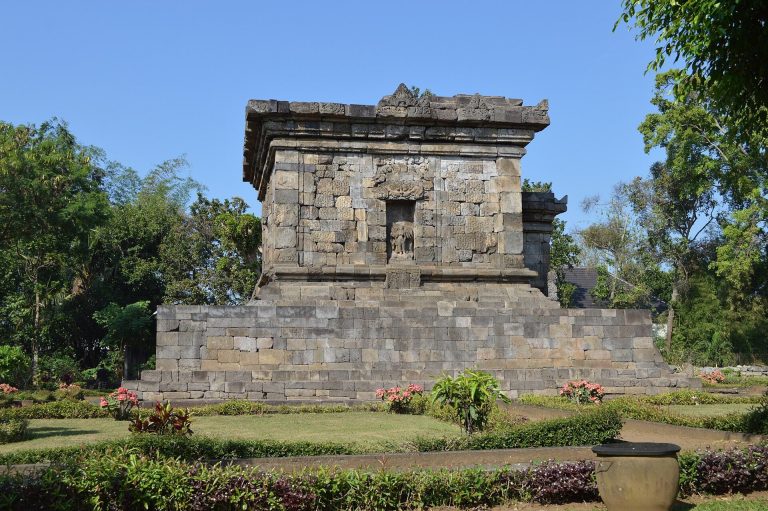
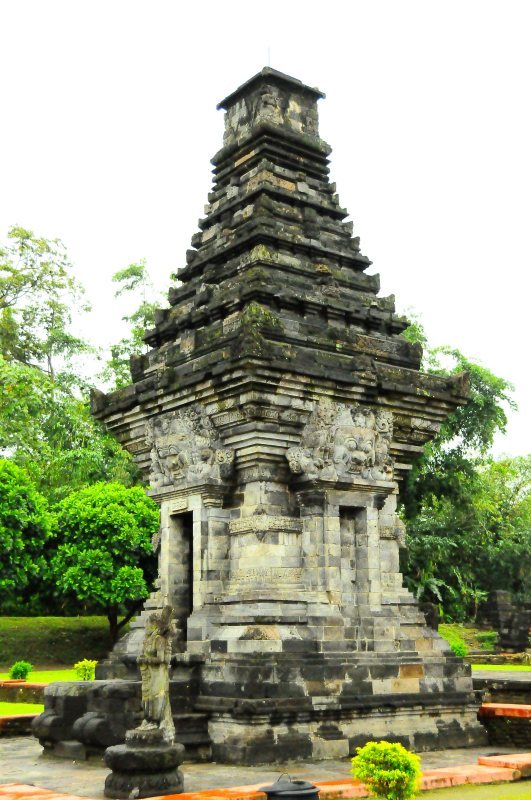
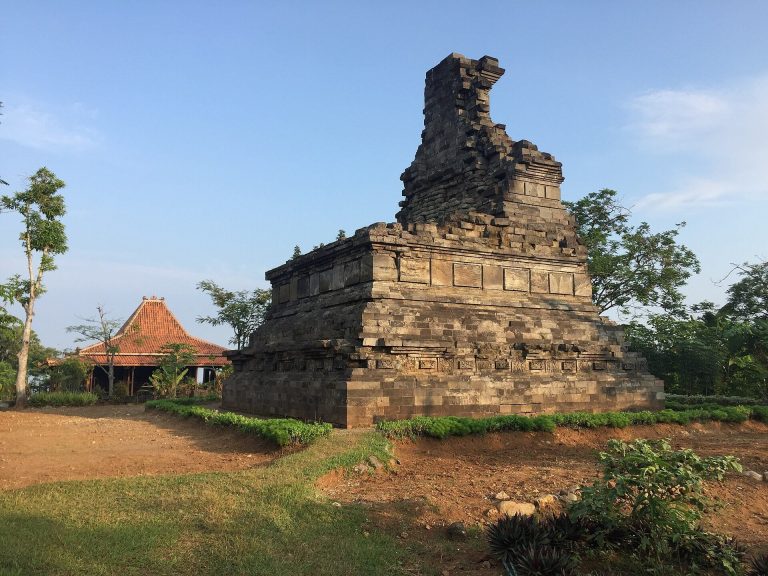
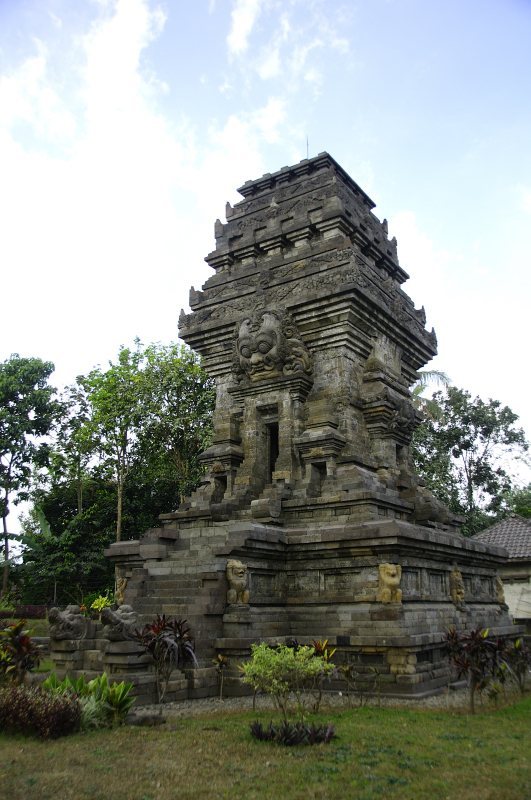
Kidal is built from andesite and has a vertically geometric composition divided into a raised base, a narrower body, and a roof. The platform rises about 2 metres above the surrounding area. After restoration, the temple measured approximately 10.8 metres in length, 8.36 metres in width, and 12.26 metres in height, while its original height is estimated at about 17 metres. The narrower body between the broader base and roof gives the structure a slender profile. Medallions decorate the base and body, and circular bands run around the body.
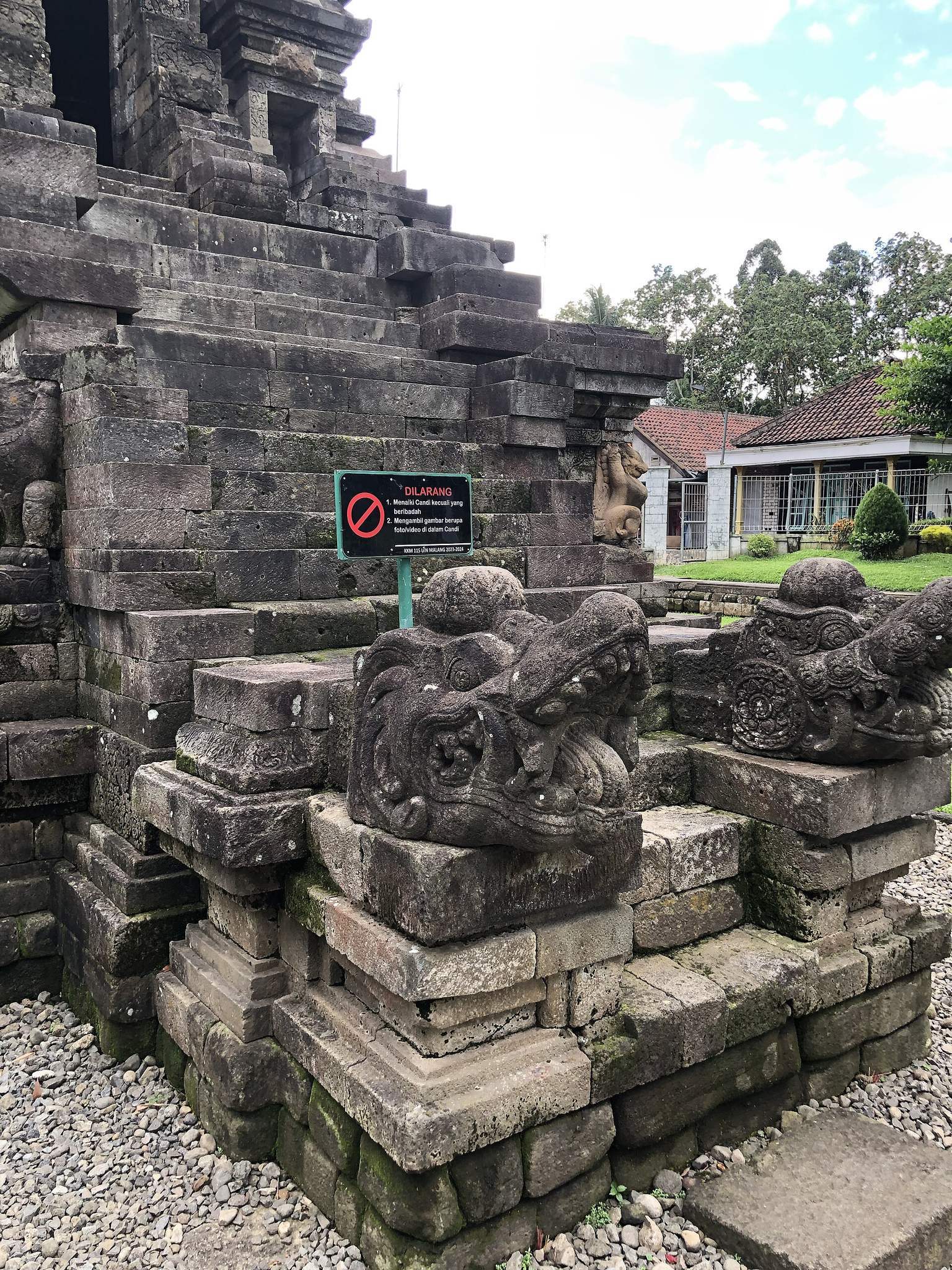
The entrance faces west and is reached by a narrow stone staircase. Shaped side elements and angular low walls called badug frame the steps, forming a distinctive part of the temple’s design. The roof consists of three levels that become progressively smaller toward the top. Each level provides a broad surface for decoration, while the uppermost level retains a comparatively wide form. A tradition holds that small diamonds once decorated the corners of the roof levels.
A carved Kala, a fearsome protective figure in Hindu-Javanese architecture, appears above the entrance and above the temple niches. The face has bulging eyes, an open mouth, and two large curved fangs. Fingers beside the face form threatening mudras, symbolic hand gestures associated here with protection. The large fangs are characteristic of East Javanese temple design.
The courtyard contains excavated foundations belonging to a surrounding wall. A western entrance staircase passes through the wall. The complex appears to stand about 1 metre below the present surrounding ground level. This difference may reflect the original ground level or changes caused by a natural disaster such as flooding or a volcanic eruption. The former garbhagrha, the innermost sanctuary of a Hindu temple, contained an image of Shiva Mahadeva understood as Anusapati’s posthumous divine representation. That image is now held by the Royal Tropical Institute in Amsterdam. A separate Shiva statue in Leiden is also strongly thought to have come from Kidal.
Garudeya Reliefs
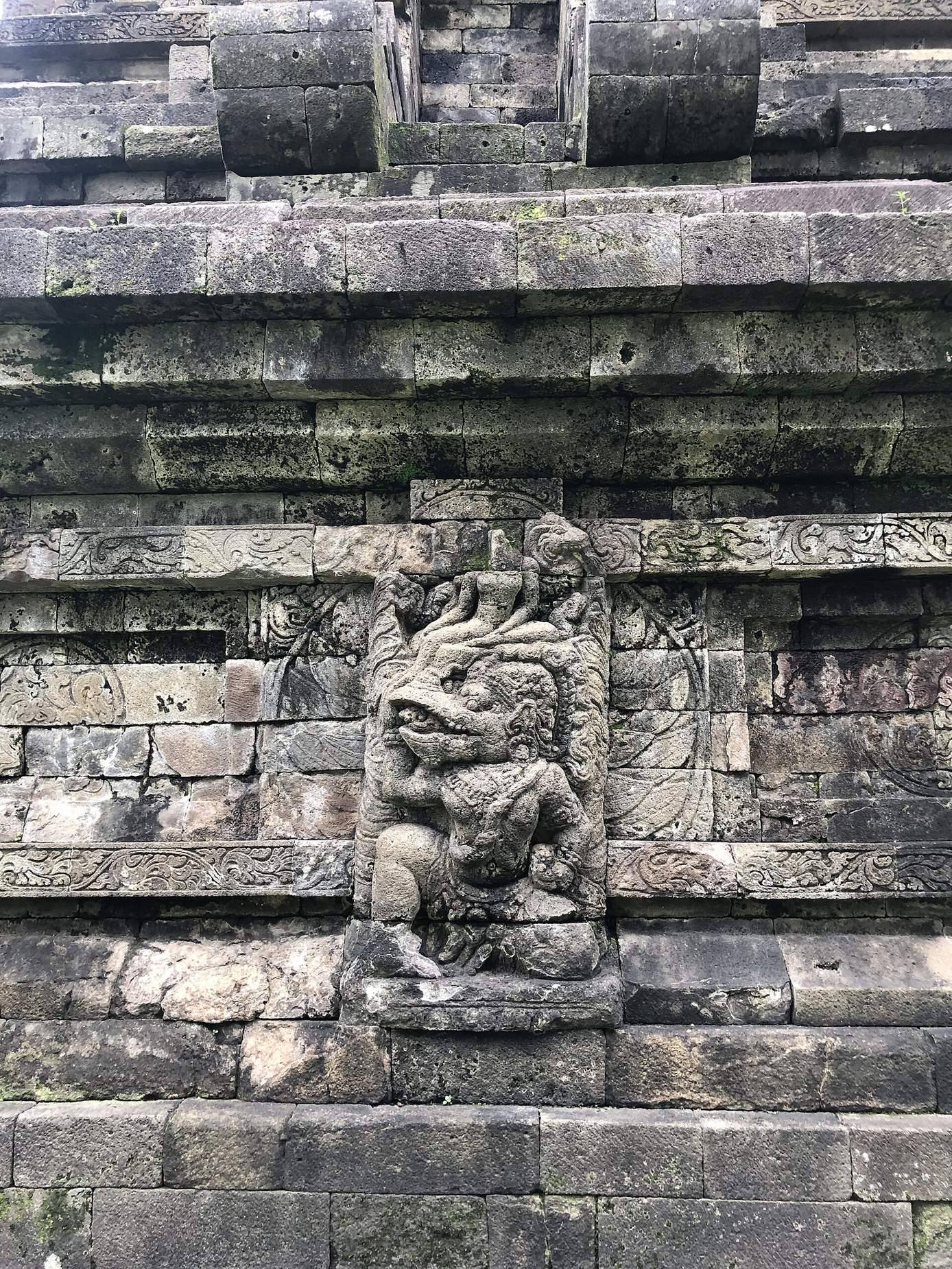
Three Garudeya reliefs occupy the middle sections of three sides of the temple base, with the entrance side excluded. They are read in prasawiya, or counterclockwise order, beginning on the south side to the right of the entrance staircase. The first shows Garuda beneath three snakes, the second depicts him carrying a vessel on his head, and the third shows him carrying a woman identified in the story as his mother. The second relief is particularly well preserved and is described as the most beautiful of the sequence.
The scenes represent the Garudeya story, in which Garuda, the divine bird and mount of Vishnu, obtains amerta, the sacred water of immortality, to free his mother Winata from enslavement to Kadru. After Garuda is defeated by Vishnu, he receives permission to take the amerta on the condition that he become Vishnu’s mount. At Kidal, the story conveys themes of liberation, devotion to a parent, and ritual purification. Garudeya imagery was especially associated with the spread of Vaishnavism, the Hindu tradition centered on Vishnu, in Java, and it also appears at Sukuh Temple.