Keats House: A Regency Home and Literary Memorial in Hampstead
Site at a Glance
- Popularity
- High
- Country
- United Kingdom
- Primary era
- Modern
- Eras represented
- Modern
- Civilizations
- British
- Site type
- Domestic
- Remains
- House
On this page11 sections
History
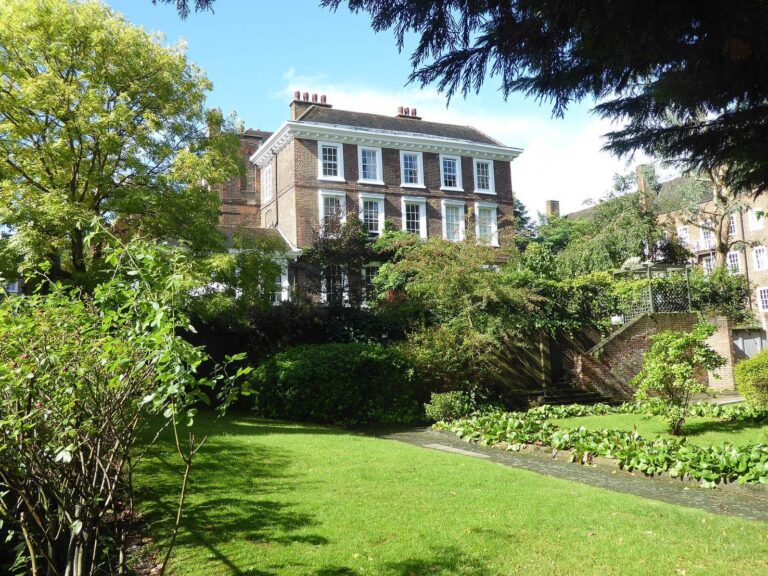
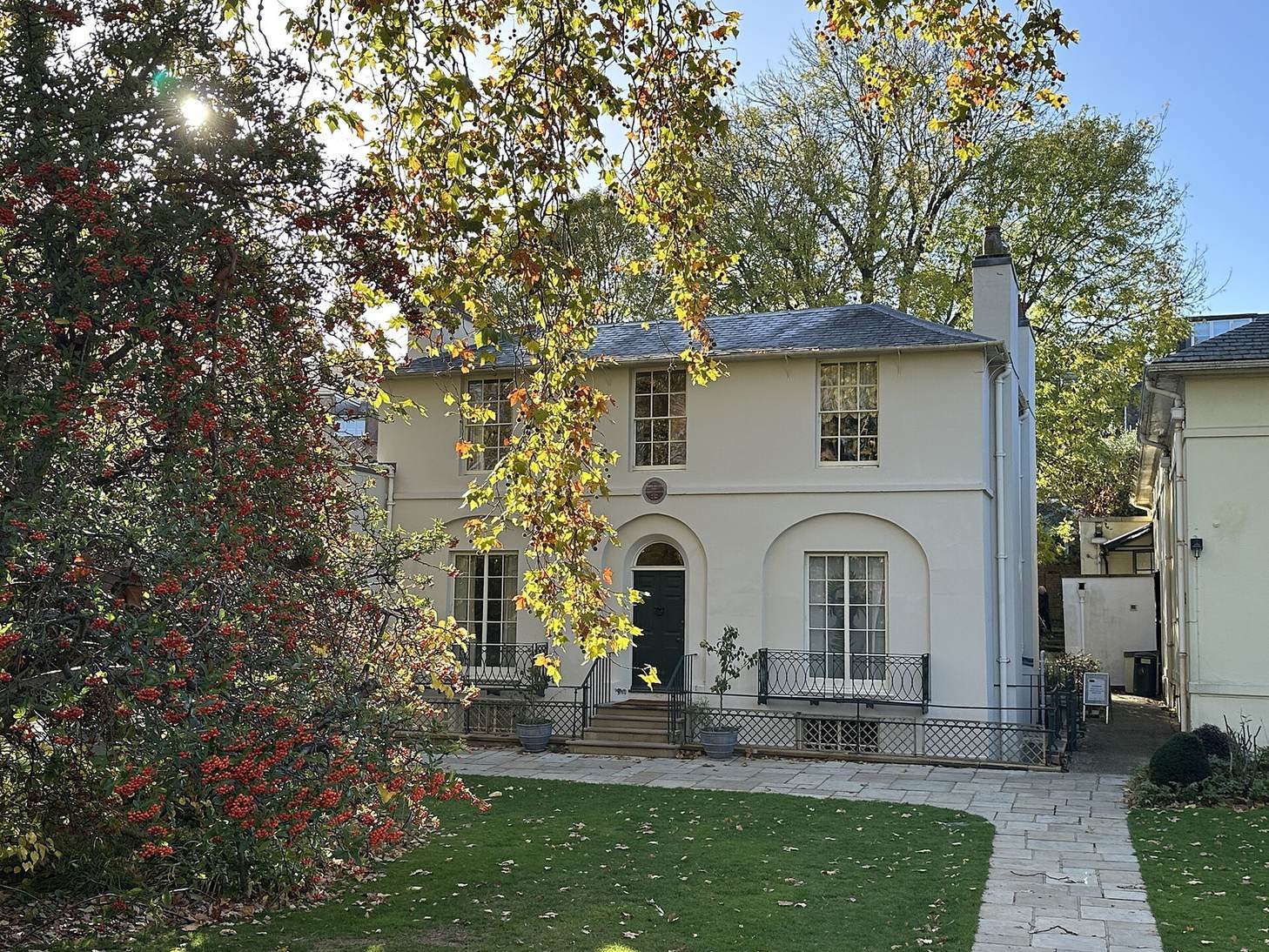
Keats House is a Regency house in Hampstead, London, United Kingdom, built in 1814–15 and later associated with the English Romantic poet John Keats. Its architectural style takes its name from the British Regency period of the early nineteenth century. The house was among the first in the Lower Heath Quarter, then part of Hampstead, a rural settlement beyond London; it was probably completed between November 1815 and February 1816.
Keats at Wentworth Place
Charles Wentworth Dilke and Charles Brown were living in the house by October 1816, while other Dilke family members occupied two nearby homes. Keats began visiting in 1817 after a literary associate introduced him to Dilke. In December 1818, after his brother Tom died of tuberculosis, Keats accepted Brown’s invitation to share the house. He paid £5 a month and half the liquor bill. The years he spent there are often regarded as among his most productive.
Dilke and his family left on 3 April 1819, and the house was let, probably furnished, to Mrs Brawne, a widow, and her family. The Brawnes had briefly stayed in Brown’s half while Keats and Brown were walking in Scotland. Fanny Brawne lived with her family in the adjoining house. Keats fell in love with her, and they became engaged; their relationship inspired poems. He remained in Brown’s half until May 1820, then lived in the Brawne family’s half from August to September. As his tuberculosis worsened, he was advised to seek a warmer climate. He left London for Italy in 1820 and died there, unmarried, the following year, aged 25.
Later occupants and preservation
After Keats’s death, his sister Fanny became friends with Fanny Brawne. Fanny Keats and her husband, Valentin Llanos, occupied the half formerly used by Brown from 1828 to 1831. Mrs Brawne died accidentally in December 1829, and the Brawne family had left their part of the house by March 1830. In 1838–39 the two houses were brought together and a drawing studio was added. During the occupancy of retired actress Eliza Chester, the property became one dwelling, with a dining room and conservatory. Other nineteenth-century occupants included painter and illustrator Henry Courtney Selous (1835–38), Chester (1838–48), piano manufacturer Charles Cadby (1858–65), physiologist William Sharpey (1867–75), and George Currey, Master of Charterhouse, in 1876. A Royal Society of Arts plaque commemorating Keats was installed in 1896.
The house remained occupied almost continuously until the twentieth century, when demolition threatened it. A subscription, including donations from the United States, helped save the building, which opened to the public as the Keats Memorial House on 9 May 1925. An adjoining building opened as the Keats Museum and Branch Library in 1931, combining a public library with a room for objects from the house’s collection. The Heath Branch Public Library closed in March 2012; the building reopened the following month as Ten Keats Grove, with a volunteer-run library in part of the premises.
A restoration carried out from 2007 to 2009 returned the house’s interior to its original condition. The Keats Foundation was established as a trust in 2010 to support the house and its upkeep. Keats House is a Grade I listed building, England’s highest listed-building category, reserved for buildings of exceptional architectural or historic interest; its designation dates to 1950.
Remains
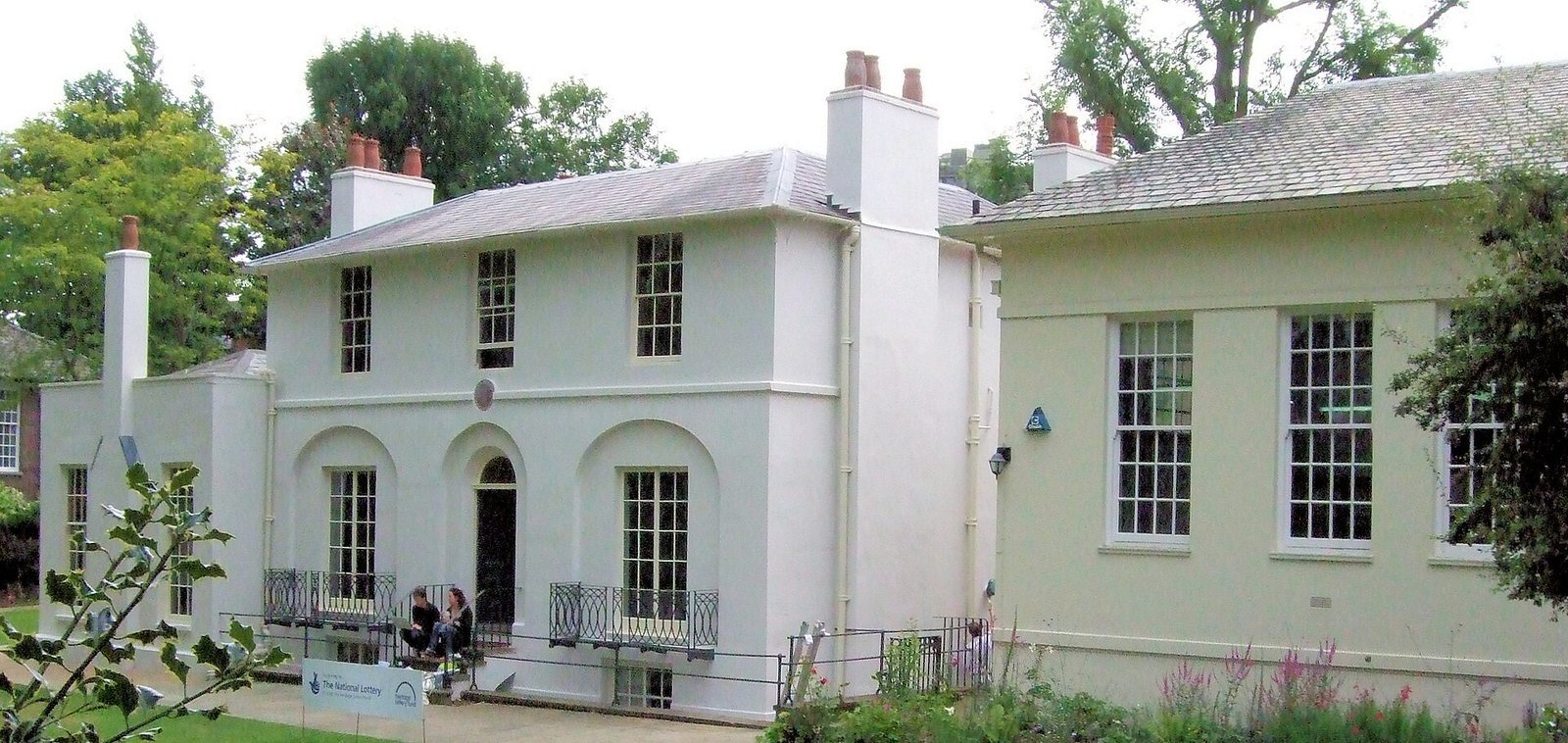
At 10 Keats Grove, the house comprises two originally semi-detached homes that shared a garden, built in Regency style. They now form a single dwelling, with a drawing studio, dining room, and conservatory. An adjoining building stands within the grounds on the former kitchen-garden and outbuilding area, which later also included a coach house.
House and adjoining building
The main house
The combined house retains the arrangement of the two homes that once made up Wentworth Place. Its interior includes the drawing studio, dining room, and conservatory added as the property was adapted for use as one dwelling. The house is also known by the former names Wentworth Cottage, Lawn Cottage, Laurel Cottage, and Lawn Bank.
The adjoining building
The separate building within the grounds occupies land formerly used for a kitchen garden and outbuildings, and later for a coach house. It served as the Keats Museum and Branch Library, with a room for displaying objects from the house’s collection. It is now known as Ten Keats Grove.
Garden
A common, or black, mulberry tree in the garden is believed to date from the seventeenth century. Given the other fruit trees that grew in the grounds, it may once have been part of an orchard. If its estimated age is correct, Keats would have seen it. A letter from July 1818 refers to a white mulberry. Charles Brown attributed the composition of Ode to a Nightingale to a plum tree in the garden.
Commemorative features and collections
Commemorative plaque
The Royal Society of Arts plaque commemorating Keats is affixed to the house.
Objects associated with Keats
The house displays the engagement ring Keats offered to Fanny Brawne, which she wore until her death, and a copy of Keats’s death mask. The collection also includes his manuscripts, books bearing his personal notes, and letters he wrote to or received from friends, including Percy Bysshe Shelley. Some objects were displayed in the adjoining museum and library building; some were donated by descendants of Charles Brown, who emigrated to New Plymouth, New Zealand, in the last year of his life.