Tasshin-ji Temple: A Soto Buddhist Temple and Sculpture Collection in Tamba


Site at a Glance
- Rating
- 4.1
- Popularity
- Low
- Country
- Japan
- Primary era
- Early Modern
- External website
- Open
- Eras represented
- Early Modern
- Civilizations
- Tokugawa
- Site type
- Religious
- Remains
- Temple
On this page11 sections
History
Tasshin-ji Temple is a Buddhist temple in Japan, located in Tamba City, Hyogo Prefecture. It belongs to the Soto school of Buddhism, a major Japanese Zen tradition, and has Amitabha Buddha as its principal image, the temple’s main object of worship. The temple bears the mountain title Jukusan, a traditional designation used alongside a formal temple name, and its present Soto identity dates from a revival in 1712.
Early traditions and medieval connections
The origins of Tasshin-ji and its history before the medieval period remain uncertain. Temple tradition attributes its foundation to Gyoki, a prominent Nara-period Buddhist monk associated with preaching, social works, and the establishment of temples. This attribution is a foundation tradition rather than a securely documented event.
The temple’s present head priest has proposed that the site may once have formed part of an estate belonging to To-ji, a major Buddhist temple in Kyoto that historically held landed domains in different regions. If so, Tasshin-ji may have been connected with the Shingon school during the medieval period. Shingon is an esoteric Buddhist tradition centered on ritual practice, mantra, and mandala-based teachings. The limited documentary evidence does not establish this proposed connection as certain.
Destruction and revival
A temple tradition describes Tasshin-ji as a large Buddhist institution with warrior monks before it was burned during Akechi Mitsuhide’s campaign in Tamba. Mitsuhide was a sixteenth-century military commander whose campaigns formed part of the destruction and political upheaval of the late Sengoku period. The account of Tasshin-ji’s destruction is treated cautiously because the documents that transmit it are not particularly old.
In 1695, during an epidemic, divination reportedly attributed the outbreak to the sin of leaving Buddhist images unattended. Villagers then recovered images said to have been hidden in the mountains during Mitsuhide’s attack and left there. They also moved a mountain chapel from the mountainside to the foot of the mountain. This relocated chapel became the predecessor of the present temple.
In 1712, the monk Chikuun Teizan invited Daian Seikan, the twenty-fifth abbot of Entsu-ji in Hikami, to serve as Tasshin-ji’s founding abbot. The temple was revived as a Soto institution. The relocated mountain chapel, known as the Tarumido, became the main hall, and the temple adopted the name Jukusan Tasshin-ji from it.
Regional religious and artistic importance
Tasshin-ji is regarded as one of the major ancient temples of the Tamba region. It is the sixth pilgrimage temple of the Fifteen Ancient Temples of Tamba, the twenty-fifth temple of the Forty-Nine Yakushi Pilgrimage in the Western Provinces, and an additional pilgrimage site in the Hikami District Western Provinces circuit.
More than 80 Buddhist statues are preserved in the temple’s treasure hall. Their concentration and distinctive characteristics have given Tasshin-ji the byname “the Shosoin of Tamba.” Twelve statues in four cases are designated as national Important Cultural Properties, while 34 are designated by Hyogo Prefecture.
A local-history theory proposes that Tasshin-ji once served as a workshop and training center for sculptors working in Tamba. The theory is associated with the collection’s unfinished statues and repeated images of the same deities. A Todaiji document calls the Kamakura-period sculptor Kaikei a “Tamba sculptor,” but the surviving evidence from Tasshin-ji is too limited to establish a definite connection between Kaikei and the temple.
Remains
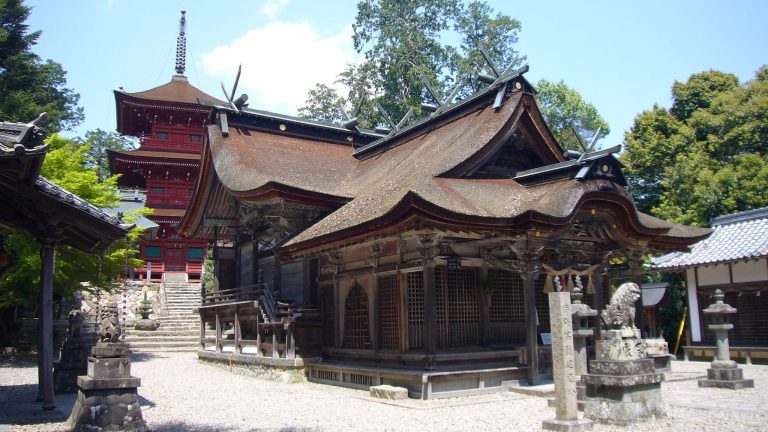
Tasshin-ji consists of a temple complex at the foot of the mountain, with the former mountain chapel serving as its main hall and a treasure hall housing a substantial group of Buddhist wooden sculptures. The physical arrangement reflects the temple’s revival in the early eighteenth century, when the Tarumido was moved down from the mountainside and incorporated into the renewed Soto institution.
Main hall
Tarumido
The main hall is the relocated Tarumido, a mountain chapel associated with Jukusan. Its transfer from the mountainside to the foot of the mountain created the predecessor of the present Tasshin-ji. The building therefore preserves a direct physical link with the temple’s reorganization in the period before its Soto revival in 1712.
Treasure hall sculptures
Images of Buddhist deities
The treasure hall contains more than 80 Buddhist statues, including images of Amitabha Buddha, Yakushi Buddha, Eleven-Headed Kannon, Tobatsu Bishamonten, and Kichijo-ten. Kichijo-ten is associated with prosperity, beauty, and good fortune. The nationally designated group includes a seated Amitabha Buddha, a seated Eleven-Headed Kannon, a seated Yakushi Buddha, and other wooden Buddhist figures.
Tobatsu Bishamonten
Sixteen statues represent Tobatsu Bishamonten, a form of Bishamonten shown standing on the palms of the earth goddess. Bishamonten is regarded as the guardian of the north and a protector of Buddhist law. The concentration of images of this one type is a notable feature of Tasshin-ji’s collection and supports the local theory that the temple was connected with the production and training of sculptors.
Wooden construction and style
Most of the sculptures were carved primarily from a single block of timber, a method known as single-block construction. The collection also includes statues made with joined-block construction, in which several wooden blocks were assembled to form the image. Many of these sculptures are thought to have broken into fragments after being left unattended for a long period.
The statues include unfinished works and display a distinctive manner marked by enlarged or swollen abdomens. This characteristic has been called the “Tasshin-ji style.” Together with the repeated representations of particular deities, the unfinished images provide the physical basis for interpreting the collection as evidence of local sculptural activity.