Kasteel Ten Bieze: An Eighteenth-Century Hunting Lodge in Belgium
Site at a Glance
- Rating
- 4.7
- Popularity
- Very Low
- Country
- Belgium
- Primary era
- Early Modern
- External website
- Open
- Eras represented
- Early Modern, Modern
- Civilizations
- Belgian, County of Flanders, Habsburg, Holy Roman Empire
- Site type
- Domestic
- Remains
- Castle
On this page13 sections
History
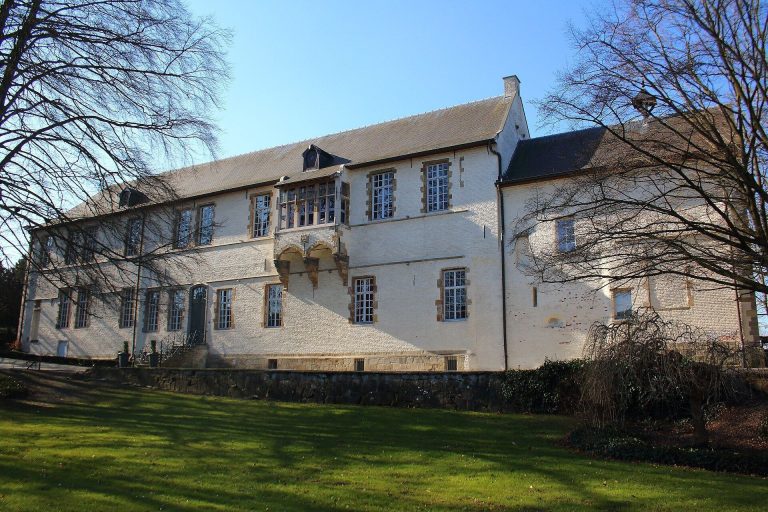
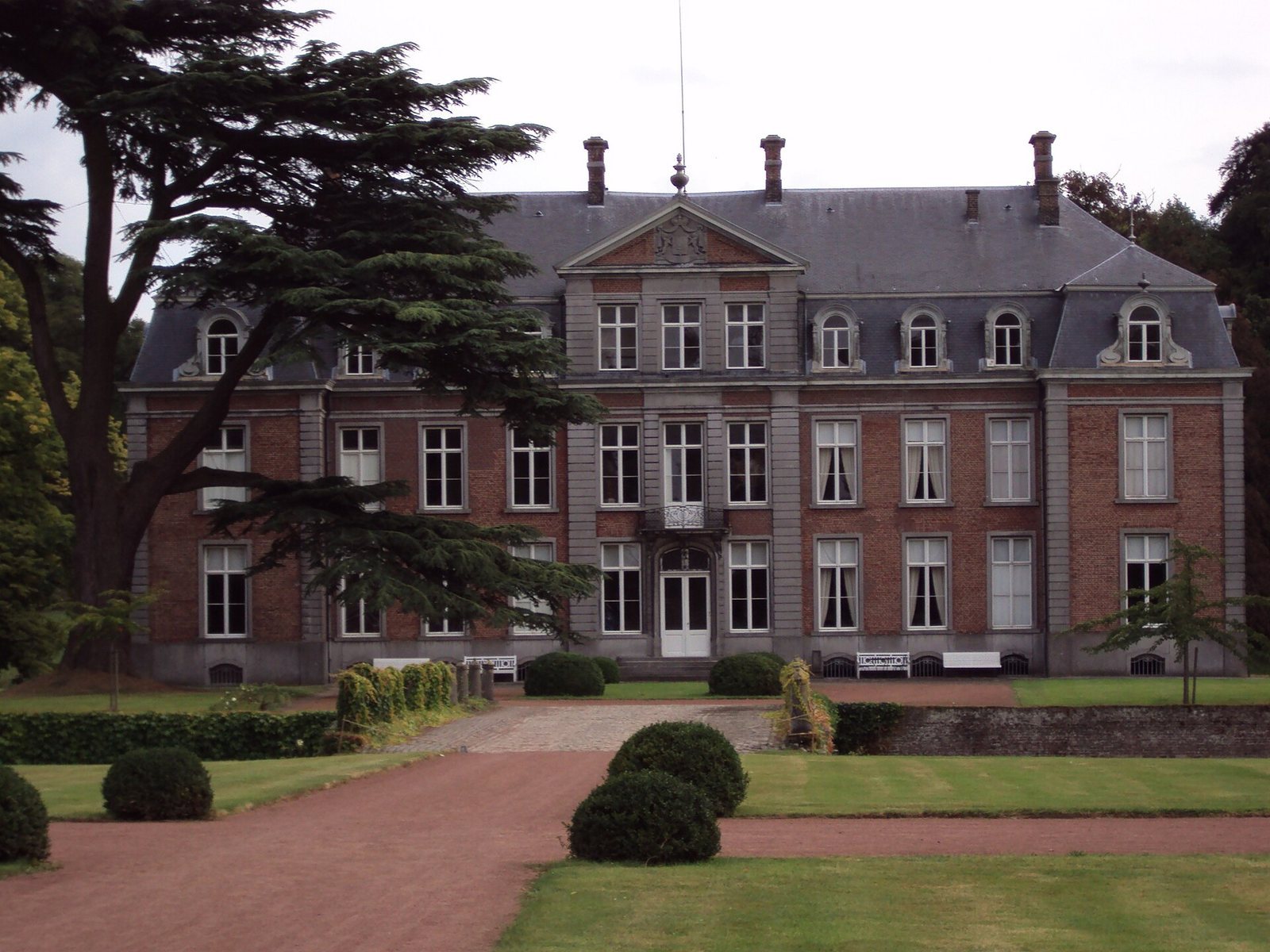
Kasteel Ten Bieze, also called the Castle of Beerlegem, is an eighteenth-century Rococo-Baroque hunting lodge in Zwalm, Belgium. Built on the site of an earlier castle, it developed within the historic lordship of Beerlegem in the Munkbosbeek valley.
Medieval origins
The earlier castle belonged to the lords of Beerlegem and is first recorded in 1096 under Lord Diederik van Beerlegem. Its position reflects the long-standing importance of the Beerlegem lordship, whose former judicial authority is also represented by the pillories later associated with the castle square.
The Rodriguez d’Evora y Vega period
In 1680, troops of Louis XIV plundered the family’s Ter Saelen castle at Destelbergen. After this attack, Lupus Maria, also known as Lopez, Rodriguez d’Evora y Vega purchased the lordship and the Beerlegem castle.
The present residence was built on the earlier site during the eighteenth century, around 1730. It is also listed with a construction date of 1762. The two elongated buildings that form the forecourt were erected between 1773 and 1783, while two side wings were added between 1862 and 1867.
Later ownership and preservation
The estate belongs to Count d’Ursel de Bousies, a descendant of the former owners, the Marquises of Rode of the Rodriguez d’Evora y Vega family. Hubert d’Ursel de Boussies resides in the present castle. The property is recorded as monument number 45149 and remains privately owned.
The Beerlegem pillory was concealed during the French Revolution. It was later moved to an island northwest of the castle and, since 1969, has stood at the western corner of the castle square.
Remains
Kasteel Ten Bieze is a rectangular Rococo-Baroque building set within a 60-hectare domain. The estate combines parkland laid out partly in the English style and partly in the French style with dense woodland containing old beeches and oaks. Its buildings, square, water features, avenues, and gardens form a connected historic landscape.
Main buildings and approach
Castle
The castle has a central three-bay section flanked by sections of eleven bays. Their pediments carry sculpted coats of arms associated with the Marquis of Rode. A staircase at both the front and rear leads to a doorway placed at the centre of the building. The Chapel of Our Lady also bears the coat of arms of the lords of Rode.
Forecourt and entrance
Two elongated eleven-bay buildings stand along the eastern and western sides of the forecourt, forming the approach to the castle. An ice cellar dating from 1843 stands near the entrance. A monumental wrought-iron gate was installed in 1861.
Castle square and pillories
Pillories
Four pillories stand at the corners of the castle square. The Beerlegem pillory is made of Balegem stone. The Welle-Schelderode example is made of grey hardstone and shows a crouching lion with a shield. The Gontrode pillory depicts a crouching lion with a shield surrounded by a mantle, while the Oosterzele pillory also shows a crouching lion with a shield. A pillory was a device used for public punishment and humiliation under historical local jurisdictions.
Parkland, woodland, and water
Water features and woodland
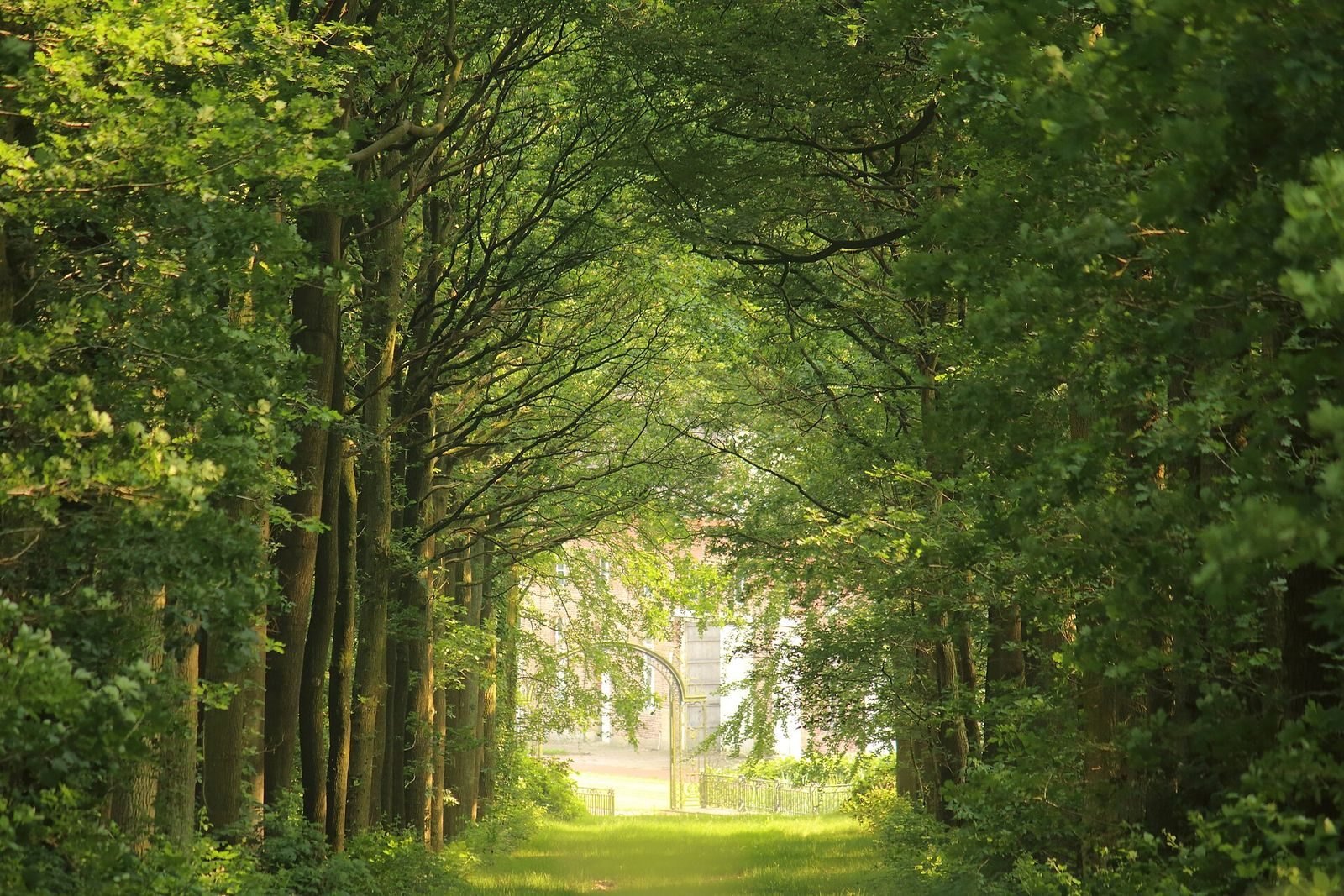
The domain contains a fish-rich pond and surrounding moats supplied by the Munkbosbeek, which runs through the forest, and by about thirteen springs. The woodland includes avenues of oak and sweet chestnut, the building called De Kluize, and the spring known as Het Wijnhuizeke.
Cedar and wisteria garden
A cedar of Lebanon stands in front of the castle. Local tradition attributes its introduction to John the Fearless, Duke of Burgundy from 1404 to 1419, who supposedly brought it from the Holy Land after the last Crusade. Dendrological research dates the tree to around 1400, while the connection with John the Fearless remains a legend. The domain also contains a wisteria garden with numerous varieties of the plant, described as unique in Europe.