Kanjōsan Castle: A Mountain Fortress in Hyōgo, Japan
Site at a Glance
- Country
- Japan
- Primary era
- Early Modern
- Eras represented
- Medieval, Early Modern
- Civilizations
- Ashikaga shogunate, Kamakura shogunate
- Site type
- Military
- Remains
- Castle
On this page6 sections
History
Kanjōsan Castle was a Japanese mountain fortress on Mount Kanjōsan in Aioi, Hyōgo Prefecture, Japan. Its foundation is uncertain: one tradition places an initial fortification in the Kamakura period, when Japan was governed by the Kamakura shogunate, and credits the local Uryū warrior family. Another attributes its construction to Akamatsu Norisuke in the early Nanboku-chō period, when rival Southern and Northern courts contested imperial authority. The castle later served the Akamatsu, Uragami, and Ukita, becoming an expanded eastern border stronghold under the Ukita.
Early Akamatsu traditions
In 1333, Akamatsu Norimura supported Emperor Go-Daigo’s effort to restore imperial rule and helped drive the Hōjō clan from Kyoto. After receiving little reward and losing his office as military governor of Harima, Norimura transferred his allegiance to Ashikaga Takauji, founder of the Muromachi shogunate. Takauji is said to have granted him the castle for a rear-guard action that helped Takauji escape Kyoto and raise an army in Kyushu.
A separate tradition links the castle’s name to a letter of commendation from Takauji to Norisuke, recognizing his defense against Nitta Yoshisada’s forces for more than 50 days. The same tradition says that the castle’s defenders withstood a siege by Yoshisada’s troops, who fought for Go-Daigo.
Akamatsu power and recovery
Under the Muromachi shogunate, the Akamatsu clan became a major regional power, ruling much of the San’yō region. In the late Muromachi period, Ashikaga shogun Yoshinori, the military ruler, tried to reduce the clan’s territories. Akamatsu Mitsusuke assassinated him at a banquet in Kyoto, but the ensuing revolt failed and the Akamatsu lost much of their land.
Akamatsu Masanori began to restore the clan’s position after recovering one of the Southern Court’s imperial regalia, objects representing imperial authority. The Northern Court rewarded him with half of Kaga Province. During the fifteenth-century Ōnin War, a conflict that weakened central authority, former Akamatsu territories had been granted to the Yamana. The Akamatsu allied with the Hosokawa and captured Bizen, Mimasaka, and most of Harima. Masanori established Okishio Castle in a more central location to govern these lands, and the clan abandoned its former stronghold at Shirahata Castle.
Uragami and Ukita control
Internal divisions, the rising influence of the Amago, and the growing power of the Akamatsu retainers the Uragami and Bessho weakened the clan. Around 1521, the Uragami displaced the Akamatsu at Kanjōsan Castle and took control of the surrounding area. They shifted their allegiance between the Amago and Mōri before later allying with Oda Nobunaga.
Ukita Naoie seized the castle in 1575. After the Ukita helped Hashiba Hideyoshi, later known as Toyotomi Hideyoshi, in his campaign against the Mōri, they ruled Bitchū, Bizen, and Mimasaka. Kanjōsan then served as their eastern border fortification and was substantially rebuilt and expanded.
Fall and preservation
The circumstances of the castle’s fall are uncertain. It may have been burned by Akamatsu Norisuke during Nitta Yoshisada’s late Nanboku-chō campaign in Harima, or captured in 1577 during Hideyoshi’s attack on Kōzuki Castle. After the Ukita sided with the defeated Western Army at the Battle of Sekigahara, Tokugawa Ieyasu confiscated their domains. Kanjōsan Castle was abolished and demolished in 1603.
Since 1996, the ruins have been protected as a National Historic Site within the Remains of Akamatsu Clan Castles, a designation that also includes Shirahata Castle and Okishio Castle.
Remains
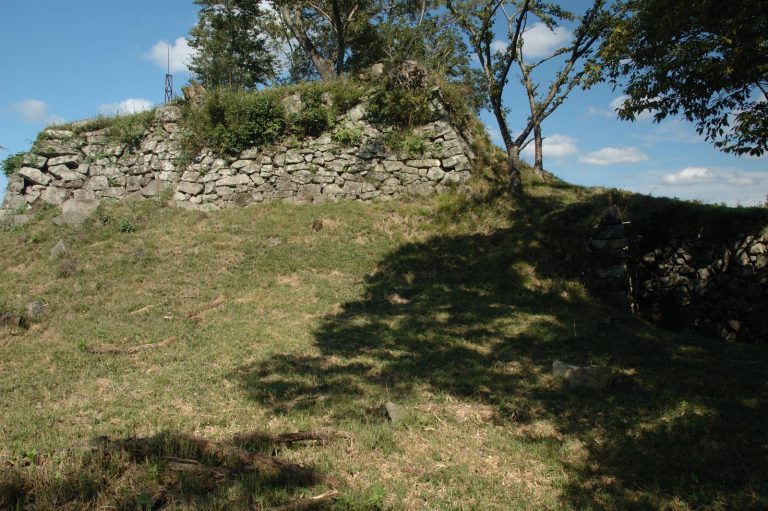
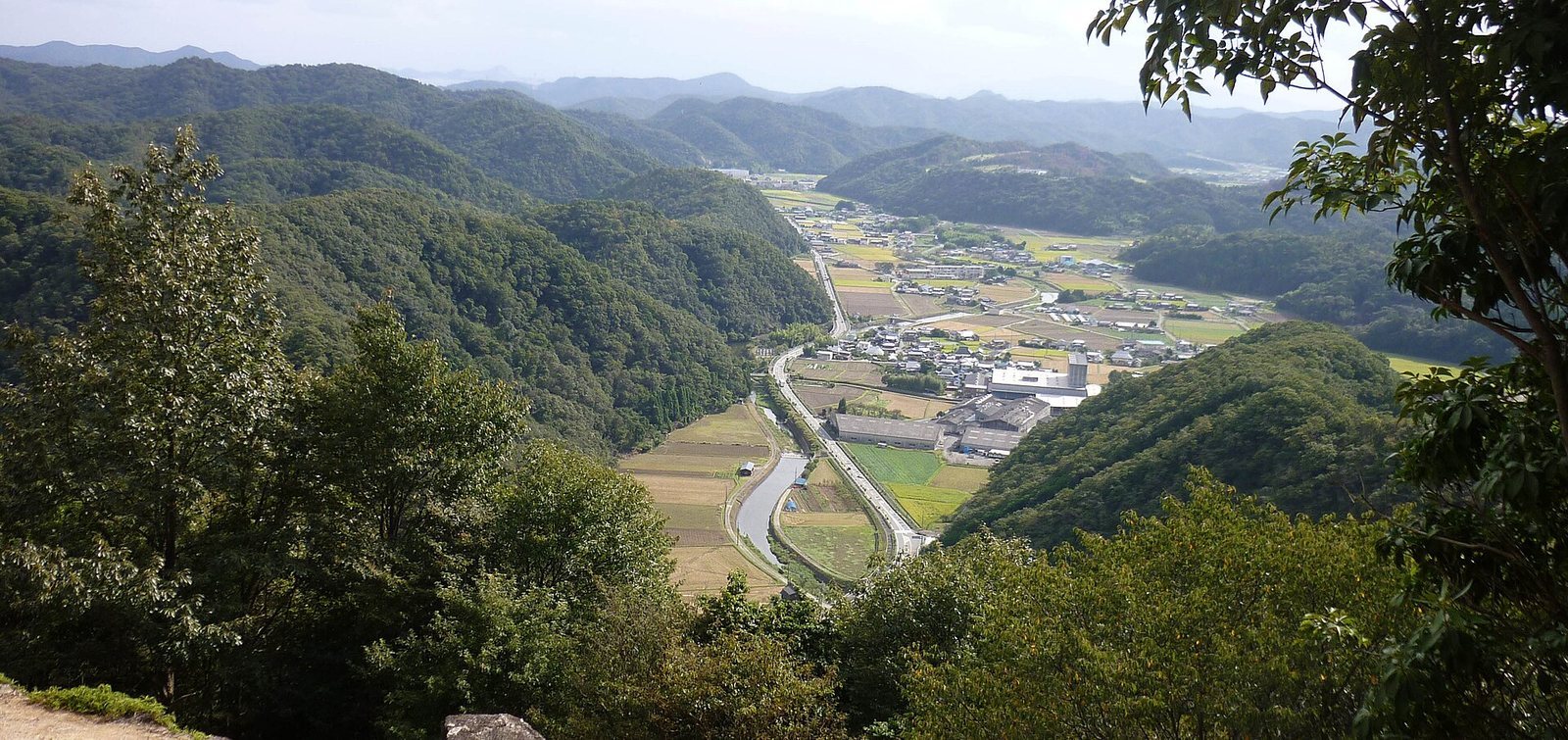
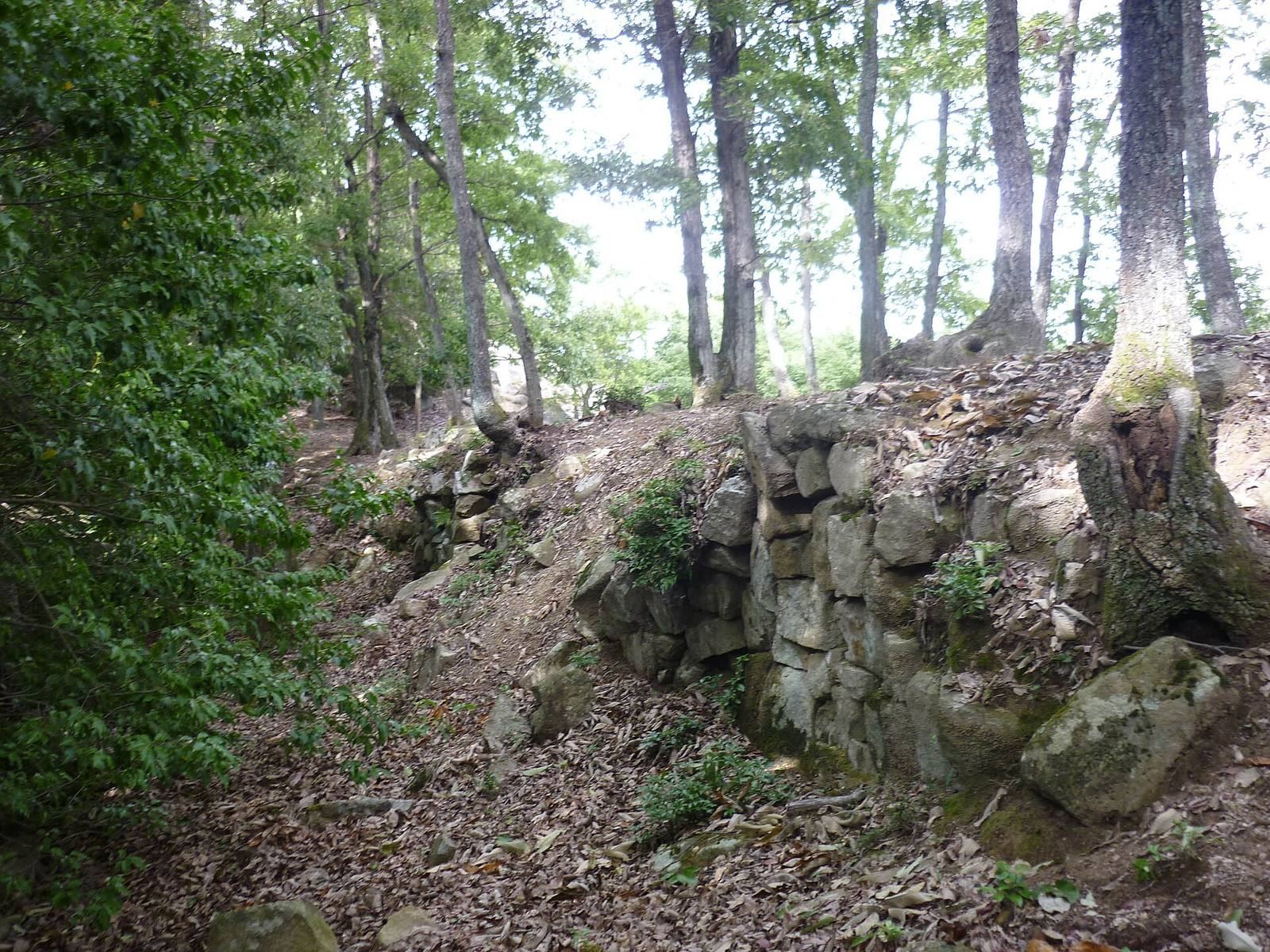
Kanjōsan Castle occupied Mount Kanjōsan, a 250-metre mountain in a narrow valley of the Yanagawa River, north of central Aioi. The site lies north of the former San’yōdō highway route, which followed the Seto Inland Sea coast toward the San’in region. The old route is now Hyōgo Prefectural Road No. 5, while the modern San’yōdō highway and railway tracks run farther south. The castle is in ruins, with remnants of stone walls among its surviving remains.