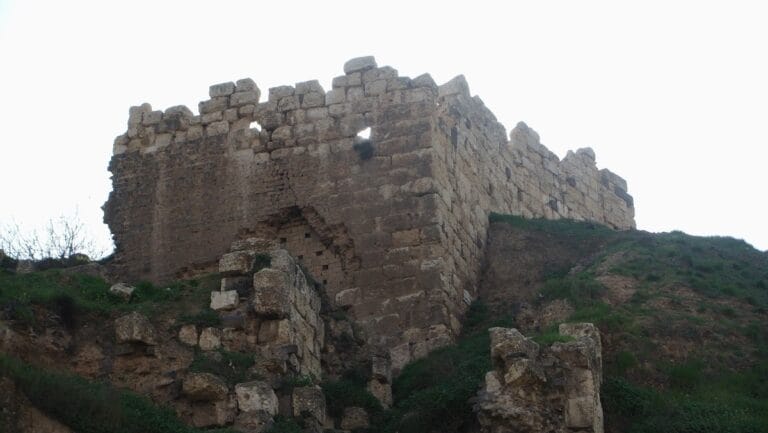
Kamouh el Hermel: An Ancient Monument in Lebanon
Site at a Glance
- Rating
- 4.4
- Popularity
- Low
- Country
- Lebanon
- Primary era
- Classical
- Eras represented
- Classical
- Civilizations
- Unclassified
- Site type
- Civic
- Remains
- Monument
On this page9 sections
History
Kamouh el Hermel is an ancient monument on a hill near Ras El Assi, approximately 6 kilometres south of Hermel in Lebanon. Its date and builders remain uncertain, although comparisons with tower tombs from the late Seleucid period, the Hellenistic age associated with the dynasty founded by Seleucus I after Alexander the Great, have led to a proposed date in the first or second century BC. The monument is also known as the Pyramid of Hermel, God’s Pyramid, House of El, the Funnel of Hermel, and the Needle of Hermel.
Proposed ancient origins
The monument has been compared with the tall funerary towers of late Seleucid Palmyra in present-day Syria. A tower tomb is a built burial monument containing chambers or compartments, and this architectural resemblance forms the principal basis for dating Kamouh el Hermel to the first or second century BC. Its attribution, however, has never been settled. William McClure Thomson, a nineteenth-century American missionary and traveller, considered it possibly Greek, while Thomson and Charles William Meredith van de Velde also entertained an Assyrian origin.
René Dussaud later proposed a more specific interpretation, identifying it as probably a first-century BC monument commemorating the hunting prowess of a member of Syrian royalty. He also observed similarities between its carved animal scenes and the reliefs of the Ishtar Gate, the ceremonial entrance to ancient Babylon decorated with glazed-brick animal images. These comparisons offer possible historical contexts, but the monument’s original purpose and attribution remain uncertain.
Earlier activity and modern history
The hill had activity long before the proposed ancient construction of the monument. A Neolithic site, belonging to the period when communities increasingly adopted farming, herding, and settled ways of life, was identified south and west of the hill. Lorraine Copeland and Frank Skeels discovered it in 1965 and collected flint tools from the surrounding area.
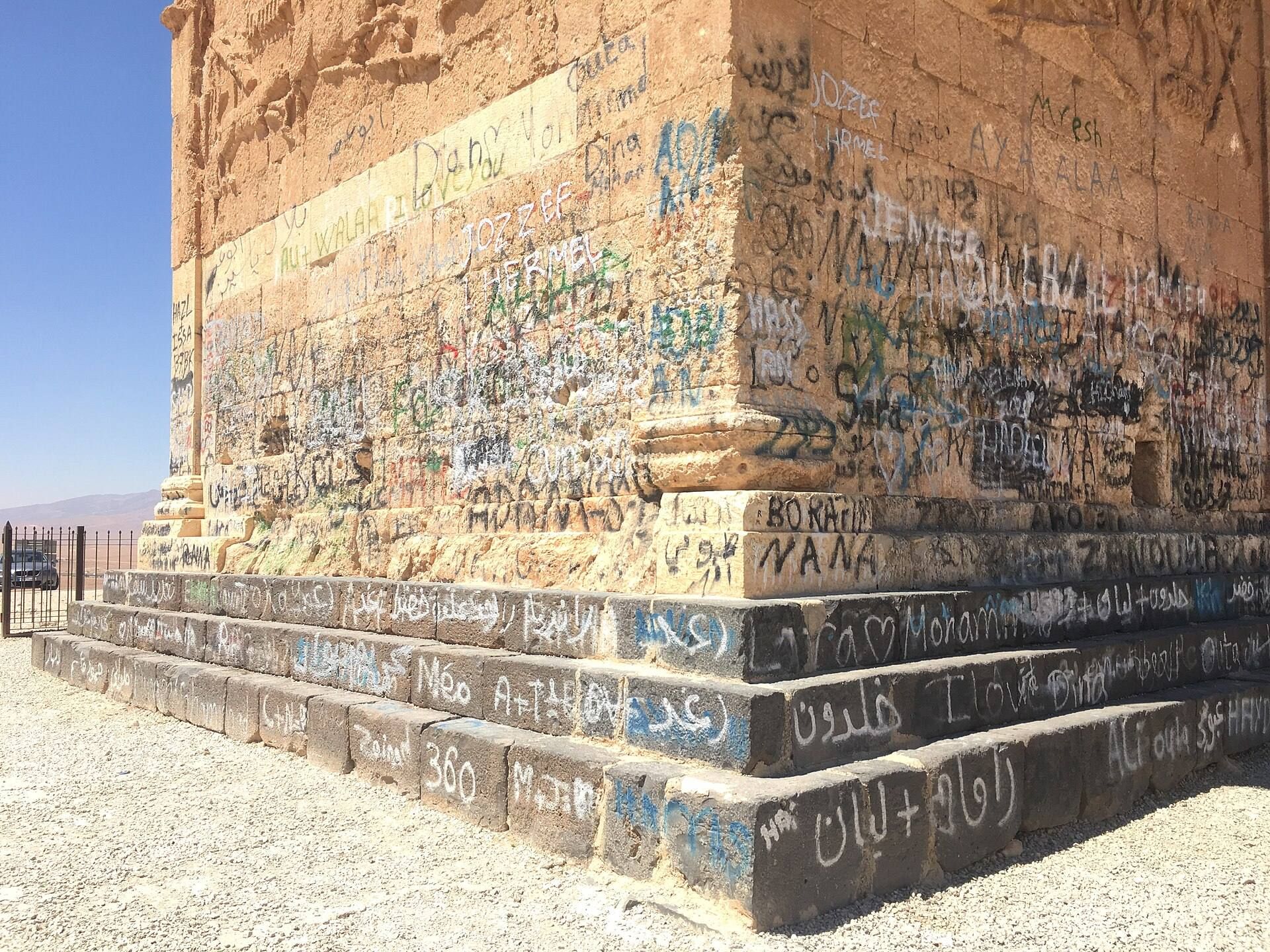
Parts of Kamouh el Hermel were restored in 1931. Later efforts to protect the monument with fencing did not prevent local vandalism between 2000 and 2018. During that period, graffiti covered all four faces of the base, and the monument’s carved surfaces remained partly damaged.
Remains
Kamouh el Hermel stands on a clearly visible hill and consists of a stepped dark-stone base, two massive limestone blocks, and a small pyramid above them. Estimates place its total height between approximately 19.6 and 27 metres. Animal reliefs occupy the monument’s four faces, while Neolithic flint finds from around the hill provide evidence of a much earlier phase of human activity in the same setting.
Monumental structure
Base and limestone supports
The monument rests on a base about 1.1 metres high, formed with three steps of black basalt. Two massive limestone blocks rise from this base. They measure approximately 7 metres in height and 9 metres in width, and each pair of blocks is associated with an estimated weight of between 40 and 50 tonnes. Together, they support the pyramid above.
Pyramid
The upper pyramid is approximately 4.5 metres high. Its position above the large limestone supports gives the monument its characteristic form and accounts for names such as the Pyramid of Hermel and the Needle of Hermel. The structure has undergone partial restoration, while damage from graffiti affects the base and some of its carved surfaces.
Animal reliefs
The north face carries a relief showing two deer, possibly caught in a hunting trap. On the east face, a boar is attacked by dogs and speared. The badly damaged south face preserves an image that may represent a bear. The west face shows two wolves attacking a bull. These scenes form the basis for the proposed connection between the monument and royal hunting imagery.
Neolithic flint finds
Flint recovered south and west of the hill includes blade butts with scraping edges or notches, borers, and cores, including one with a double edge. Small flakes and some vaguely bifacial pieces were also collected. The material is grey or chocolate-brown, and some pieces have a shiny patina. These objects belong to the Neolithic activity identified around the monument rather than to the later stone structure itself.