Fole Church: A Medieval Church in Gotland, Sweden
Site at a Glance
- Country
- Sweden
- Primary era
- Medieval
- Eras represented
- Medieval, Modern
- Civilizations
- Swedish
- Site type
- Religious
- Remains
- Church
On this page9 sections
History
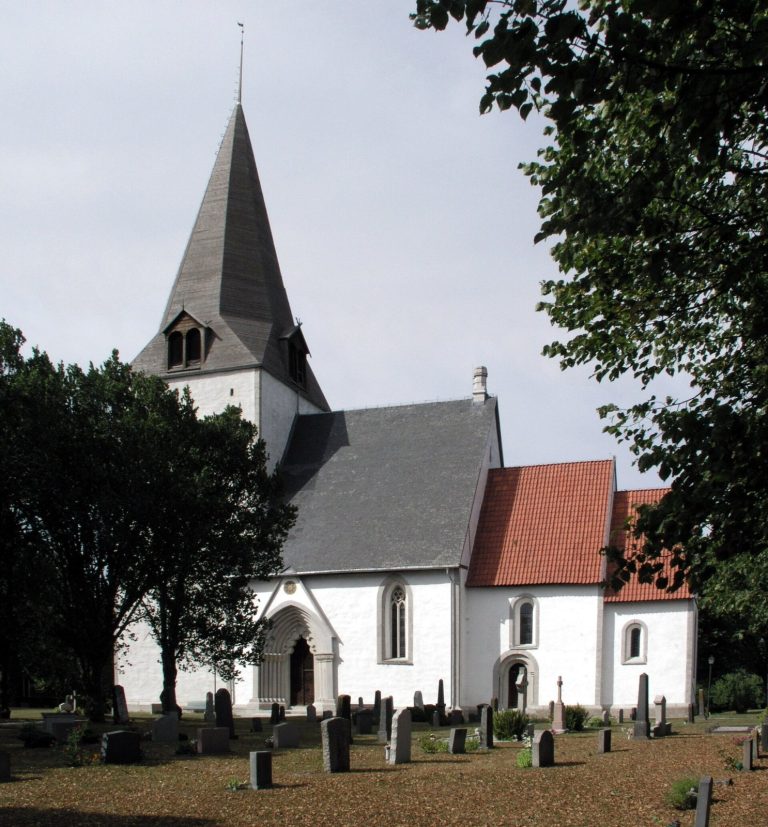
Fole Church is a medieval limestone church in the interior of Gotland, Sweden, rebuilt in the 13th century with Romanesque and Gothic elements. Romanesque architecture typically used rounded arches and substantial forms, while Gothic design is associated with pointed arches and later medieval building developments. The church belongs to the Church of Sweden, an Evangelical Lutheran church, and serves Väskinde parish, a local church community, within the Diocese of Visby, an ecclesiastical district.
Medieval rebuilding
The present church replaced an earlier Romanesque stone building. Work first renewed the choir, the area around the altar, and the eastern part of the nave, the church’s main body, in the mid-13th century. The remainder of the nave was rebuilt several decades later. The renewed church was inaugurated in 1280, and the western nave may have been completed around that time.
Later changes
The church has remained largely intact since its medieval rebuilding. The sacristy, a room used to prepare for worship and store liturgical items, was restored in 1707. Minor changes to the interior took place intermittently over the following centuries.
Remains
Plan and exterior
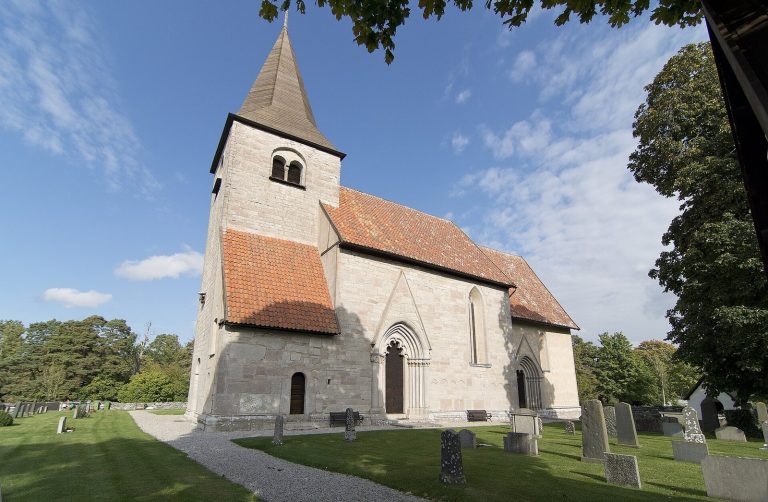
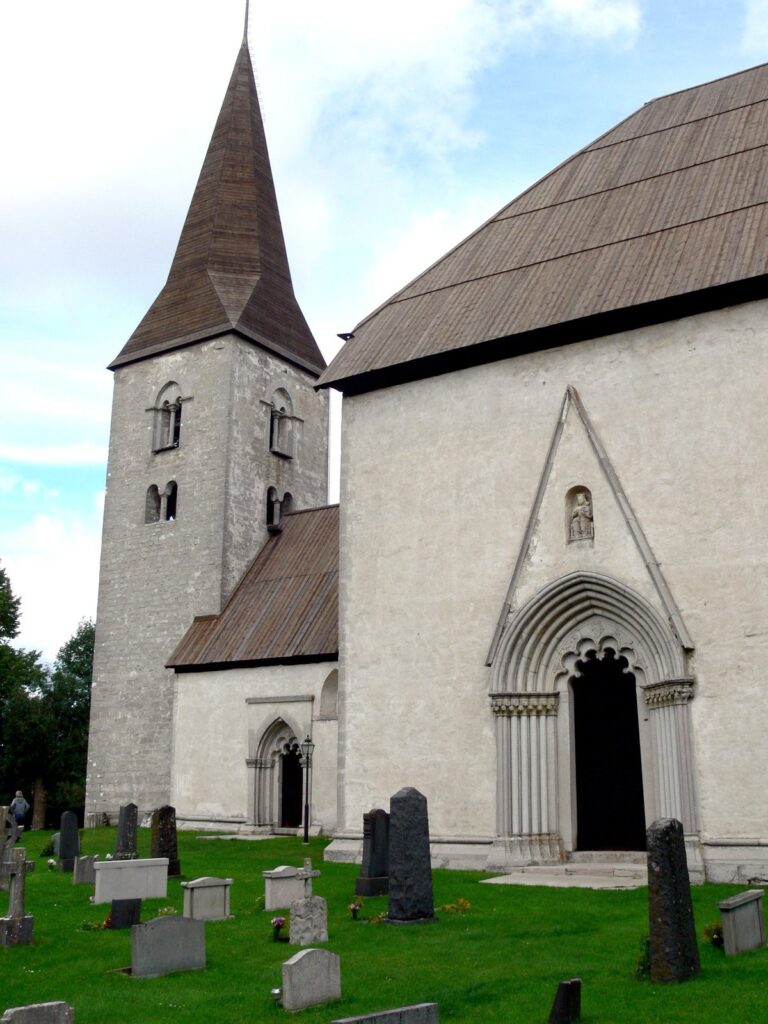
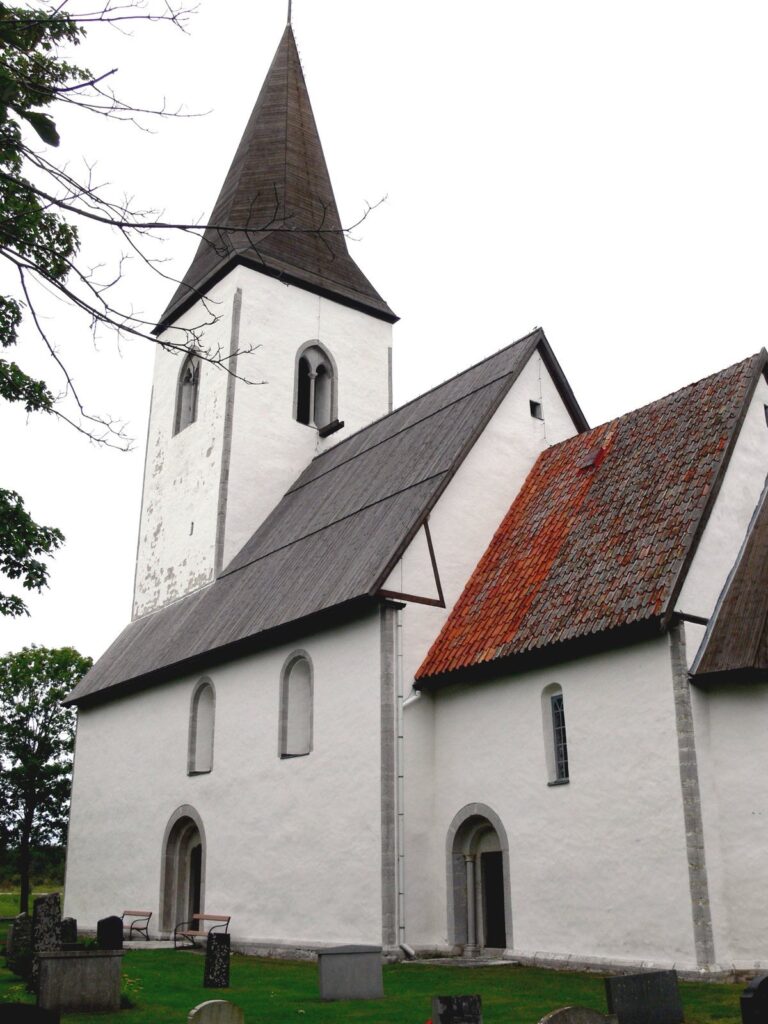
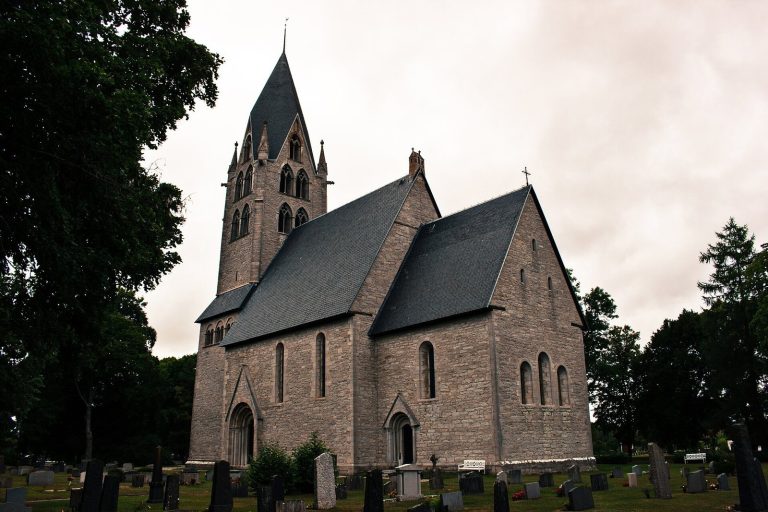
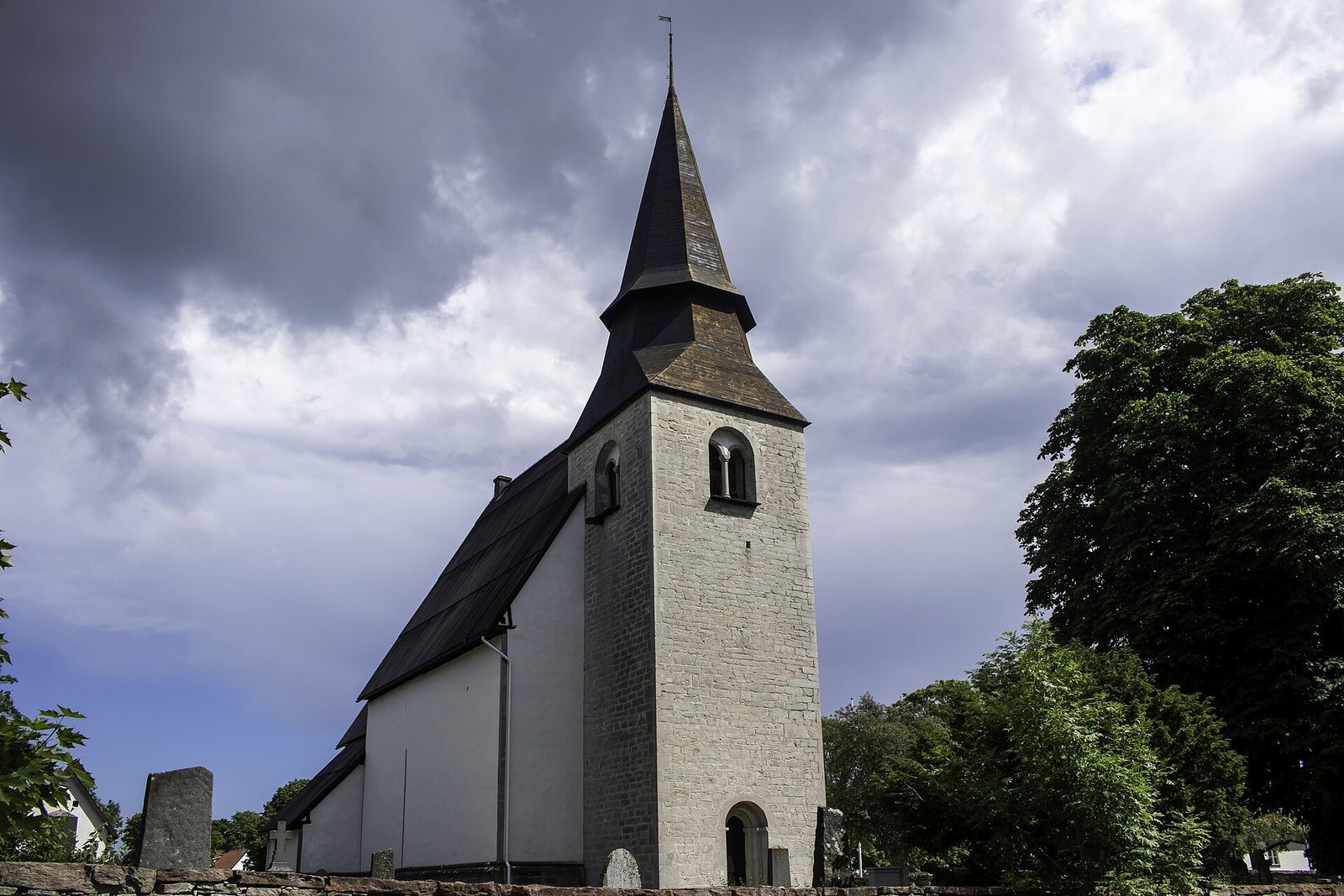
The limestone church is arranged around a west tower, a nave wider and taller than the choir, a choir with a straight eastern wall, and a sacristy on its north side. The tower, dating to about 1200, is the oldest part of the building. Its unplastered masonry does not rise above the nave’s roof ridge, and it belonged to the earlier church. Foundations of that predecessor survive, including those of its apse, a rounded projection at the sanctuary end. The present church instead has a straight eastern wall with three tall windows. Entrances open through the south sides of the nave and choir and the west side of the tower. The tower has a Romanesque portal; the south front has Gothic portals with triangular gables. The southern windows and the tower’s column-framed bell openings are original. A clear joint in the nave wall marks where the building was extended.
Interior structure
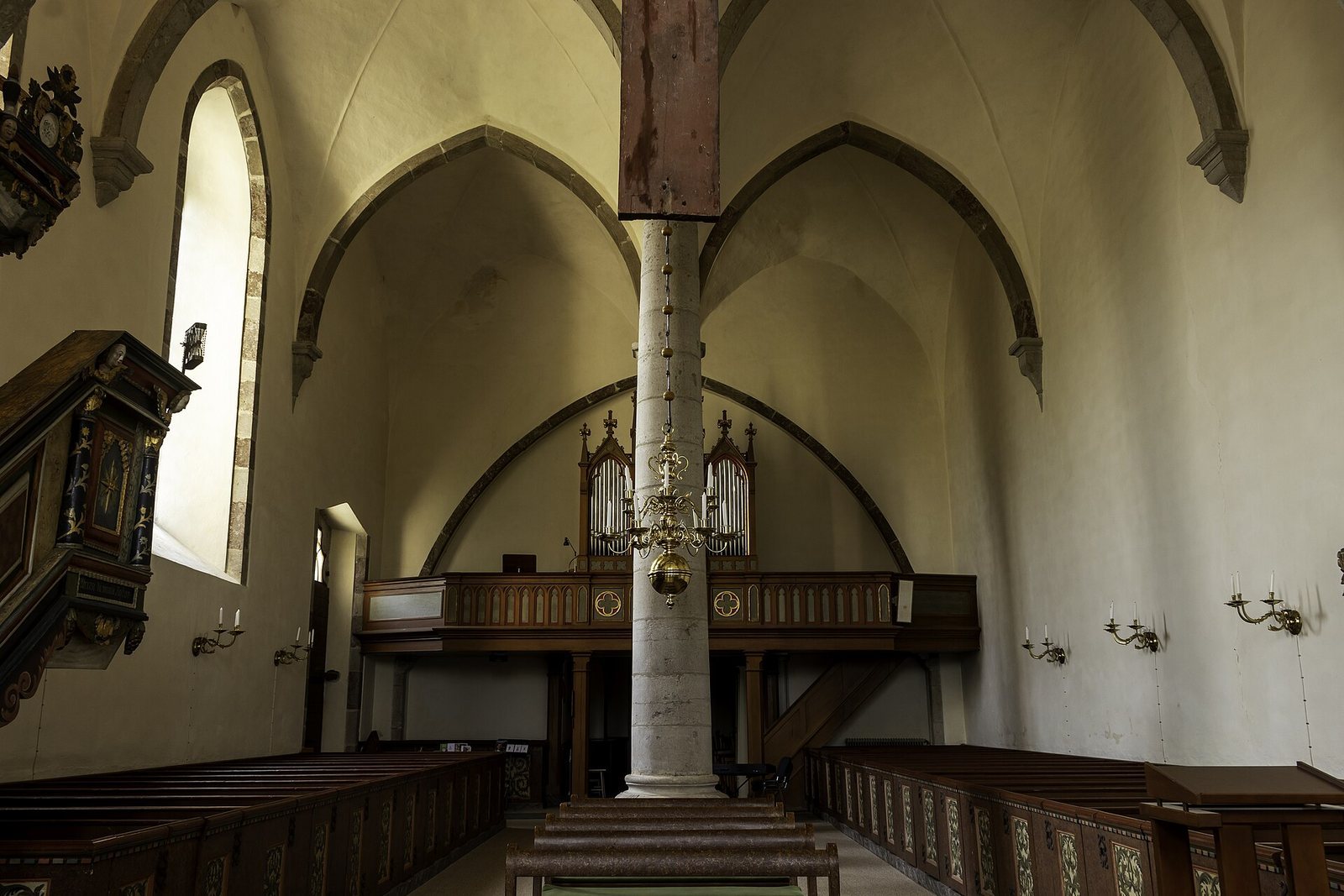
Curved ceilings cover the interior. The nave is divided into two aisles with six ceilings supported by two columns, and a broad arch separates it from the choir. Paired arches carried on a narrow column connect the tower’s bell chamber with the nave. An original spiral staircase runs within the tower masonry, rising from the southwest corner of the tower chamber to the upper floors.
Medieval decoration and objects
Fragments of wall paintings survive inside the church. A wall also bears runes, characters from early Germanic writing systems, made by local residents to preserve their right to use a road through Fole. The limestone baptismal font, a basin used for baptism, dates to the early 13th century. Raised carvings on its upper part depict the Flight into Egypt and the apostles, while human heads and animals decorate its base. Around 1707, the font’s carvings were painted over. A mid-13th-century triumphal cross, a large cross displayed at the arch between nave and choir, hangs there and was overpainted in the 1840s. Several medieval tombstones are also kept in the church.
Later furnishings
Johan Bartsch painted the altarpiece in 1654. The benches date from the first half of the 18th century, and Johan Hernell made the pulpit and its canopy in 1751. A Neo-Gothic gallery, an elevated platform in a revival of medieval Gothic design, was installed in the western part of the nave in 1870. It is one of only a few surviving galleries of this kind on Gotland.
Churchyard and setting
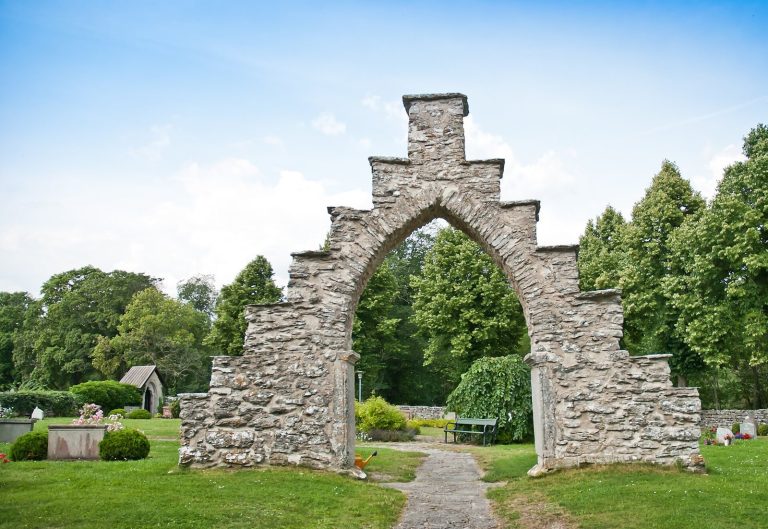
Fole Church stands about 15 km northeast of Visby, 17 km north of Roma, and 17 km southwest of Slite. At 59 m above sea level, it is among the highest-situated churches on Gotland. A large parish garden lies to the north, and a school stands to the east. Nearby buildings include a school dating to 1858 and a parsonage dating to 1820. A portal in the eastern part of the churchyard is probably partly medieval.