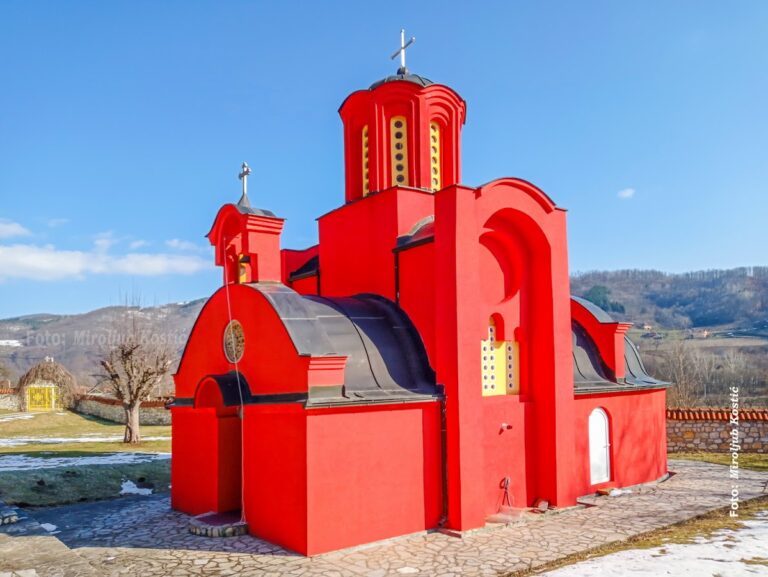
Kalenić Monastery: A Morava-Style Serbian Orthodox Endowment


Site at a Glance
- Rating
- 4.9
- Popularity
- Low
- Country
- Serbia
- Primary era
- Medieval
- External website
- Open
- Eras represented
- Medieval
- Civilizations
- Serbian Despotate
- Site type
- Religious
- Remains
- Monastery
On this page11 sections
History
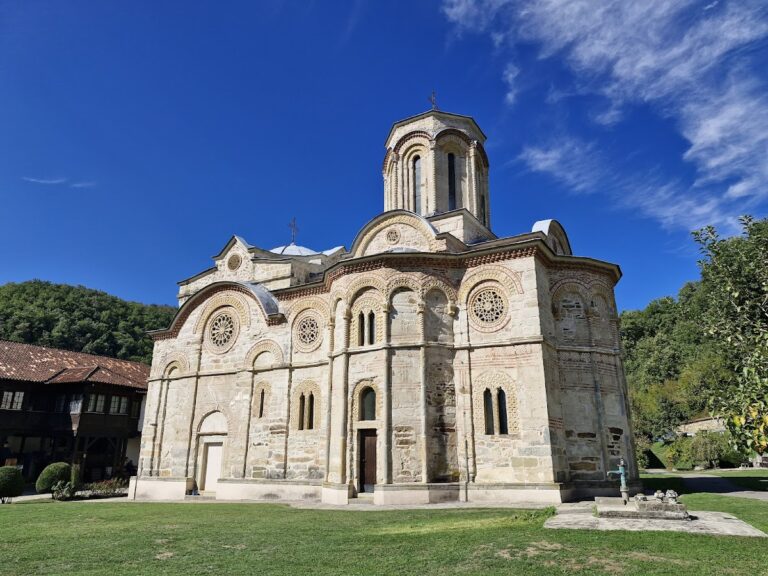
Kalenić monastery is a Serbian Orthodox women’s monastery in Serbia, founded in the late medieval period and built in the Morava architectural tradition between 1407 and 1413. Dedicated to the Presentation of the Virgin Mary, the monastery was the endowment of Bogdan, a prominent nobleman and protovestiary, a high-ranking court official, to Despot Stefan Lazarević.
Foundation and medieval art
The church was constructed and painted during the period associated with Despot Stefan Lazarević, the Serbian ruler under whom Kalenić was founded. Its architecture belongs to the Morava School, a late-medieval Serbian tradition recognized for patterned masonry, elaborate church plans, and richly carved stone decoration. The frescoes, created around 1413, belong to the late Palaiologan Byzantine artistic tradition, the final phase of Byzantine art under the Palaiologan dynasty.
Abandonment and restoration
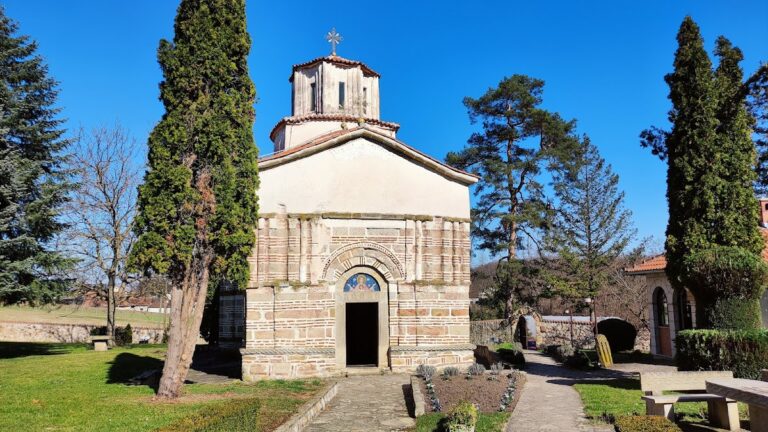
Kalenić was abandoned toward the end of the seventeenth century. Monks from Morača restored the monastery in the middle of the eighteenth century, returning the complex to religious use. A major professional restoration followed between 1928 and 1930.
Modern monastic life and protection
Kalenić has been a women’s monastery of the Serbian Orthodox Church within the Šumadija Eparchy. Abbess Nektarija Trajanoska and the sisterhood have headed the monastery since 3 March 2000. Earlier recorded heads include Evpraksija Dragin, who served from 1953 to 1987, Marijamija Gavrilović, who served from 1987 to 2000, and Nikon Lazarević, recorded as head from 1910 to 1944.
The monastery is protected as an immovable cultural heritage site and is designated a monument of culture of exceptional importance in Serbia. It also traditionally hosts the annual assembly titled “I Passed through Levač, I Passed through Šumadija,” held under the patronage of Serbia’s Ministry of Culture and the municipality of Rekovac.
Remains
The surviving monastery church combines a compact three-conch plan with a single dome, a western entrance vestibule, patterned masonry, carved stone decoration, and an extensive cycle of early fifteenth-century wall paintings. The building’s form and ornament bring together the principal architectural and artistic features associated with the Morava School.
Church architecture
Plan and masonry
The church is organized around three conches, semicircular projecting parts that shape the distinctive triconch plan. It is a pillarless structure, and its dome rises on a tall faceted drum. A narthex, or entrance area, is attached to the west and carries a blind dome, a solid dome without windows that serves chiefly as a decorative feature. The walls use alternating courses of stone and thin brick set in a thick layer of lime, creating a strongly patterned surface.
Carved stone decoration
Elaborate architectural carving enriches the exterior. Slender columns beneath the arched cornices divide the façades vertically, while the arches, windows, and portals contain complex carved ornament. Human and animal figures appear in the lunettes above the window openings. On the south façade, a carved image shows the Virgin Mary with Christ between two six-winged seraphim.
Fresco painting
Paintings in the church
The church preserves frescoes regarded among the best-preserved examples of fifteenth-century Serbian wall painting. Their delicate lyricism, flowing lines, light colors, and gentle transitions between tones reflect the refined style of late Palaiologan art. In the main apse, the paintings include the Communion of the Apostles and the Adoration of the Lamb. Above the prothesis is a Lamentation of Christ, while the naos, the principal central worship space, contains saints, warrior saints, hermits, and scenes of Christ’s miracles.
Paintings in the narthex
The narthex contains scenes from the life of the Virgin Mary and a ktetor composition. A ktetor is the founder or principal patron represented in a church’s commemorative imagery. In this scene, Bogdan, his wife Milica, and his brother Petar approach Despot Stefan. The space also includes a cycle based on apocryphal lives of the Virgin Mary, alongside scenes of the major feasts, Christ’s earthly life, and his miracles.