Pleš Monastery: A Serbian Orthodox Monastic Complex in Serbia


Site at a Glance
- Rating
- 4.9
- Popularity
- Low
- Country
- Serbia
- Primary era
- Modern
- External website
- Open
- Eras represented
- Modern
- Civilizations
- Unclassified
- Site type
- Religious
- Remains
- Monastery
On this page8 sections
History
Pleš Monastery is a Serbian Orthodox monastery in Serbia, near the village of Pleš in the municipality of Aleksandrovac. Its origins are dated to the thirteenth century, while the restoration or re-establishment that created the foundation of the present monastery belongs to the beginning of the fifteenth century. Tradition associates the monastery with the Nemanjić dynasty, the medieval Serbian ruling house linked with the patronage of many Orthodox monasteries.
Medieval origins and fifteenth-century re-establishment
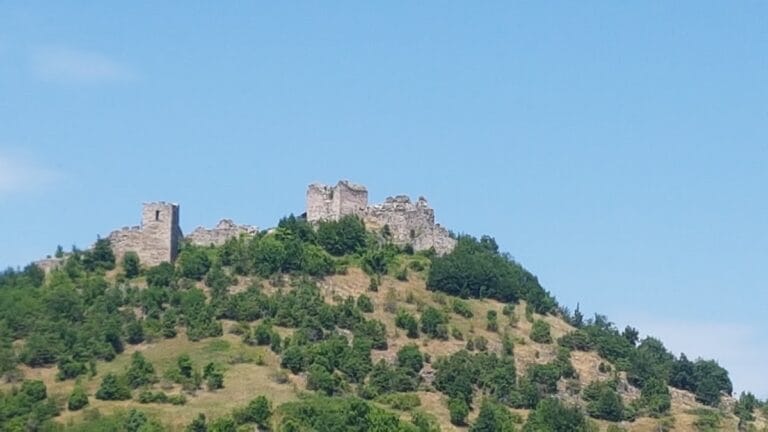
The monastery lies in the upper course of the Rasina River, in a landscape dominated by Koznik, a medieval fortress overlooking the area. Koznik controlled a broad region and the route connecting Župa with the Ibar Valley. It is traditionally associated with Radič Postupović, a Serbian nobleman linked with the court of Prince Lazar and with his son, Despot Stefan Lazarević, a ruler of late medieval Serbia.
Despot Stefan Lazarević issued two charters to Radič Postupović at Koznik in 1405. Against this setting, the possibility has been raised that the rebuilding or establishment of Pleš Monastery in the fifteenth century was connected with Radič and the political circumstances of that period. This association remains part of the monastery’s historical interpretation rather than a confirmed attribution of its construction.
Flood, abandonment, and revival
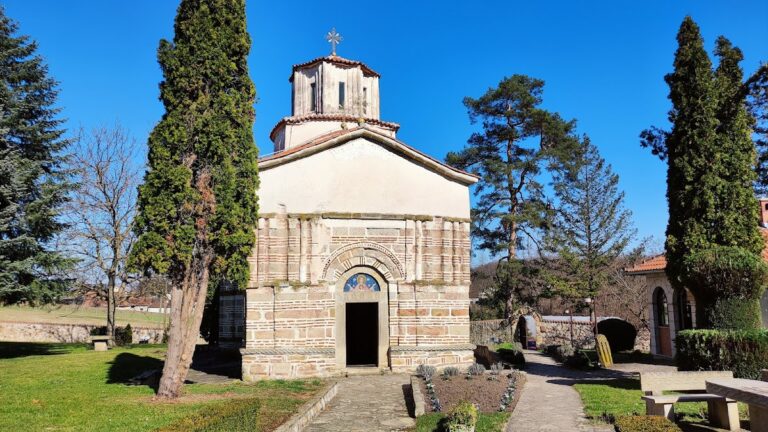
The monastery and its church were traditionally said to have been damaged by a major flood of the Rasina River in 1901. Afterward, the monastery had no monastic residents and was abandoned. In 1939, residents of Pleš built a smaller church on the foundations and at the location of the earlier church.
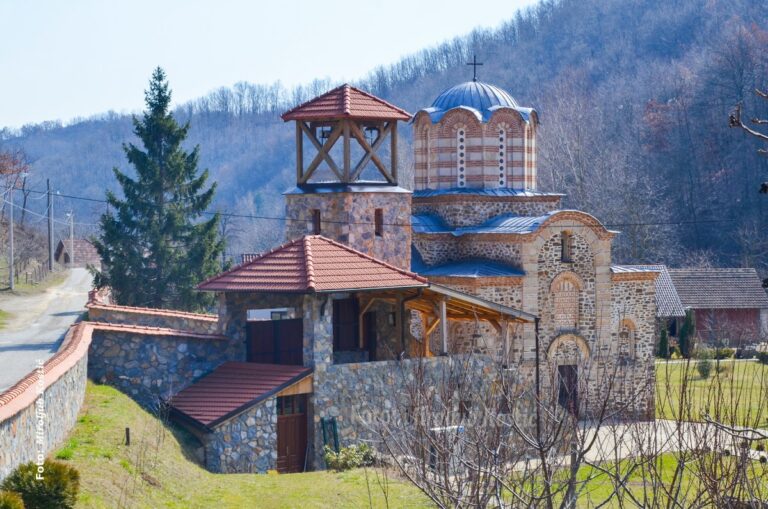
The present church and monastic residence, or konak, were built between 1996 and 2003. A konak is a residential building within a monastery complex that accommodates monks and supports monastic life. Following this rebuilding, Pleš Monastery became active again. It is dedicated to the Holy Unmercenary Physicians, Christian saints traditionally associated with healing and treating illness without payment, and their feast is celebrated at the monastery on July 14.
Remains
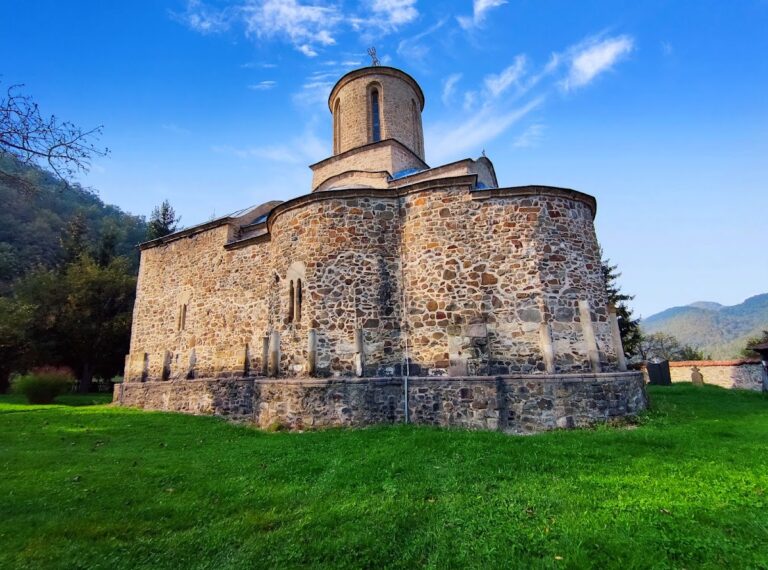
The monastery complex stands beside the village of Pleš in the upper Rasina valley and consists of a church and a konak. The smaller church erected in 1939 occupied the foundations and site of the older church. The buildings now present belong to the rebuilding carried out between 1996 and 2003, while the complex remains associated with the earlier medieval foundation.
Monastery buildings
Church
The present church was built between 1996 and 2003 on the site and foundations associated with the earlier church. It replaced the smaller building raised there by local residents in 1939 and serves the monastery dedicated to the Holy Unmercenary Physicians.
Monastic residence
The monastery’s konak, or residential building, was constructed alongside the present church during the rebuilding between 1996 and 2003. Together, the church and residence form the active monastic complex.
Koznik and the surrounding setting
The medieval fortress of Koznik occupies a difficult-to-access position at an elevation of 922 metres above the surrounding area. Its commanding location and association with the region connecting Župa and the Ibar Valley provide the historical setting for Pleš Monastery’s fifteenth-century re-establishment.