Kalavryta Castle: A Medieval Stronghold in Greece
Site at a Glance
- Popularity
- Very Low
- Country
- Greece
- Primary era
- Medieval
- Eras represented
- Medieval
- Civilizations
- Crusader, Principality of Achaea
- Site type
- Military
- Remains
- Castle
On this page9 sections
History
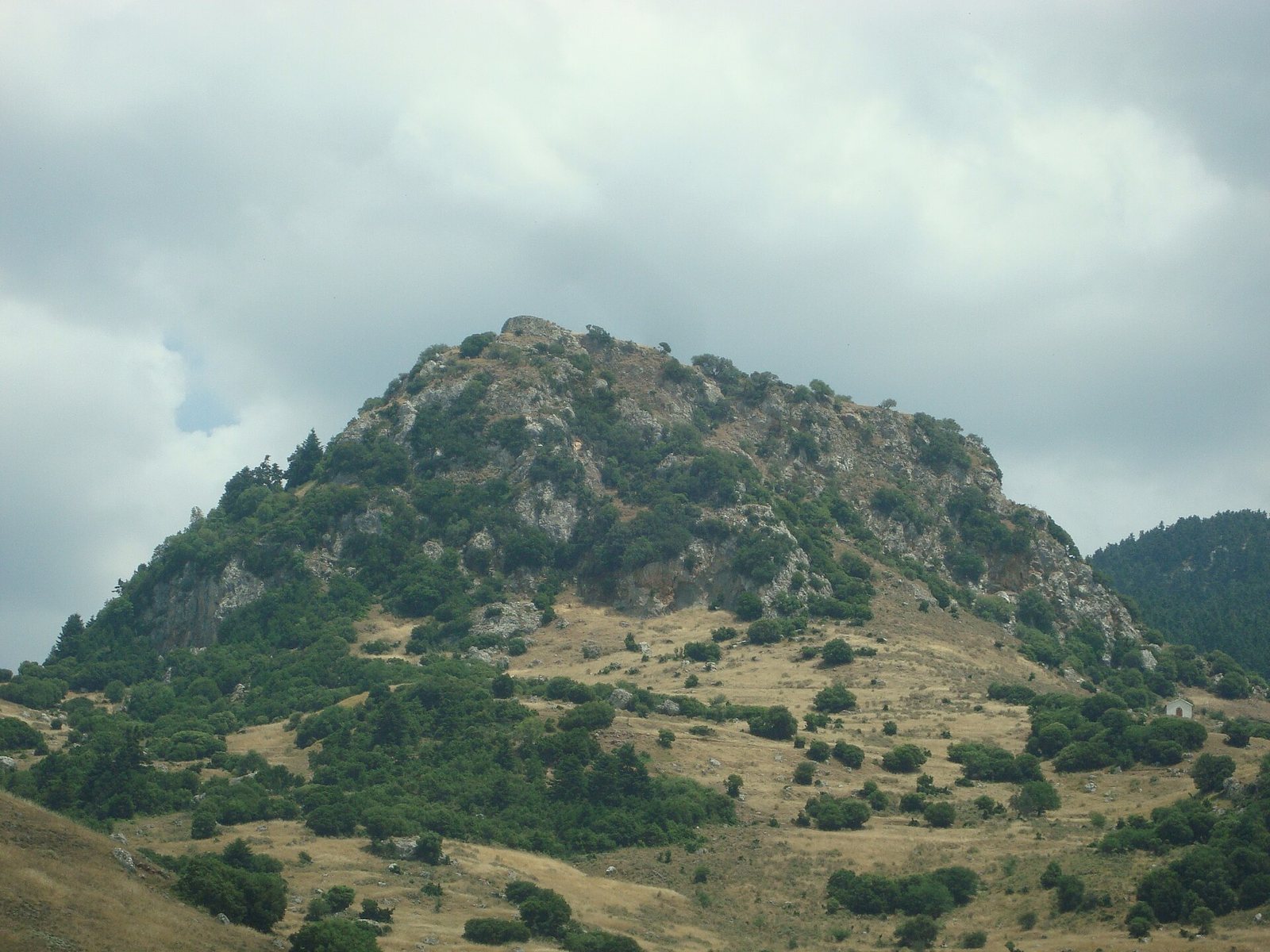
Kalavryta Castle is a medieval stronghold on a hill east of Kalavryta, Greece, built shortly after 1208 by crusader knight Othon de Tournay to defend the capital of the Barony of Kalavryta.
Crusader foundation
After crusaders captured Constantinople in 1204, they established the Latin Empire, a crusader-ruled state, and divided former Byzantine territories among dependent states. In the Peloponnese, William of Champlitte founded the Principality of Achaea and granted lands to his knights as baronies. The Barony of Kalavryta was established in 1209 and given to Othon de Tournay.
Byzantine and Hospitaller control
The castle probably passed to Byzantine control around 1263, following a Byzantine victory at the Battle of Pelagonia in 1259 and the recovery of Constantinople in 1261. Around 1400, Theodore I Palaiologos, a high-ranking Byzantine ruler of the Morea (the medieval name for the Peloponnese), granted it to the Knights Hospitaller, a Catholic religious and military order. They held it until 1404, when it returned to Byzantine rule. Byzantine control continued until the Ottoman conquest of the Peloponnese in 1458.
Ottoman and Venetian rule
Troops of Thomas Palaiologos retook the castle in 1459. The following year, Ottoman sultan Mehmed II besieged and captured it. Its last Byzantine commander, Doxa, was taken prisoner and flayed alive.
The castle also became known as Oria Castle. Tradition connects the name with Catherine Zaccaria, daughter of Centurione II Zaccaria, the last Frankish prince of Achaea, and wife of Thomas Palaiologos. According to the story, she threw herself from the castle in 1460 rather than be captured by the Ottomans.
From 1460 to 1715, Ottoman and Venetian control alternated. The castle then remained under Ottoman rule until 1821 and shared Kalavryta’s fortunes during the Greek War of Independence against Ottoman rule, which lasted from 1821 to 1829. Afterward it belonged to the Greek state and no longer had strategic importance.
Remains
Castle site and defenses
Hilltop enclosure
The castle occupies a naturally defensible hill on the slopes of Mount Chelmos, about 1.5 kilometres east of central Kalavryta. The hill reaches approximately 1,170 metres above sea level, around 400 metres higher than the town, which lies at about 750 metres. A plateau of roughly 20,000 to 30,000 square metres formed the castle’s interior. The surviving castle is in ruins.
Towers and outlying fortifications
A dense network of towers and outer fortifications surrounded the castle. These defenses provided early warning of attacks and helped control nearby mountain passes.
Earlier remains and reused stone
Ancient stone blocks were incorporated into the foundations of the castle walls. Settlement on the site reaches back to prehistoric times, while ancient and medieval ruins also survive on the hill’s western slopes. Some scholars consider the hilltop to have been the acropolis, or fortified high center, of ancient Cynaetha, a city in Arcadia in the northern Peloponnese.