Brancaleone Fortress: Venice’s Late-Medieval Stronghold in Ravenna
Site at a Glance
- Popularity
- Medium
- Country
- Italy
- Primary era
- Medieval
- Eras represented
- Medieval
- Civilizations
- Venetian
- Site type
- Military
- Remains
- Fort
On this page11 sections
History
Brancaleone Fortress is a late-medieval stronghold of the Republic of Venice in Ravenna, Italy, planned to defend the city’s northeast. Construction began in 1457, and the fortress also served to deter a possible civil uprising.
Construction under Venetian rule
Venice took control of Ravenna after Ostasio III da Polenta was defeated in 1441. In 1456, Doge Francesco Foscari, the elected head of the Venetian Republic, secured Senate approval for the fortress. Giacomo Corner and Vitale Lando prepared its design, which was carried out under Giovanni Francesco da Massa.
Work began on 25 May 1457. Ravenna’s chief civic officer, podestà Pietro Zorzi, buried three copper coins, and Archbishop Bartolomeo Roverella laid the foundation stone. The fortress entered service before its construction was complete. On 19 January 1460, Doge Pasquale Malipiero instructed the podestà to support the castellan, Marco di Riniero, the officer responsible for the fortress, and the first troops stationed there. The citadel’s defenses were finished by 1470, although the precise completion date of the complex is unknown.
The origin of the name Brancaleone is uncertain. Gaetano Savini questioned a proposed link to a Venetian patrician family, noting that Venetian documents using the name date from after 1500; he considered a connection to Brancaleone degli Andalò, Count of Casalecchio, more likely. Giuseppe Morini instead suggested that the name joins words meaning paw and lion, referring to the winged lion emblem of Saint Mark and Venice. Another interpretation connected it to a Ravenna lion caught in a paw, shown on a 1937 city coat of arms. That explanation is considered mistaken because the lion is associated with Ravenna only from 1509, after Venetian influence had begun.
Sieges and military decline
Papal forces attacked the fortress in 1509. It resisted for a month before surrendering under fire from 32 guns belonging to the Duke of Ferrara and commanded by Francesco Maria I della Rovere, Duke of Urbino. Brancaleone was attacked again during the 1512 Battle of Ravenna. Repairs made afterward proved inadequate, and a French siege in 1515 ended with the fortress’s surrender after four days.
In 1526, Pope Clement VII commissioned a survey of the fortresses of Romagna, a historical region in northeastern Italy. Antonio da Sanagallo the Younger and Michele Sanmicheli carried out the survey and assessed damage at Brancaleone. As the political situation stabilized, the fortress lost its defensive importance. Its weapons were transferred to other military centers, and from about 1630 the removal of material extended to the structure itself.
Ownership, conservation, and cultural use
The Rava family acquired the fortress in 1877, after which its grounds served for years as a garden or vegetable plot. Ravenna’s municipality bought it in 1965. Conservation work from 1972 to 1980 sought to recover the fortress’s earlier appearance and prepare the grounds for public uses, including a park and open-air theater. Further municipal work in 1988 improved the surrounding district and access.
At the initiative of theater director Mario Salvagiani, the fortress became a venue for concerts, opera, and outdoor cinema. A major classical concert took place there in 1971; jazz performances followed in 1973 and the Ravenna Jazz program began in 1974. Opera and ballet were introduced in 1975, with an Opera and Ballet Season starting in 1977. On 1 July 1990, Riccardo Muti conducted the first Ravenna Festival concert at the fortress, which remains one of the festival’s regular venues. Brancaleone Fortress is designated Italian national heritage.
Remains
Layout, construction, and setting
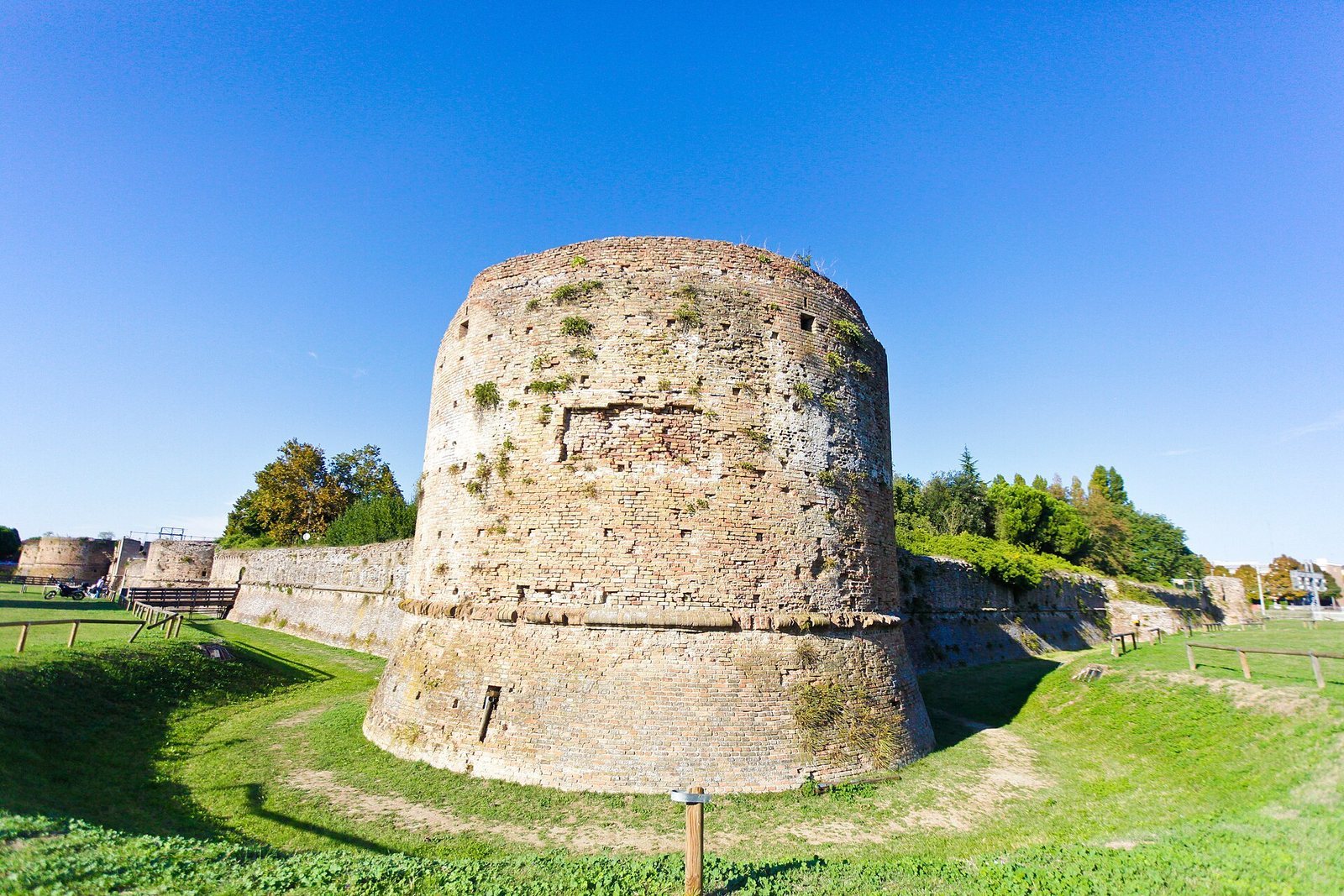
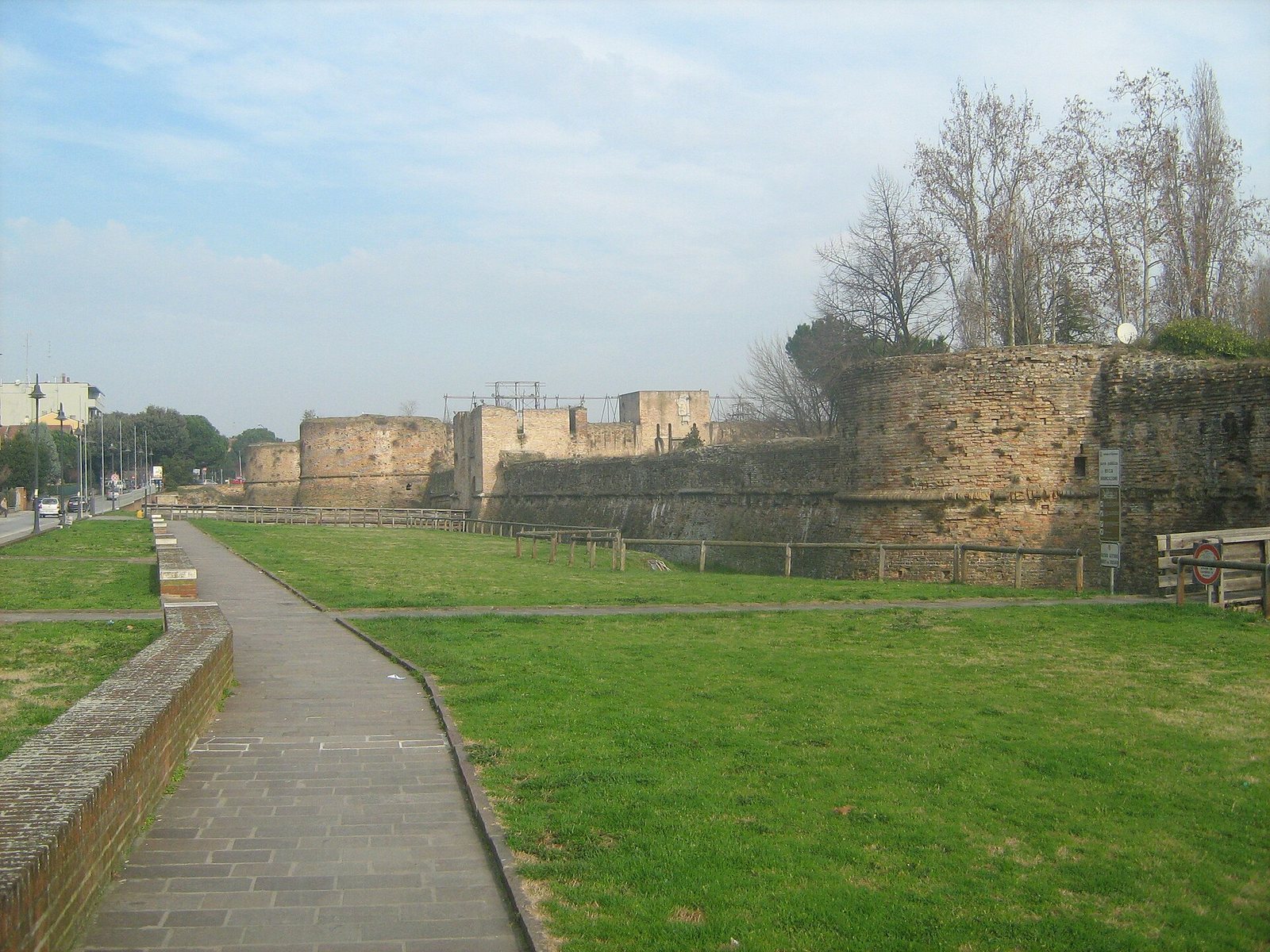
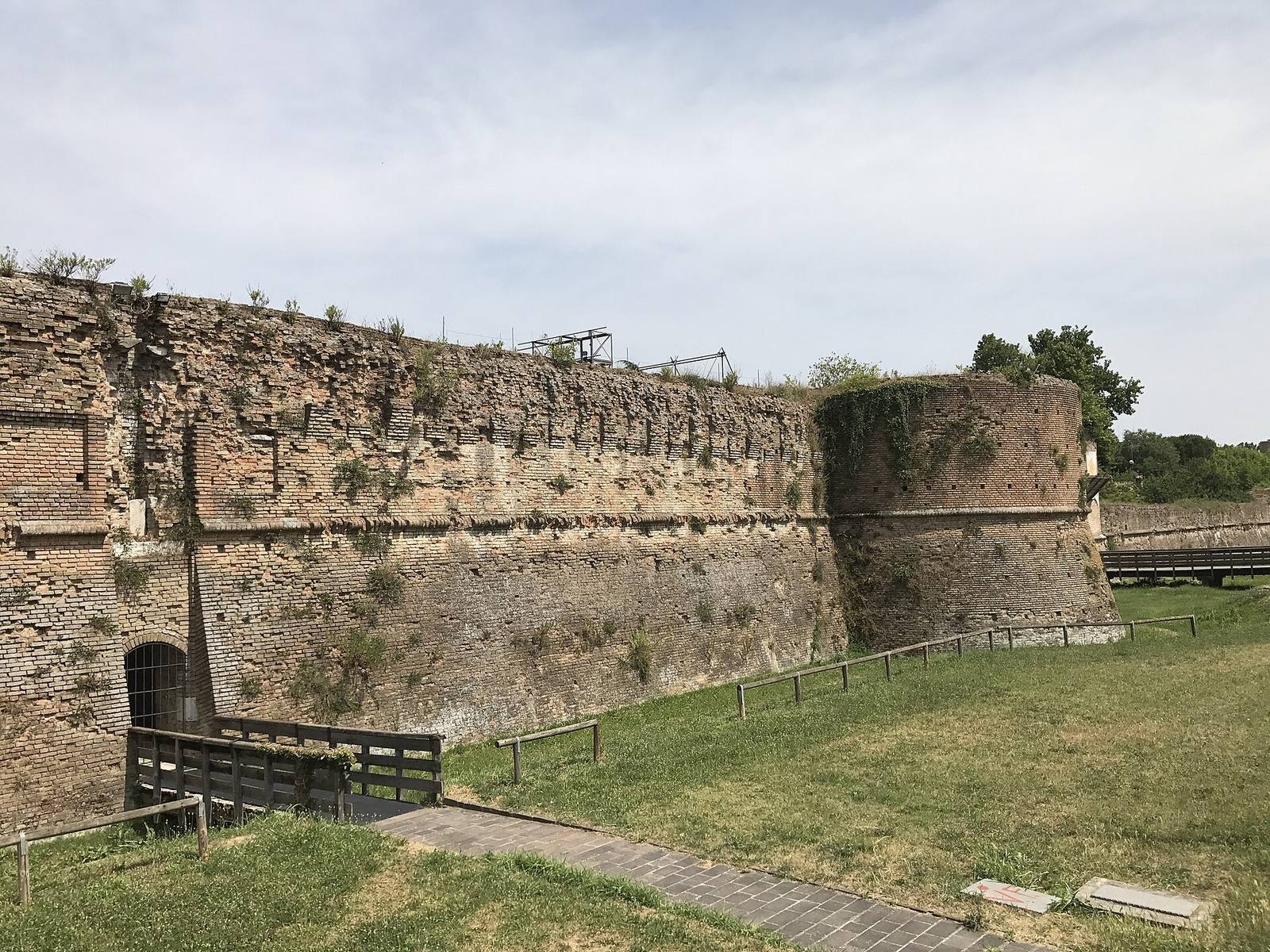
The brick-built complex occupies the northeast corner of Ravenna’s former city walls, near the River Montone. Its layout has two parts, the fortress proper and the citadel. The surviving structure is altered and restored, and its elevation is about one metre below sea level.
Fortress and citadel
The fortress proper housed the castellan, while the citadel accommodated the stationed troops. Today, the citadel grounds contain a children’s park; the fortress itself is used for open-air cinema and musical performances.
Fortified towers
The named towers include the Torrione della Scala, Torrione dell’Olio, Torrione della Munizione, Torrione della Cittadella, Torrione di Mezzo, Torrione dell’Orto, Torrione Rotto, and Torre Fiorentina, also known as Torre della Ghiacciaia.
Entrance reliefs
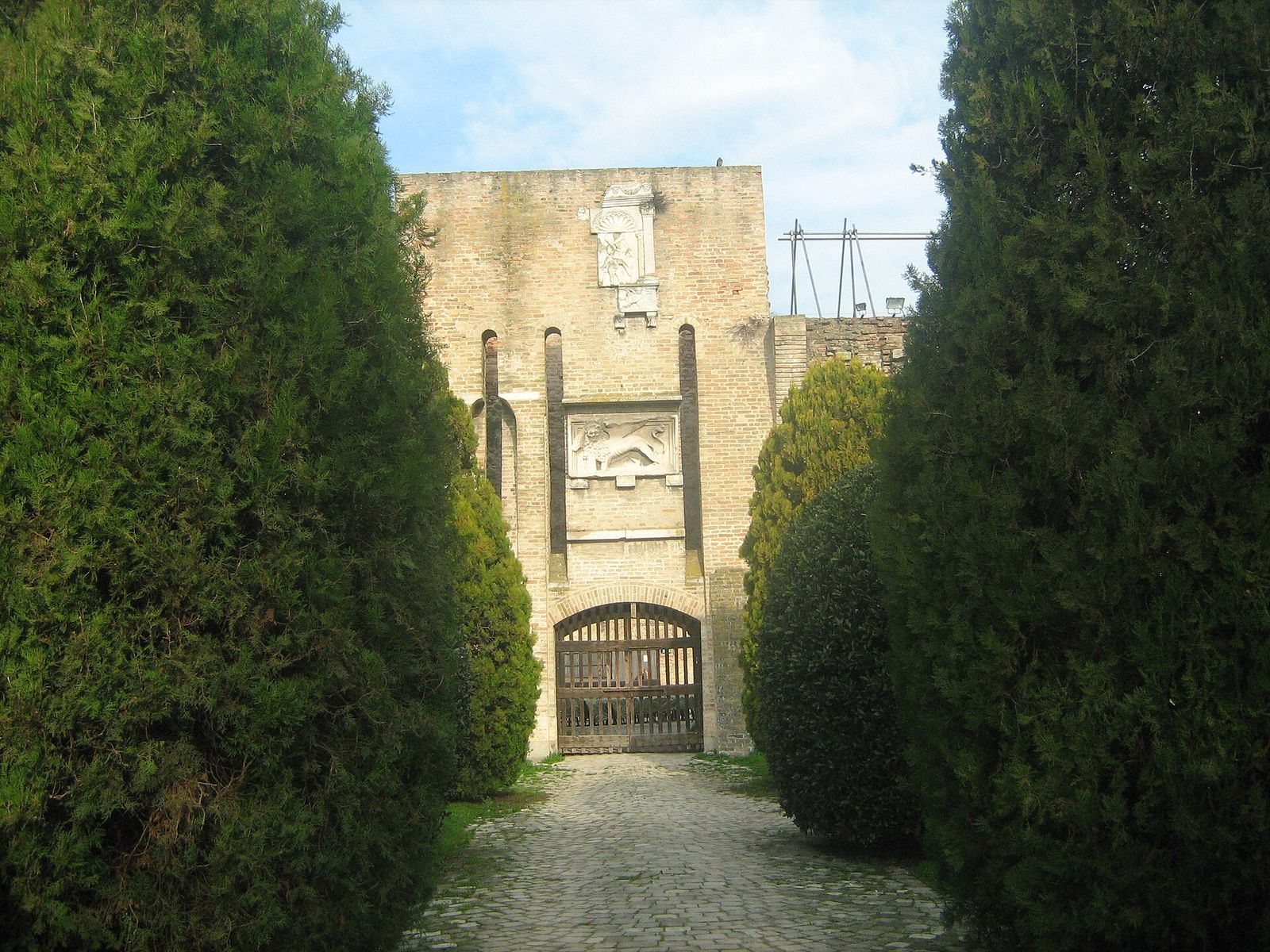
Above the entrance, in the area identified as the Torre della Cappella, are two bas-reliefs: a winged Lion of St Mark and a Madonna and Child. The lion relief is attributed to the fifteenth-century artist Marino di Marco Cedrini and is associated with the entrance between the fortress and the citadel.
Walls, river, and grounds
The River Montone once flowed along Ravenna’s northern edge. After it was diverted into the Fiumi Uniti in the eighteenth century, a city street occupied the fortress’s northern side. In the nineteenth century, railway construction beside the fortress led to the demolition of much of the eastern city wall. Later urban improvements added pedestrian green spaces, a car park, and a small park around the complex. The public garden associated with the fortress covers 17,000 square metres.
Reused building materials
Materials from earlier structures were incorporated into the fortress, including the Church of Sant’Andrea dei Goti, the Da Polenta family’s Palazzo Beldeduit, and the walls of Caesarea, a locality in Ravenna.