Kalø Castle: A Medieval Danish Fortress and Historical Site
Visitor Information
Google Rating: 4.5
Popularity: Medium
Country: Denmark
Civilization: Medieval European
Site type: Military
Remains: Castle
History
Kalø Castle is situated near the town of Rønde in Denmark and was constructed by the Danish kingdom during the early 14th century. The fortress was part of a series of strongholds built in Jutland to reinforce royal power in the wake of widespread peasant rebellions.
Around the year 1313, King Erik Menved established Kalø Castle on a small island in Kalø Bay. Its purpose was to act as a “forced castle,” designed to intimidate and control the local population. The castle was connected to the mainland by an artificial causeway created from cobblestones and earth. Construction relied heavily on compelled labor provided by local peasants. Just a few years later, in 1320, King Christoffer II was forced by the Danish nobility to destroy such fortifications, including Kalø, though the details of this demolition are not fully recorded. Reconstruction efforts resumed either under Christoffer II or his successor Valdemar Atterdag, and by the early 1340s, the castle had regained much of its former structure.
During the 14th and 15th centuries, Kalø Castle passed between various noble owners through a system of pledges and mortgages. Prominent figures such as Gert af Holsten and Claus Limbek held the castle at different times, until Queen Margrethe I redeemed it in 1407. From this point until 1661, it operated as a lens castle, meaning it served as a royal administrative center governed by appointed nobles. The castle also functioned as a state prison. Notably, in the early 16th century, Christian II confined the future Swedish monarch Gustav Vasa there from 1518 to 1519. Gustav Vasa famously escaped by disguising himself as a peasant.
Following the establishment of absolutist monarchy in 1660, Kalø Castle’s strategic role diminished considerably. By 1672, King Christian V authorized the dismantling of the increasingly ruinous fortress. Ulrik Frederik Gyldenløve oversaw this process, repurposing many of the castle’s bricks and stones for construction at Charlottenborg Palace in Copenhagen.
In the 19th century, preservation efforts began, protecting the castle ruins and surrounding lands. The first major conservation project took place in 1903 under architect C. M. Smidt, who undertook restoration work to stabilize the remains. Restoration continued sporadically throughout the 20th century, enduring interruptions including some damage caused during World War II due to German military exercises. Archaeological work and repairs have persisted into the 21st century, including the addition of a removable staircase inside the main tower in 2016. The site now lies within the boundaries of Mols Bjerge National Park, established in 2009.
Remains
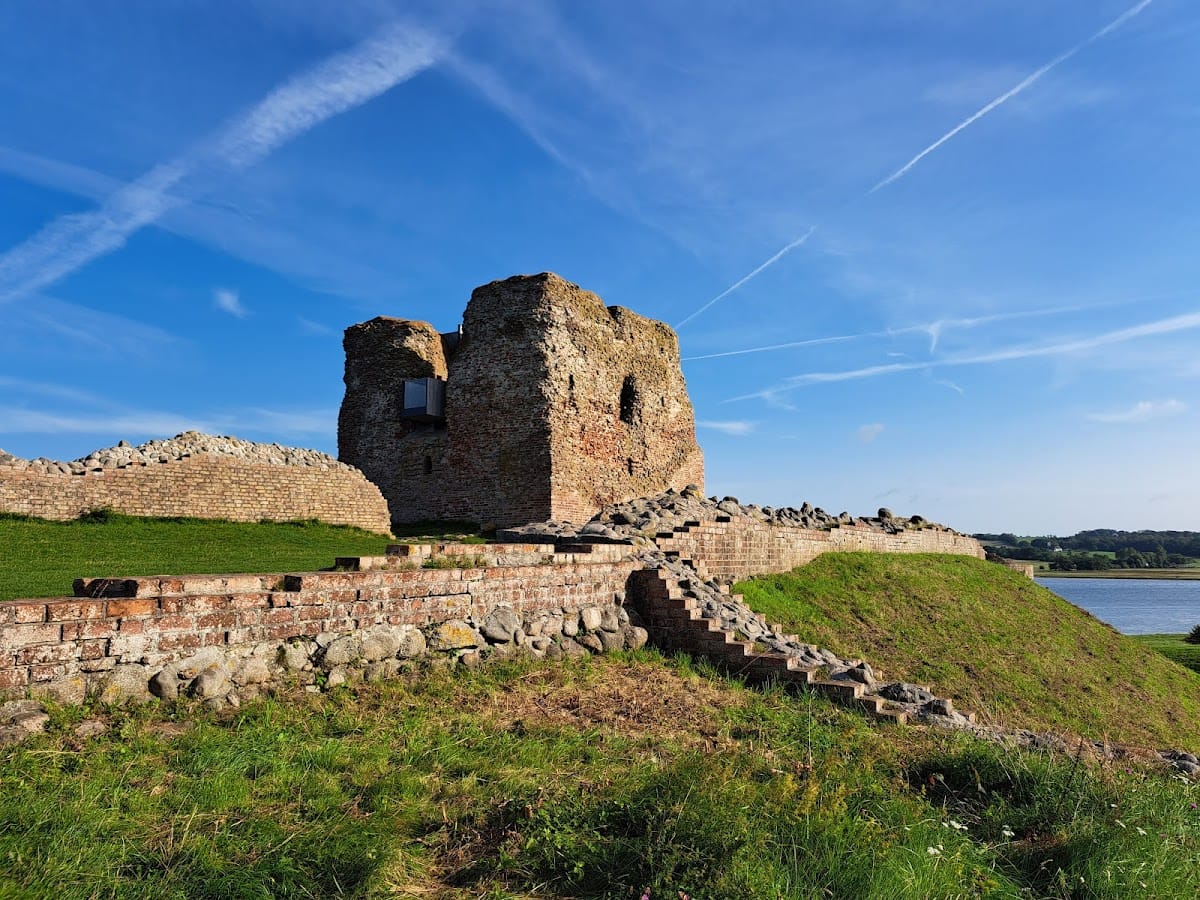
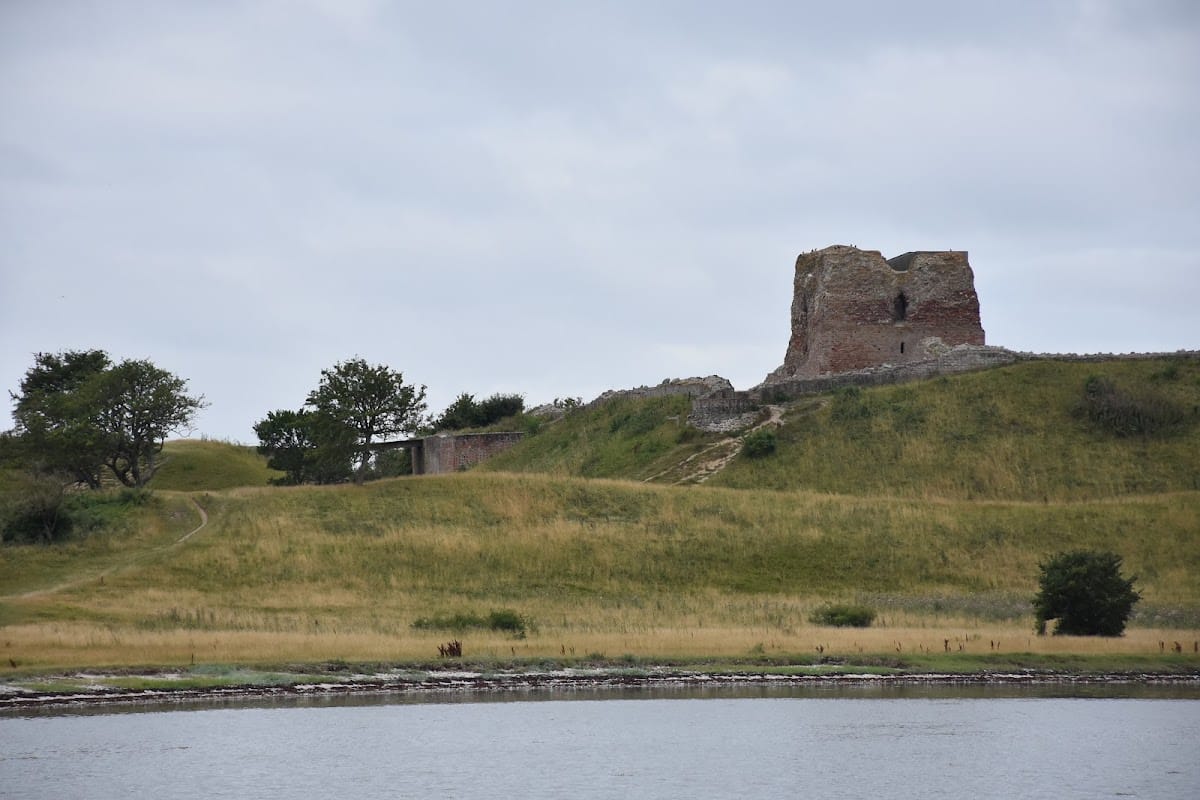
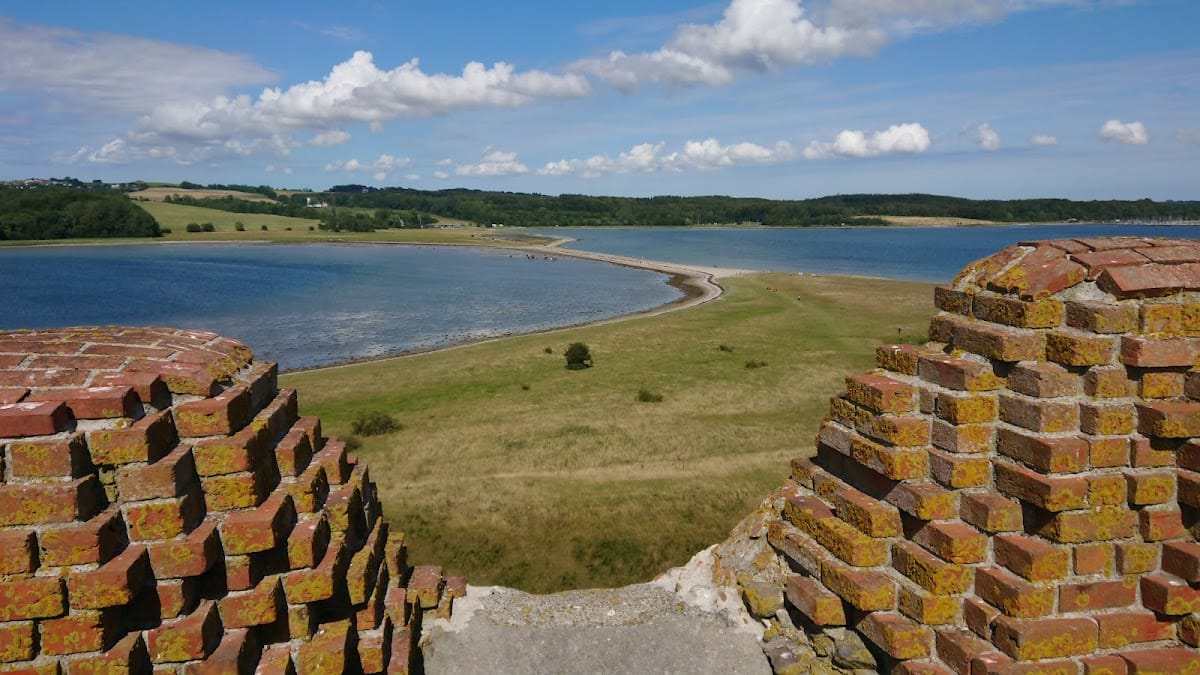
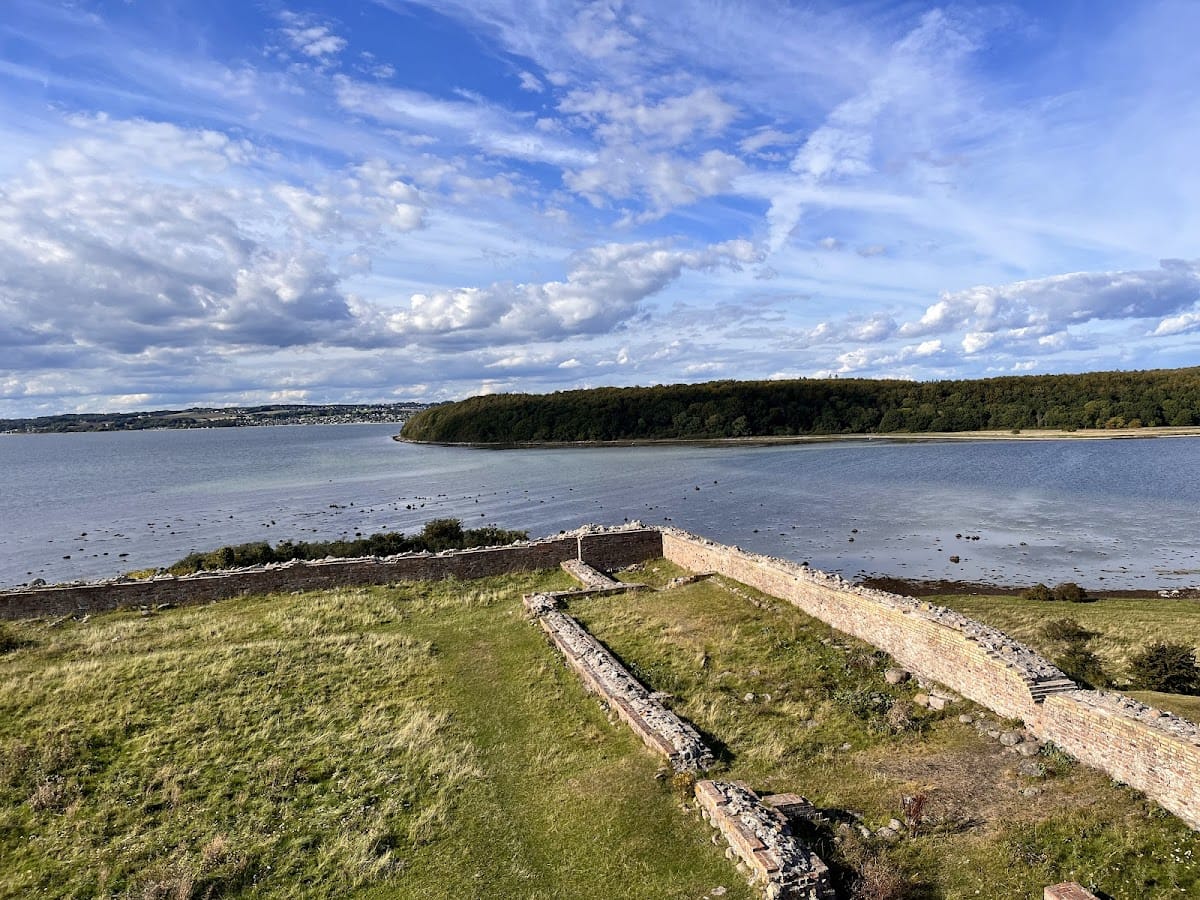
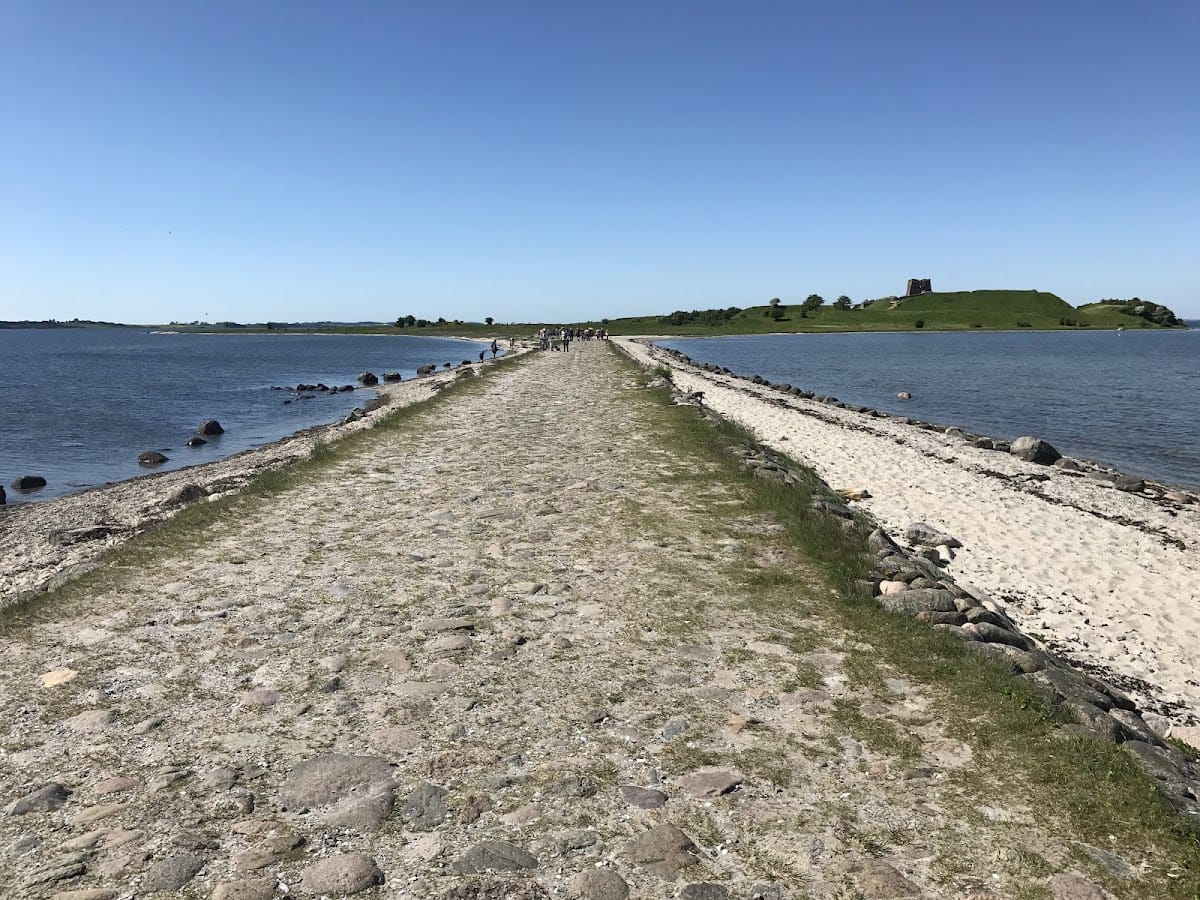
Kalø Castle was originally constructed on a small island in Kalø Bay, linked to the mainland by a 500-meter-long artificial embankment built of cobblestones and raised about 1.2 meters above sea level. This causeway is recognized as the longest and best-preserved medieval connection of its kind in Denmark. The fortress featured a comprehensive defensive system, including deep moats that surrounded the island, earthen mounds, and outer ring walls, which together formed multiple lines of protection constructed in the early 1300s through intensive manual labor.
Among the surviving structures, the main tower—referred to as the “hovedtårnet”—stands as the most prominent feature, exhibiting thick brick walls typical of Danish medieval construction techniques. Inside the tower, modern interventions include a removable staircase installed to enhance visitor access while preserving the ruins. Broken sections of the original ring walls remain visible, outlining the castle’s defensive perimeter. Another surviving building, known as the “fruerstuen,” is a distinct chamber whose precise function is historically documented and preserved in fragmentary form.
The bricks used throughout the site reflect a building tradition that has been prevalent in the region for nearly a thousand years. Over subsequent centuries, the ruins served secondary purposes, including grazing land for livestock such as cattle and sheep. Surrounding the castle ruins is a protected area spanning approximately 170 hectares, which encompasses adjacent forested areas like Hestehave Skov and Ringelmose Skov. Within the castle grounds lies a riding ground situated near the bridge, where a commemorative stone honors the restoration efforts of architect C. M. Smidt.
Together, these archaeological features offer insight into the castle’s medieval military architecture and its evolving role through Danish history, preserved in a natural setting that continues to safeguard this heritage.