Jude the Apostle Church in Przewóz: A 16th-Century Wooden Church
Site at a Glance
- Popularity
- Very Low
- Country
- Poland
- Primary era
- Early Modern
- Eras represented
- Early Modern, Modern
- Civilizations
- German, Habsburg, Holy Roman Empire, Kingdom of Bohemia
- Site type
- Religious
- Remains
- Church
On this page4 sections
History
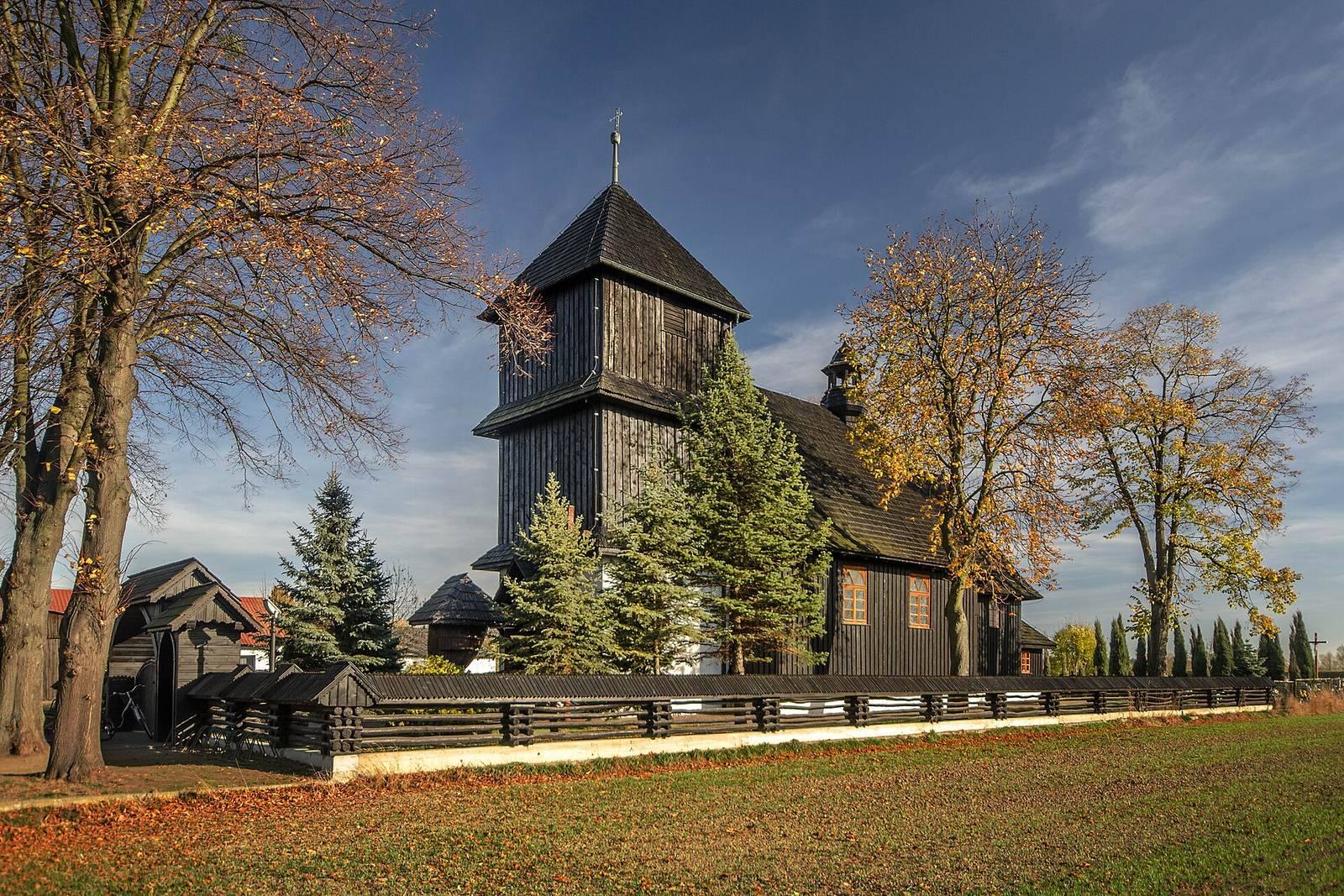
Jude the Apostle Church is a wooden Roman Catholic church in Przewóz, Poland, completed in Gierałtowice in 1559. It was repaired in 1711 and moved to Przewóz in 1937, with Jerzy Kampa directing the relocation work.
Dedicated to Jude Thaddeus, traditionally counted among the Twelve Apostles, the church is a filial church, meaning it depends on a parish rather than serving as the parish’s principal church. It belongs to the Sacred Heart of Jesus parish in Nieznaszyn, within the Łany deanery, a grouping of parishes in the Diocese of Opole. Its liturgical memorial falls on 28 October. The church was restored in 2009, when the Nawrot company also repaired its organ.
Remains
Plan and exterior
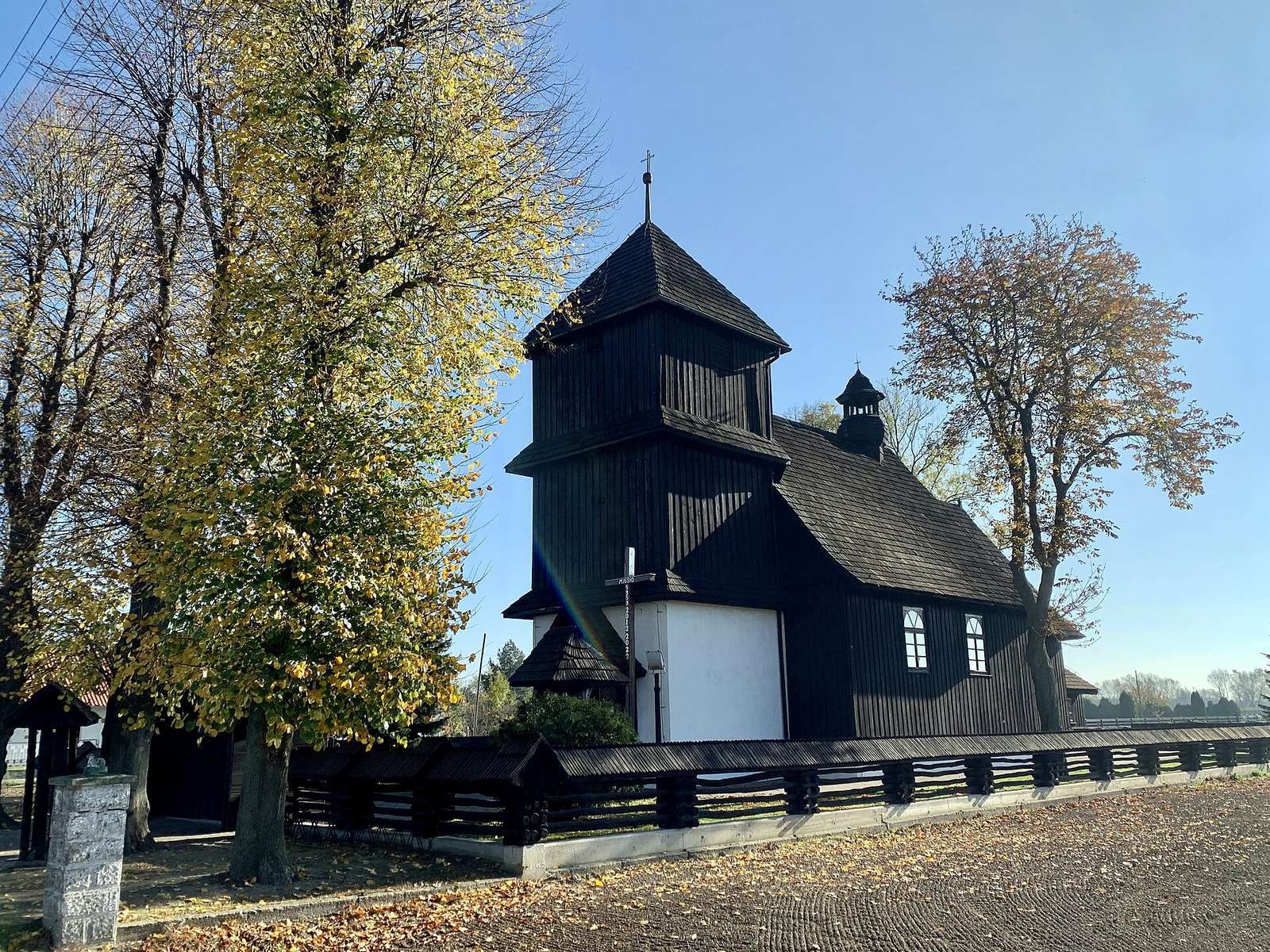
The church is a single-nave building, its main worship space formed with interlocking horizontal logs. A smaller chancel, the area around the altar, ends in a three-sided form, with a sacristy on its central axis. The building is not aligned on the customary east-west axis. Its tower has a masonry lower storey with a porch at ground level and a wooden upper storey supported by upright posts and horizontal beams. A shingled tent roof caps the tower. The main roof has two ridges and is covered with shingles; an octagonal bell turret rises above it, topped by a wooden helmet-shaped roof and a lantern.
Interior and furnishings
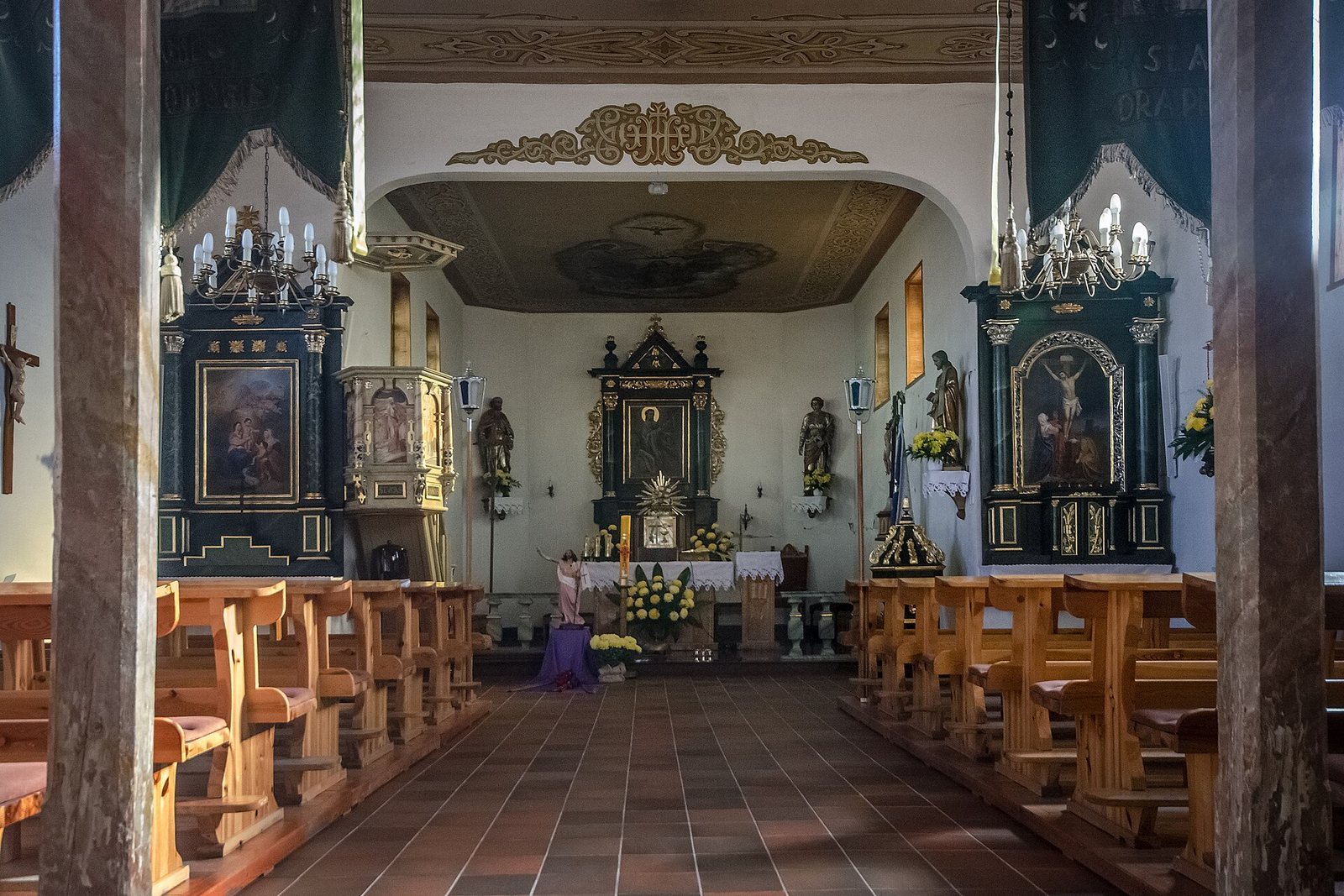
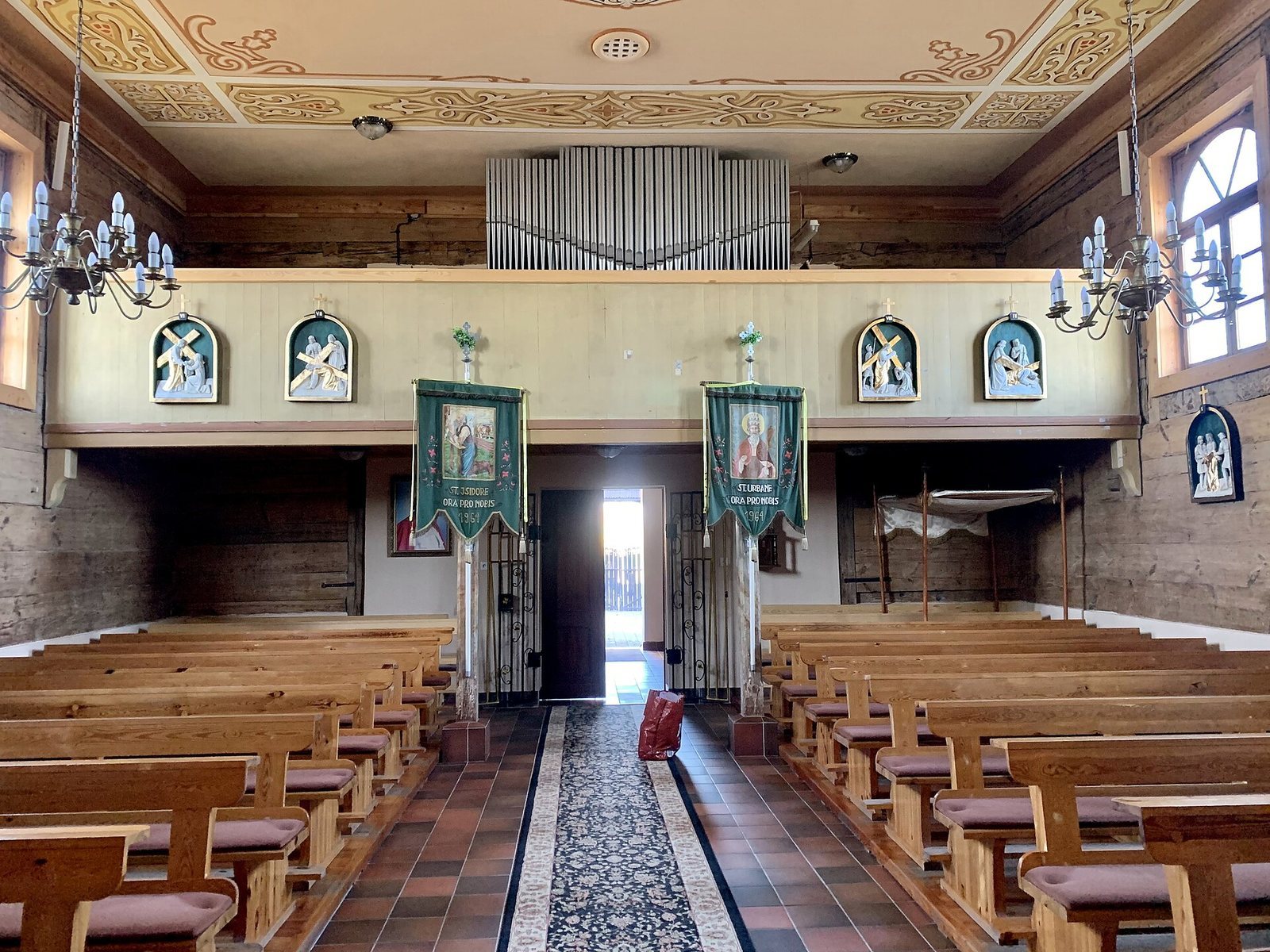
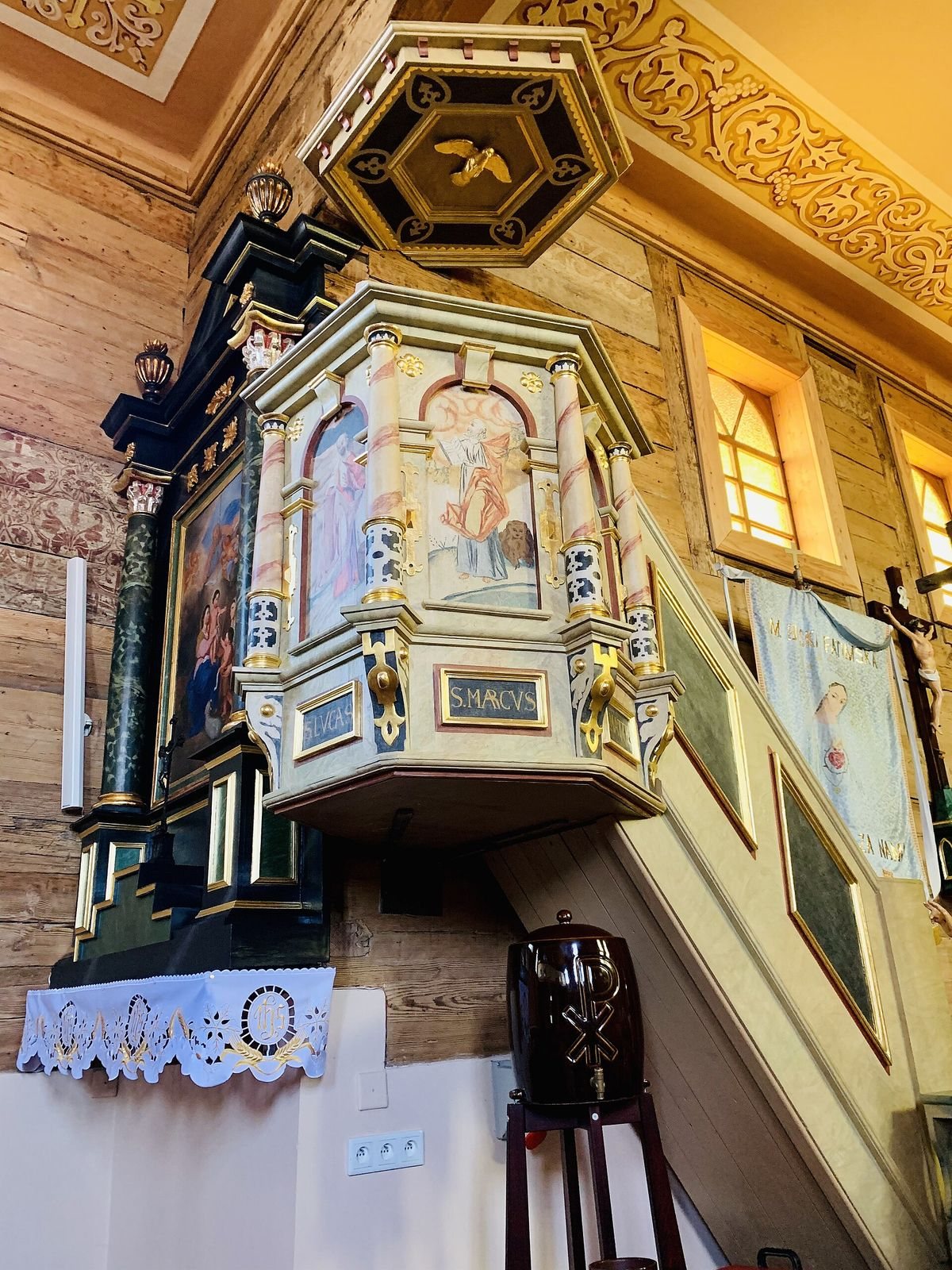
The interior has plastered walls, flat ceilings, and a tiled floor. A music gallery rests on two pillars and has a straight-fronted rail. Its organ case was made by the Rieger company in 1939. Painted ceiling scenes show the Last Supper in the nave and the Virgin Mary in the chancel. The main altar and two side altars follow the Classicist style, which draws on forms associated with classical antiquity. A pulpit is also part of the church’s furnishings.