Friedrichsthal Hunting Lodge in Schwerin: A Former Grand-Ducal Hunting Residence
Site at a Glance
- Popularity
- Medium
- Country
- Germany
- Primary era
- Early Modern
- Eras represented
- Early Modern, Modern
- Civilizations
- German, Holy Roman Empire
- Site type
- Domestic
- Remains
- Elite Residence
On this page9 sections
History
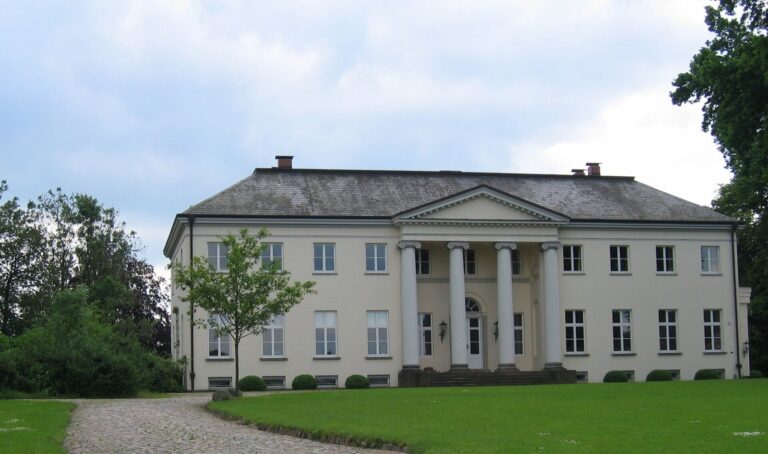
Friedrichsthal Hunting Lodge is a former grand-ducal hunting residence on the northwestern outskirts of Schwerin, Germany. Its origins lie in a summer house built around 1790, which Grand Duke Friedrich Franz I acquired in 1797 and converted into a hunting lodge.
From summer house to hunting lodge
In 1790, government councillor August Georg von Brandenstein leased the Hellkrug inn for 24 years and bought land just west of it. The inn had been operating since 1722. On the newly acquired land, von Brandenstein built a summer house. After several changes of ownership, Friedrich Franz I, grand duke of Mecklenburg-Schwerin from 1785 to 1837, bought the house and grounds in 1797. Abundant game in the surrounding area led him to have the summer house converted into a hunting lodge.
The estate was expanded in 1798 with two semicircular wings used as a coach house and stable. Two service houses for the hunt master and hunting pack, as well as more stables, were added later. In 1805, plans by building designer Johann Chornelius Barca were used to add another storey to the main building.
Changing uses
Friedrich Franz I made limited use of the lodge, so it was opened to associations and local residents. The last court hunt there is believed to have taken place in 1822. Attempts to sell the property in the years that followed did not succeed.
In 1914, the lodge housed soldiers recovering from illness or injury. During the First World War, its west wing became a home for war orphans. In 1936, the building was assigned to the Kyffhäuserbund, a German veterans’ organization, for use as a veterans’ home. After 1945, it served first as a tuberculosis sanatorium and later as an old people’s home, a role it retained until after German reunification.
The lodge’s landscape park once reached Lake Neumühl. In 1945, its southern part was cleared as reparations to the Soviet Union. From 1948, land reform divided the area into settlement plots; houses and weekend homes were subsequently built there. The lodge and former cavalier houses are protected as historic monuments.
Recent history
The building stood empty from 1993 and fell into disrepair. A Berlin investor bought it in late 2010. In 2017, a group from Lower Saxony acquired the lodge with plans to renovate it in keeping with monument-preservation requirements and convert it into privately owned apartments.
Remains
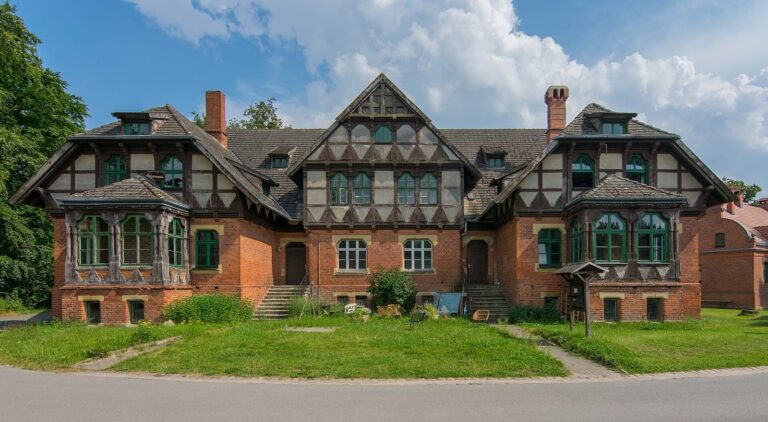
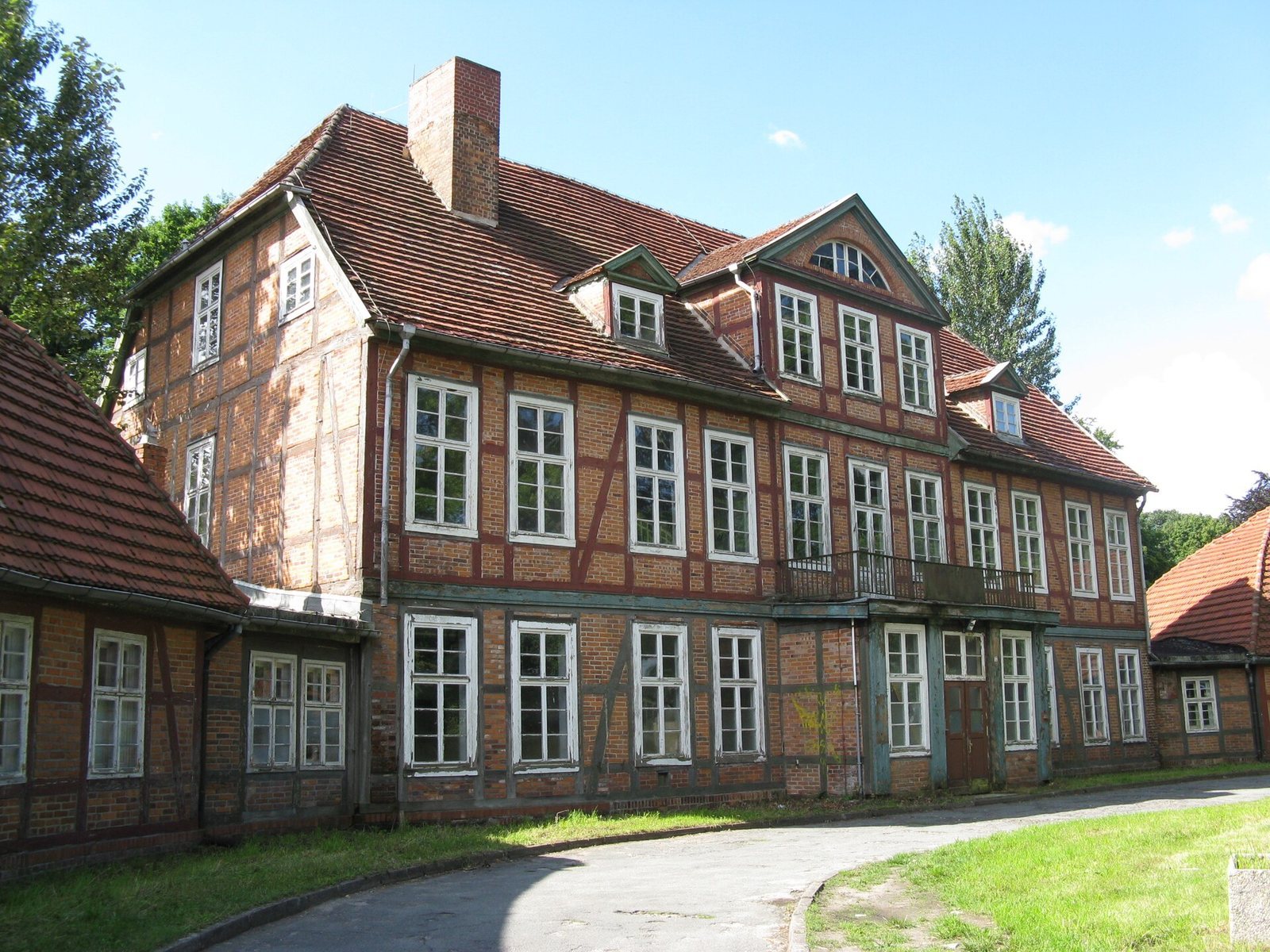
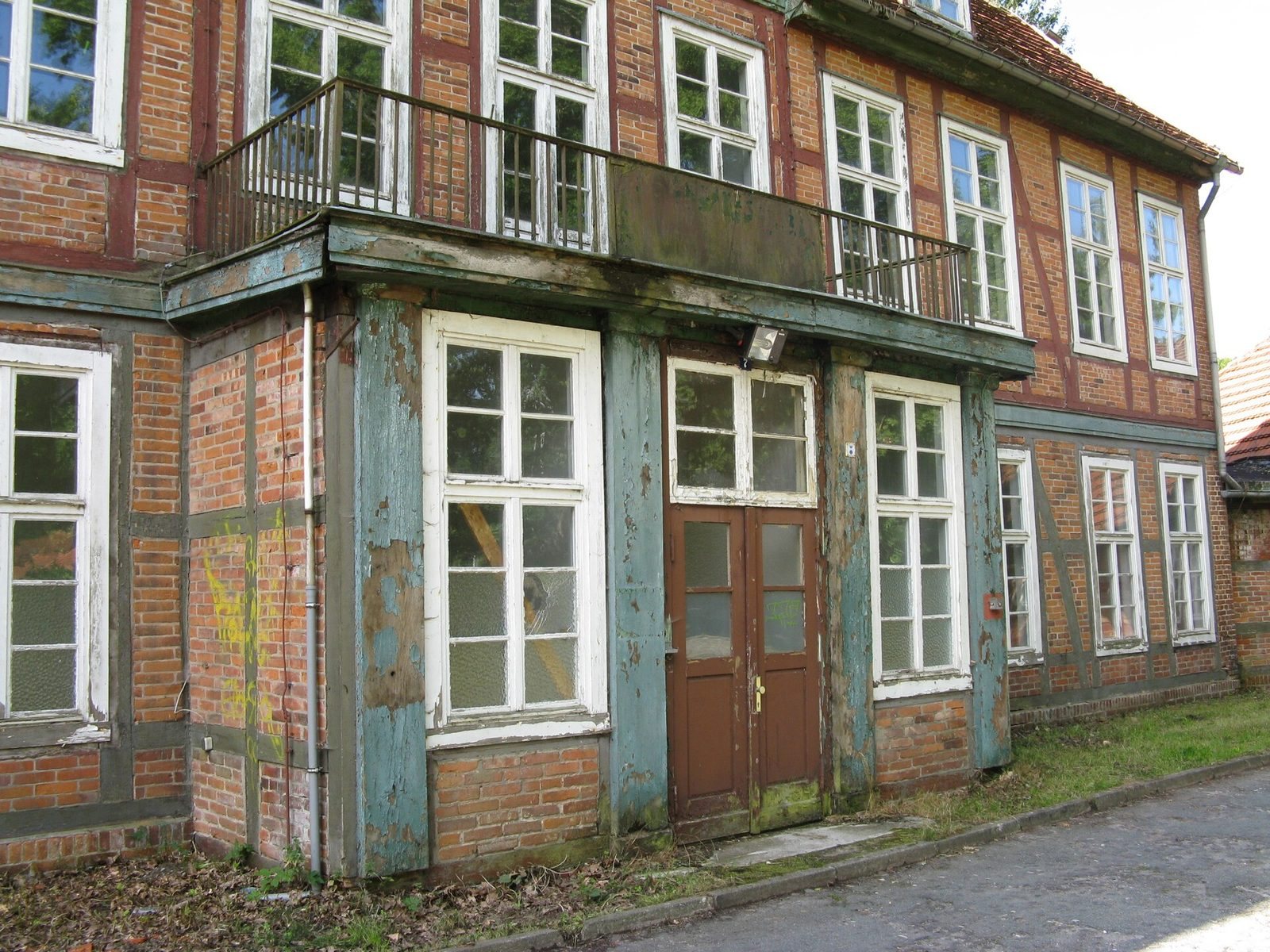
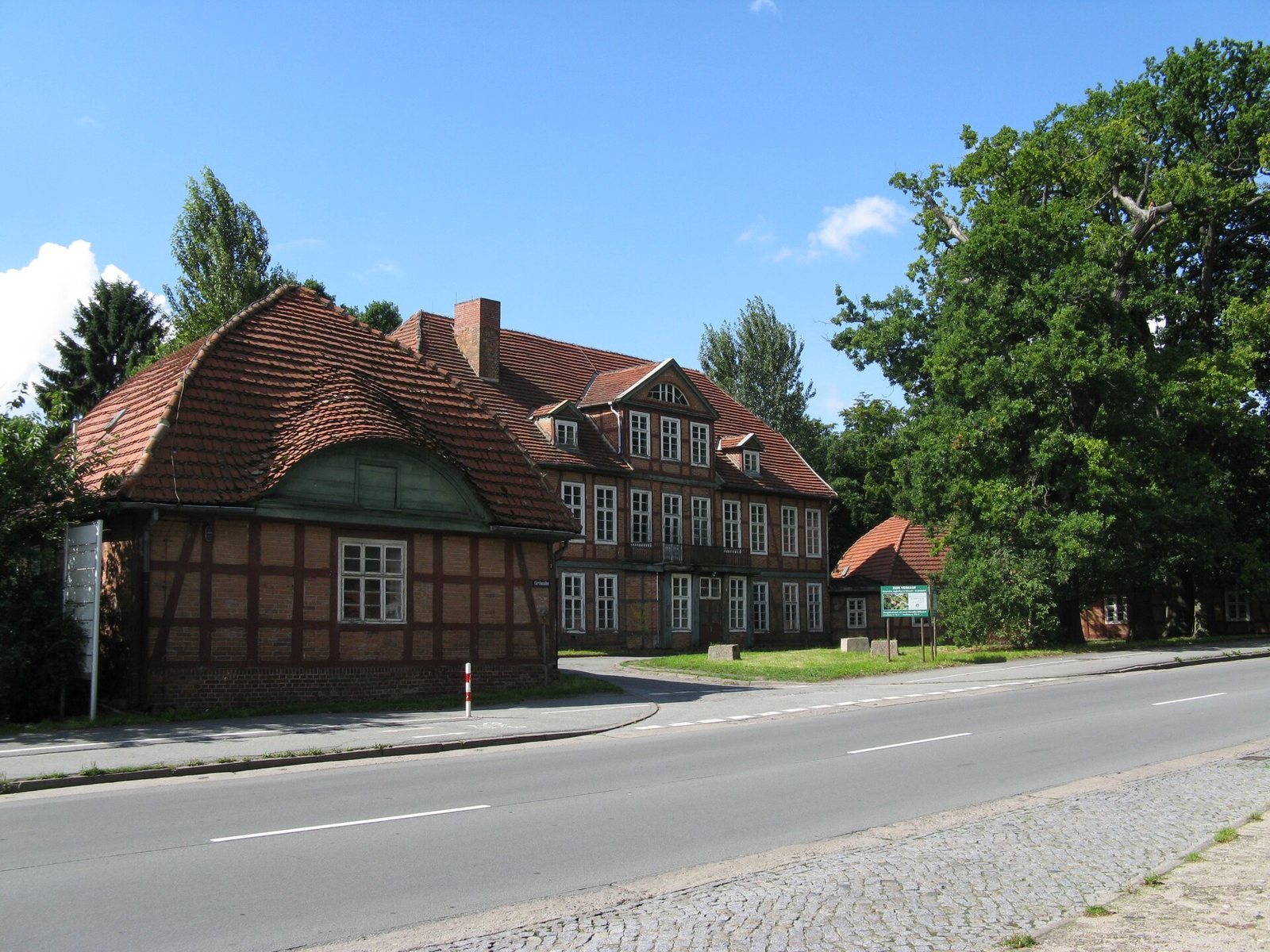
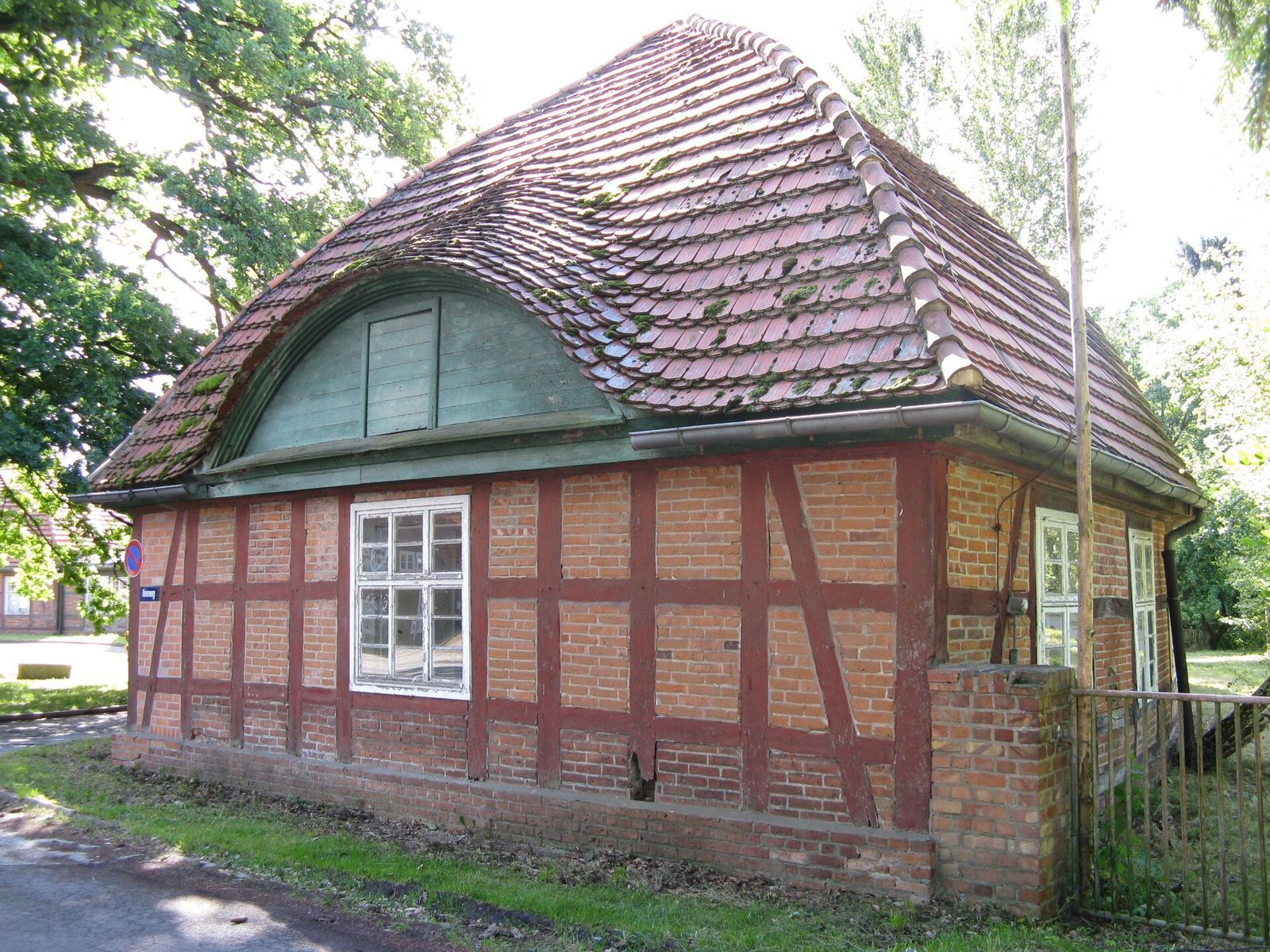
The lodge stands beside the B104 road, about 400 metres north of Lake Neumühl. The ditch called De Kanal runs behind the building and flows into the lake. Mixed woodland borders the grounds to the south and southwest, while housing lies to the north and east. The two-storey, timber-framed main building has a roof with gable ends partly replaced by sloping planes. A central cross-gabled section rises above it, with its ridge at right angles to the main roof ridge; two gabled dormers face the road on the north side. A later entrance porch is set beneath a balcony-like terrace. Single-storey timber-framed wings curve out in semicircles from the main building. Their roofs are supported by plank-built trusses and have curved dormers that blend into the roof surface. The wings were later joined structurally to the central building.
Associated buildings and features
Former cavalier houses
Across the road stand two former cavalier houses, service buildings associated with a court residence. Both are single-storey and timber-framed. They were substantially altered in 1995–96.
Hunting-scene wallpaper
Friedrich Franz I acquired the hunting-scene wallpaper that once decorated the lodge in Hamburg. Titled La chasse à Compiègne (“The Hunt at Compiègne”), it was printed in Paris in 1814 from designs by the French artist Antoine Charles Horace Vernet. The paper depicts a courtly red-deer hunt. Removed from the lodge, it has been displayed at Friedrichsmoor Hunting Lodge, in Friedrichsmoor, a district of Neustadt-Glewe, since 1964, apart from a brief interruption. It is believed to be the sole surviving example of that print.
Memorial to Karl Axel von Monroy
A memorial stone in the castle park commemorates Karl Axel von Monroy, a government ministry official and reserve officer. Called up during the First World War, he died on 6 February 1915 in a field hospital at Noyon in northern France. His grave is at Nampcel, and the stone was erected in the park the following year.