Jagdhaus Gabelbach: A Late-Baroque Hunting Lodge in Germany
Site at a Glance
- Popularity
- Low
- Country
- Germany
- Primary era
- Early Modern
- Eras represented
- Early Modern
- Civilizations
- Holy Roman Empire
- Site type
- Domestic
- Remains
- Elite Residence
On this page9 sections
History
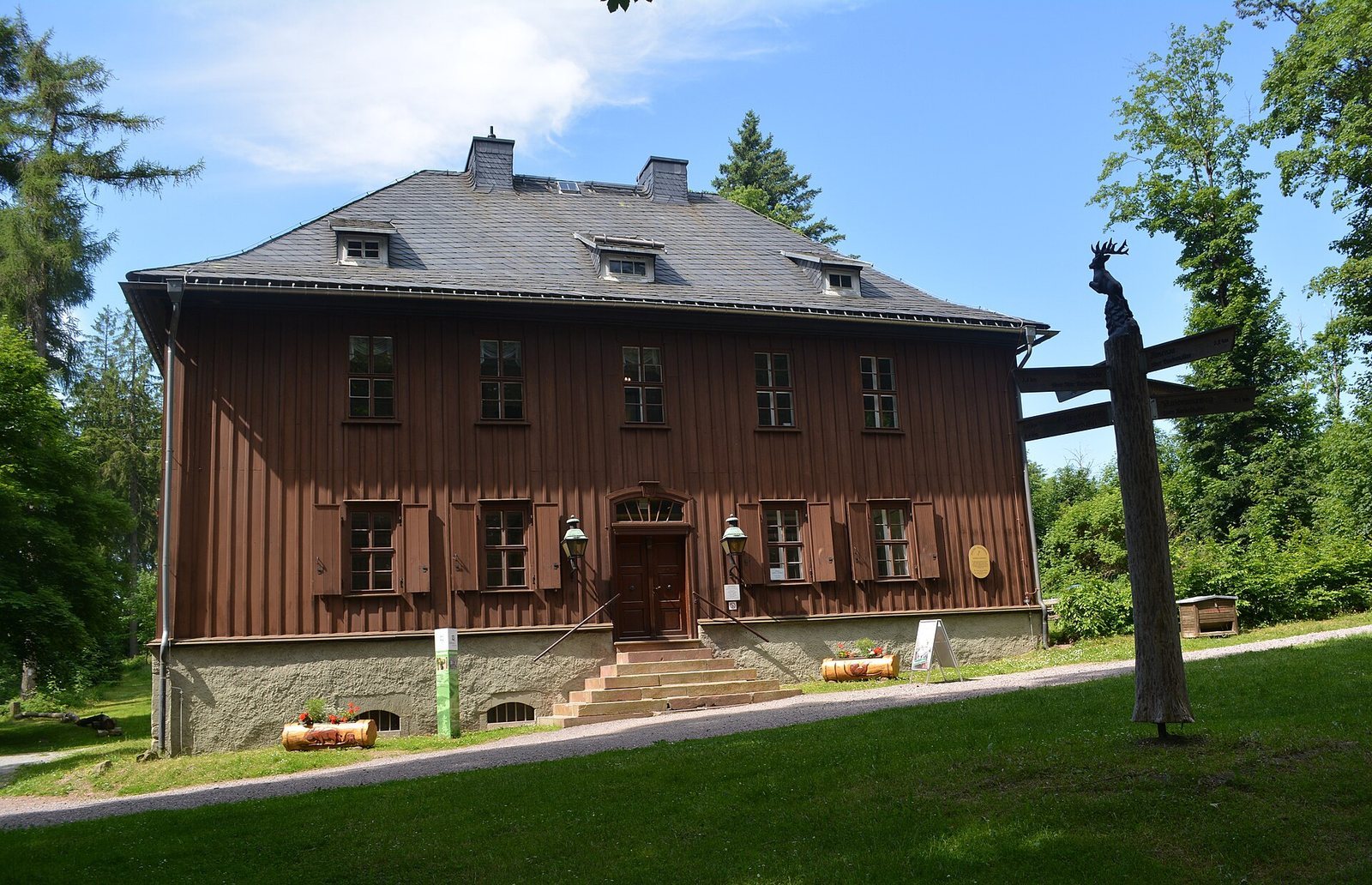
Jagdhaus Gabelbach is a late-Baroque hunting lodge beside the Gabelbach stream in Germany’s Thuringian Forest, about three kilometres south of Ilmenau. Duke Carl August of Saxe-Weimar-Eisenach commissioned the building, which was completed in 1783. Carl August ruled the central German duchy and supported the arts and literature.
Goethe and the lodge
In the early nineteenth century, the writer and natural scientist Johann Wolfgang von Goethe visited the lodge frequently and studied nature in the surrounding area. Karl Ludwig von Knebel, a German writer in Goethe’s intellectual circle, was also a regular guest during his time in Ilmenau. The lodge’s sleeping and writing chamber was used by Goethe and Carl August during their stays.
Kickelhahn and the Gabelbach-Gemeinde
During a visit by Grand Duchess Maria Pawlowna in 1852, the idea arose to build a viewing tower on nearby Kickelhahn, a mountain in the Thuringian Forest. The tower was completed in 1855. The lodge later hosted meetings of the Gabelbach-Gemeinde, a literary association connected with writers including Joseph Victor von Scheffel, Friedrich Hofmann, Rudolf Baumbach and Theodor Fontane.
From ducal property to museum
The lodge belonged to the state of Saxe-Weimar-Eisenach until 1920, then to the state of Thuringia. In 1952 it passed to the Ilmenau district, and from 1964 it belonged to predecessor organizations of Klassik Stiftung Weimar, a cultural foundation responsible for collections and heritage sites associated with Weimar’s cultural history. The building became accessible as a museum in 1969; the city of Ilmenau has been responsible for the museum since 2008. Renovations took place in 1995 and 2012. After the later work, a permanent exhibition about Kickelhahn and changes in Goethe’s forest was added on the ground floor.
Remains
The lodge and its interiors
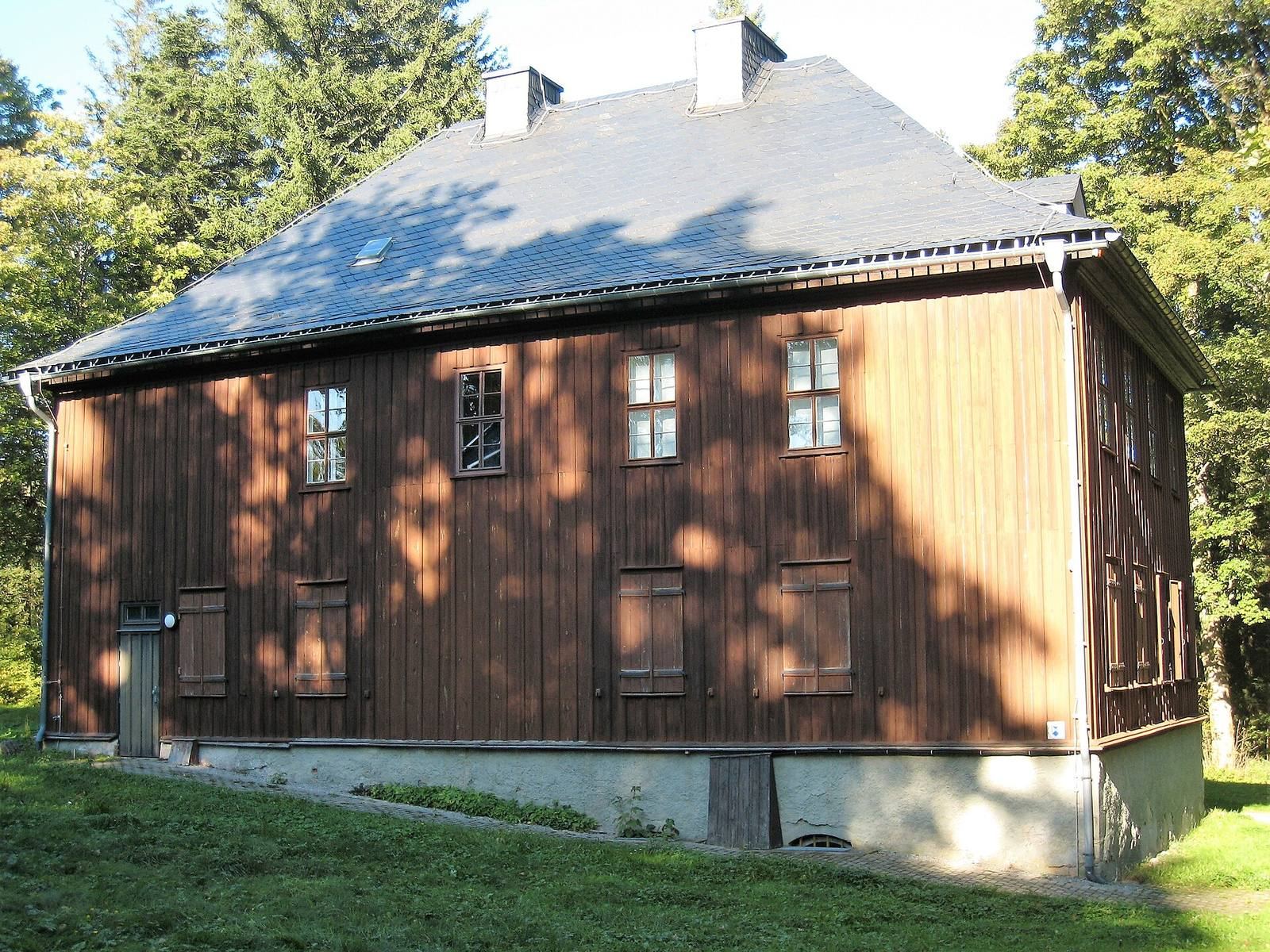
The relatively simple building stands beside the Gabelbach stream near Kickelhahn. Its late-Baroque features and two-storey arrangement frame a ceremonial hall and private rooms upstairs, with museum displays on the ground floor.
Upper-floor rooms
The upper floor contains a representative ceremonial hall and a sleeping and writing chamber used by Goethe and Carl August during their visits.
Ground-floor exhibitions
The ground floor presents the forest around Kickelhahn through audiovisual media and authentic objects. The displays address the area’s uses and protective and cultural functions, with attention to nature, the environment and hunting. Another part of the museum explores Goethe’s forestry and natural-science studies, alongside Carl August’s interest in hunting.
Door from Goethe’s hut
The museum displays the door of the burned Goethe hut. The hut is associated with the composition of Goethe’s poem “Wanderer’s Nightsong.”