Ishiya Kofun: A Fifth-Century Burial Mound in Matsue, Japan


Site at a Glance
- Rating
- 4.2
- Popularity
- Very Low
- Country
- Japan
- Primary era
- Classical
- External website
- Open
- Eras represented
- Classical
- Civilizations
- Yamato
- Site type
- Burial
- Remains
- Burial Mound
On this page9 sections
History
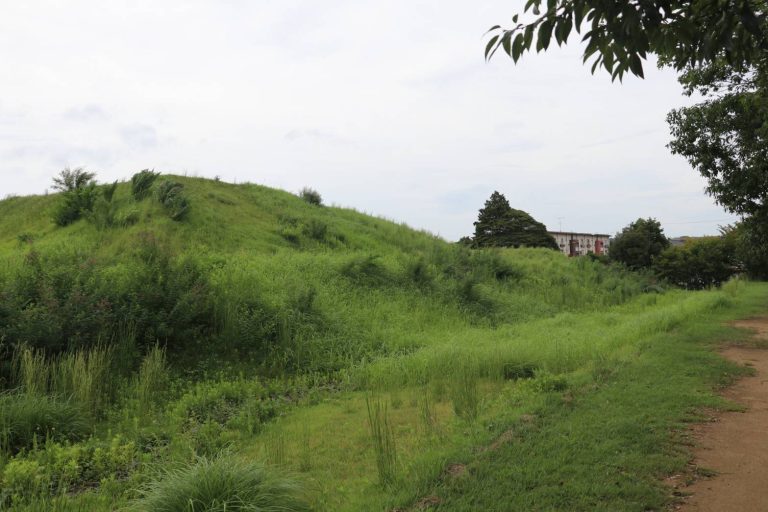
Ishiya Kofun is a Kofun-period burial mound in Matsue, Japan, constructed by the people of the Kofun-period culture during the latter half of the fifth century. It is a rectangular hōfun, a square or rectangular type of Japanese burial mound, and is regarded as one of the largest tombs of this form in the San’in region. Its position above the Ōhashi River connected it with an important water route between Lake Shinji and Nakaumi.
A tomb beside the Ōhashi River
The mound stands on a hill overlooking the river, where an ancient ferry called Asakanwatari operated. The ferry is mentioned in the Izumo-no-kuni Fudoki, an early eighth-century account of the geography, traditions, and places of ancient Izumo. The location of the tomb has led to the interpretation that it belonged to a powerful local clan involved in controlling navigation along this route.
The pottery and haniwa recovered from the site date the mound to the latter half of the fifth century. Haniwa are clay objects placed on and around burial mounds, including cylindrical forms and figures representing people, animals, buildings, weapons, and ceremonial objects. Their variety places Ishiya Kofun within a period when elaborate figurative haniwa were being produced in Izumo alongside the large keyhole-shaped tombs of the Kinai, the central region around the ancient capitals of Nara and Kyoto.
Discovery and preservation
Ishiya Kofun came to attention in 1978, when many haniwa fragments were uncovered during construction for a residential development. The planned building area included the western side of the mound, and construction had already started, placing the site at risk. Discussions involving Shimane Prefecture, Matsue City, and the national Agency for Cultural Affairs resulted in an agreement to acquire the land publicly and preserve the tomb.
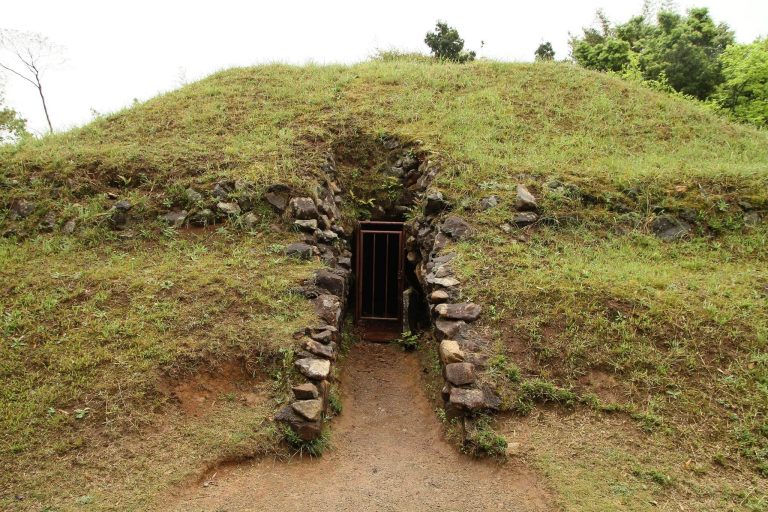
An investigation carried out in 1978 established the mound’s size and shape, while leaving its burial facility unexcavated. The form of the burial chamber therefore remains uncertain. Ishiya Kofun became a National Historic Site of Japan on April 6, 1979, and its preservation has allowed later study of the large quantity of haniwa fragments recovered from the mound.
Haniwa and Izumo’s wider connections
Reorganization and reconstruction of fragments from the northern projecting area led to an announcement in March 2012 identifying what is considered Japan’s oldest haniwa depicting a wrestler. The work also revealed previously unrecognized types, including seated figures, house-shaped figures, and parasol-shaped figures.
The range of figurative haniwa suggests that diverse forms were being made in Izumo at roughly the same time that they appeared in the great keyhole-shaped tombs of the Kinai. The Shimane Prefectural Ancient Culture Center has proposed that powerful Izumo clans may have taken part in the construction of major Kinai tombs such as the Daisen Tumulus, traditionally identified as the tomb of Emperor Nintoku. That traditional identification is not necessarily archaeologically certain.
Remains
Ishiya Kofun occupies a natural hill about 30 metres above sea level, approximately 2.5 kilometres east-southeast of central Matsue on the southern bank of the Ōhashi River. The rectangular mound is oriented toward the southwest. It measures about 37.5 metres along its north side, 42 metres along its south side, and has an average height of 7.5 metres. Its builders reshaped the hill and added earth to create a two-tiered mound, covering the sloping surfaces with fukiishi, stones used to protect and finish an earthen mound.
Mound, stonework, and boundaries
Most of the slope-covering stones are local andesite known as Ōmisaki stone, the same stone used in the walls of Matsue Castle. Dry moats more than 10 metres wide run along the north and south sides of the mound. Each side has a rectangular projecting area extending into the moat. The northern platform lies on the mound’s central axis, whereas the southern one is set toward the western side of the mound foot, producing an unusual asymmetrical arrangement.
An east-west row of stones lies about 5.5 metres north of the mound foot. Its purpose remains unknown, and comparable examples are rare. Cylindrical haniwa and morning-glory-shaped haniwa stood on the first tier, while cylindrical examples also encircled the top of the mound. Numerous fragments of cylindrical haniwa were found among the fukiishi. Since the burial facility has not been excavated, its construction and arrangement cannot be described with certainty.
Projecting areas and funerary activity
Northern projecting area
The northern projecting area produced numerous fragments of figurative haniwa showing people, horses, shields, quivers, and other objects. Haji ware, a lower-fired ancient Japanese pottery tradition, Sue ware, a high-fired kiln-made pottery tradition, and utensil stands were also found there. Some figures retain red or green pigment, and many have styles considered distinctive to Ishiya Kofun. The concentration and variety of the objects indicate that funerary rites took place on this platform. The fragments reconstructed as the wrestler, seated figures, house-shaped figures, and parasol-shaped figures came from this area.
Southern projecting area
The southern projecting area yielded a small quantity of cylindrical haniwa fragments. Its arrangement is interpreted differently from that of the northern platform, with the available evidence suggesting a setting for performances involving song and music.