Hradiště Vraclav: An Early Medieval Přemyslid Stronghold in Czechia
Site at a Glance
- Rating
- 4.6
- Popularity
- Very Low
- Country
- Czechia
- Primary era
- Medieval
- Eras represented
- Medieval, Modern
- Civilizations
- Duchy of Bohemia
- Site type
- Military
- Remains
- Fortified Town
On this page8 sections
History
Late Bronze Age and Early Medieval Origins
Hradiště Vraclav is an archaeological stronghold in Czechia, on the northern edge of Vraclav in the Svitavy Uplands. The site was inhabited during the Late Bronze Age by people associated with the Silesian-Platěnice culture, an archaeological culture identified through characteristic settlements and artefacts.
During the early Middle Ages, the site became a Přemyslid administrative centre on the Trstenice trade route, a communication and commercial route linking Bohemia with the eastern parts of Central Europe. Contemporary records called the stronghold Vratislav or Wratizlau. Tradition attributes its foundation to Duke Vratislav II, a Přemyslid ruler who later became the first king of Bohemia, while coin finds indicate that construction probably took place around the turn of the tenth and eleventh centuries.
Political Conflict and Decline
In 1108, Duke Svatopluk ordered the massacre of members of the Vršovci, a powerful Bohemian noble lineage involved in conflicts with the ruling dynasty, at the stronghold. Around the turn of the twelfth and thirteenth centuries, Hradiště Vraclav passed into the possession of the Děpoltici, a junior branch of the Přemyslid dynasty. Its castellan, the administrative and military governor of a fortified centre, was Byčen in 1226.
The stronghold lost importance during the thirteenth century as the region’s administrative centre moved to Vysoké Mýto. Hradiště Vraclav was abandoned in the second half of that century. The Dalimil Chronicle, an early fourteenth-century Czech historical chronicle, later described the site as deserted and overgrown.
Archaeological Investigation and Protection
Hradiště Vraclav was recognized as an archaeological location before 1789. Josef Ladislav Píč carried out the first archaeological investigations at the turn of the nineteenth and twentieth centuries. Most knowledge of settlement on the acropolis comes from research conducted by Ludvík Skružný and Ladislav Hrdlička between 1961 and 1963.
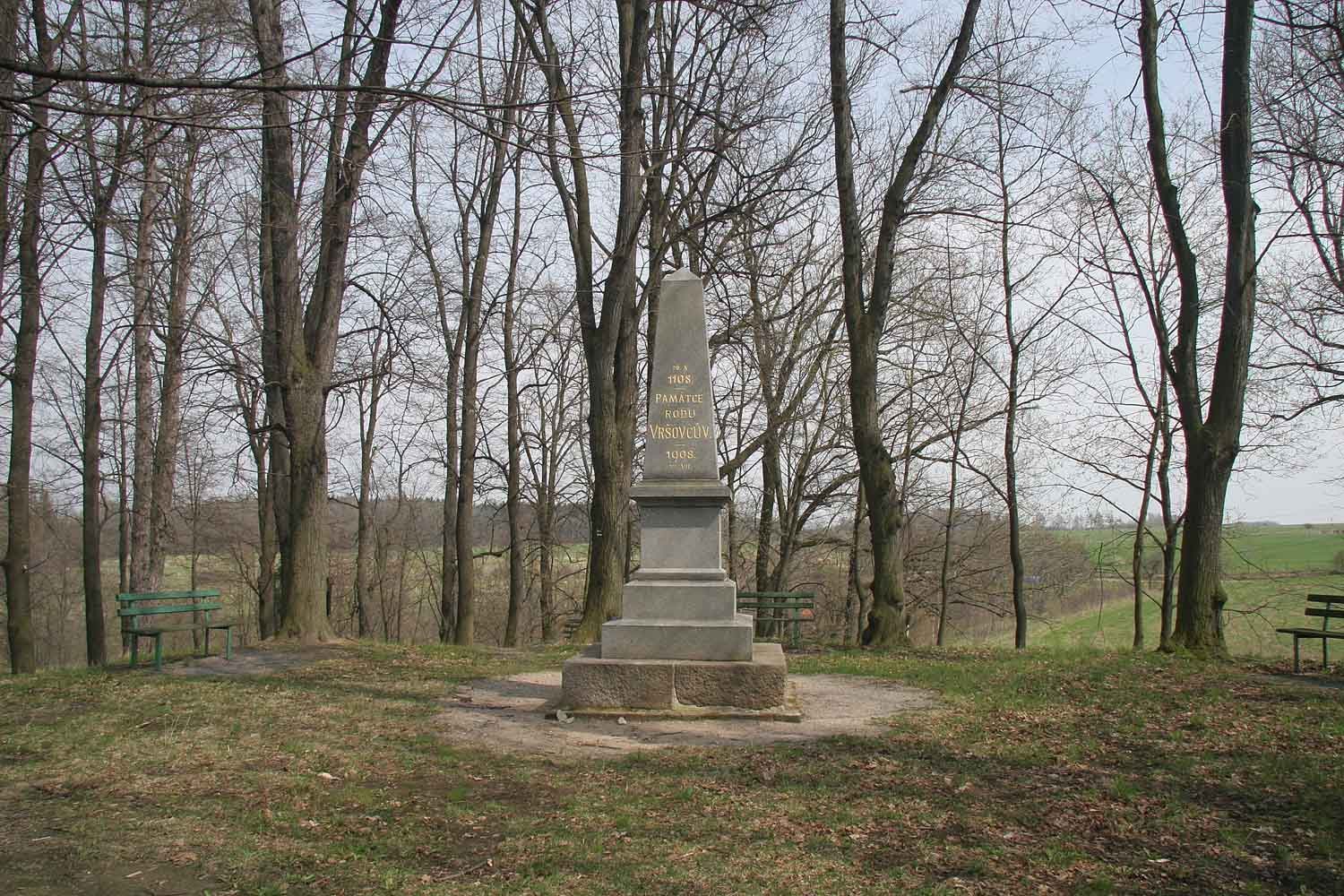
Later work focused on surface collection and detector surveys in the outer settlement. Finds from this area show that craft workshops operated there and confirm the stronghold’s connection with the trade route. The remains are protected as a cultural monument. A monument erected on the acropolis rampart in 1908 commemorates the eight-hundredth anniversary of the Vršovci massacre.
Remains
Settlement Layout
Acropolis
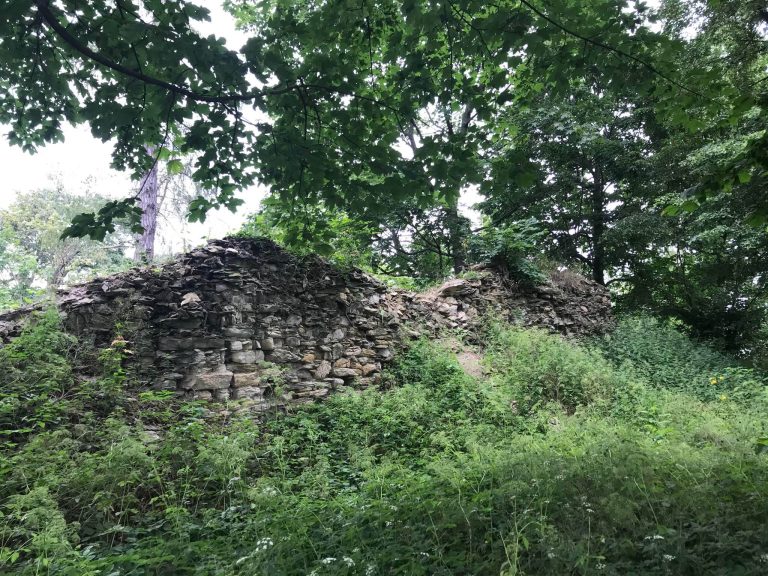
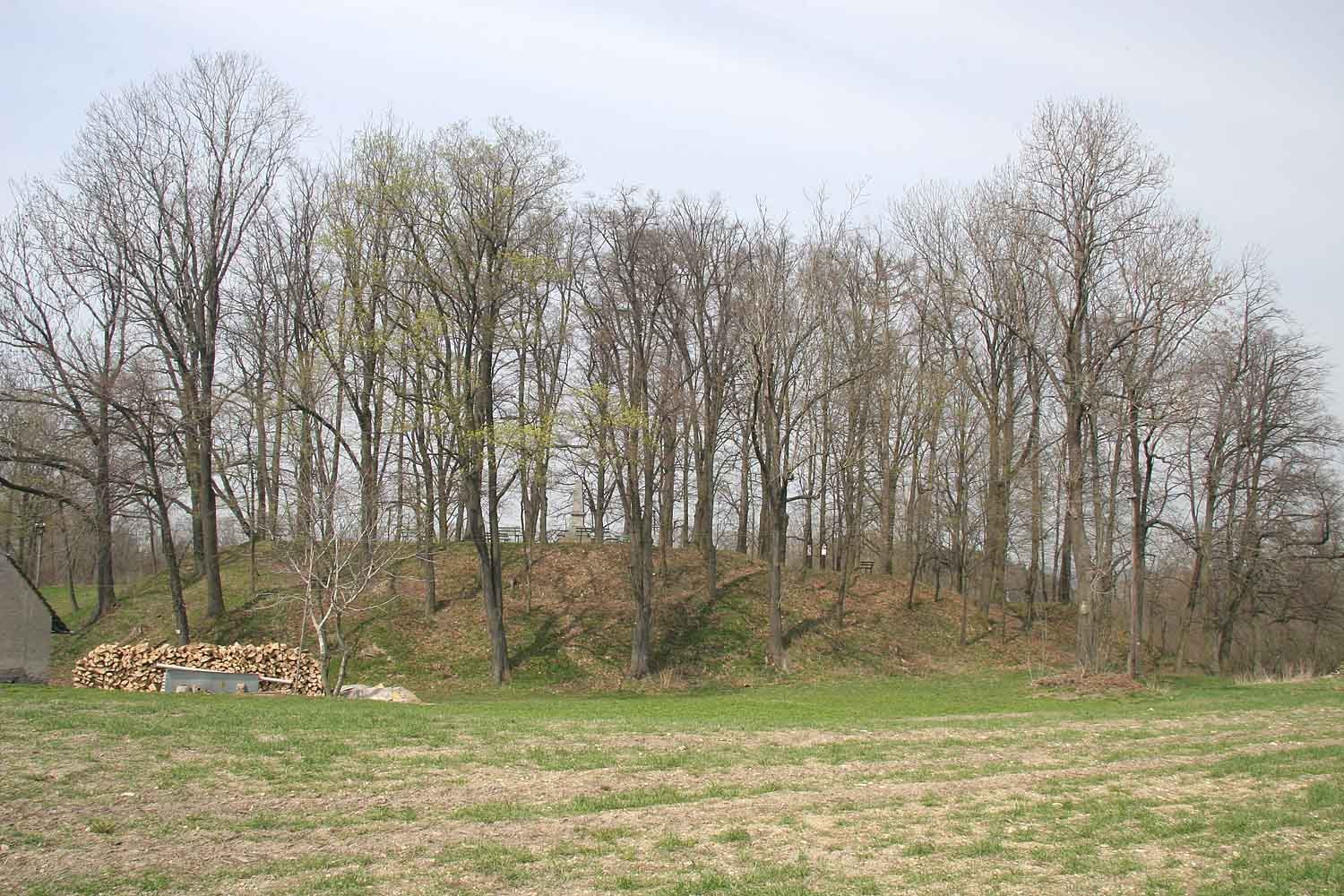
Hradiště Vraclav occupies a promontory at approximately 330 metres above sea level. The settlement consisted of an acropolis and an outer settlement. On the southeastern side of the acropolis, an earthwork fortification survives as a bank rising to as much as 6 metres. A burial ground lay in the central part of the acropolis, while the 1908 commemorative monument stands on the rampart.
Outer Settlement
The outer settlement extended beyond the acropolis and contained craft workshops connected with the stronghold’s position on the Trstenice trade route. Agricultural activity has destroyed or obscured its fortifications, although archaeological investigation has identified a shallow, indistinct ditch in the area.