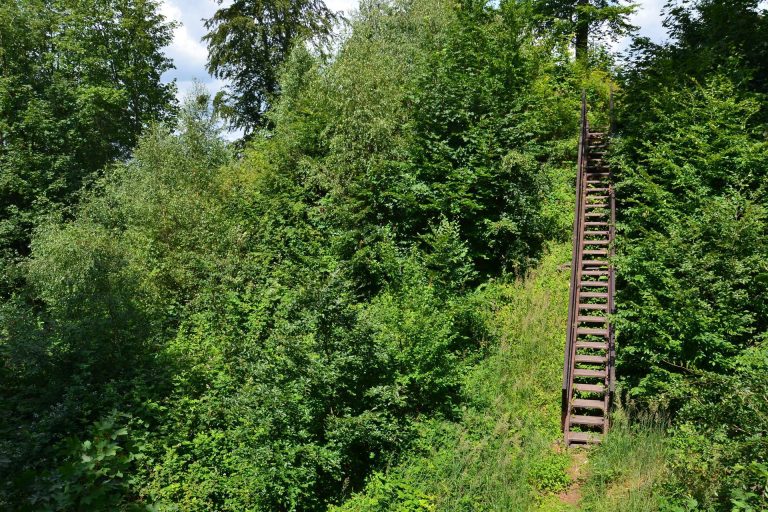
Zítkov: A Fourteenth-Century Castle in Czechia


Site at a Glance
- Rating
- 4.5
- Popularity
- Very Low
- Country
- Czechia
- Primary era
- Medieval
- Eras represented
- Medieval
- Civilizations
- Holy Roman Empire, Kingdom of Bohemia
- Site type
- Military
- Remains
- Castle
On this page9 sections
History
Zítkov was a castle in Czechia on the western edge of Choceň, founded during the second half of the fourteenth century. It occupied a strategically enclosed spur above the Tichá Orlice valley and formed part of the medieval network of noble residences in eastern Bohemia. The castle was attacked at least once while it was occupied, and it ceased to exist at the beginning of the fifteenth century.
Lichtenburk ownership
The Lichtenburks, a medieval noble family with estates and fortified residences in Bohemia and eastern Bohemia, were among Zítkov’s owners. During the fourteenth century, Choceň was divided between the Lichtenburks and the lords of Potštejn. The Potštejn lords were based at Žampach and did not maintain a residence at Choceň. In 1388, Jan Pykna of Lichtenburk was recorded as lord of the New Castle, a name often associated with Zítkov.
The modern name Zítkov refers to the remains of the castle rather than to a name necessarily used during its occupation. At the start of the fifteenth century, the castle was replaced by a fortified manor at Choceň. That manor is documented between 1410 and 1417, marking a change in the form of noble residence at the site.
Inheritance dispute and destruction
The castle’s capture may have been connected with a dispute over the inheritance of Zikmund Pykna of Lichtenburk, a medieval Bohemian nobleman. After his death, his property became a royal escheat, meaning that it reverted to the Crown and could be granted to another claimant. King Wenceslaus IV granted the property to Půta of Častolovice, another Bohemian nobleman.
Boček of Poděbrady rejected the transfer. On 3 February 1410, Zikmund of Lichtenburk had recorded a debt of 3,000 kop of groschen in Boček’s favour, secured against half of Choceň. A kop was a medieval counted group of groschen coins. The conflict continued until 1433, when supporters of Půta of Častolovice burned Choceň. The attack may also have involved the castle, which was then controlled by Boček of Poděbrady.
Archaeological interpretation
Objects from the site include material dating from the twelfth century to the first half of the fourteenth century. This has made it possible to consider whether the castle was connected with a reference from 1338 to an otherwise unidentified castle conquered by Charles IV, the fourteenth-century King of Bohemia and Holy Roman Emperor. The evidence is inconclusive. The apparent use of firearms and the two-palace arrangement of the castle core point toward a more advanced phase of the fourteenth century. The core may nevertheless have developed through a longer and more complex process.
Between 2007 and 2011, the Regional Museum in Vysoké Mýto organized a metal-detector survey on the castle hill. More than 300 artefacts were recovered, most of them arrowheads. Later investigation of the castle core, made more difficult by the terrain, found a vessel containing fragments of a cut-up silver chalice. The chalice is thought to have been stolen from a church several centuries after the castle disappeared and hidden among its ruins. Copper riding spurs that were later gilded may have formed part of the same theft and may have reached the site about two centuries after the castle ceased to exist. A less likely interpretation is that the spurs were deliberately destroyed during the castle’s capture to dishonour their wearer, since gilded spurs represented knighthood.
Zítkov’s surviving remains are protected as a cultural monument of the Czech Republic.
Remains
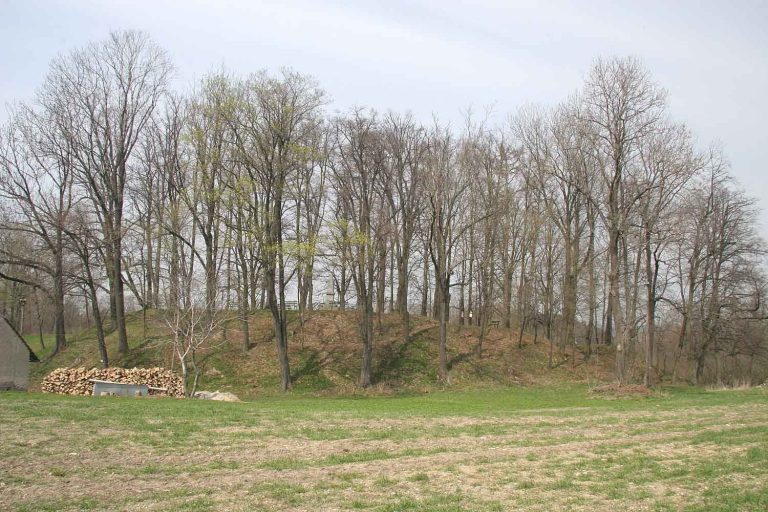
The castle occupied a north to south spur projecting from a long ridge on the western side of the Tichá Orlice valley. Its eastern slope descended steeply toward the valley, while a deep ravine separated the spur from the ground to the west and north. The site was divided into an outer bailey on the southern entrance side and a castle core farther north, with ditches and banks forming successive defensive boundaries.
Outer bailey and entrance defences
Two ditches protected the approach to the outer bailey. A surviving section of the first ditch lies on the southern side, followed by a narrow access neck that led to the second ditch. A gate stood beyond this second obstacle. Much of the head of the outer bailey was occupied by a mound-like rise, probably the remains of a tower positioned above the gate. A bank along the northwestern edge marks part of the bailey’s perimeter fortification.
Castle core
Palaces and defensive boundaries
A further ditch separated the outer bailey from the castle core and continued along the core’s western and northern sides. An additional bank stood in front of it. On the western side, the bank broadened into an outer defensive space, while a small platform below the northeastern corner may preserve part of another, higher defensive enclosure.
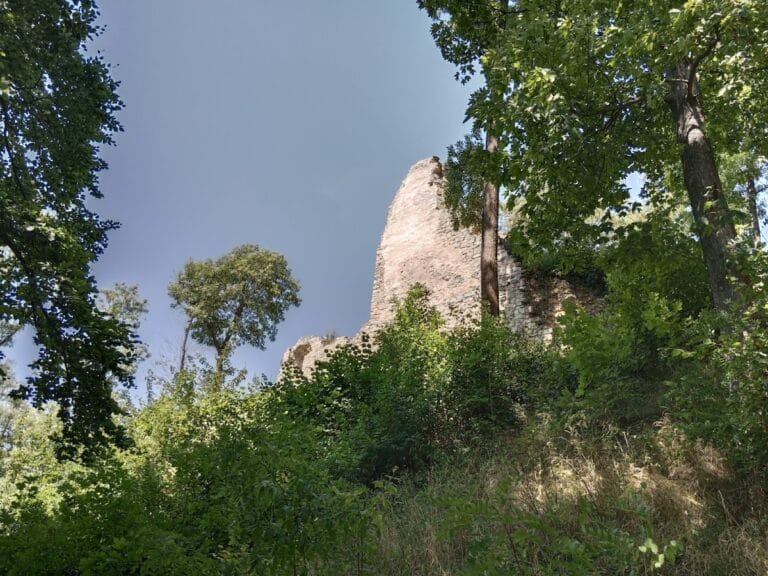
The principal buildings in the core were two palaces with basements. They survive as changes in the terrain rather than as standing structures. Bricks and fired daub were found in the palace area. Fired daub is clay or earth hardened by intense heat, and its presence suggests that the upper storey of the palaces used half-timbered construction, with a wooden frame and earthen infill. Brick may have been used because the castle’s gravelly-sand geological substrate provided little suitable building stone.
Archaeological finds
The castle hill has yielded more than 300 artefacts, predominantly arrowheads, providing material evidence for military activity at the site. The castle core also produced the vessel containing fragments of a cut-up silver chalice and a pair of copper riding spurs with later gilding. These finds belong to different episodes in the site’s history, including the later concealment of valuable objects among the ruins, and add to the evidence for the castle’s changing use after its medieval occupation ended.