House Under the Kings: A Former Palace and Library in Warsaw
Site at a Glance
- Popularity
- Medium
- Country
- Poland
- Primary era
- Early Modern
- Eras represented
- Early Modern, Modern
- Civilizations
- Kingdom of Poland, Polish–Lithuanian Commonwealth
- Site type
- Domestic
- Remains
- Elite Residence
On this page7 sections
History
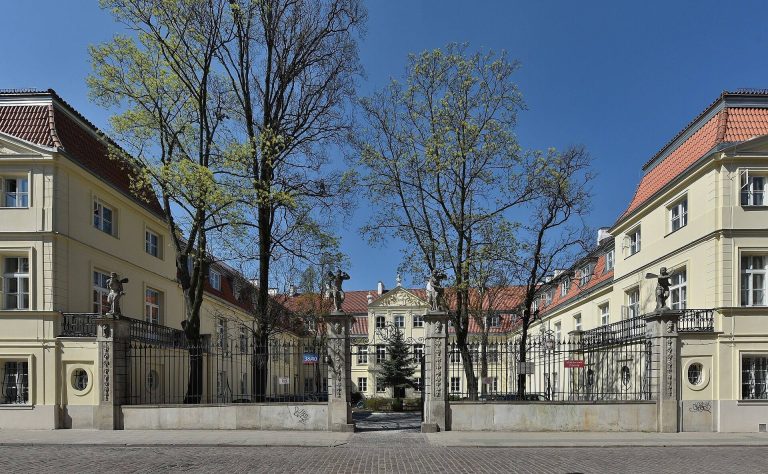
House Under the Kings is a palace in Warsaw, Poland, built around 1621 as a residence for Jan Mikołaj Daniłowicz, Grand Treasurer of the Crown.
Palace and library
The palace was ruined during the Swedish Deluge, Sweden’s invasion and occupation of the Polish-Lithuanian Commonwealth in the mid-seventeenth century. Jesuits, members of a Catholic religious order, acquired the estate in 1660. It later passed to Teodor Potocki, a senior church prelate.
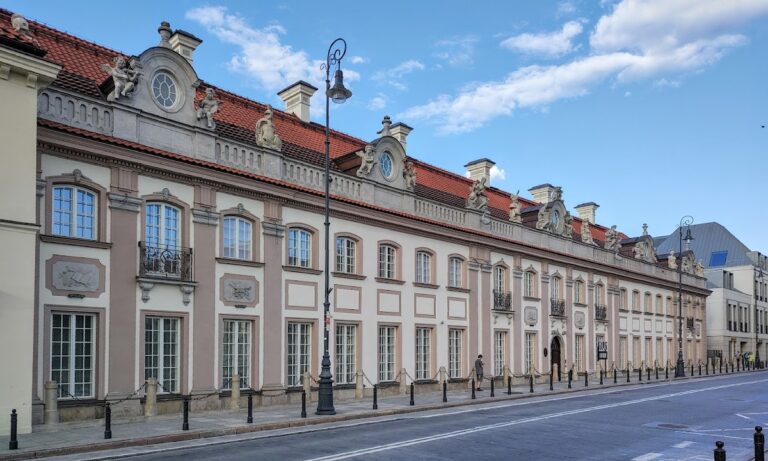
Bishop Andrzej Stanisław Załuski acquired the building in 1736 and placed his brother Józef Andrzej Załuski’s book collection there. Adaptation for the Załuski Library, a major public library in Warsaw, probably began in 1742 and continued until 1754. The books were moved into the palace in 1745, and the library opened to the public in 1747. The building was enlarged around 1760–1762.
From library to tenement
The library remained in the palace until 1795. In 1794–1795, following the Kościuszko Uprising, a Polish insurrection in 1794, Russian authorities confiscated its collection, estimated at about 300,000–500,000 volumes. On the orders of Empress Catherine II, the books were taken to St. Petersburg.
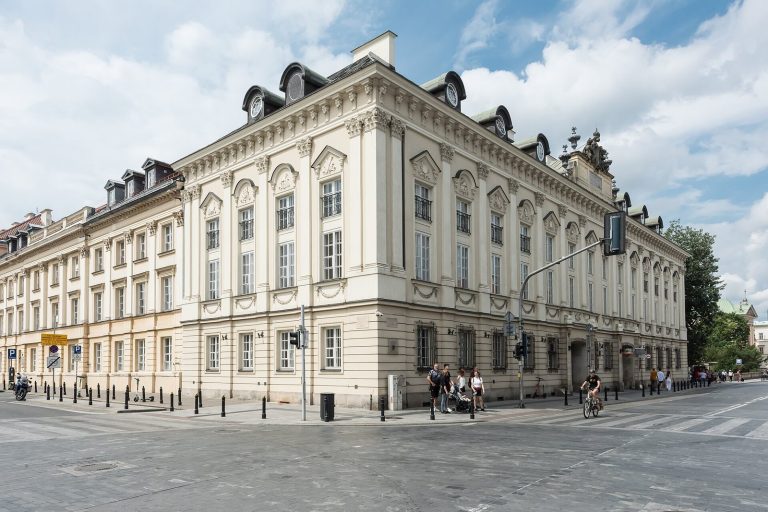
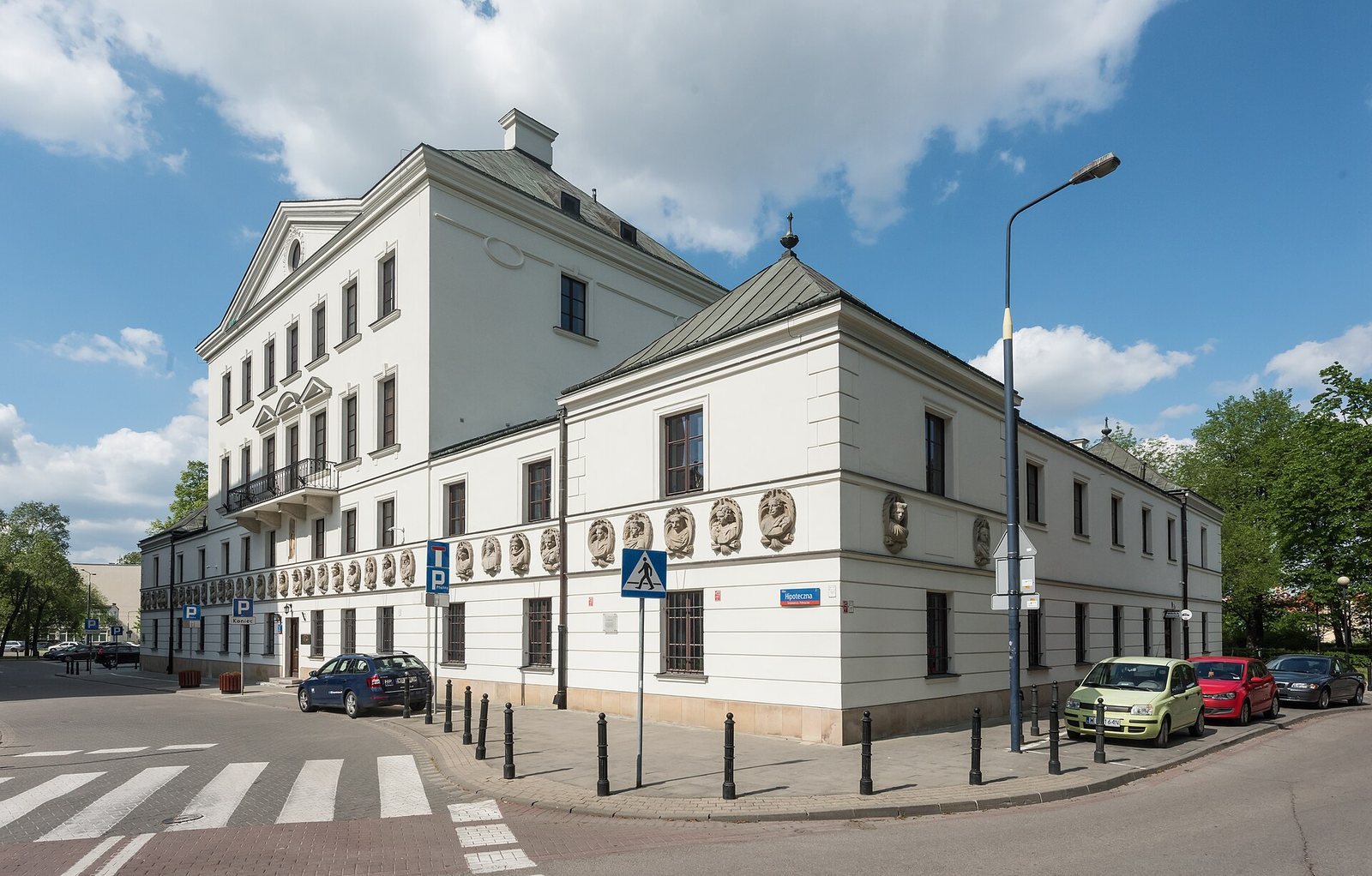
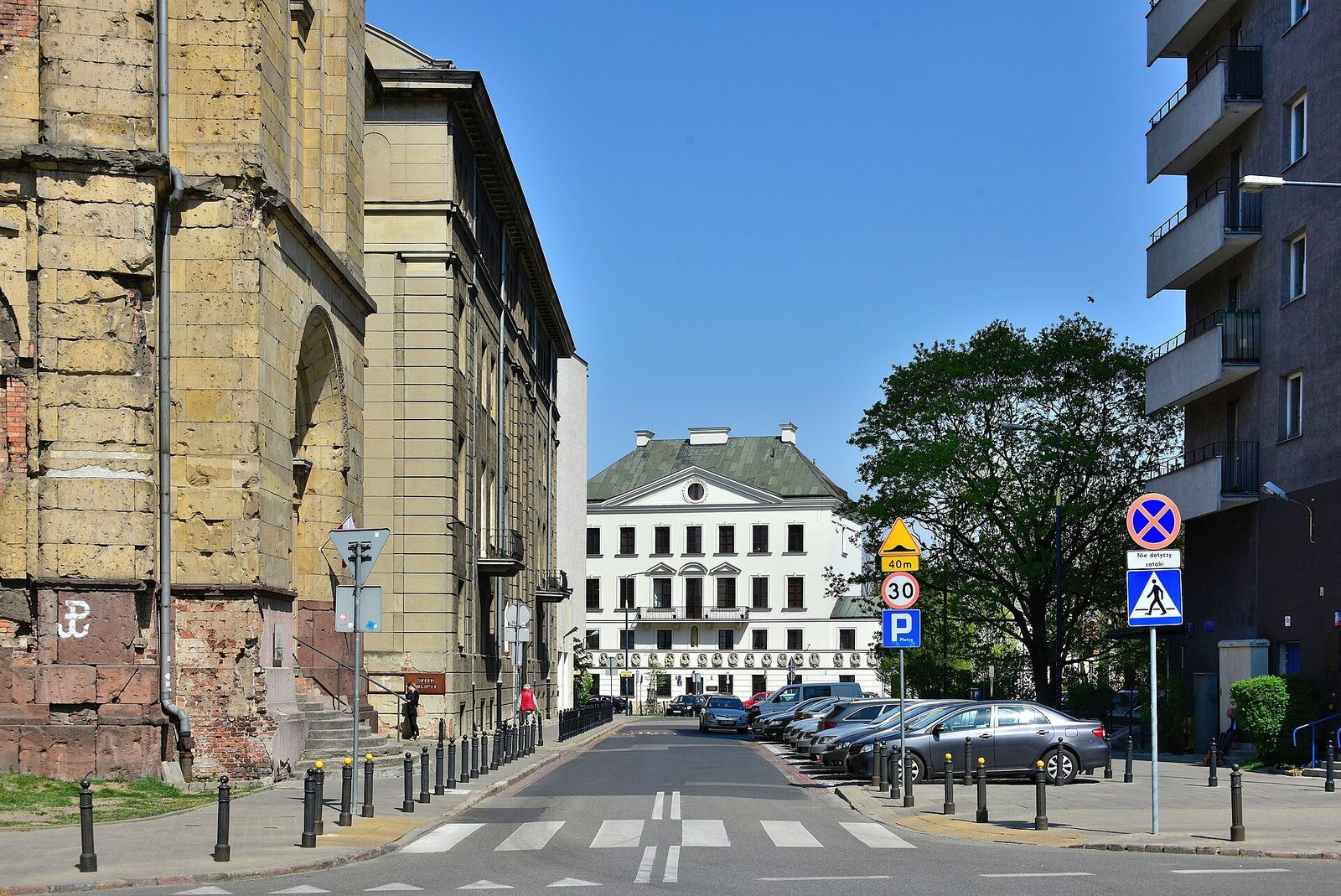
The palace deteriorated and was largely destroyed by fire in 1807, after which it was rebuilt. Alterations continued during the nineteenth century. After 1821, it was adapted as a residential tenement. In 1824, owner Stanisław Nowakowski found busts of Polish rulers in the cellar. He arranged for rulers not represented in the find to be added and had the busts installed on the exterior walls. The building became known as House Under the Kings around 1900; its earlier name was Daniłowicz Palace. That year, the outbuildings in front were demolished to make way for Hipoteczna Street.
War damage and reconstruction
The palace suffered heavy damage during the 1944 Warsaw Uprising, an armed revolt against German occupation. After the uprising collapsed, German forces burned the building. It was reconstructed in 1960–1962. Since 1962, it has housed the headquarters of ZAiKS, a Polish authors’ association representing creators’ copyright interests.
Remains
The building originated as a small palace, with important architectural features at its roofline and across its exterior walls.
Wings and roof tower
During the 1960–1962 reconstruction, the wings were rebuilt to an earlier design. The front had two storeys rather than three, and decorative turrets marked the corners. A small tower on the roof housed an observatory when the building served the Załuski Library.
Rulers’ busts
Forty busts of Polish rulers were incorporated into the exterior walls as a frieze (a horizontal decorative band). The series ran from Władysław IV Vasa to Duke Frederick Augustus I. Frederick Augustus’s bust was later removed and replaced with a statue of the Virgin Mary.