Bridewell Museum: Norwich’s Medieval Residence and House of Correction
Site at a Glance
- Popularity
- Low
- Country
- United Kingdom
- Primary era
- Medieval
- Eras represented
- Medieval
- Civilizations
- English
- Site type
- Civic
- Remains
- Prison
On this page12 sections
History
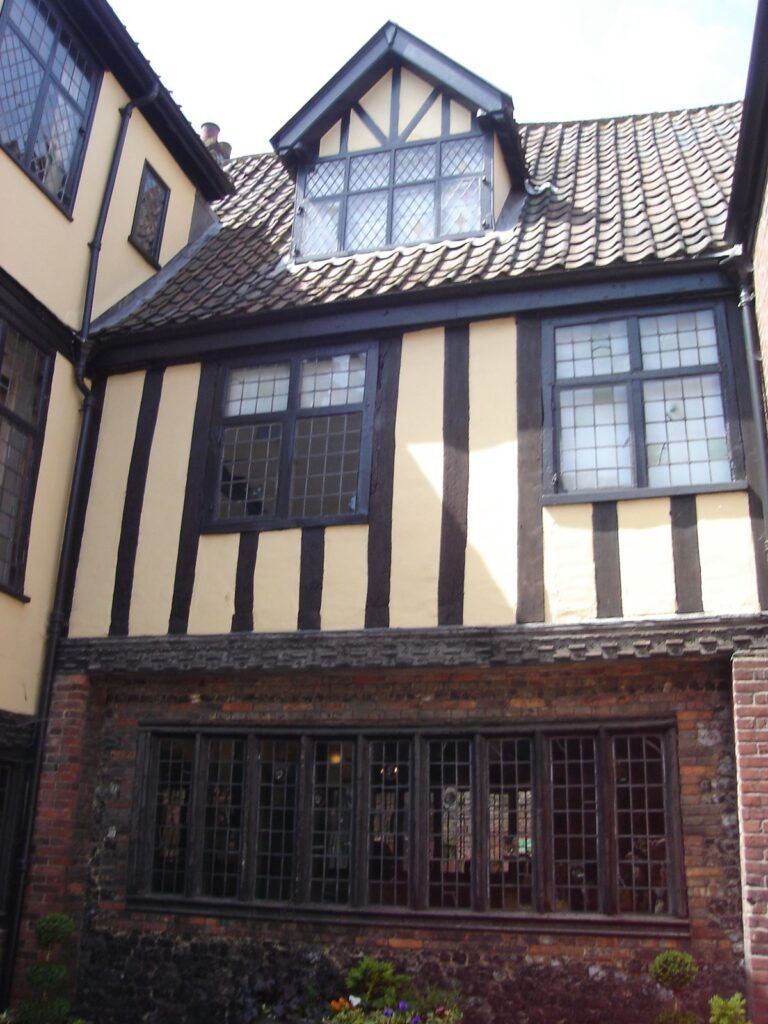
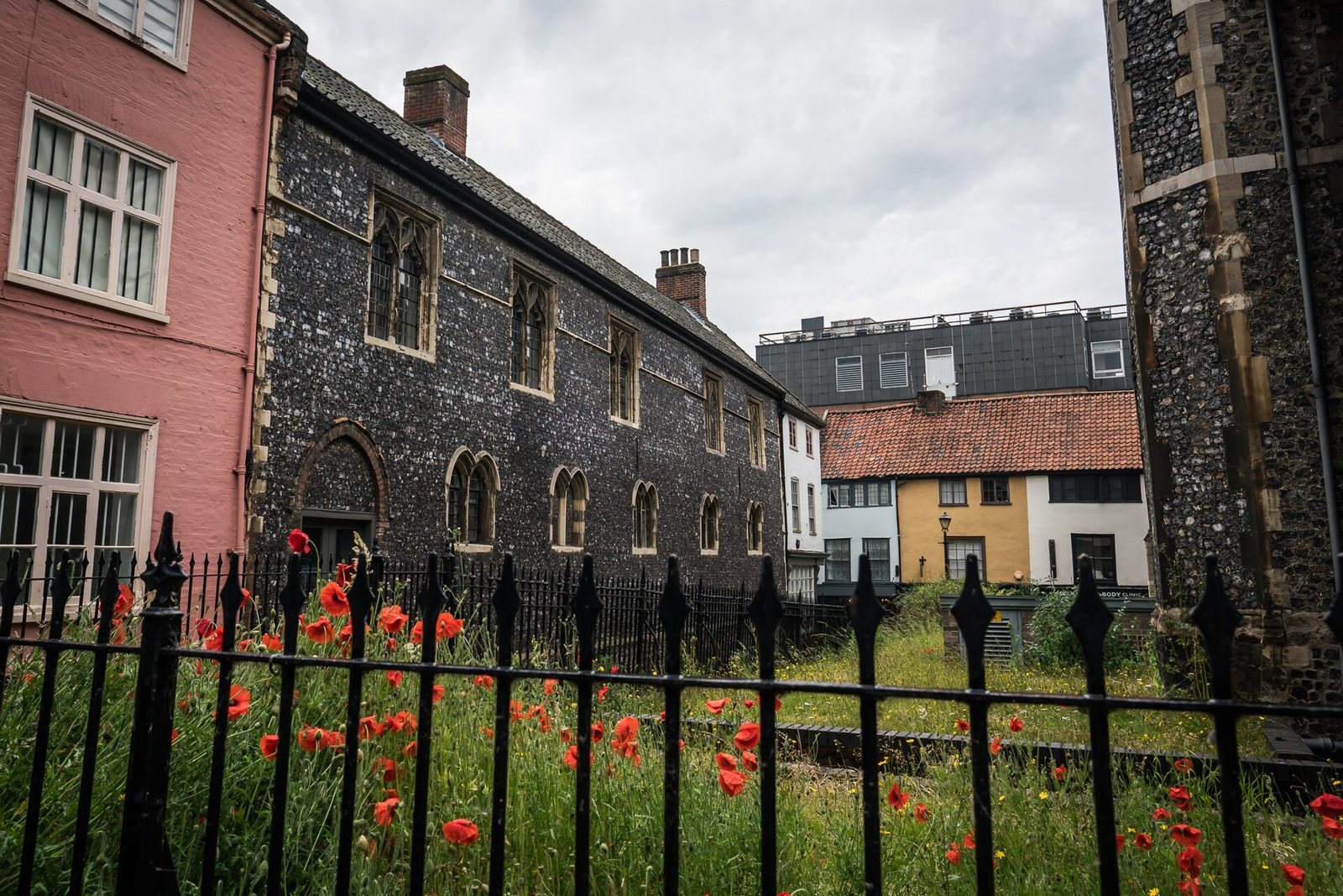
Bridewell Museum, now the Museum of Norwich at the Bridewell, occupies a medieval residence in Norwich, United Kingdom. Built in stages from the late 14th to early 15th century, the building became a house of correction in 1585 and later served as a factory before its conversion into a museum.
A prominent medieval residence
The Appleyard family lived in the house during the 14th and 15th centuries. Bartholomew Appleyard and his son William both served as city bailiffs. William became Norwich’s first mayor and represented the borough in Parliament on ten occasions.
House of correction
As part of Norwich’s late 16th-century reforms to poor relief, the city corporation bought the property in 1584 and opened it as a house of correction the following year. A Bridewell was an institution intended to discipline and reform poor people and others judged disorderly. Norwich’s establishment was among England’s earliest reform-oriented institutions. Its stated aims were to feed and house poor vagrants, provide religious teaching, and put them to work before they sought employment.
In practice, the institution joined assistance with punishment, treating poverty and criminality as overlapping problems. It was not intended to be a prison and operated separately from the City Gaol, but the mayor’s court threatened confinement there as a penalty for wilful idleness. By the 1630s, the Bridewell was regarded as a place of punishment. Whipping was common, usually in six- or twelve-stroke punishments.
Margaret Utting, an elderly former prostitute with syphilis, was sent to the Bridewell rather than a hospital or poorhouse because of judgments about her morality. She remained there until she died. Barbara Bloy was whipped for misconduct and briefly changed her behaviour; three months later, after another whipping, she returned to be put to work.
Factory and museum
A fire badly damaged the building in 1751, especially its ground and first floors. After a prison was built at St Giles Gate, the former Bridewell was sold in 1828 and used as a factory.
Sir Henry Holmes bought the building in 1923 and gave it to Norwich. It became the Bridewell Museum, now the Museum of Norwich at the Bridewell, and is Grade I listed, the highest category of listed-building protection in England. A major redevelopment of the museum took place in the early 2010s.
Remains
Medieval building
Layout and construction
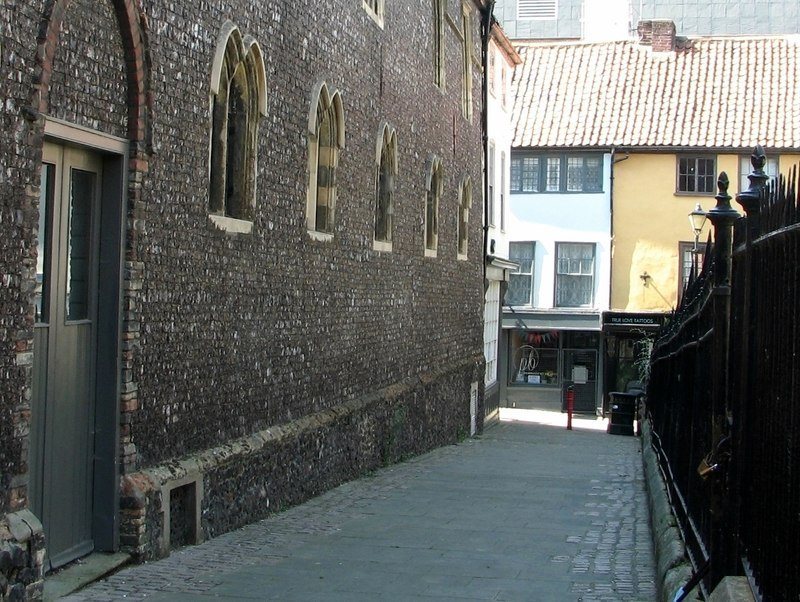
The medieval building survives in fragmentary form as an L-shaped range facing the alley beside St Andrew’s Church. Its construction took place in three or more stages between the late 14th and early 15th centuries.
Brick-vaulted undercrofts
Beneath the building are two ranges of brick-vaulted undercrofts, vaulted chambers below a building’s main floor. They are described as the most extensive in Norwich.
House-of-correction fittings and museum displays
Correction-house equipment
The Bridewell’s historical equipment included two whipping posts, a pair of stocks, and a chair for people considered unruly.
Collections and history wall
In 2012, 5,000 objects were on display at the museum. They included the last Jacquard loom to have woven cloth in Norwich. A Jacquard loom uses punched cards to produce patterned weaving. The displays also included hats made by Edwardian hat-maker Rumsey Wells. The museum’s history wall is a mosaic assembled from more than 9,000 Norwich photographs submitted by members of the public.
Samson sculpture
A sculpture of Samson, the biblical figure associated with great strength, had stood at Samson and Hercules House in Tombland since 1657. After restoration, it was brought to the museum. A public campaign called “Saving Samson” supported its display there in 2019. The sculpture is shown in a custom glass case with environmental controls.