St Augustine’s Church in Jamy: A Baroque Parish Church
Site at a Glance
- Popularity
- Very Low
- Country
- Poland
- Primary era
- Early Modern
- Eras represented
- Early Modern
- Civilizations
- Polish–Lithuanian Commonwealth
- Site type
- Religious
- Remains
- Church
On this page6 sections
History
St Augustine’s Church in Jamy is a timber Baroque Roman Catholic parish church in Poland, first built in Wadowice Górne in 1692. Dedicated to St Augustine of Hippo, it serves the parish named for him. Augustine (354 to 430) was a Christian theologian and bishop whose writings strongly influenced Western Christianity.
In 1916, the church was purchased and transferred from Wadowice Górne to Jamy. The parish of St Augustine in Jamy was established in 1925.
Remains
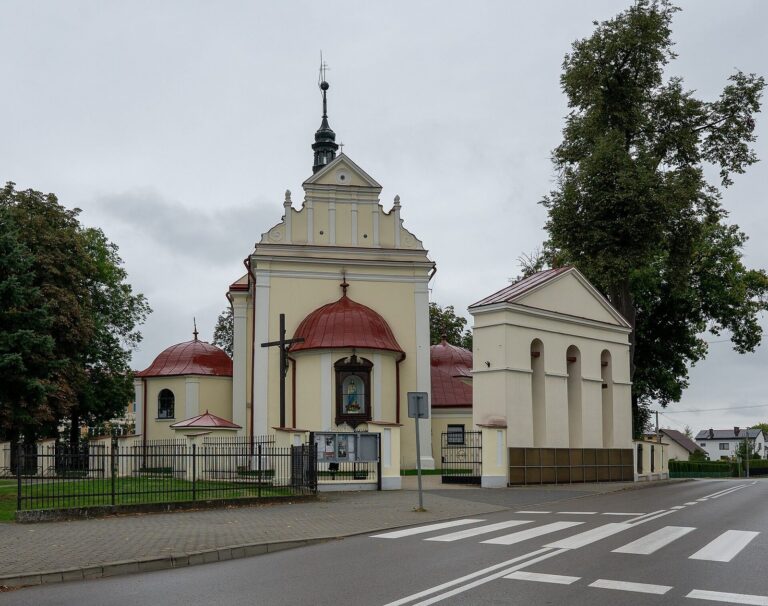
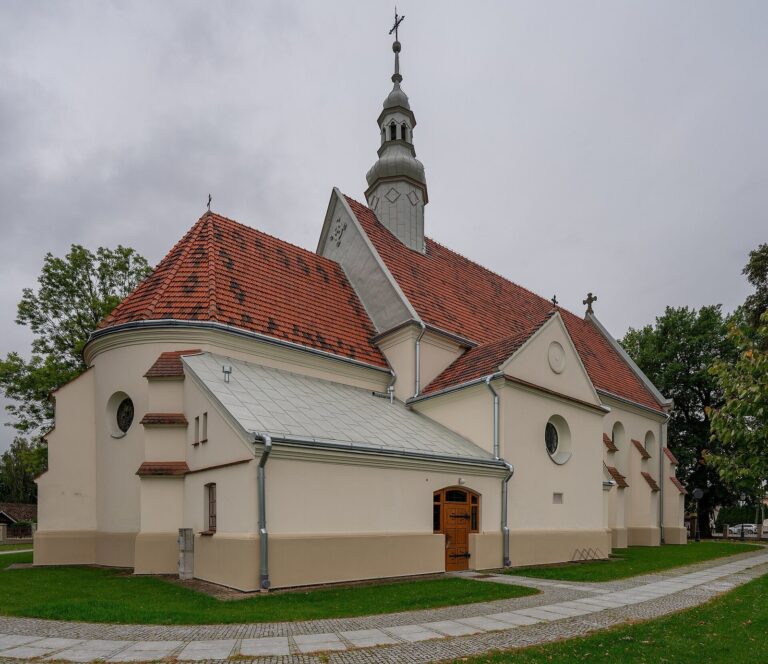
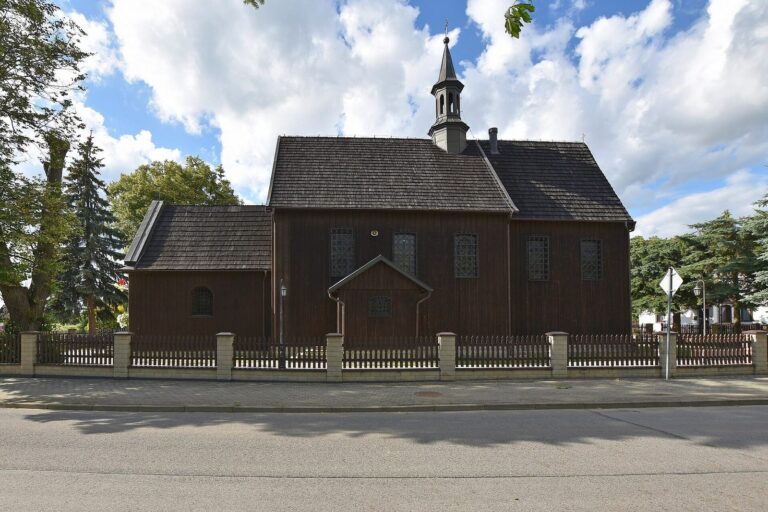
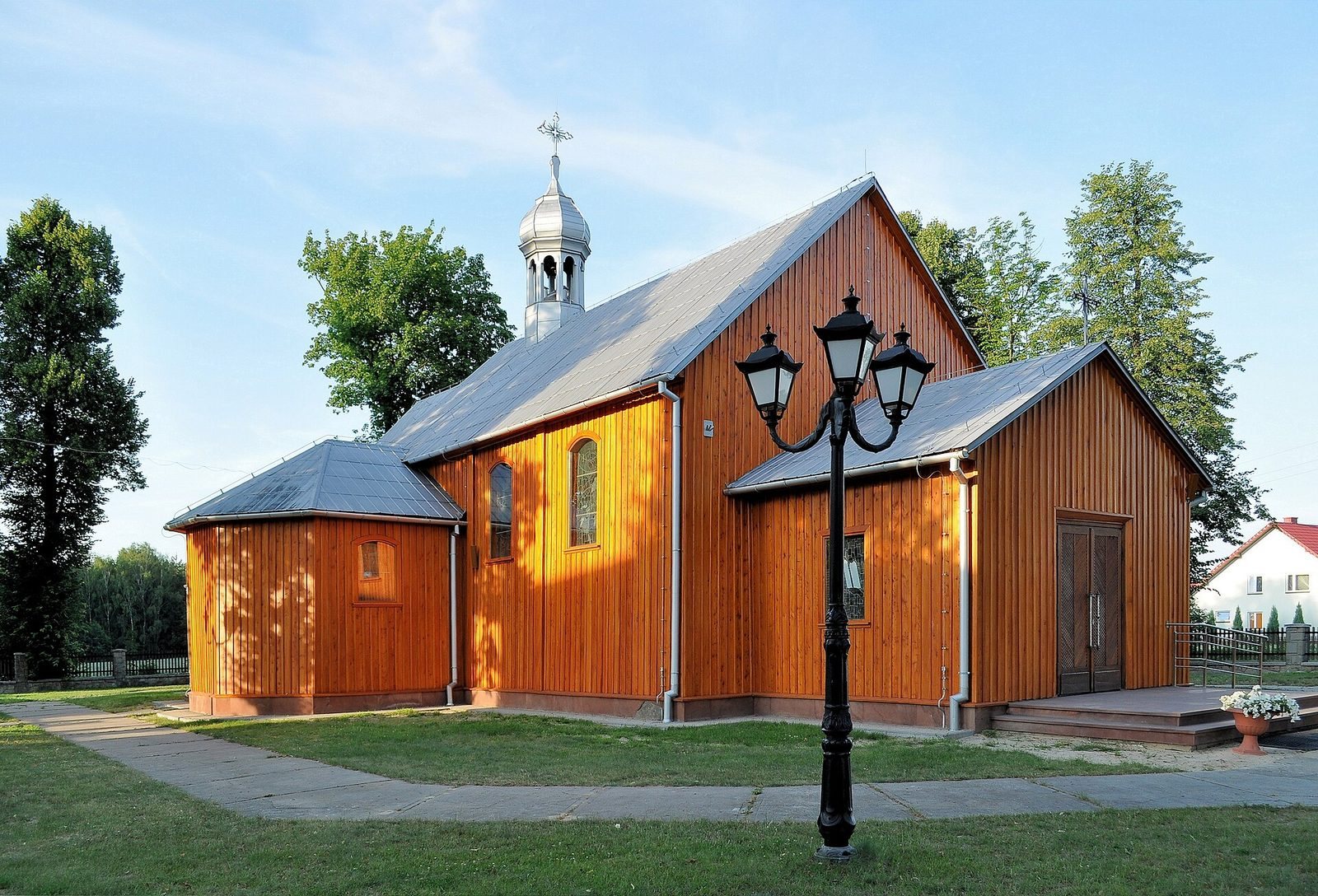
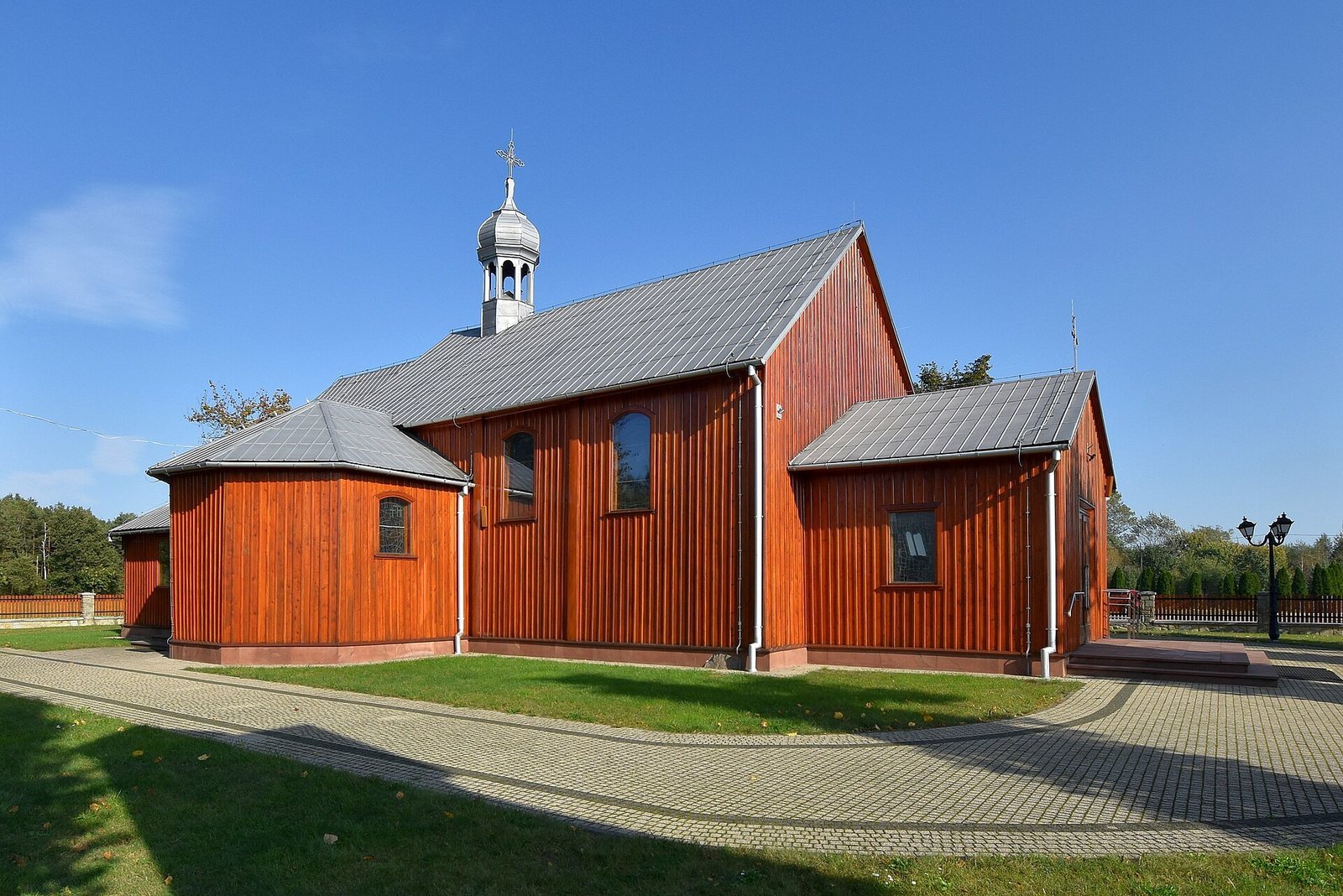
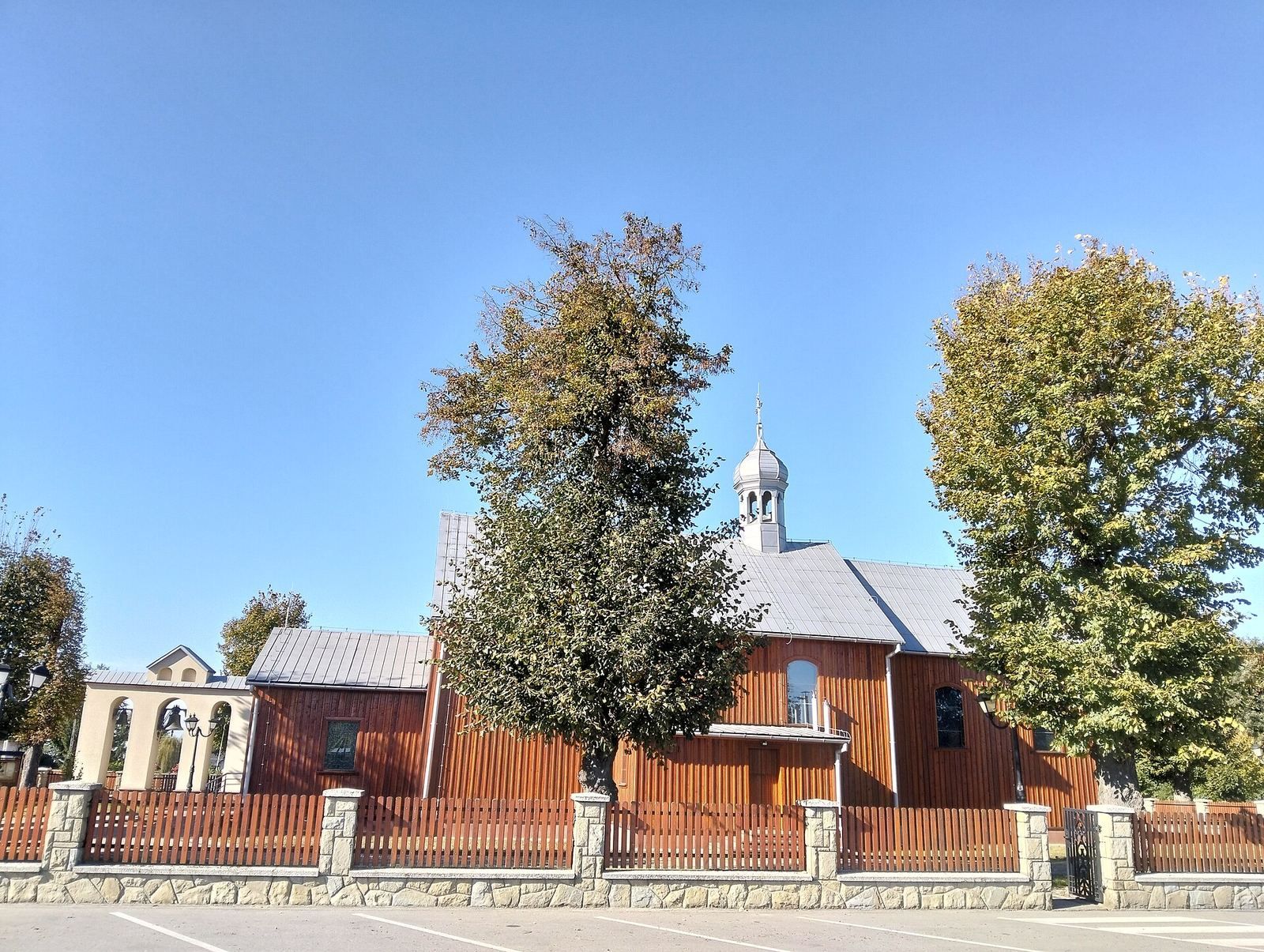
The church is built from interlocking horizontal timbers, with boarded exterior walls, a single nave (the main worship space), and gabled roofs. Its plan includes a narrower chancel, the area around the altar, and a chapel adjoining the nave. A bell turret rises above the church, while a separate masonry structure holds additional bells.
Church and bell structures
Plan and exterior
The chancel ends in a three-sided form and has an attached sacristy, a room for storing vestments and liturgical objects. The adjoining chapel also has a three-sided end. The church has a front porch and a side porch, which was remodeled in the twenty-first century.
Interior and furnishings
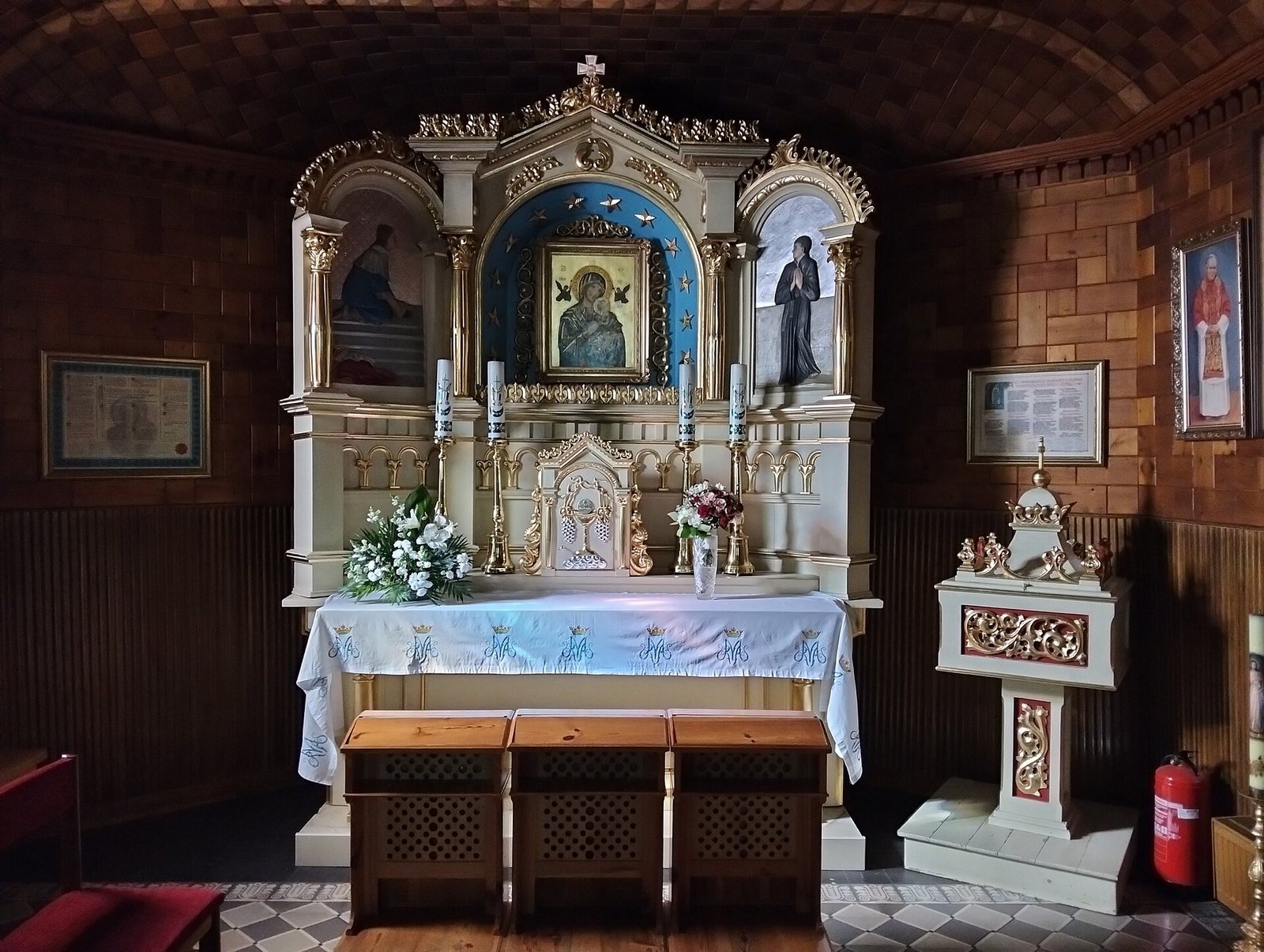
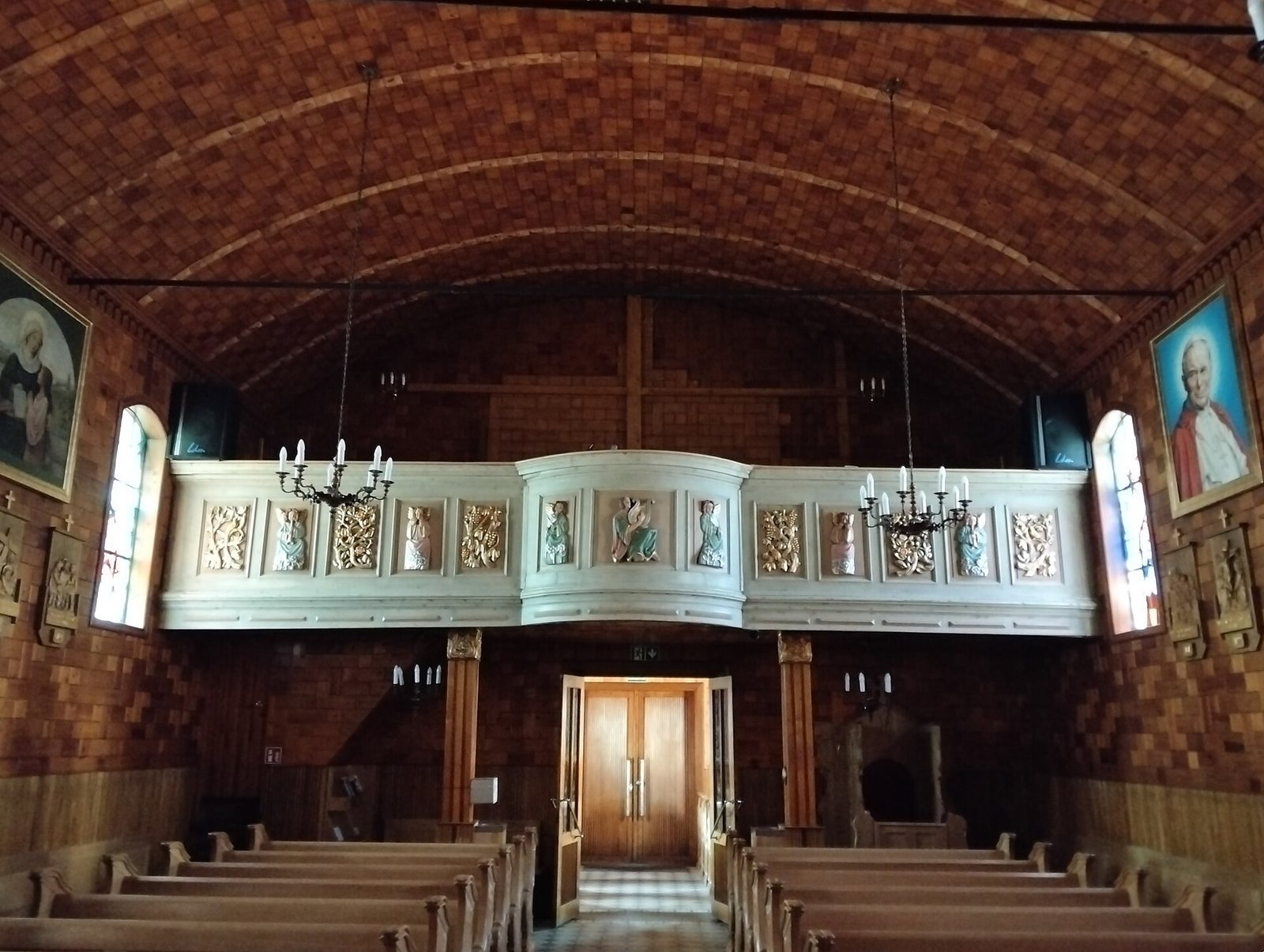
Inside, false barrel vaults, shaped to resemble barrel vaults without being structural vaults, have flattened arches; other parts of the interior have flat ceilings. Three late-Baroque altars dating to the eighteenth century were transferred from Wadowice Górne. Sculptor Józef Tomczyk made the baptismal font in 1960. The seven-stop organ, whose controls select sets of pipes and their pitches, was made in 1967 by Tadeusz Salwierz of Mielec.
Bells
A Baroque bell turret with a lantern stands above the nave. The separate screen belfry is a freestanding, wall-like masonry structure with three openings for bells. Its oldest bell dates to 1670 and bears a German-language inscription. The other two bells were cast in 1957 and 1956; the smaller bell from 1956 is a sanctus bell, used during worship.