Houndhill: A Tudor Farmhouse in Worsbrough
Site at a Glance
- Popularity
- Medium
- Country
- United Kingdom
- Primary era
- Early Modern
- Eras represented
- Early Modern
- Civilizations
- English
- Site type
- Domestic
- Remains
- House
On this page8 sections
History
Houndhill is a Tudor farmhouse in Worsbrough, near Barnsley in South Yorkshire, United Kingdom, built by Robert Elmhirst in the late sixteenth century. Its later fortification brought the house into the English Civil War, when its owner, Richard Elmhirst, supported King Charles I.
Early Elmhirst history
An early trace of the Elmhirst family in the wider district dates to 1340, when Roger Elmhirst was fined in Rockley Manor Court after two horses strayed into the lord’s meadow. Rockley Manor adjoined Worsbrough Manor. The first specific reference to land at Houndhill dates from 1556.
In a 1618 lawsuit, Richard Elmhirst stated that his ancestors had held Houndhill and Elmhirst for twelve generations as copyholds, a form of land tenure governed by a manor’s customs. He inherited Houndhill in 1626. His father, Robert, had built the house in the late sixteenth century, and additions were made during the seventeenth century.
Civil War and its aftermath
Richard served Sir Thomas Wentworth in York as Deputy Collector of Recusant Rents, payments associated with refusal to conform to the established Church of England. As the Civil War began in 1642, Richard fortified Houndhill as a Royalist. Tradition holds that Sir Thomas Fairfax, a leading commander of Parliament’s forces, took the house in summer 1643 after Richard surrendered. In the same account, Fairfax prevented soldiers from killing him.
In 1645, officials called sequestrators, who took control of property belonging to people judged to support the opposing side, investigated Richard’s wealth. After a lengthy and contested inquiry, he was ordered to pay a fine of £666, which he paid in 1650. He died in 1654.
Later ownership and change
Richard’s son, also named Richard, died in 1673, leaving Houndhill and his other property to his daughter Elizabeth, who was married to John Copley. The house later passed into the ownership of Captain F. W. T. V. Wentworth. The Elmhirst family received mining royalties during the nineteenth and early twentieth centuries, while coal mining caused severe subsidence to Houndhill and its farmland during much of the twentieth century.
In 1932, Alfred O. Elmhirst arranged for Houndhill to be bought back for his brother, Leonard Knight Elmhirst. Substantial restoration followed, and the house was extensively renovated in 1934. Leonard gave it to A. O. Elmhirst in 1950; A. O. lived there from 1932 until his death in 1995. In 1972, the M1 motorway was routed through the valley below Houndhill, changing the character of the area. The house and surrounding land remain in the family’s possession, which traces its Worsbrough landholding across more than twenty generations. Houndhill is a Grade II* listed building, a category in England for buildings of particular importance and more than special interest.
Remains
The house and its defenses
The farmhouse
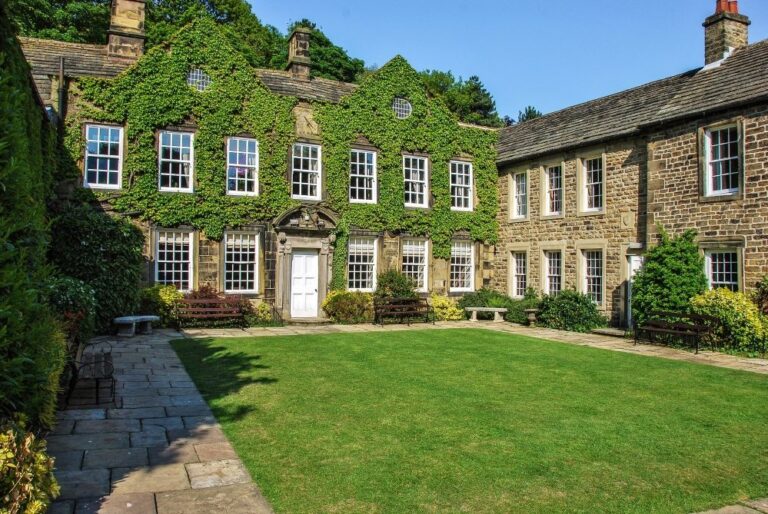
Houndhill has an H-shaped plan and two storeys. Its main construction uses finely dressed stone blocks laid in regular courses, with a stone-slate roof; the older wing is timber-framed. These forms and materials make up the farmhouse’s principal architectural character.
Civil War fortifications
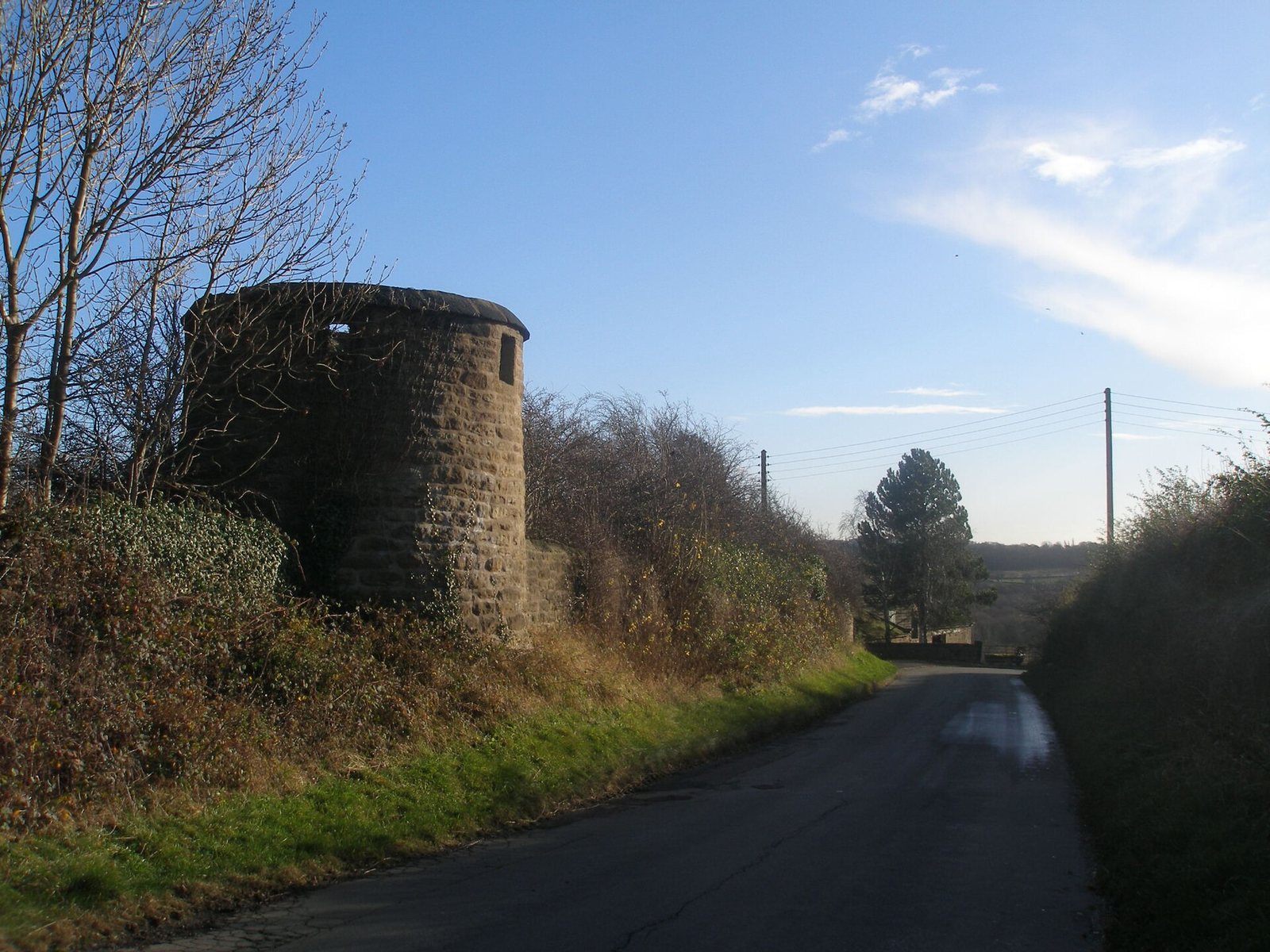
Richard Elmhirst’s defenses consisted of two towers and an incomplete wall around the house. Together, they formed the fortification added when Houndhill was prepared for the Civil War.