Horvat Eleq: An Archaeological Site in Israel
Site at a Glance
- Popularity
- Low
- Country
- Israel
- Primary era
- Classical
- Eras represented
- Classical, Modern
- Civilizations
- Achaemenid, Ottoman, Ptolemaic, Roman, Seleucid
- Site type
- Military
- Remains
- Wall
On this page12 sections
History
Horvat Eleq is an archaeological site in Israel whose principal archaeological phases extend from the late Persian period to the Ottoman era. Human activity was nearly continuous from the Middle Paleolithic through the Byzantine period, followed by later occupation. A year-round spring and a position above two historic routes helped sustain settlement.
Early settlement and the Hellenistic period
A fortified wall marks the late Persian phase, when Achaemenid Persia ruled Judea. An early Hellenistic rural settlement followed. The Hellenistic period was shaped by Greek-influenced successor kingdoms, including the Ptolemies and Seleucids, which ruled parts of the eastern Mediterranean.
The settlement may have been destroyed during the campaign of Alexander Jannaeus, a king of the Hasmonean dynasty, a Jewish ruling house in Judea. It then remained deserted until the time of Herod, king of Judea under Roman authority.
Herodian and Roman periods
The walled complex is attributed to Herod’s reign, from 37 to 4 BCE. Changes to its plan were probably made during the first century CE, perhaps under Agrippa I, a later king of Judea. Construction and settlement at Horvat Eleq reached their peak in the early Roman period.
Two routes passed by the site. One ran east from the coastal plain beside Taninim Stream toward the Jezreel Valley; the other continued north along the coast, bypassing the Carmel ridge to the north. Both were established in the early Roman period as parts of the Roman imperial road network.
Horvat Eleq was abandoned after the First Jewish-Roman War (66-70 CE), a revolt against Roman rule in Judea. A small number of sling stones and arrowheads found at the site do not establish that a siege or battle occurred there.
Late Roman and Byzantine use
The spring tunnel, aqueduct and pools continued to serve the site during the Late Roman and Byzantine periods. This prolonged use followed the abandonment of the walled complex.
Ottoman and British Mandate settlement
Occupation returned during the Ottoman period. After the First World War, pioneers settled on land acquired by the Jewish Colonization Association, an organization that supported Jewish agricultural settlement, and Baron Rothschild. The settlement was abandoned in 1923, during the British Mandate, the period of British administration of Palestine under a League of Nations mandate.
Archaeological investigation
Excavations led by archaeologist Yizhar Hirschfeld began in 1989 and continued almost continuously until 2007. The principal remains investigated belong to the late Persian, Hellenistic and Roman periods.
Remains
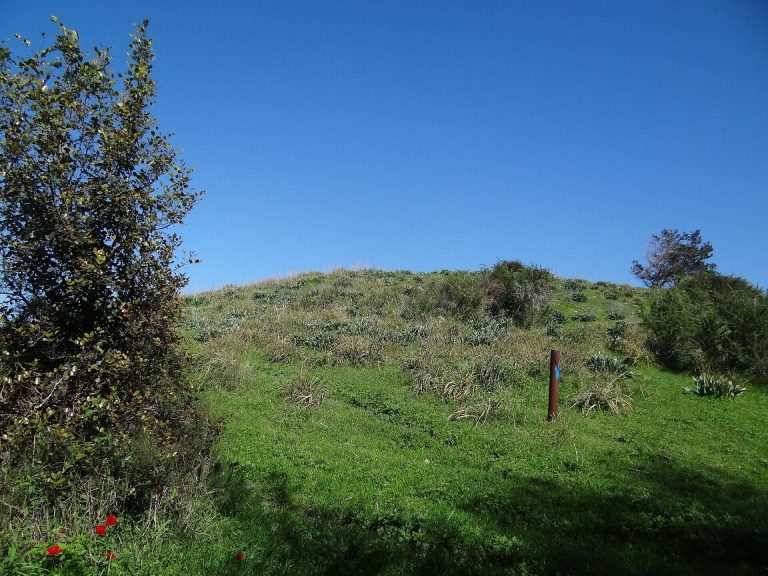
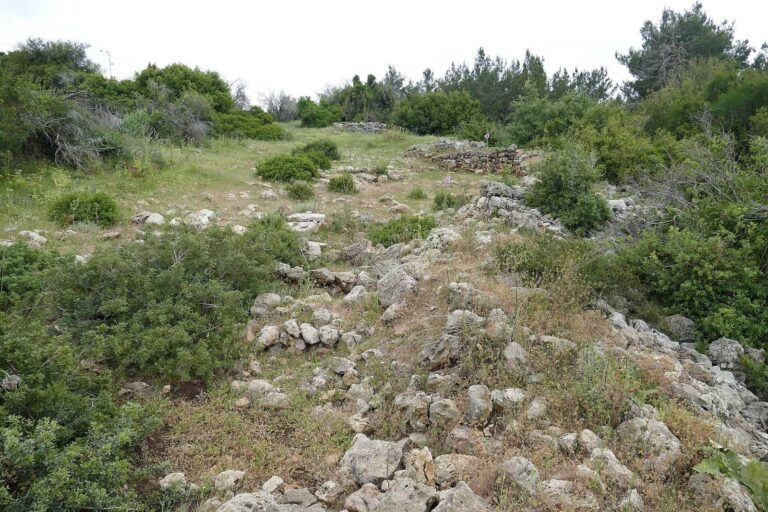
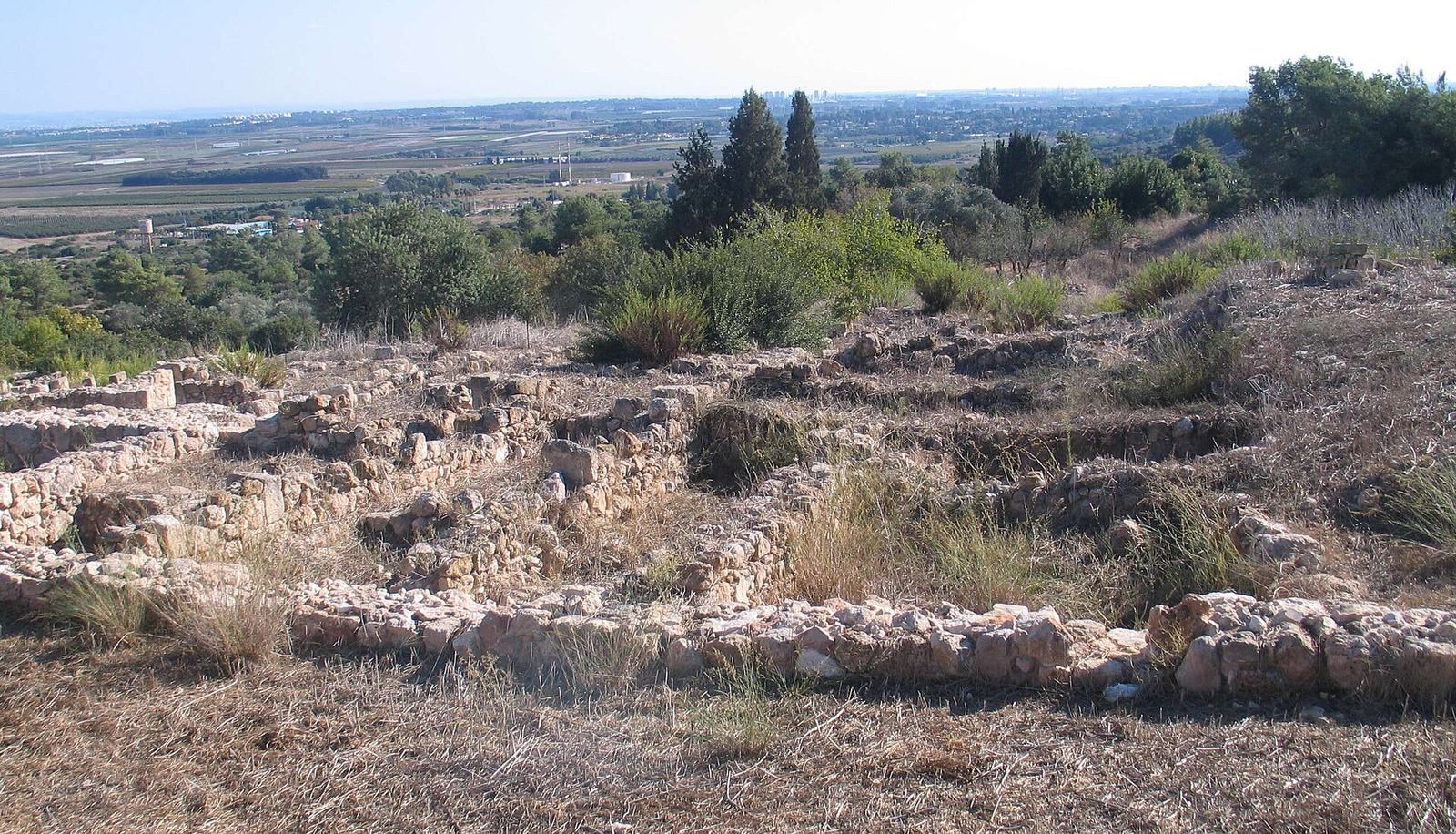
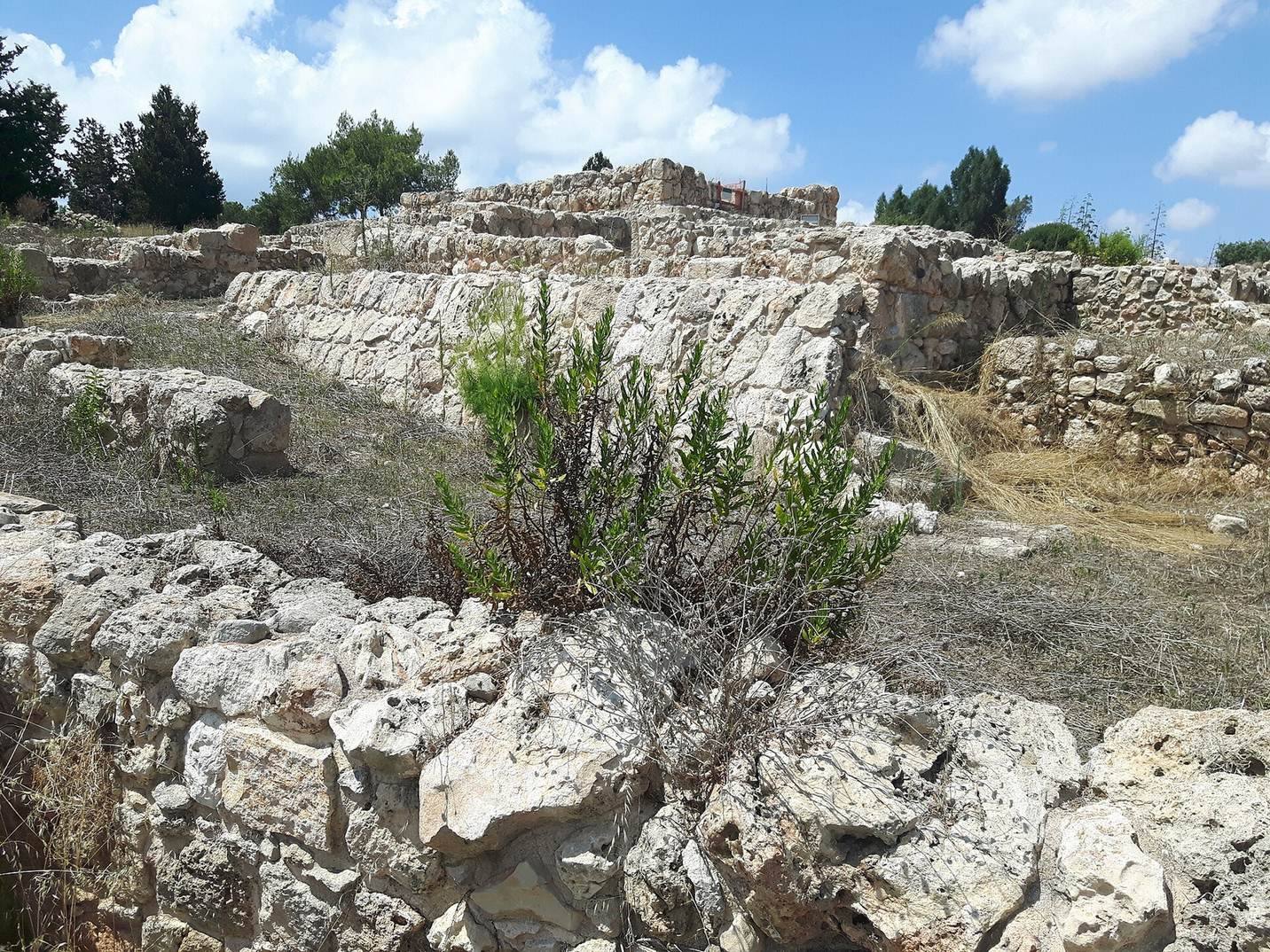
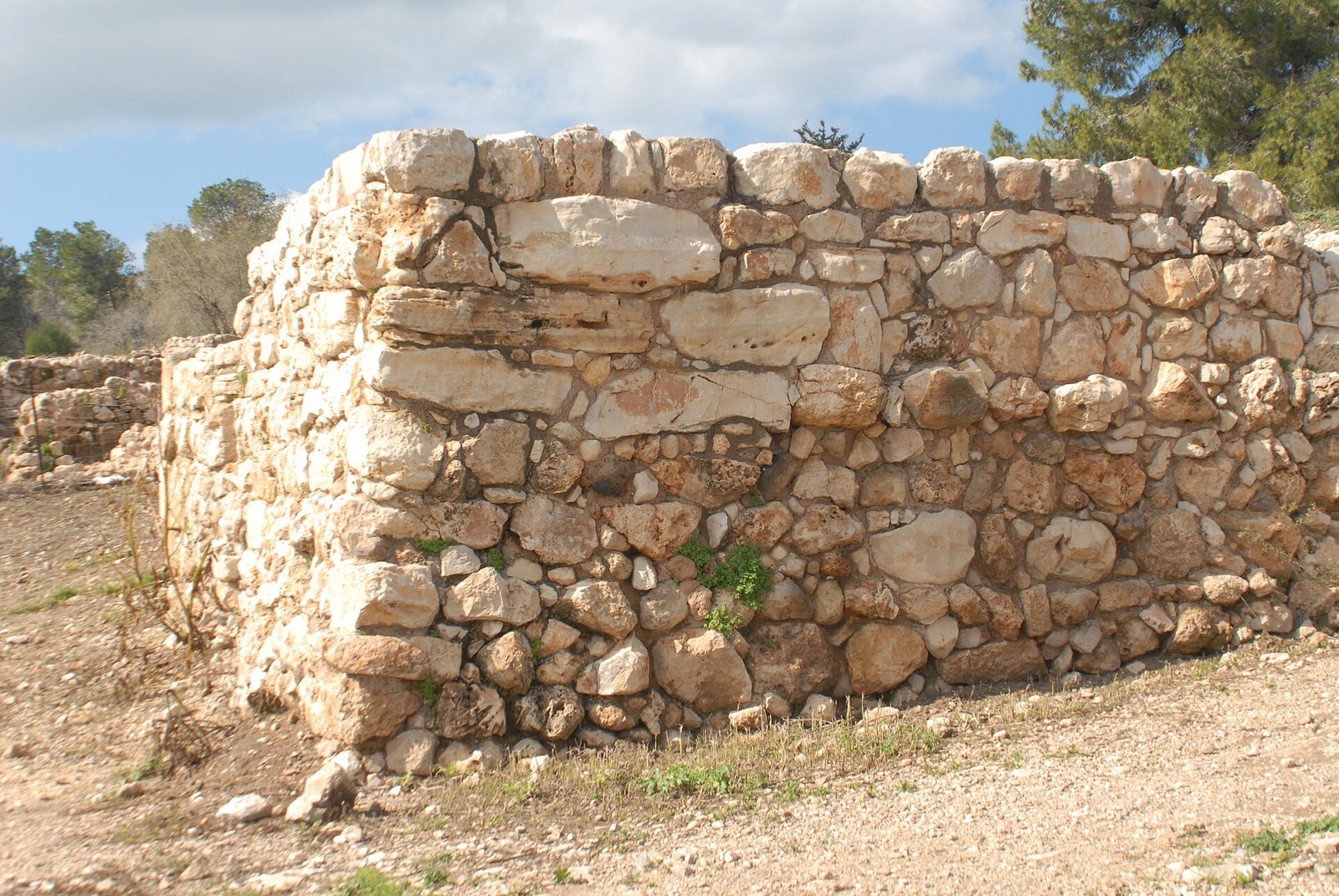
Horvat Eleq lies in southeastern Ramat HaNadiv, at the southern edge of Mount Carmel and 141 metres above sea level. Its principal visible archaeological remains date to the Hellenistic and Roman periods. The walled complex occupies the upper part of the site, with an agricultural area and spring installations below it.
Late Persian and Hellenistic remains
The late Persian remains include a fortified wall. Near the spring entrance, the early Hellenistic settlement had a water pool and about a dozen walls. Architectural groups to the north and south of this area are understood as parts of a rural settlement. Finds include locally made pottery and imported vessels from the Aegean and Greece, dating to the third and second centuries BCE, when Ptolemaic and Seleucid kingdoms ruled Palestine.
Roman wall and Water Gate
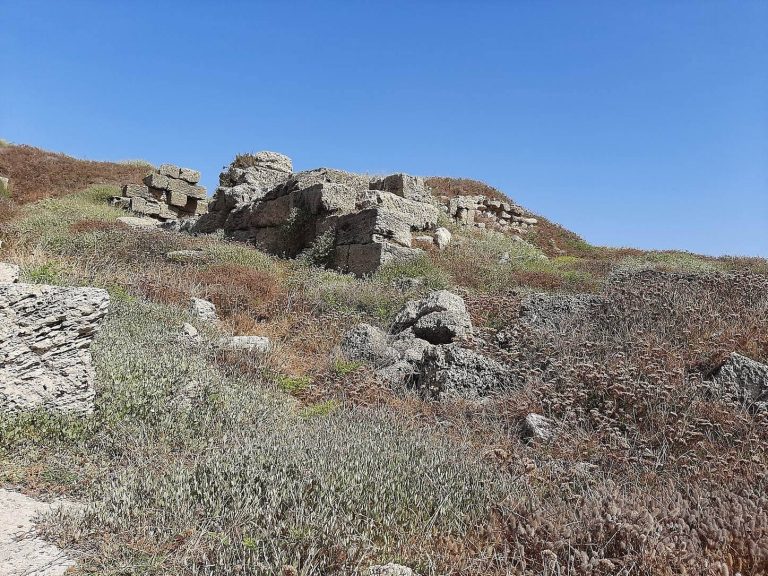
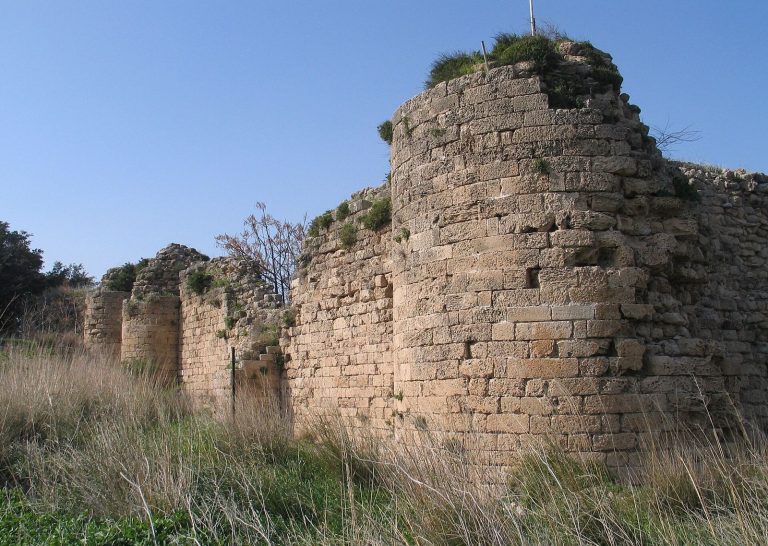
The Roman-period perimeter wall has been exposed along its full length on the north, east and south sides. Built from dressed dolomite blocks, it is estimated to have stood about 8 metres high. Most corner towers covered roughly 5 square metres, while the southeastern tower measured 8 by 9 metres; intermediate towers at the centres of the wall sides were about 5 metres long. A passage about 3 metres wide in the southern wall faces the spring and is known as the Water Gate.
Spring and agricultural installations
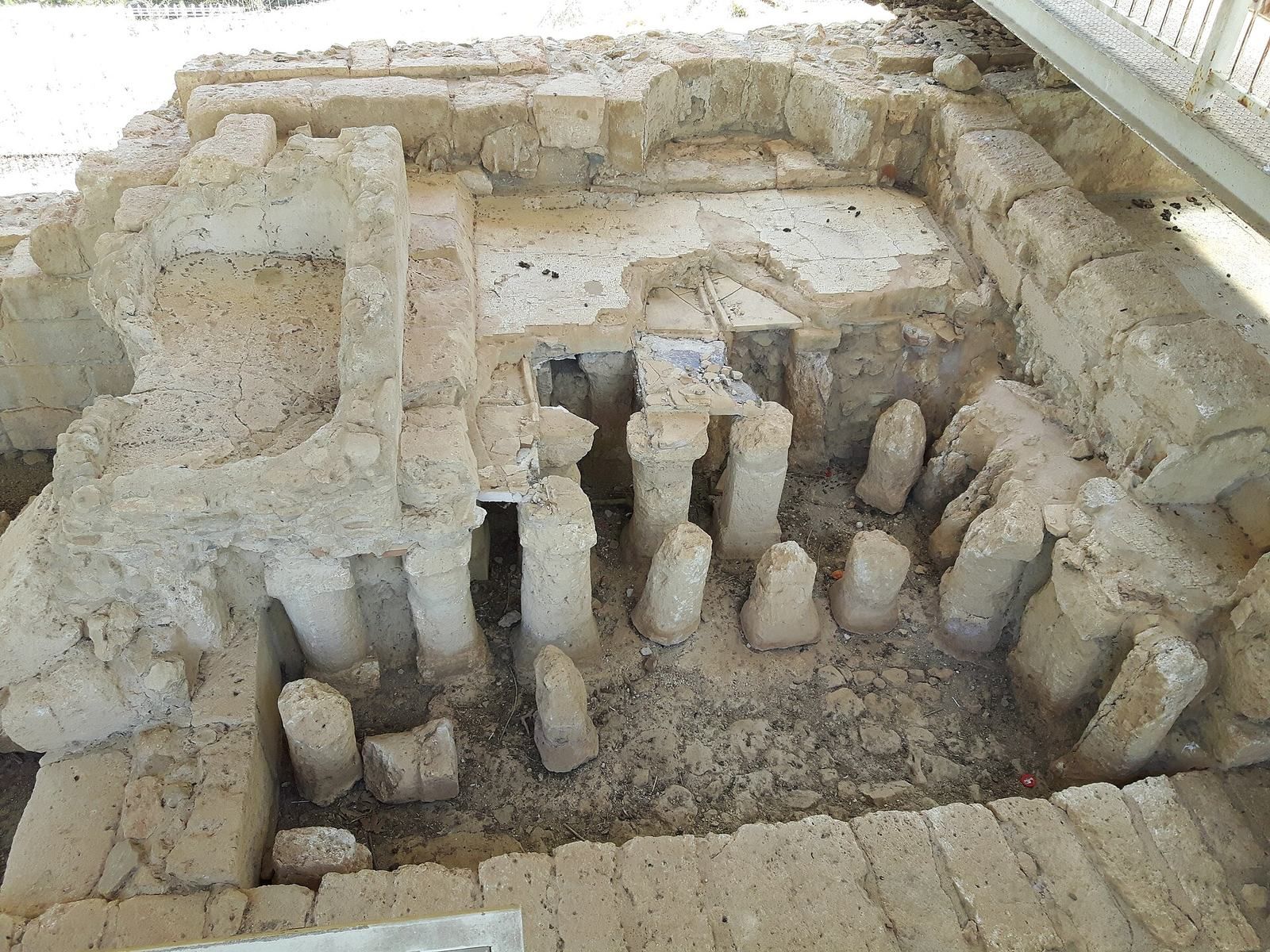
The lower agricultural area contains an olive press, a pool, a bathhouse, a spring and a spring tunnel. An aqueduct and pools formed part of the water system. The tunnel held a hoard of more than 2,100 coins dating from the fourth to seventh centuries CE. Its contents are consistent with the Bordeaux Pilgrim’s description, in the first half of the fourth century, of a fertility spring about three miles from Caesarea. The Bordeaux Pilgrim was an anonymous Christian traveler whose itinerary described places in the Holy Land.
Columbarium and graves
A first-century CE columbarium tower, a structure with niches for keeping pigeons, stands at the site. It has been compared with a similar tower at Horvat Abu Hof near Lahav. Two Roman-period graves were found at the western edge of Horvat Eleq.
Ottoman and Mandate remains
At the top of the hill, a nineteenth-century village occupied about 2,000 square metres. An estate house of the same period stood to its north.