Glyndebourne: A Country House and Opera Festival in Lewes
Site at a Glance
- Rating
- 4.8
- Popularity
- High
- Country
- United Kingdom
- Primary era
- Modern
- External website
- Open
- Eras represented
- Early Modern, Modern
- Civilizations
- British, English
- Site type
- Entertainment
- Remains
- Theatre
On this page15 sections
History
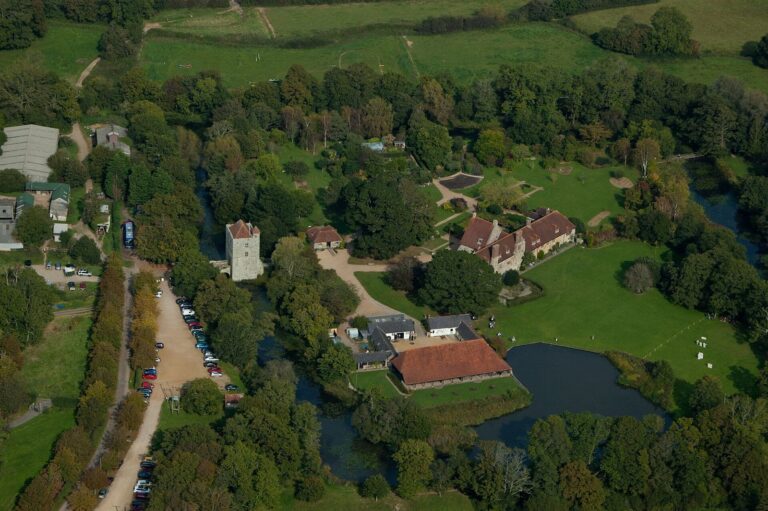
Glyndebourne is a country house and opera venue in Lewes, United Kingdom. A manor house stood on the estate by at least the fifteenth century, although the age of the present house is uncertain. In the twentieth century, John Christie made the estate the home of a professional opera festival.
The estate and the Christie family
The estate entered the Hay family’s possession in 1618 and passed to James Hay Langham in 1824. In 1833, Langham inherited his father’s baronetcy, a hereditary British title below the peerage, along with an estate in Northamptonshire. The inheritance terms were meant to require him to give up Glyndebourne, but he had been certified insane. After litigation, the estate passed to his relative Langham Christie, who paid another relative £50,000 to withdraw a competing claim.
Langham Christie was the son of Daniel Christin, a Swiss-born man who adopted the surname Christie when he entered the East India Company, a British trading company that also maintained military forces and administered territories in India. Daniel returned to England with a fortune estimated at £20,000. His second marriage, to Elizabeth, daughter of Sir Purbeck Langham, eventually brought Glyndebourne into the Christin-Christie family. Daniel’s career and the origins of his wealth remain uncertain. A story linked his fortune to gems supposedly given by a sultan after Daniel prevented troops from looting a harem. Claims that he served in the Bombay Engineers and rose to major are unsupported. His will called him a former captain in the Company’s Bombay service but did not mention engineering. A family pedigree also claimed promotions to lieutenant in 1781 and captain in 1783, and service in the 1782 war against Hyder Ali, ruler of Mysore in southern India; those details remain unverified.
From country house to opera festival
Langham Christie’s son William made substantial changes to the house during the 1870s, including work by architect Ewan Christian in 1876. John Christie gained use of the house after his grandfather, William Langham Christie, died in 1913, and took full legal possession of the estate in 1920.
A keen musician, John held amateur opera evenings at the house. At one in 1931 he met soprano Audrey Mildmay, who had been engaged to bring professional experience to the performances. They married on 4 June that year. During their honeymoon they attended the Salzburg and Bayreuth festivals, inspiring plans for professional opera at Glyndebourne. Christie first imagined a festival modelled on Bayreuth, but the plan developed into smaller-scale Mozart productions suited to the proposed theatre.
The first theatre opened with a six-week season beginning on 28 May 1934. Mozart’s Le nozze di Figaro opened the season, followed by Così fan tutte. Conductor Boyd Neel led the first music heard in the renovated opera house during private performances arranged at Christie’s invitation. Christie appointed Fritz Busch as music director and Carl Ebert, formerly senior director of Berlin’s Städtische Oper, as artistic director. Rudolf Bing was general manager until 1949. All three were exiles from Nazi Germany.
War, recovery, and a widening repertoire
The festival stopped during the Second World War, when the house became an evacuation centre for children from London. Performances resumed gradually after 1945. Christie financed the festival himself through 1951, and the Glyndebourne Festival Society assumed financial management in 1952. After John Christie died in 1962, his son George, later Sir George, succeeded him, and further improvements to the theatre followed.
Mozart remained central to the festival’s repertoire. Glyndebourne performances of Idomeneo in the 1950s helped renew interest in the opera, while the festival’s 1938 production of Verdi’s Macbeth contributed to its reassessment. Later seasons included works by Rossini, Richard Strauss, Ravel, and Stravinsky. Glyndebourne began commissioning operas specifically for the festival in 1984. Dutch soprano Gré Brouwenstijn sang Leonore in Beethoven’s Fidelio in 1959, 1961, and 1963, making the role a signature part of her repertoire. Bernard Haitink served as the festival’s musical director from 1978 to 1988.
Glyndebourne Touring Opera began in 1968. Its annual tour, held from October to December, visits theatres across the United Kingdom, beginning at Glyndebourne, to bring the company’s productions to a wider audience. Picnics in the park around the theatre also became part of the festival’s informal character.
Theatre renewal and the wind turbine
Repeated additions enlarged the original theatre, while a rehearsal hall and buildings for restaurants, dressing rooms, storage, and other needs accumulated around it. By the late 1980s, George Christie had concluded that a replacement was necessary. The old theatre’s final season took place in 1992, after which construction of a new one began. Its first performance, Mozart’s Le nozze di Figaro, took place on 28 May, exactly 60 years after the original theatre’s first performance.
Glyndebourne sought permission for a wind turbine in 2007. The Secretary of State called in the planning decision because of its wider implications for renewable-energy development in the South Downs Area of Outstanding Natural Beauty, a protected landscape, as well as objections from countryside-protection groups and local residents. Permission was granted in 2008, and the turbine began operating in January 2012. During its first five years, it generated the equivalent of 102% of Glyndebourne’s annual electricity use, exceeding the 90% target.
Remains
The site’s built fabric brings together the altered country house and organ room, two successive opera theatres, and remains associated with a post mill and a wind turbine. The house preserves elements from different periods, while the replacement theatre is a large oval brick building.
The house and organ room
The house
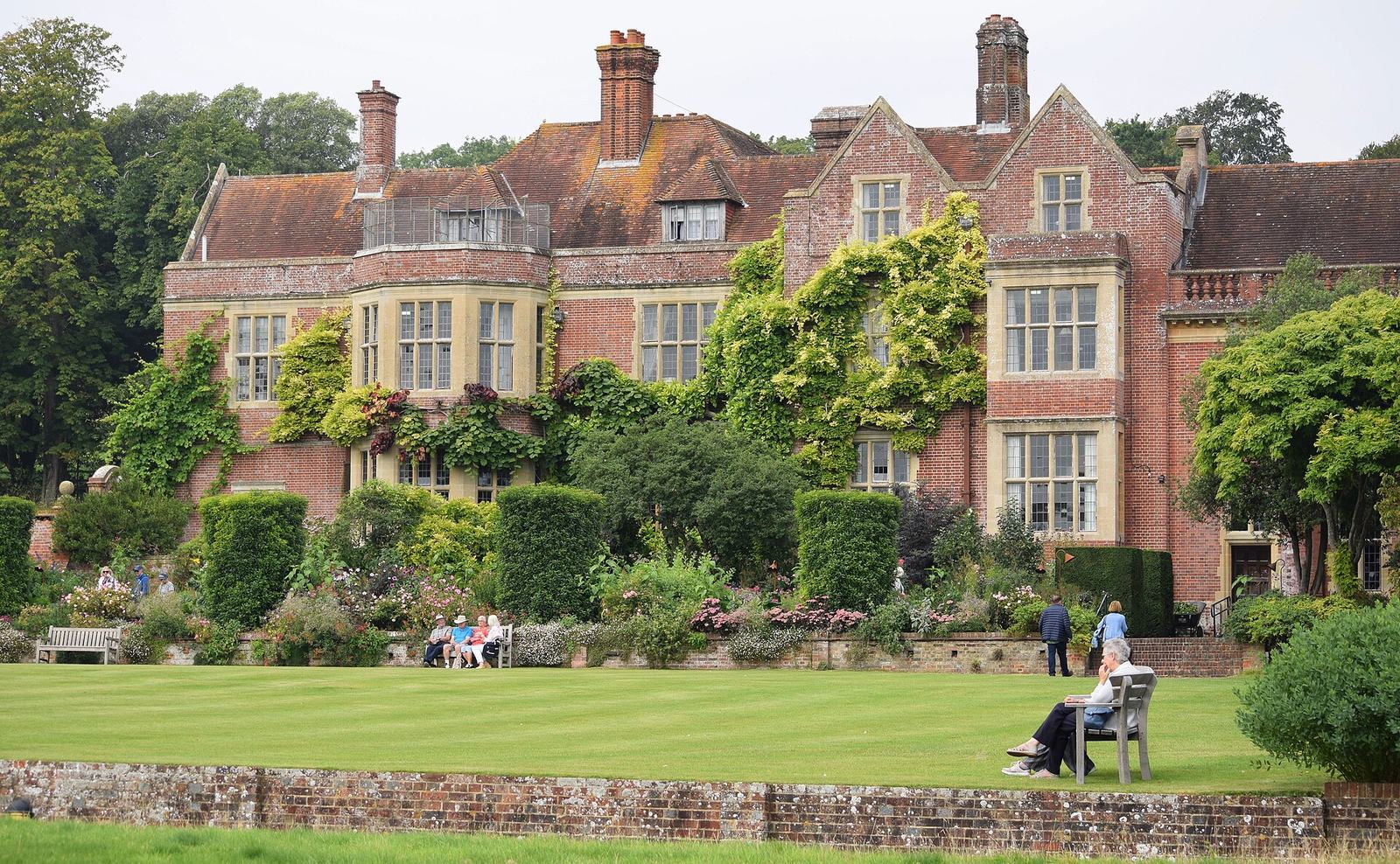
Timber framing and pre-Elizabethan panelling in the house point to a probable early-sixteenth-century date, though its exact age is unknown. William Langham Christie’s brick extension concealed a seventeenth-century façade and added ornate stonework and balustrading. Ewan Christian’s 1876 work introduced bay windows and decorative brickwork, giving the garden-facing exterior its Jacobethan appearance, a blend of features associated with Elizabethan and Jacobean architecture. Some exterior fabric from the older parts of the house can be seen from the driveway beside the theatre.
The organ room
John Christie added an organ room 80 feet (24 metres) long, almost doubling the length of the house’s south façade. It held a pipe organ built by Hill, Norman & Beard in 1924. Christie had bought the firm in 1923 and owned a substantial share in it. The organ began with four keyboards and 46 stops, controls that bring selected groups of pipes into use, and was later enlarged to 106 stops. Several sets of principal-toned pipes, which build a full organ sound, were unusual in an English-made instrument. After the Second World War, parts of the soundboards, pipes, and structure went to the rebuilt Guards Chapel at Wellington Barracks, destroyed during the Blitz, Germany’s sustained aerial bombing of Britain. Other pipes were given to churches for new organs. The organ at Glyndebourne is now a gutted shell, while its case and console remain.
The opera theatres
The original theatre
The first theatre was built as an annex to the organ room. Its auditorium seated 300, and its orchestra pit was large enough for a symphony orchestra. Later expansions increased its capacity to 433 in 1936, nearly 600 by 1952, and 850 by 1977. A rehearsal hall was also added.
The replacement theatre
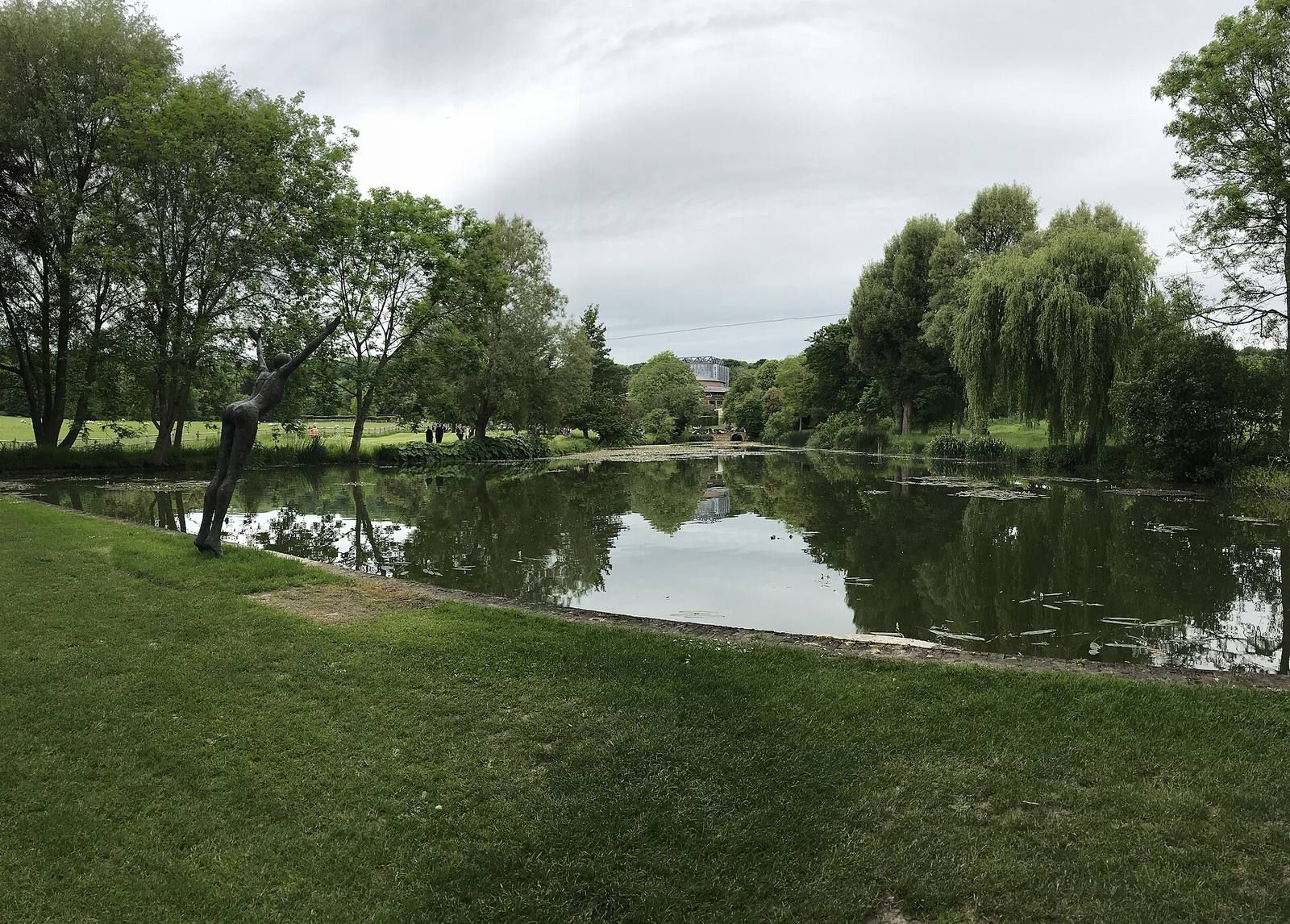
Completed in 1994, the replacement is a large oval brick building designed for about 1,200 people. Its four-level auditorium has a horseshoe layout, with main-floor seats, two balconies, and a gallery beneath a circular roof. The semicircular stage building rises more than 60 feet (18 metres), allowing scenery to be raised above the stage and stored. Its acoustic design has been praised.
Mill and energy installations
The post mill
A post mill, a windmill whose body turns around a central post, was erected at Glyndebourne in 1706 and used until 1921. It collapsed in 1925, and its trestle timbers were lost in 1964.
The wind turbine
Before the turbine was installed, a temporary 50-metre mast stood on Mill Plain during 2008–09 to measure wind conditions over a year. The readings were lower than predicted, possibly because winds were unusually weak during that period. The turbine now supplies electricity to Glyndebourne.