Hörder Burg: A Medieval Moated Castle in Dortmund
Site at a Glance
- Rating
- 4.3
- Popularity
- High
- Country
- Germany
- Primary era
- Medieval
- Eras represented
- Medieval, Modern
- Civilizations
- German, Holy Roman Empire
- Site type
- Military
- Remains
- Castle
On this page11 sections
History
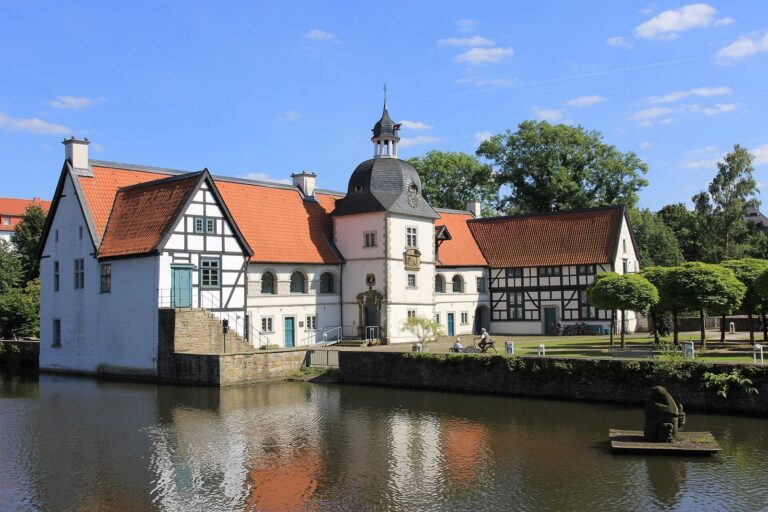
Hörder Burg is a medieval lowland moated castle in Hörde, now part of Dortmund, Germany. Built in the 12th century, it became the ancestral seat of the noble Hörde family. Its earliest recorded mention appears in a charter issued by Otto IV, a German king and Holy Roman Emperor, for Corvey Abbey, a Benedictine monastery in Westphalia. The charter also names Albert I von Hörde.
The Hörde family and the Counts of the Mark
The Counts of the Mark, regional medieval rulers, acquired the castle in the late 13th century and enlarged it. During the Great Dortmund Feud, an armed conflict involving Dortmund and regional powers, it served as their stronghold. In 1340, Konrad von der Mark granted Hörde town rights. The castle later became the seat of the Hörde administrative district, formed in the 15th century, and of the Eichlinghofen court.
Fire, succession, and war
A fire on the eve of All Saints’ Day in 1505 devastated the castle. The lord’s residence and one other building survived. In 1614, at the close of the Jülich-Cleves succession dispute, which concerned competing claims to Lower Rhine territories, the Treaty of Xanten transferred the castle to Brandenburg-Prussia.
During the Thirty Years’ War, a major European conflict from 1618 to 1648, Spanish forces, Brandenburg troops, and later troops of Wolfgang Wilhelm, Duke of Palatinate-Neuburg, occupied the castle in turn; each was driven out. French troops took it in 1673. A fire then partly destroyed the castle and its chapel, as well as 38 houses in Hörde. The castle was subsequently rebuilt on its old foundations.
Industrial transformation
In 1840, Iserlohn manufacturer Hermann Diedrich Piepenstock acquired the castle and established an ironworks on its grounds. Called Hermannshütte after its founder, the works became the Hörde Mining and Ironworks Association in 1852, the Ruhr region’s first joint-stock company in the iron and steel industry. The association later merged with Hoesch AG, a major German steel company.
Restoration and present use
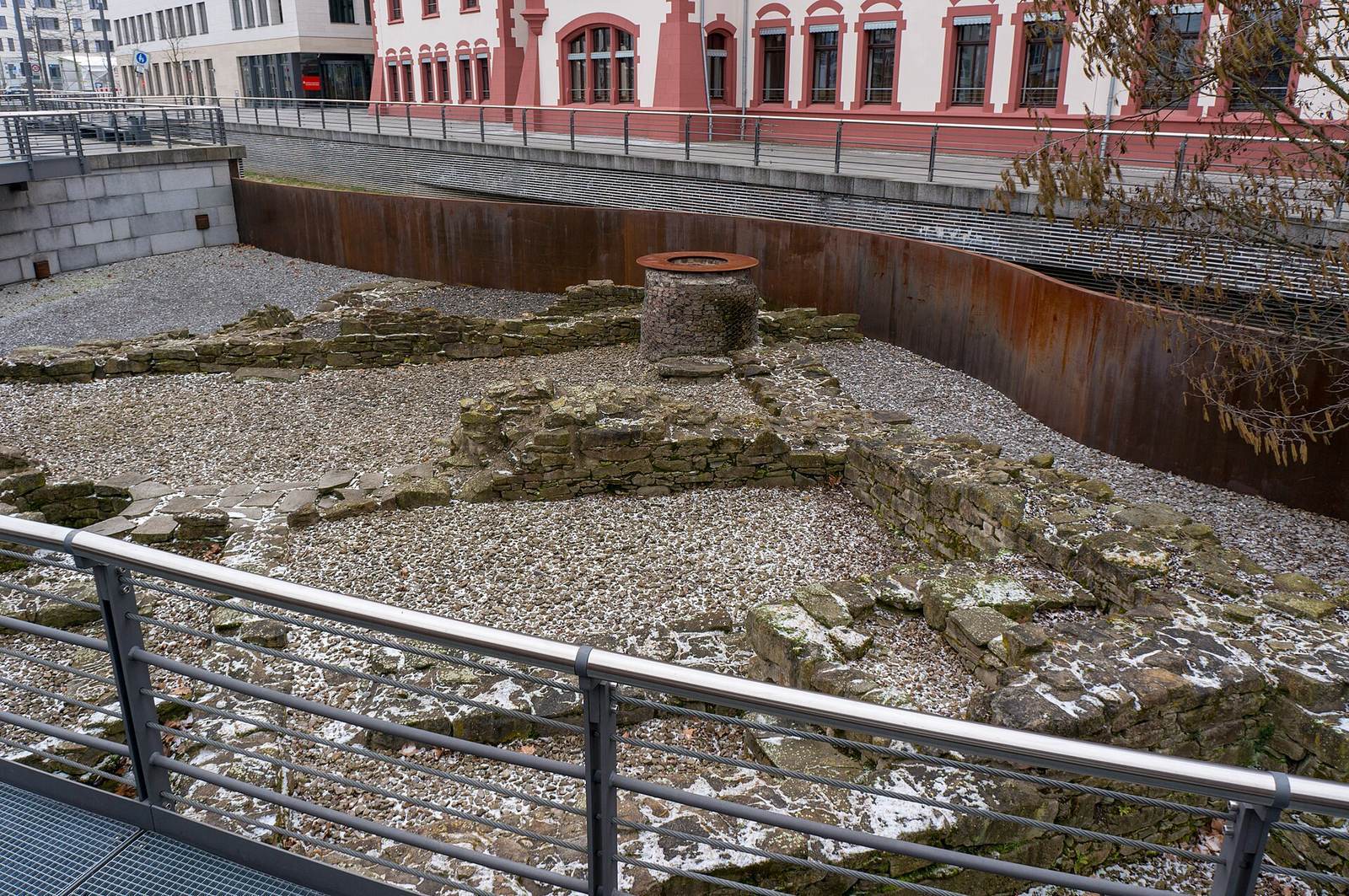
After steelmaking at Phoenix-Ost declined and the steelworks were dismantled, extensive restoration of the castle began in June 2008 and was complete by 2019. Excavations took place in front of the building, and a local heritage association temporarily housed a museum there after the fieldwork ended in 2009. Phoenix Lake was created beside the castle and filled on 1 October 2010. Since January 2017, the restored building has served as a seminar centre and the seat of the NRW Savings Banks Academy. The former Hoesch administration building and its extensions are listed as architectural monuments in Dortmund; the medieval castle remains have archaeological monument status.
Remains
The site occupies relatively level ground near the Emscher. Its original form was that of a moated castle, a fortified residence protected by water-filled defenses. The surviving fabric brings together medieval castle features and buildings associated with the later steelworks.
Medieval features
Castle tower
The surviving tower belongs to the castle’s earliest recorded period. Work in 2000 uncovered its older masonry, and restoration added a new wooden spire. Medieval castle remains also survive as archaeological features of the site.
Grain mill
An economically important grain mill stood close to the castle, near the meeting of the Emscher and the Hörder Bach.
Steelworks administration building
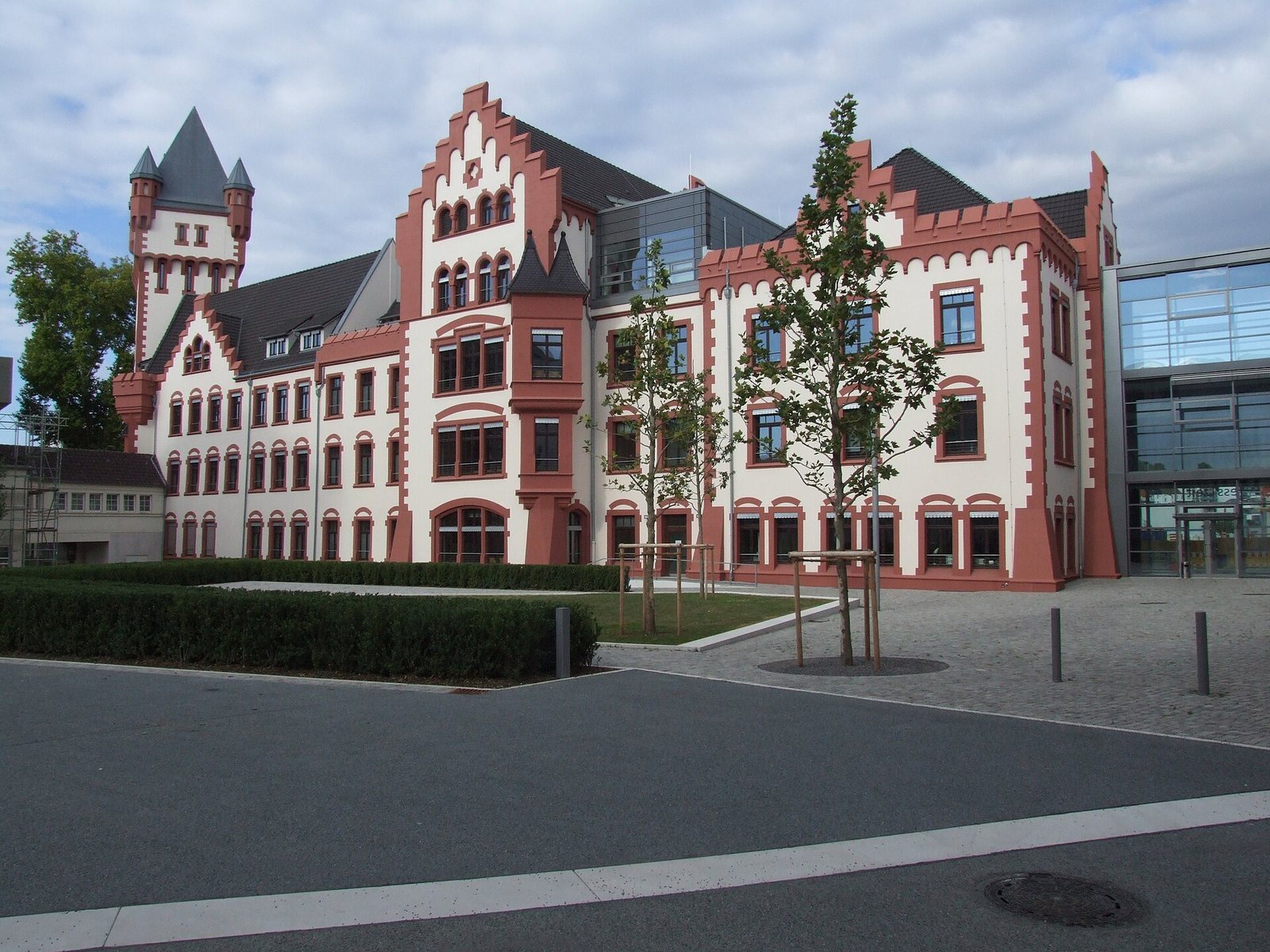
Built in 1920–22, the outer bailey, a secondary enclosed area beside the castle, served as an administrative building for the steelworks. Its Historicist design drew on architectural styles from earlier periods. The former Hoesch administration building and its extensions remain part of the site’s built fabric.
Excavated finds
Excavations in front of the castle produced numerous finds. After the work concluded in 2009, finds from the excavations and some objects from the Hoesch era were displayed on the ground floor.