Shirakumo Shrine: A Kyoto Shinto Shrine with Saionji Family Origins


Site at a Glance
- Rating
- 4.2
- Popularity
- Low
- Country
- Japan
- Primary era
- Early Modern
- External website
- Open
- Eras represented
- Early Modern
- Civilizations
- Tokugawa
- Site type
- Religious
- Remains
- Sanctuary
On this page10 sections
History
Shirakumo Shrine is a Shinto shrine in Kyoto, Japan, whose history traces to a 1224 Myoondō, a hall dedicated to Myōon Benzaiten, at the Saionji family’s Kitayama-dai villa. The original site is now occupied by Kinkaku-ji. The shrine stands in Kyoto Gyoen National Garden and is also known as “the Benzaiten of the Imperial Palace.”
The Saionji Myoondō
Saionji Kintsune established the hall beside the villa’s pond in 1224. It housed a seated image of Benzaiten, a Buddhist goddess associated with music, eloquence, learning, and wealth, together with an image of Seiryū Myōon Benzaiten. The latter was traditionally attributed to Kūkai, the ninth-century Buddhist monk who established the Shingon school of Japanese Buddhism, and was regarded as a Saionji family heirloom. The family’s hereditary association with the biwa, a Japanese lute, reinforced its devotional connection with Benzaiten.
The refined setting of the hall beside the Kitayama-dai pond became known through medieval literary and diary works, including Masukagami, the Diary of Nakatsukasa no Naishi, and Taiheiki. In 1306, Saionji Yasuko, later known as Kōgi-mon’in, carried the Seiryū Myōon Benzaiten image to the imperial court as her personal devotional image when she entered the household of Retired Emperor Go-Fushimi. The image is now the principal image of Myoondō in Kamigyo Ward.
Kitayama-dono and the shrine’s revival
Ashikaga Yoshimitsu, the Muromachi-period shogun, acquired Kitayama-dai from Saionji Sanenaga and constructed his residence, Kitayama-dono, there. The original Myoondō was demolished during this transformation. The Benzaiten statue was later moved for a period to Aka-Hachiman Kyōgoku-ji.
In 1769, Former Minister of the Center Saionji Kimiaki and Former Minister of the Right Saionji Atsusue received imperial permission to revive the Myoondō at its present location, alongside the relocation of the Saionji residence. The shrine buildings were repaired in 1840 and again in 1857. Donations from imperial residences led to the site being designated for prayers on behalf of the imperial court.
From Buddhist hall to Shinto shrine
During the Meiji period, the Saionji family moved to Tokyo. The remaining Myoondō faced possible closure or destruction during the anti-Buddhist movement, which sought to separate Buddhist institutions and images from Shinto worship and caused many Buddhist establishments to close, convert, or be destroyed. Local supporters preserved the institution as a shrine.
In 1878, Benzaiten was replaced as the enshrined deity by Ichikishimahime, one of the three Munakata deities. These Shinto deities were traditionally associated with navigation, maritime travel, and the sea. The institution was renamed Shirakumo Shrine after Shirakumo, the former name of its original village location.
Later associations
A private school named Ritsumeikan opened within the shrine grounds in 1869, and its name was later inherited by Ritsumeikan University. In 1939, Usui Mantaro purchased Saionji Kinmochi’s former detached residence, Mankatei, near the present-day Kinugasa Campus of Ritsumeikan University. He enshrined a divided spirit of Shirakumo Shrine in part of the property and named the new residence Shigure-an.
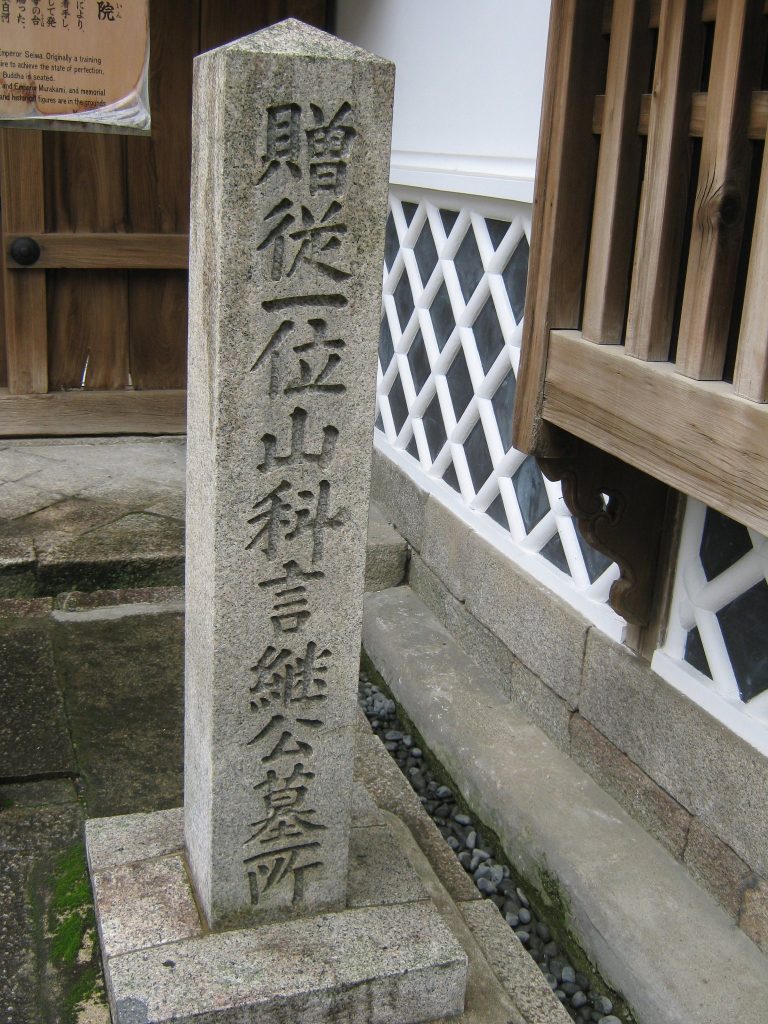
Mankatei was later demolished. A stone marker identifying the location as the former Saionji residence was removed around 2002 and is now held by the Ritsumeikan Educational Corporation. The shrine’s former principal image, a wooden seated statue of Benzaiten, was designated an Important Cultural Property on June 26, 2002.
Remains
Present shrine precinct
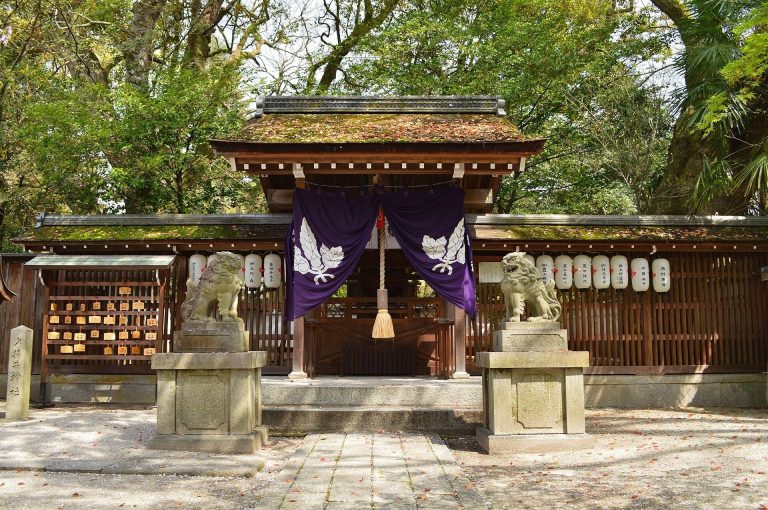
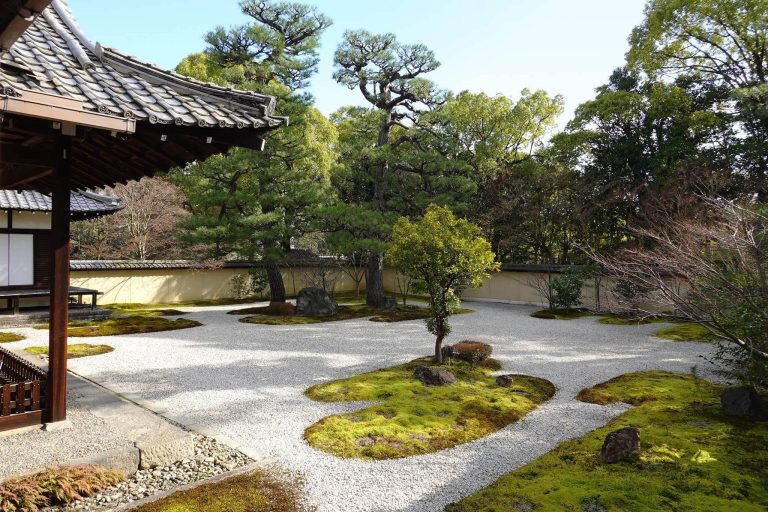
Shirakumo Shrine occupies a site within Kyoto Gyoen National Garden in Kamigyo Ward, Kyoto. Its principal sanctuary is the shrine building associated with the present institution. The current shrine reflects the later Shinto identity adopted in the Meiji period, while its historical associations reach back to the Saionji family’s earlier Buddhist hall and devotional traditions.
Kitayama-dai and the original hall
The first Myoondō stood beside the pond of the Saionji family’s Kitayama-dai villa, at the location now occupied by Kinkaku-ji. The hall was demolished when Ashikaga Yoshimitsu built Kitayama-dono on the former villa grounds. Its physical setting is therefore known through the historical location of the villa and the literary descriptions of the hall’s elegant surroundings, while the surviving Benzaiten image preserves a material link with this earlier phase.
Sacred images
The wooden seated Benzaiten statue that served as the former principal image of the Saionji Myoondō is a sculptural work associated with the shrine’s earlier Buddhist phase. It is now recognized as an Important Cultural Property. The Seiryū Myōon Benzaiten image, transferred to the imperial court in 1306, is kept as the principal image of Myoondō in Kamigyo Ward rather than at Shirakumo Shrine.
Former Mankatei site
The former Mankatei property included a branch shrine connected with Shirakumo Shrine. After the villa was demolished, the stone marker identifying the former Saionji residence was removed around 2002. The marker remains in the custody of the Ritsumeikan Educational Corporation, preserving a physical reference to the site’s later Saionji association.