Holy Trinity Church, Blythburgh: A Historic Parish Church in Suffolk


Site at a Glance
- Rating
- 4.7
- Popularity
- Low
- Country
- United Kingdom
- Primary era
- Medieval
- External website
- Open
- Eras represented
- Medieval
- Civilizations
- English
- Site type
- Religious
- Remains
- Church
On this page8 sections
History
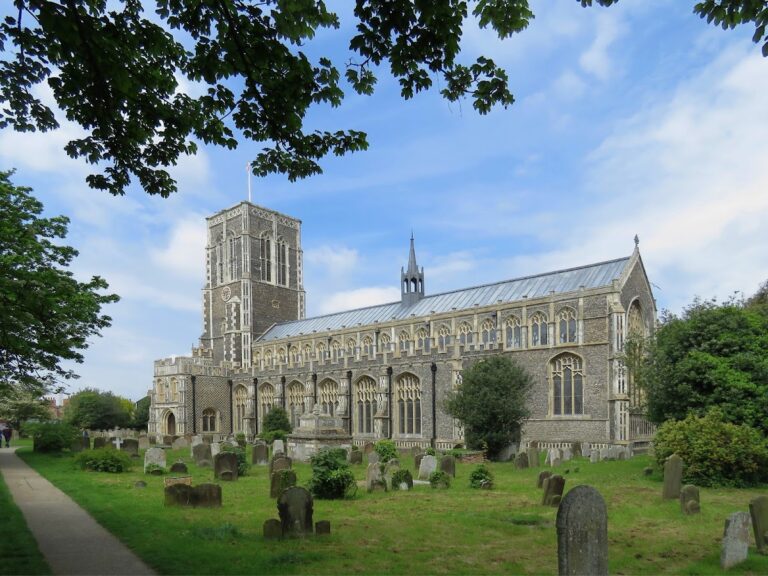
Holy Trinity Church, Blythburgh is the parish church of Blythburgh in the United Kingdom, serving a place that was among the earliest Christian sites in East Anglia. A church existed here by 654, when the bodies of Anna, the seventh-century king of East Anglia, and his son Jurmin were brought to Blythburgh after they died in battle at Bulcamp against Penda, the powerful seventh-century king of Mercia. Anna and Jurmin were descendants of Wehha, an early king of East Anglia in historical tradition.
Early Christian and Norman-period Blythburgh
At the Norman Conquest in 1066, Blythburgh formed part of the royal estate and possessed one of Suffolk’s richest churches. It was probably a Saxon minster, an early English church serving a wider community or territory, with two dependent daughter churches. The wealthy parent church was probably granted by Henry I, the Norman king who ruled England from 1100 to 1135, to Augustinian canons between 1116 and 1147. These religious communities followed the Rule of St Augustine, and their house became the Priory of the Blessed Virgin Mary.
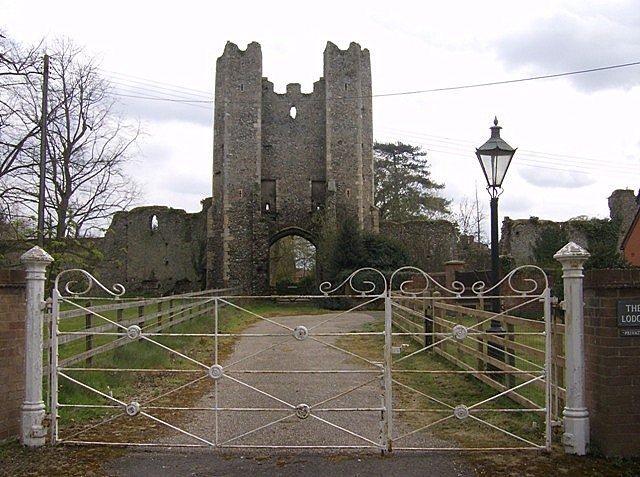
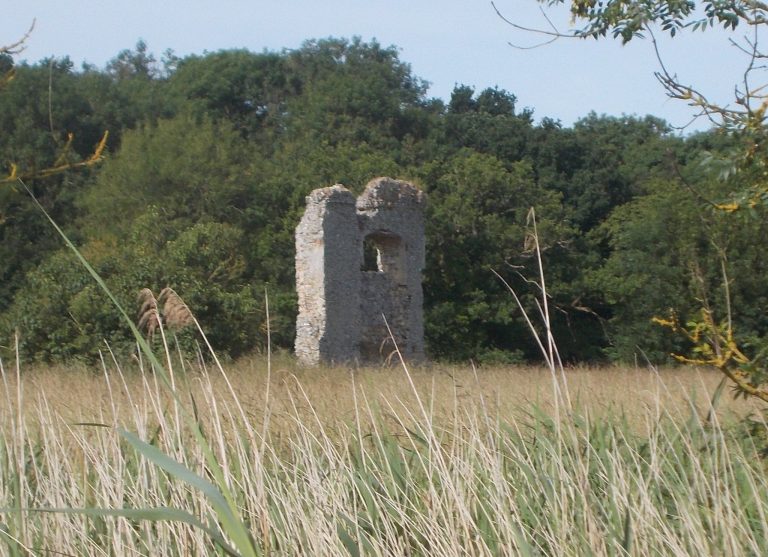
Holy Trinity was probably preceded by one of the two daughter churches and was rebuilt in the fifteenth century. It should be distinguished from the nearby ruins of Blythburgh Priory, whose conventual church served the monastic community. The priory was authorised for suppression in 1528 during the dissolution of the monasteries and was dissolved in 1537. Its property was granted in reversion to the local gentleman Sir Arthur Hopton in 1548.
Damage, religious change, and decline
On 4 August 1577, lightning struck Holy Trinity during morning service in a storm. The strike split the door, damaged the timber of the steeple and its chimes, and caused the spire to fall. The falling masonry damaged the font, the baptismal basin, and the roof. The roof was not repaired until 1782, while the spire’s fall also destroyed the angels in the western roof bays.
Further damage came during the seventeenth-century Puritan campaign against church fittings regarded as remnants of Catholic worship. On 8 April 1644, the local Puritan commissioner William Dowsing ordered extensive removal of fittings, including twenty pictures, two crosses, twenty cherubim, and more than 200 additional items within eight days.
General neglect, associated partly with rural poverty and partly with the rise of Methodism, contributed to the church’s deterioration. A Primitive Methodist chapel was founded in Blythburgh in the 1830s. By the late nineteenth century Holy Trinity was in very poor repair, prompting the establishment of a restoration fund in 1881. Repairs and later maintenance followed, and the church reopened in 1884. The proposed work was controversial: William Morris and the Society for the Protection of Ancient Buildings opposed the local building committee’s radical plans, while limited funds restricted the restoration. The church was listed at Grade I in December 1966, the highest category of statutory protection for buildings of exceptional architectural or historic interest in England.
Modern musical and parish life
In 1962, the composer Benjamin Britten identified the building’s acoustic value, and some concerts of the Aldeburgh Festival have since been held there. The parish is now part of the Sole Bay Team Ministry, a collaborative arrangement serving Blythburgh together with Reydon, Sotherton, South Cove, Southwold, Uggeshall, Walberswick, and Wangford.
Remains
Holy Trinity is 128 feet (39 metres) long and 83 feet (25 metres) high. Its surviving fabric includes a large roof structure, historic traces of the 1577 lightning strike, a seventeenth-century clock figure, a twentieth-century pipe organ, and a Commonwealth war grave in the churchyard.
Roof and storm-damaged fabric
The arch-braced, firred, tie-beam roof is formed with curved braces, raised members that shape the roof surface, and horizontal beams linking the sides to restrain them. Thirty-six angels are arranged back-to-back in pairs across the roof. They were originally painted bright red and green, with extensive tin foil and gold leaf. A modern reproduction is mounted above the south door, while the historic colour scheme was not restored during the nineteenth-century work.
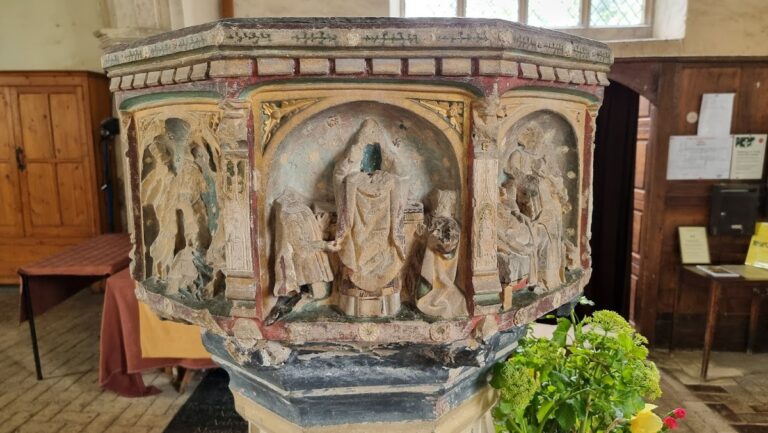
The church door retains marks resembling burns caused by candle flames. These marks have been associated with the Black Shuck legend, an East Anglian tradition concerning a spectral black dog. The font was damaged when the spire fell after the lightning strike, linking this surviving feature to the church’s most destructive recorded storm event.
Clock and organ
A jack o’ the clock dated 1682 survives inside the church. This mechanical figure was associated with the clock and its striking mechanism. In 1840 it stood on a ladder in the tower arch and chimed the hours; it now stands on a shelf near the organ and is rung to signal the start of services. Its inscription reads, “As the hours pass away, So doth the life of man decay.”
The church’s two-manual pipe organ was made by Bishop and Son in 1951. It has two keyboards for the organist and was almost completely rebuilt by Rodney Briscoe in 2003.
Churchyard memorial
The churchyard contains a Commonwealth War Graves Commission grave for Leading Cook Reginald George Arthur Remblance, a British sailor of the Royal Naval Patrol Service. He served aboard HMS Ben Roy and died in October 1944, aged 31.