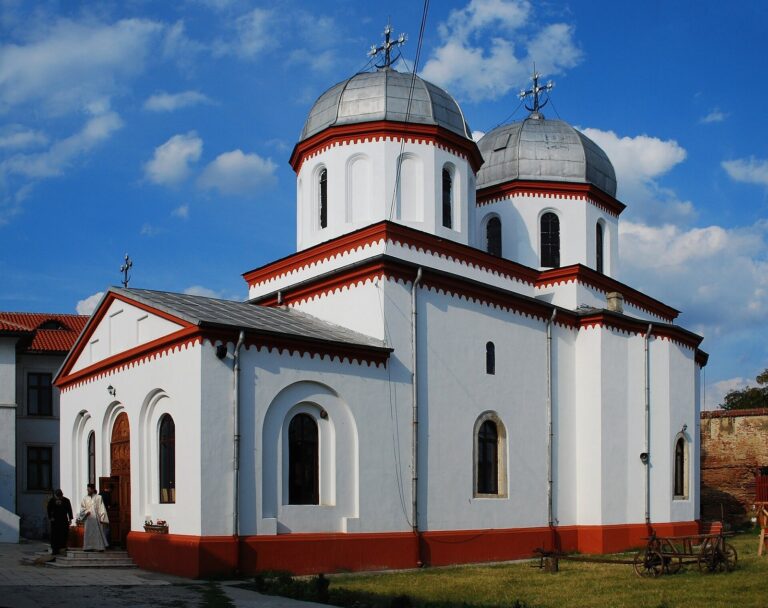
Holy Trinity Cathedral, Ruse: A Bulgarian Orthodox Cathedral
Site at a Glance
- Rating
- 4.8
- Popularity
- High
- Country
- Bulgaria
- Primary era
- Early Modern
- Eras represented
- Early Modern, Modern
- Civilizations
- Bulgarian, Ottoman
- Site type
- Religious
- Remains
- Cathedral
On this page16 sections
History
Holy Trinity Cathedral in Ruse, Bulgaria, was built in 1632 in the Bulgarian Revival style, a period of cultural and national renewal among Bulgarians under Ottoman rule. It is regarded as the city’s oldest Orthodox church and serves as the cathedral of the Diocese of Ruse, the church territory led by a bishop. It remains an active place of worship.
Construction under Ottoman rule
When the church was built, Ruse was governed by the Ottoman Empire, whose restrictions limited the height of Christian churches. Reusing an older Christian site could make approval for a new church easier, and Ruse’s Christians probably built on an earlier underground burial space, or on the remains of a church. In 1930, teacher and newspaper publisher Todor Hadjistanchev credited the construction to his father, a local master builder.
Liberation and cathedral life
A church choir was established in 1870 at the initiative of Hadjistanchev. In 1878, as Ruse passed from Ottoman rule, Russian troops under General Eduard Totleben were ceremonially welcomed in the square before the cathedral. After Bulgaria’s liberation, a friend of Metropolitan Gregory, a senior bishop, funded two chapels. From 1900 onward, the cathedral’s choir was the only church choir in Bulgaria to receive an annual state subsidy.
Heritage and religious role
The cathedral was designated a cultural monument of national importance in 1983. It has a pilgrimage association, and its liturgical feast is Holy Trinity Sunday, observed on Pentecost Sunday.
Remains
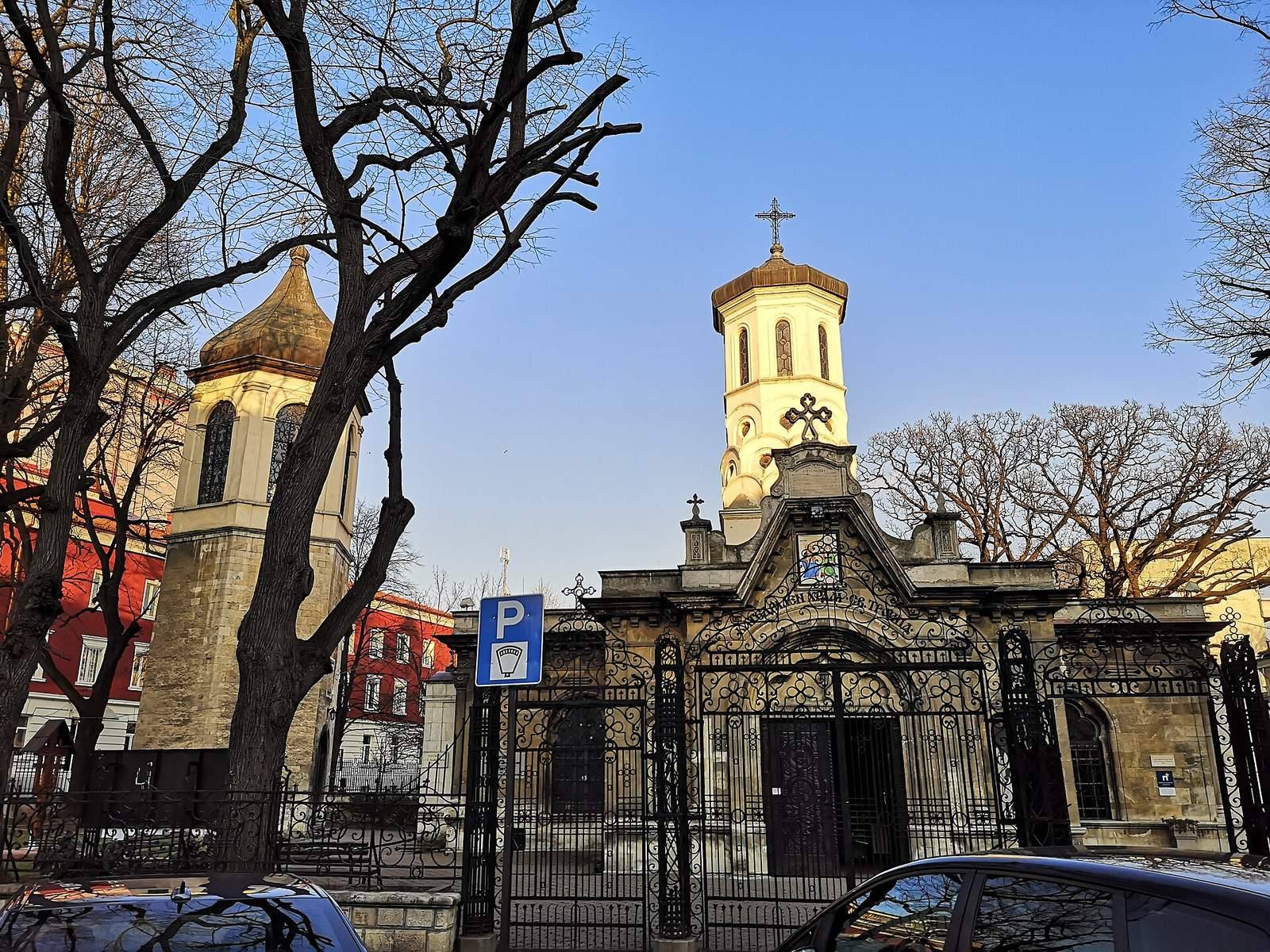
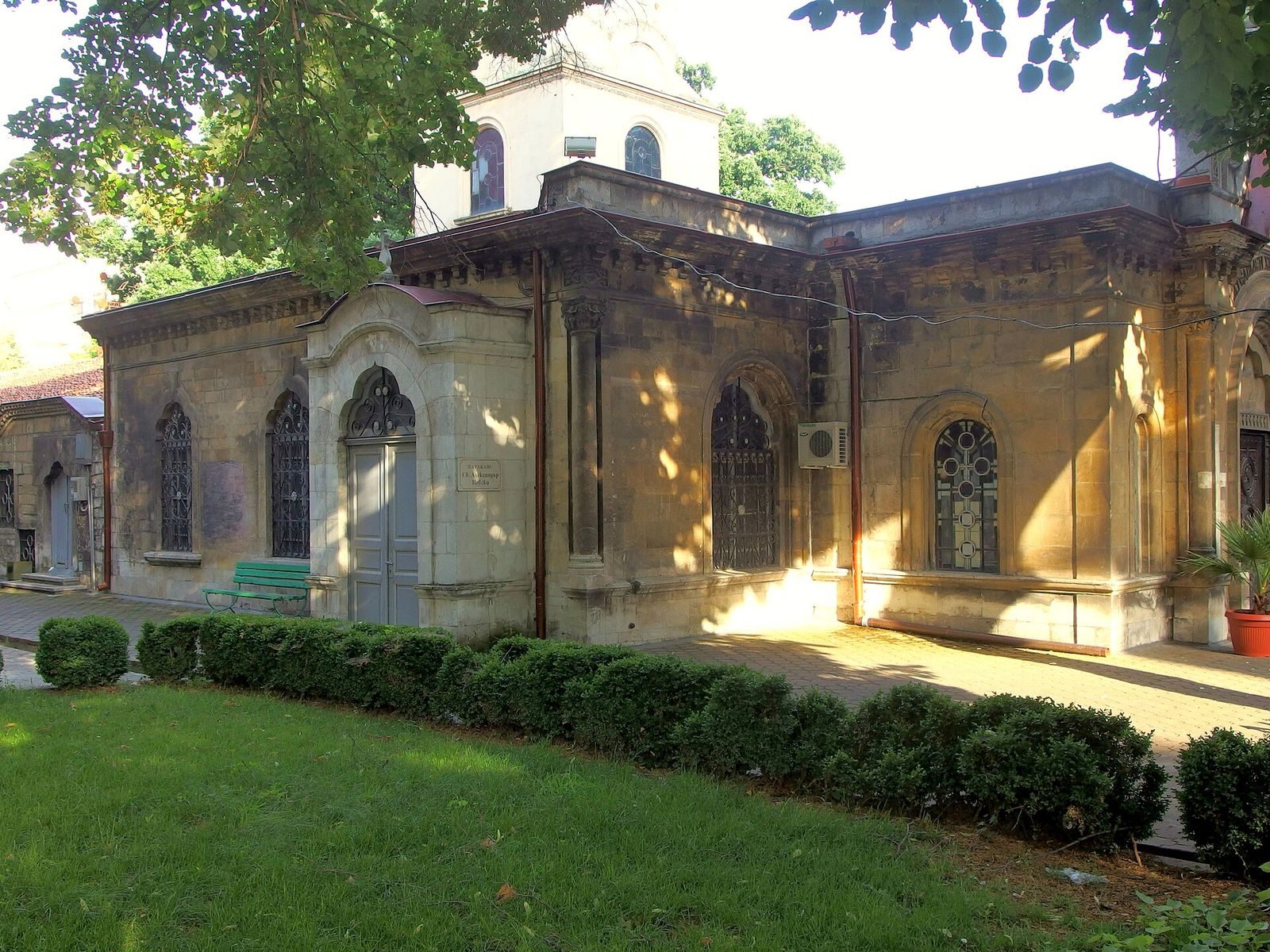
The stone cathedral stands beside Ruse’s modern opera house. Its three-nave basilica plan, a long church organized around a central nave and side aisles, measures 31.2 by 15.6 metres. The central nave rises above the side naves, while the main worship space lies 4.5 metres below courtyard level.
Church plan and earlier remains
Basilica
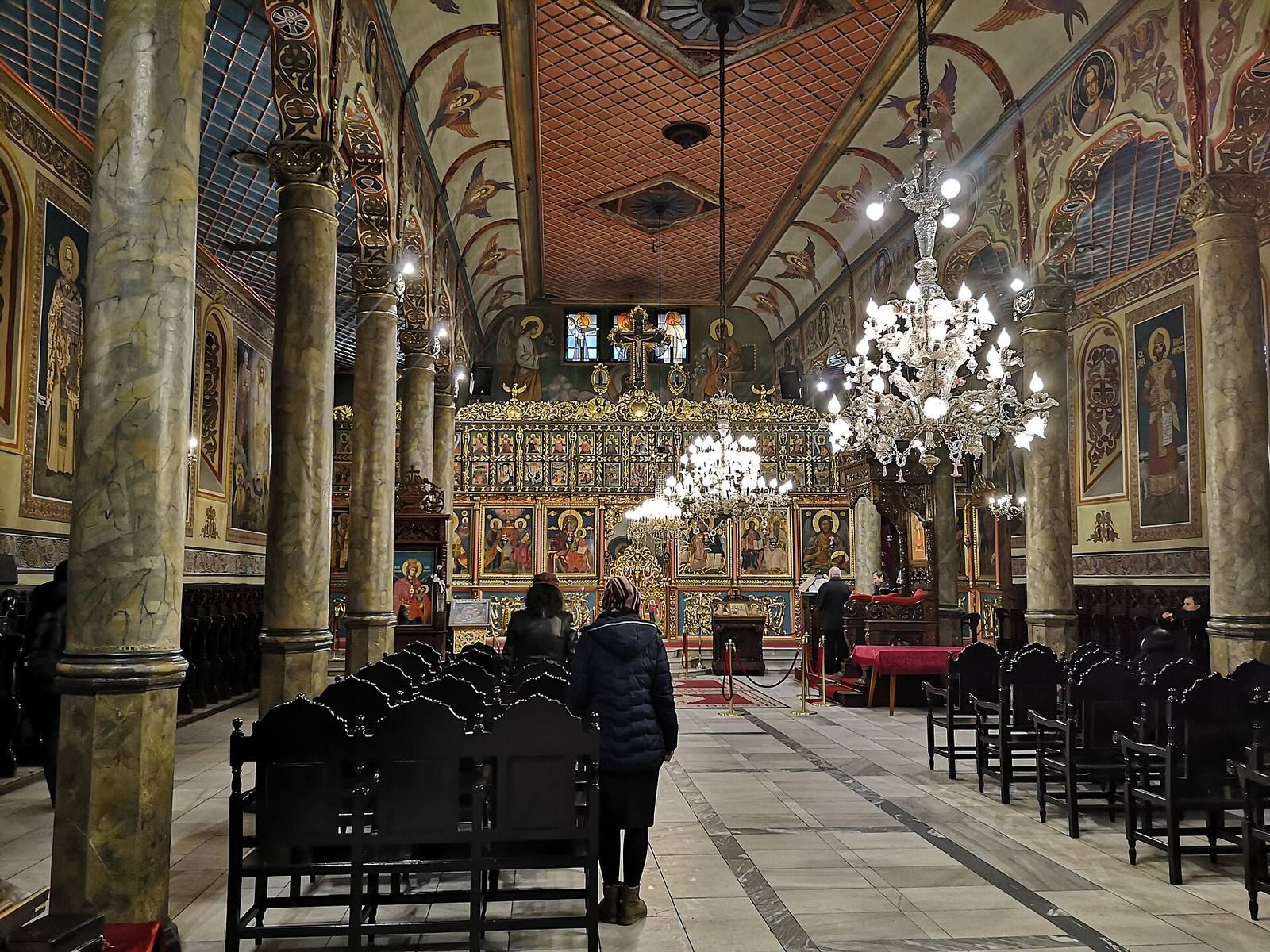
Two rows of seven columns divide the three naves. The church has one altar and an iconostasis, a screen bearing icons that separates the sanctuary from the main worship area. Its exterior is plain.
Southwest underground remains
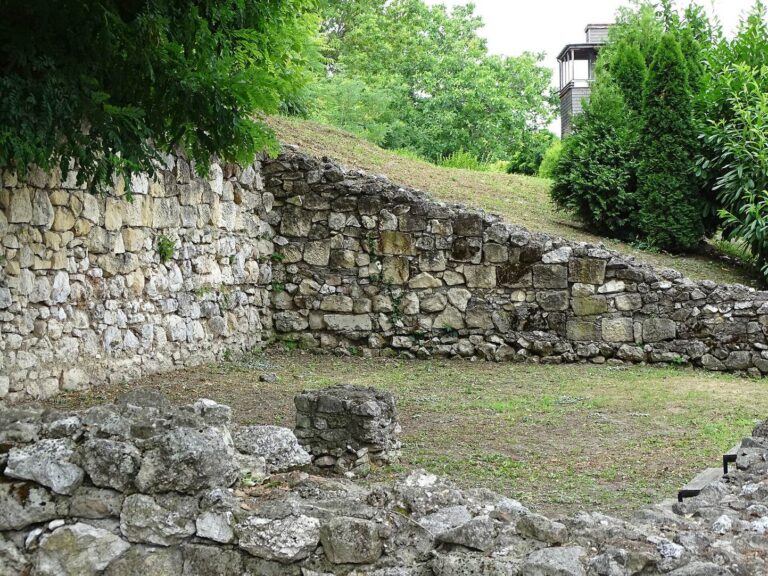
A room or surviving structure in the church’s southwest corner is identified as a catacomb, an underground burial space. It may be a fifth-century catacomb or a medieval church later incorporated into the cathedral; its date and original form are uncertain.
Entrance and bell tower
Entrance stairs and cupola
The entrance stairs are stone, replacing wooden steps after Bulgaria’s liberation. A cupola in Russian style rises above them.
Bell tower
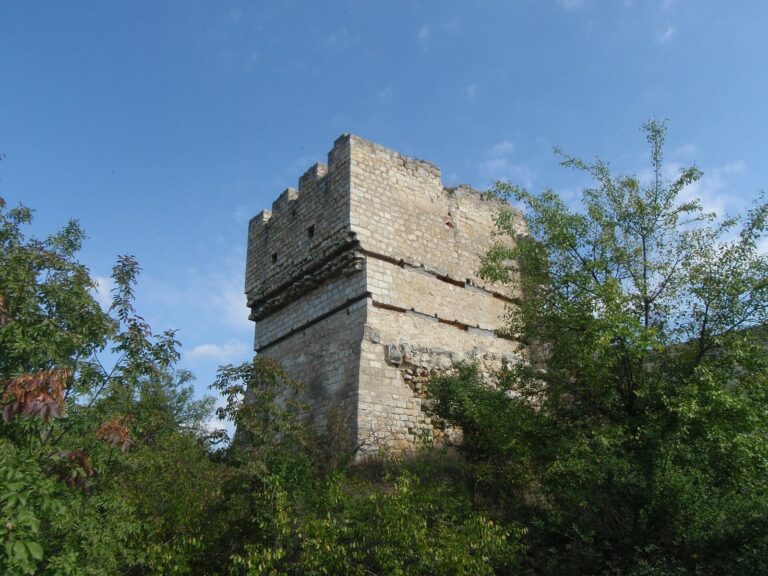
The hexagonal bell tower stands 19 metres high and holds five bells. Probably built around the time of the post-liberation changes, it incorporates stones from fortifications around the Ruschuk fortress, using the historical name for Ruse. Those fortifications were dismantled following a decision by the Congress of Berlin in July 1878, an international meeting that settled political arrangements after the Russo-Turkish War. The tower is capped by a helmet-like roof in Russian style.
Interior and memorial features
Iconostasis and decoration
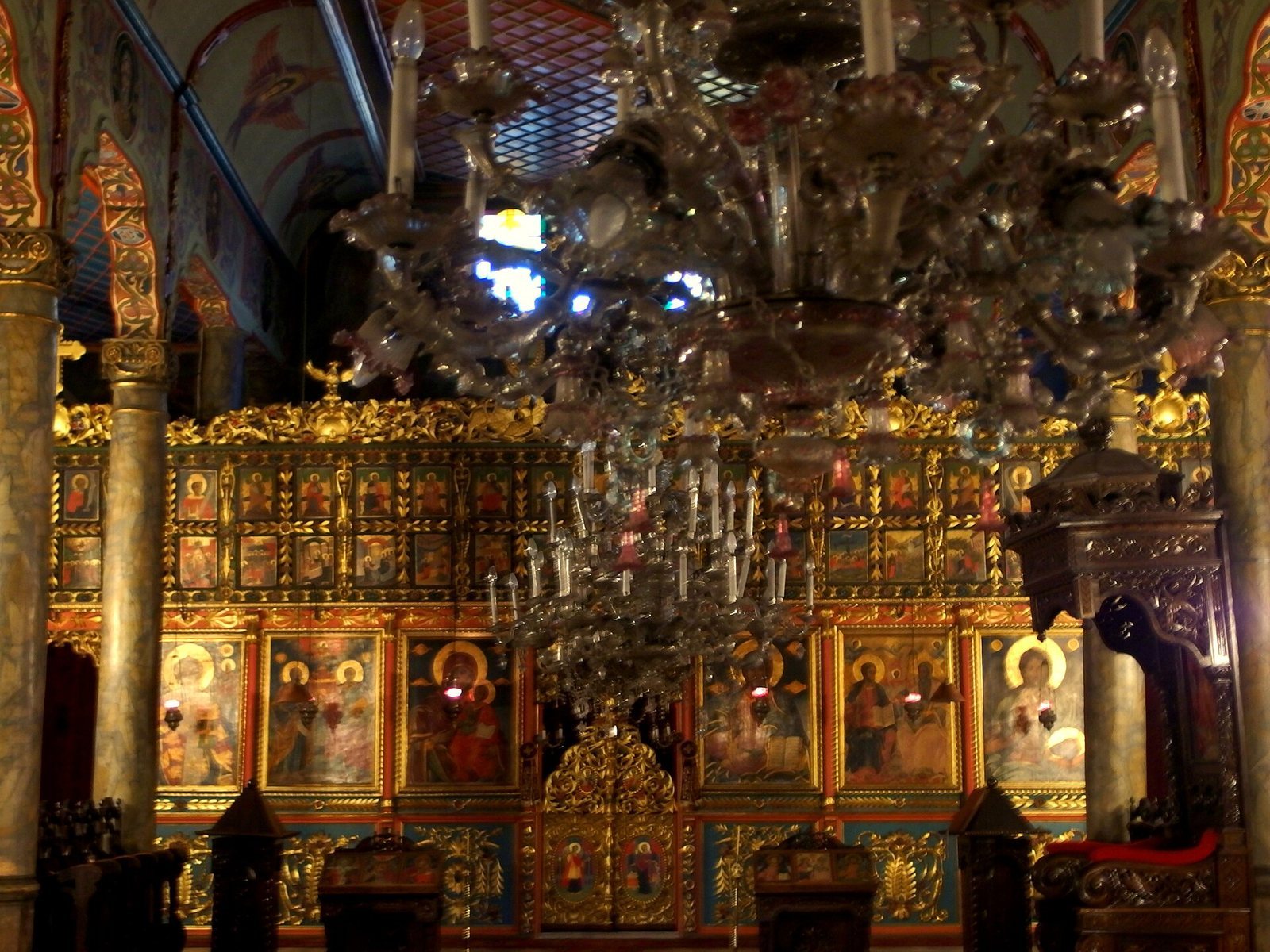
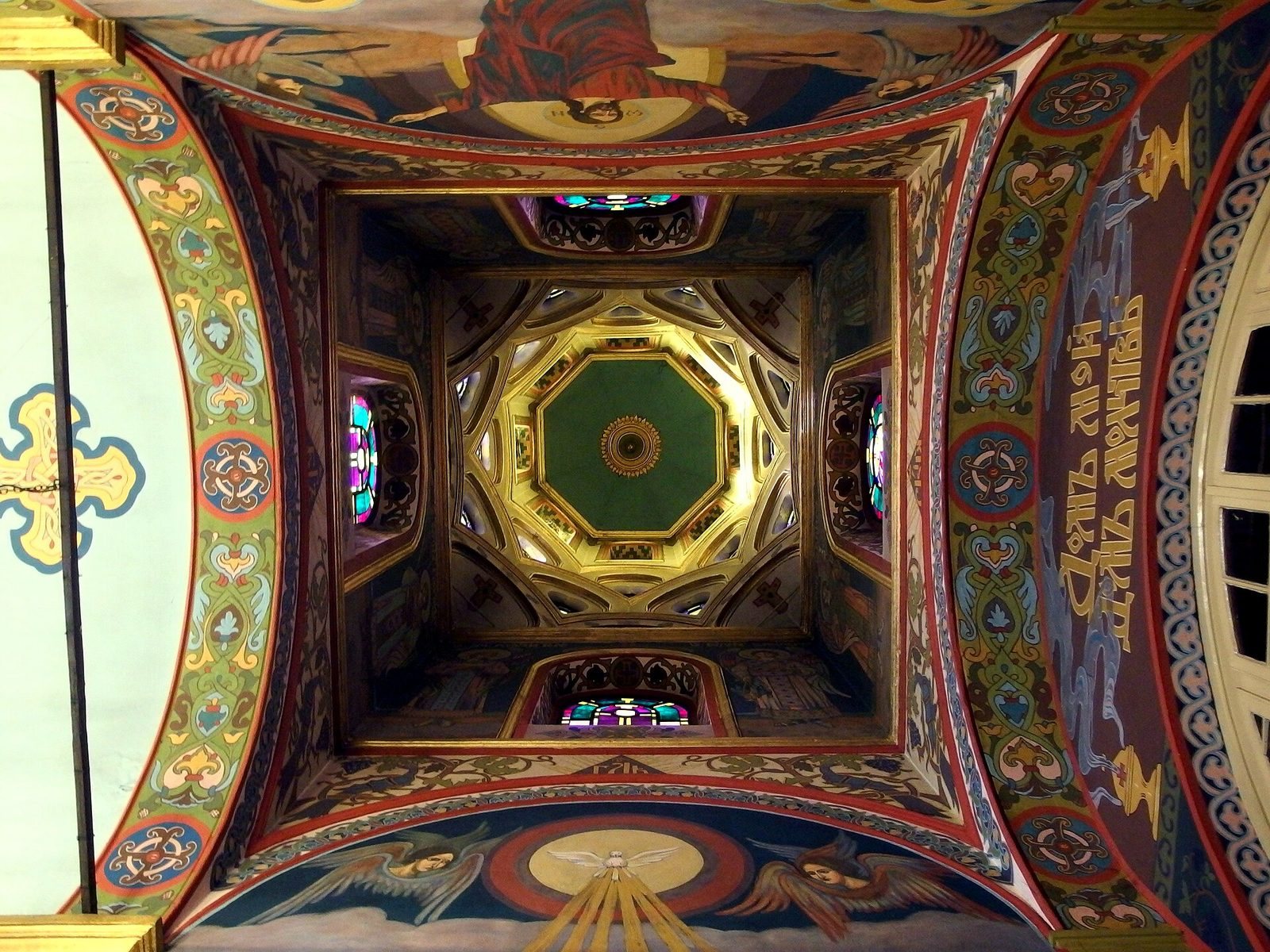
The three-tiered iconostasis contains 32 icons, made and painted in 1805–1807. Its artistic origin is uncertain: it has been associated with the Samokov and Tryavna schools, Bulgarian traditions of church painting and icon-making, or with local artists. Irina and Vaclav Yosif Kopetski of Sofia restored it between 1989 and 2000. Stefan Ivanov and Gospodin Zhelyazkov painted frescoes on the church walls in 1934, and stained-glass windows were installed in 2000.
Chapels
The cathedral has two chapels. One is dedicated to Alexander Nevsky, a medieval Russian prince and saint, and was consecrated on 5 August 1884. The other honours Saints Cyril and Methodius, ninth-century Christian missionaries associated with the spread of literacy among Slavic peoples; Gregory, Metropolitan of Dorostol and Cherven, consecrated it on 16 March 1886. The Alexander Nevsky chapel ceased liturgical use in 1979 and was converted in 1983 into an exhibition space for sacred art, church furnishings, icons and old printed books.
Icons and relics
The cathedral holds relics of several saints and a seventeenth-century icon of the Virgin Mary and Christ Child in the Eleusa style, which depicts them in tender contact. The icon is regarded as miraculous.
Vestibule graves
The entrance vestibule contains the graves of four metropolitans, senior bishops of the Dorostol and Cherven church jurisdiction who were based in Ruse: Gregory, Michael, Sophronius and Basil.