Holy Spirit Church in Rawa Mazowiecka: A Former Hospital Chapel and Evangelical Parish Church
Site at a Glance
- Popularity
- Very Low
- Country
- Poland
- Primary era
- Early Modern
- Eras represented
- Medieval, Early Modern, Modern
- Civilizations
- Kingdom of Poland, Polish–Lithuanian Commonwealth
- Site type
- Religious
- Remains
- Church
On this page9 sections
History
Hospital chapel and Benedictine church
Holy Spirit Church in Rawa Mazowiecka, Poland, began in 1374 as a small hospital chapel founded by the townsman Mikołaj Paczotka. The Benedictines of Płock, members of a Western Christian monastic order, held the church from 1378 to 1823. As the town’s population grew, the chapel was enlarged. The work culminated in its consecration in 1669 by Tomasz Ujejski, bishop of Kuyavia, a historical region in north-central Poland.
Transfer to the Evangelical community
In the early nineteenth century, Lutheran families moved to Rawa Mazowiecka. By 1821, about 314 Evangelical families lived in the town. After forming an informal parish council, the community sought to acquire the church, which had fallen into ruin. Following several years of effort, the church passed into Evangelical ownership.
A thorough renovation took place in 1828, when the adjacent hospital, which also served as an almshouse, was demolished. A parsonage was added soon afterward. The church became the main seat of the local Evangelical-Augsburg parish, part of Poland’s Lutheran church.
War damage and rebuilding
The First World War damaged both the church and parsonage. A pastor who arrived in 1929 helped renew parish life, and the church buildings were rebuilt. On 31 May 1931, marking the parish’s centenary, the church was repaired, its furnishings restored, and two bells purchased.
The Second World War interrupted parish life, and bombing damaged the church. With no pastor and disputes over ownership of parish property, local Evangelicals spent seven years seeking to recover it. The first service in the rebuilt church took place on 12 June 1952.
Remains
Church and surrounding grounds
Church
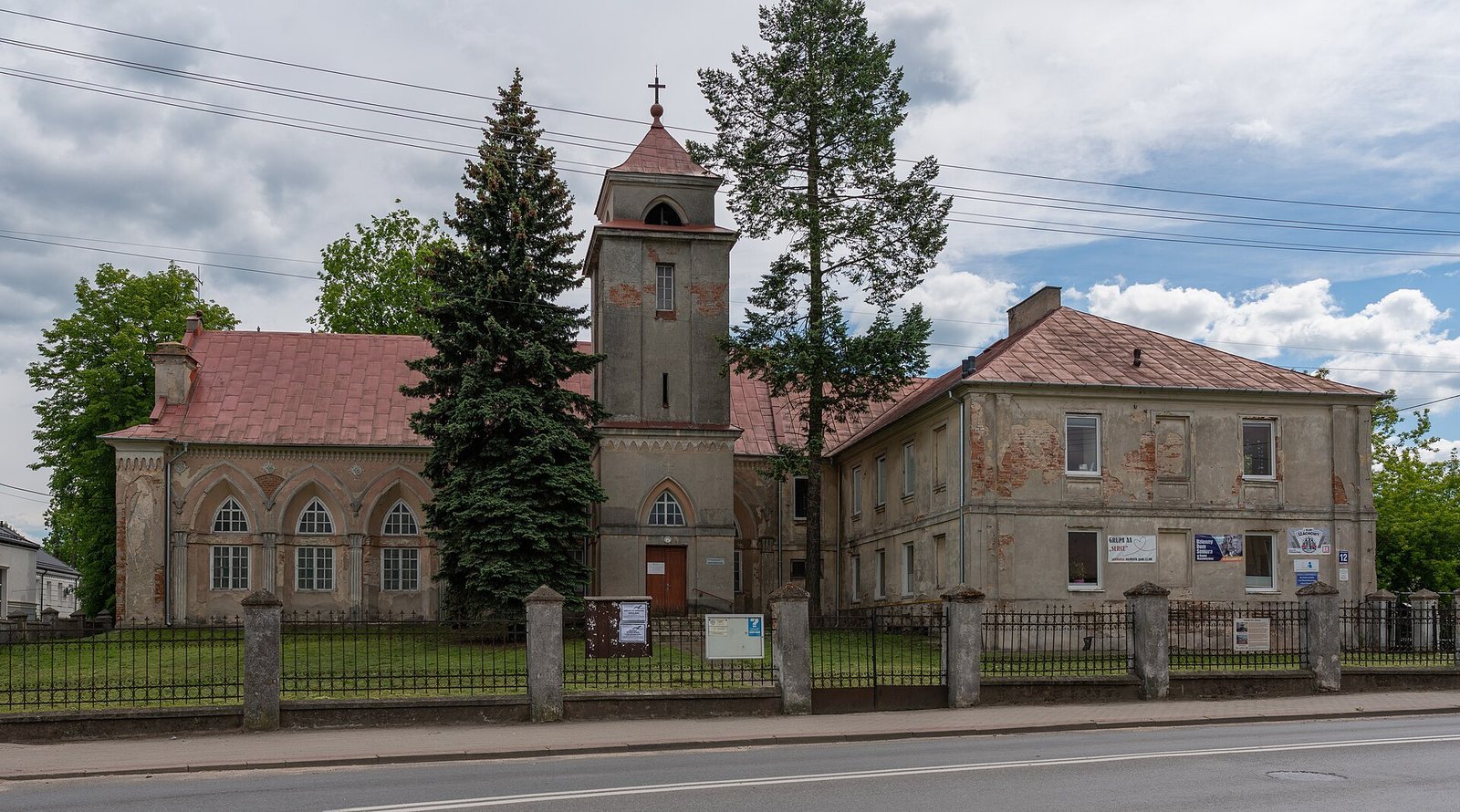
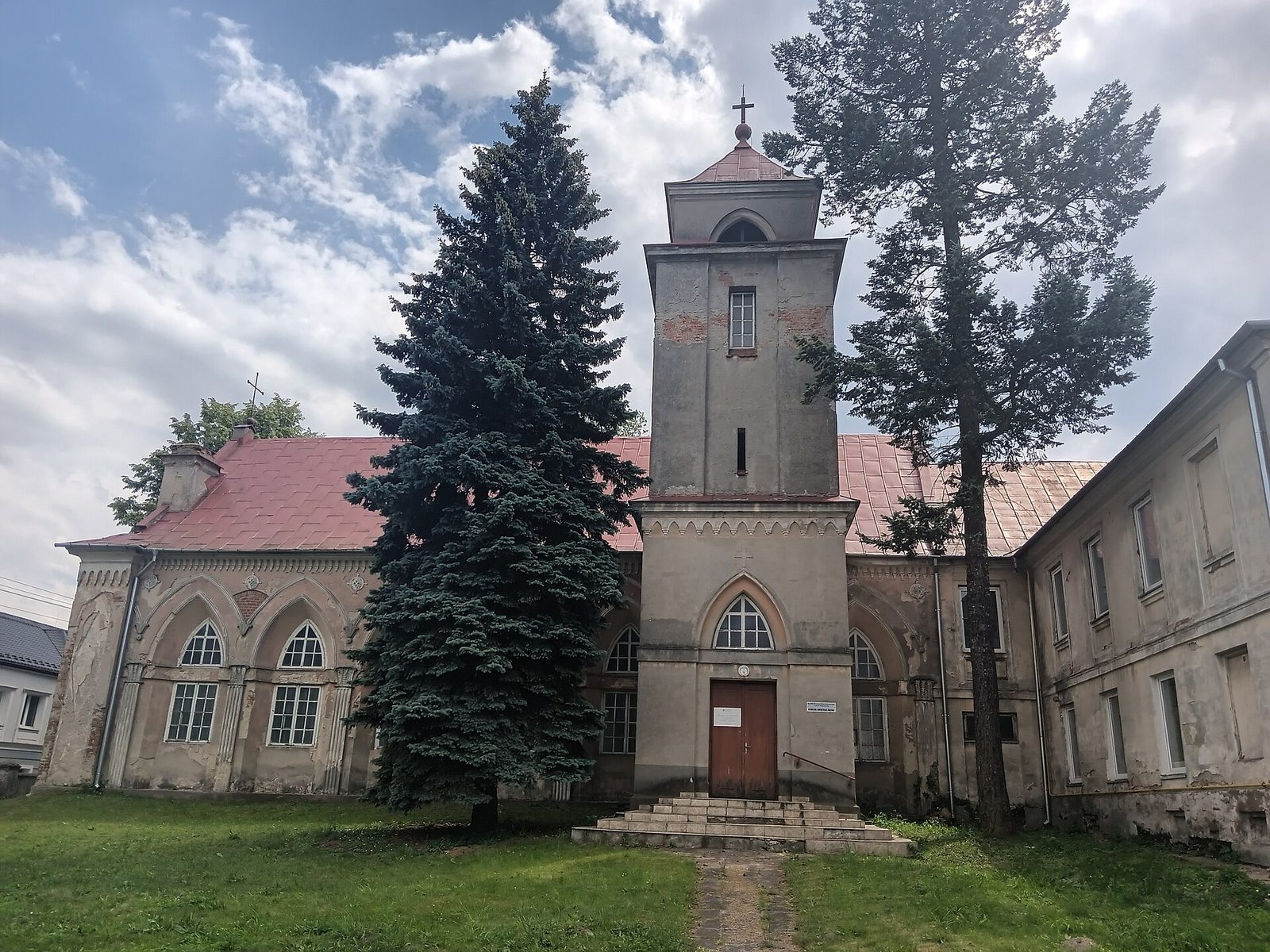
The brick church has a single nave, the main space used by the congregation, and a tower added to the building. The church’s form reflects its development from a small chapel into a larger parish church.
Parsonage
A parsonage was built soon after 1828, with living quarters for the pastor and cantor, a church official who leads singing and music.
Cemetery grounds
A cemetery once lay beside the church and may have been used to bury people who died in the hospital. The former cemetery area is now a parish garden with utility buildings, enclosed by a brick wall.