Holy Resurrection Church, Mborje: A Fourteenth-Century Orthodox Chapel in Albania
Site at a Glance
- Rating
- 4.8
- Popularity
- Very Low
- Country
- Albania
- Primary era
- Medieval
- Eras represented
- Medieval, Early Modern
- Civilizations
- Unclassified
- Site type
- Religious
- Remains
- Chapel
On this page10 sections
History
Holy Resurrection Church, also known as Christ the Life-Giver or Kisha e Ristozit, is an Orthodox church in Mborje, Albania, built in 1389–1390 during the late Byzantine period. Its construction is attributed to Bishop Nimfon, whose foundation and donation inscription survives on the southern wall. The church was built while Mborje was governed by the Muzaka brothers, Sebastokrator Gjin and Despot Theodore, in the Principality of Muzaka, a medieval Albanian principality ruled by the Muzaka family.
Foundation and Medieval Decoration
The inscription presents Bishop Nimfon as having raised the church from its foundations for the Christian community and as seeking forgiveness for his sins. This inscription-based date differs from two foundation traditions. One attributes the church to Saint Clement, an early Christian saint and bishop traditionally associated with the spread of Christianity, and places its origin in 896. Another tradition dates the foundation to the first half of the fourteenth century. The surviving inscription provides the clearest connection between the present building and the years 1389–1390.
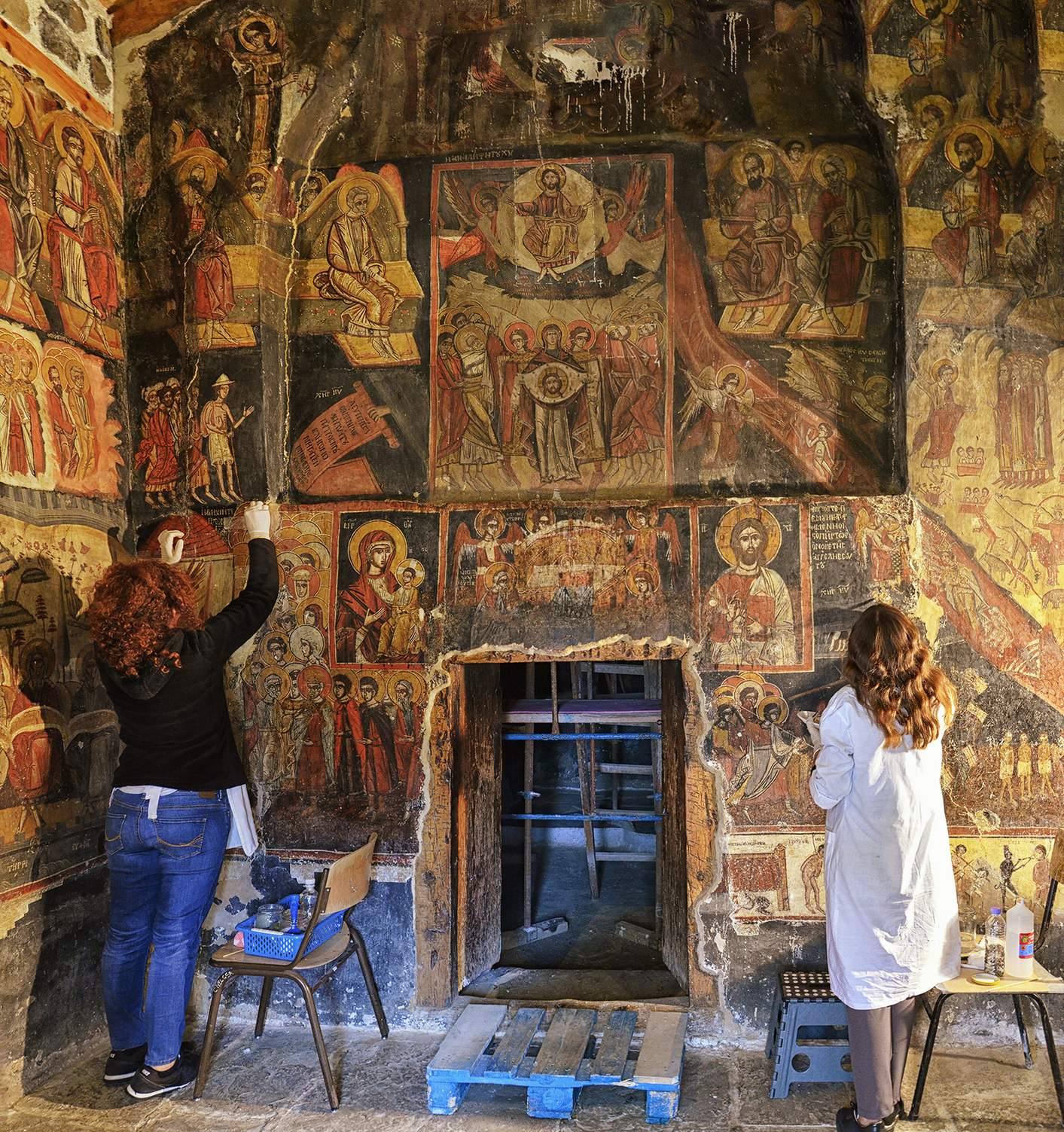
The church was painted in 1390 by artists associated with the Kostur artistic school, a regional Orthodox painting tradition linked to medieval Kostur, now Kastoria, and its surrounding area. The nave paintings are regarded as notable examples of late Palaiologan painting, the Byzantine religious artistic tradition of the later Palaiologan period. Their iconography and style have been compared with paintings at Maligrad and Kostur, leading to an attribution to the same artistic workshop.
Later Use and Protection
Paintings in the narthex and on the western facade probably date from the seventeenth century, adding a later layer to the church’s medieval decoration. A separate dedication entry identifies the church as dedicated to Saint Mary, while its formal names associate it with Christ the Life-Giver.
The church became a protected cultural monument in 1948 and is also covered by a 1971 heritage designation. It is listed among Albania’s cultural-heritage monuments under reference KO069 and cultural-monument number 66. Maintenance was carried out in 2015 because the building was at risk of collapse. The church remains regarded as a holy place believed to help people, and Orthodox believers gather there on the day marking forty days after Christ’s resurrection.
Remains
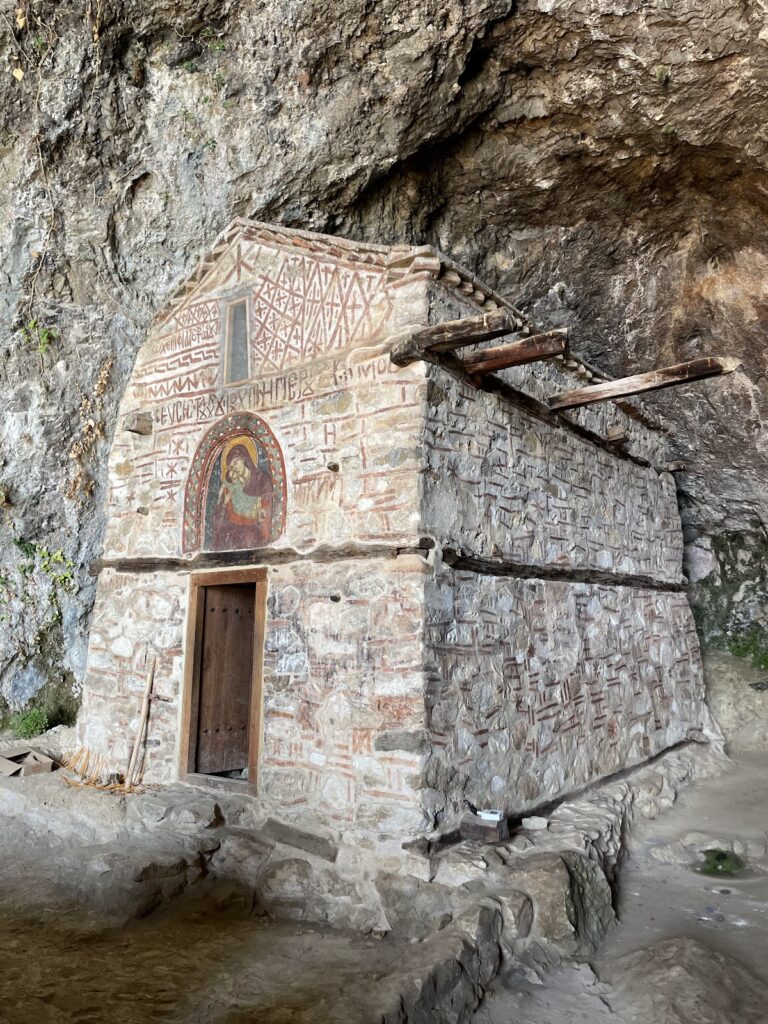
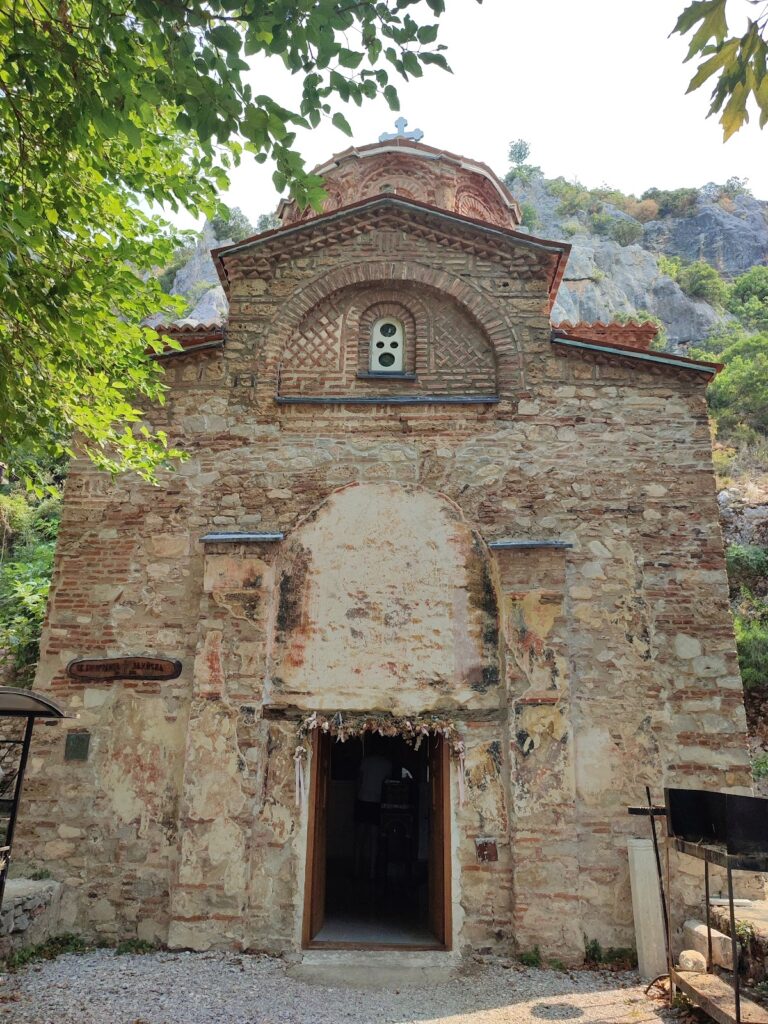
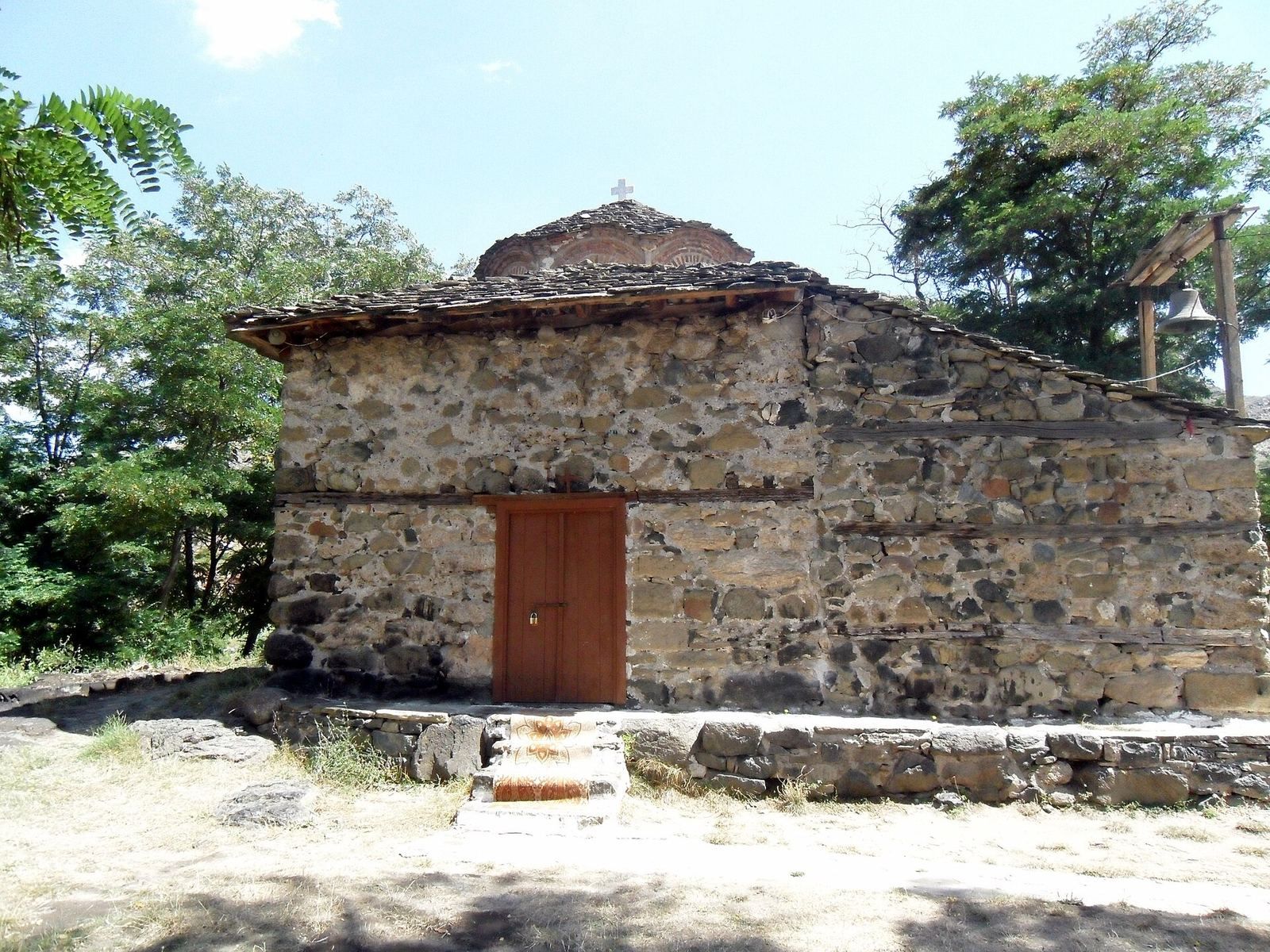
Holy Resurrection Church is a small chapel at the foot of Mount Morava, southeast of Korça. Its carefully proportioned exterior gives the building a monumental and commemorative character despite its limited size. The church follows an inscribed-cross plan, in which the arms of a cross are incorporated within a larger rectangular building, and it is organized around a domed central worship space without internal supports. The principal areas are the naos, or main worship space, the altar area, and the narthex, the entrance or antechamber.
Central Church
Naos and Dome
The central naos has a rectangular plan and a single nave covered by a dome. It reaches a maximum height of 7.5 metres. Two openings connect it with an additional attached space, one set in the southern wall and the other in the western wall of the naos. Wall paintings decorate the interior, while the southern exterior wall carries the inscription naming Bishop Nimfon and describing his foundation and donation.
Altar Area
The altar area forms the sanctuary zone of the church and belongs to the building’s compact inscribed-cross arrangement. Together with the naos and dome, it creates the principal liturgical interior without the need for internal supports.
Entrance and Exterior Decoration
Narthex
The narthex forms the entrance or antechamber of the chapel. Its original arrangement probably also included a dome. Paintings in this space probably belong to the seventeenth century and represent a later phase of decoration than the 1390 paintings in the naos.
Western Facade
The western facade also preserves paintings probably dating from the seventeenth century. These later works extend the painted decoration beyond the medieval interior and form part of the surviving exterior fabric of the church.